
Color Meanings for Mood Necklace and AI Pendants
A style-led guide to color meanings for mood necklace designs, AI pendants, and why emotional wearable tech is moving into jewelry.
I have always found mood jewelry a little ridiculous, which is probably why I like it. It takes an emotion, turns it into colour, and then lets everyone pretend the body has become more readable than it actually is. Very dramatic. Very teenage. Very now, apparently.
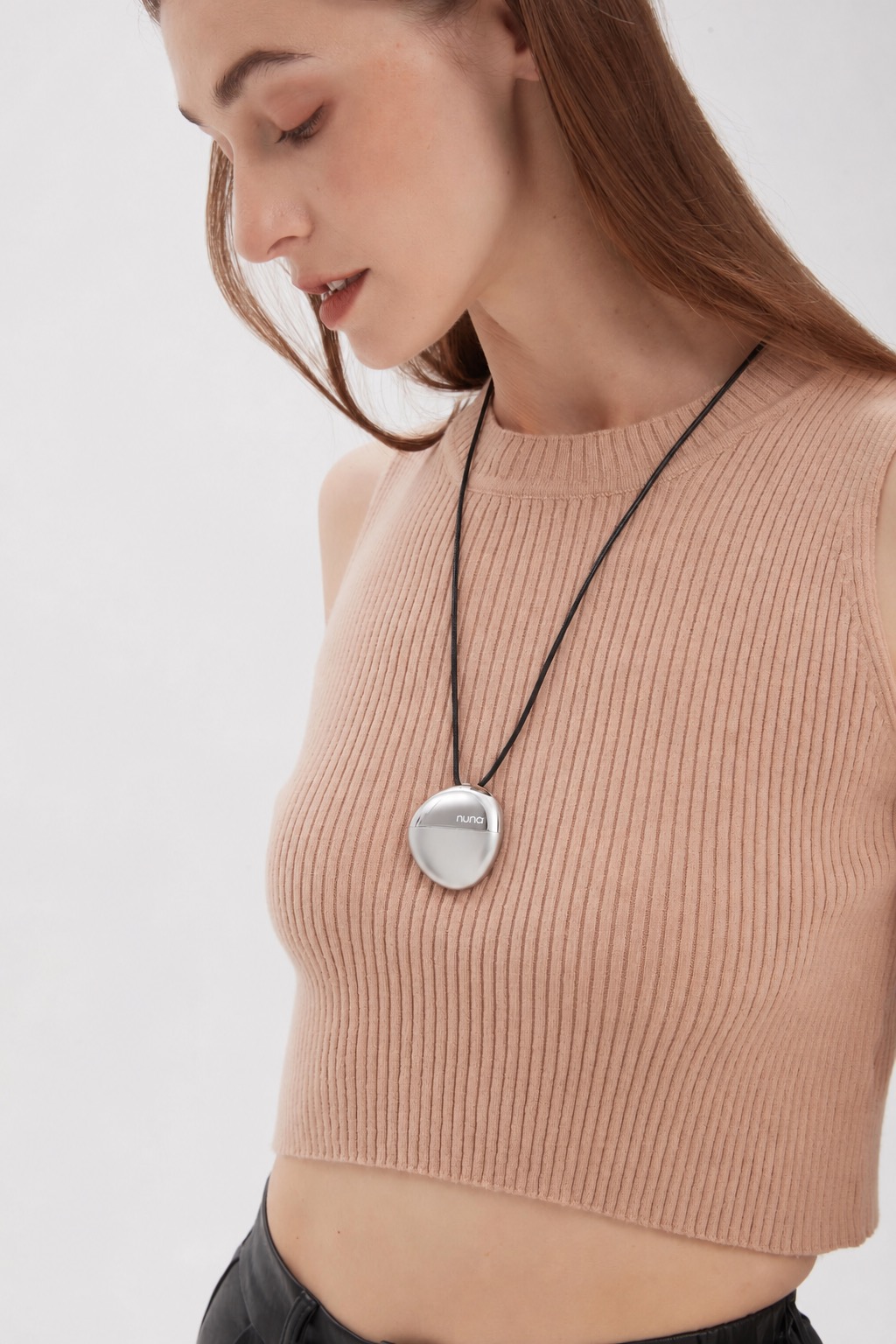
The new version is not the classic mall mood ring. It is the AI pendant: a necklace-shaped device that wants to sit somewhere between smart jewelry, emotional tracking, and futuristic accessory. Nuna’s official product page presents the Nuna AI Emotion Tracking Pendant as a wearable that visualises emotional states through changing colour. That makes it an object guide problem as much as a tech problem. If the colour is the interface, then the styling question becomes just as important as the data question.
What Color Meanings for Mood Necklace Searches Are Really Asking
When someone searches color meanings for mood necklace, I do not think they are only asking for a colour chart. They are asking for interpretation. What does blue mean? What does green mean? Is red passion or stress? Is black a bad sign, or is it just a cold room and poor circulation?
That last part matters. Traditional mood jewelry often relies on temperature-sensitive materials. McGill’s Office for Science and Society explains how mood-ring technology depends on liquid crystals that respond to temperature. The emotional reading is never as direct as the marketing implies. A colour may correlate with body temperature, environment, or sensor interpretation, but it is not a tiny therapist hanging around your neck.
That does not make it useless. It just means the object should be read as a mood prompt, not a medical-grade truth machine.
A Practical Mood Necklace Color Chart
Most mood necklace color charts follow a familiar symbolic language. An updated mood necklace colours and meanings guide maps common shades like blue, green, amber, purple, and black to emotional states, but I would treat those meanings as style shorthand rather than fixed diagnosis.
Here is the wearable interpretation I would actually use:
- Blue: calm, clear, emotionally regulated, or cool-toned serenity.
- Green: balanced, open, steady, social, or quietly present.
- Yellow: alert, curious, energised, playful, or mentally switched on.
- Amber or orange: restless warmth, excitement, anticipation, or social charge.
- Red or pink: intensity, affection, pressure, attraction, heat, or emotional volume.
- Purple: imaginative, sensitive, inward, romantic, or slightly otherworldly.
- Black or grey: low charge, cool temperature, shutdown, ambiguity, or simply bad lighting.
The key is not to over-literalise it. A color changing mood necklace is interesting because it gives emotion a visual surface. It turns the body into a display. That is fashion territory.
Why the AI Pendant Works as Jewelry
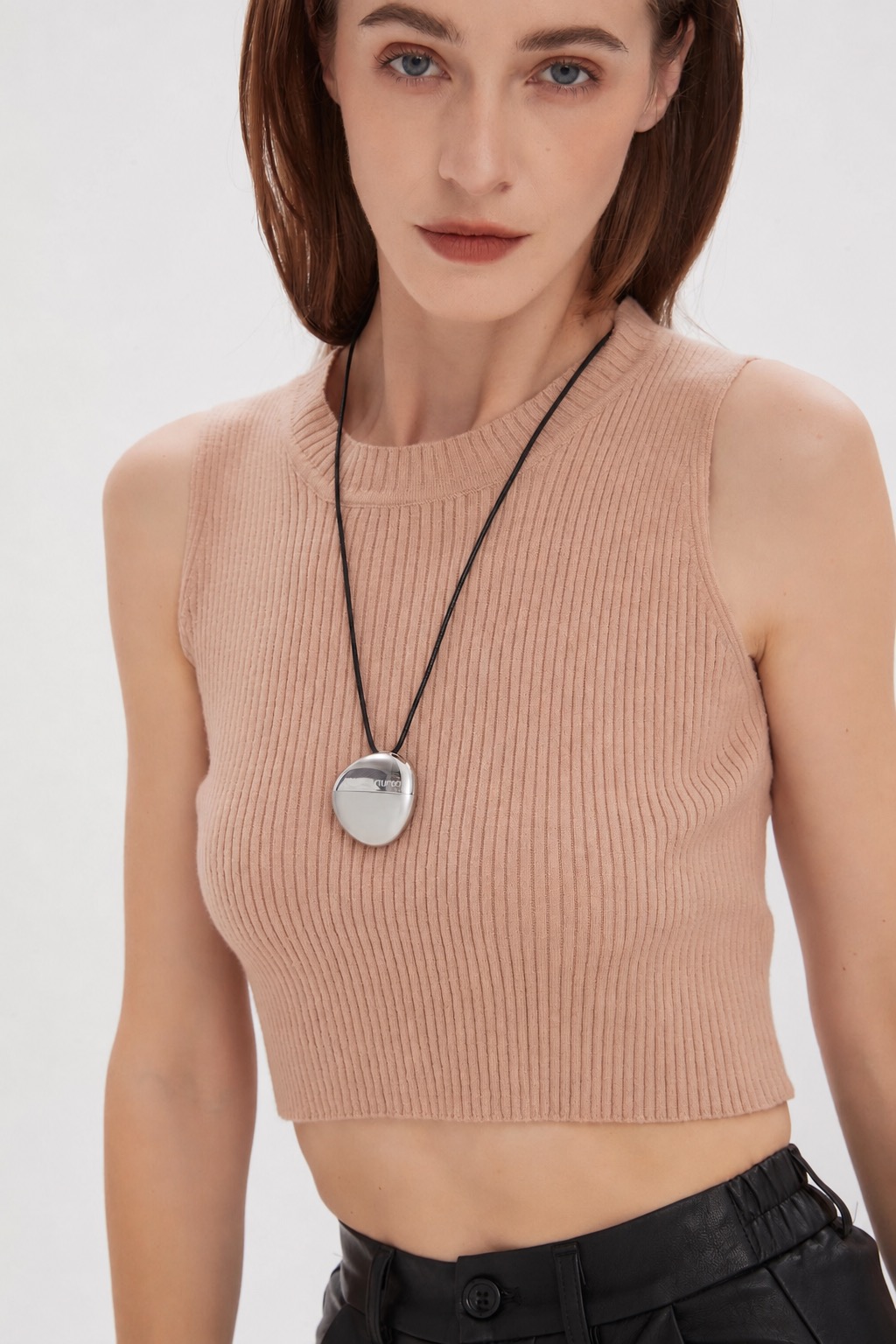
The Nuna pendant is visually restrained: black cord, silver oval body, soft reflective surface. It does not look like a smartwatch that lost its strap. It looks closer to a small amulet or polished tech pebble, which is exactly why it works.
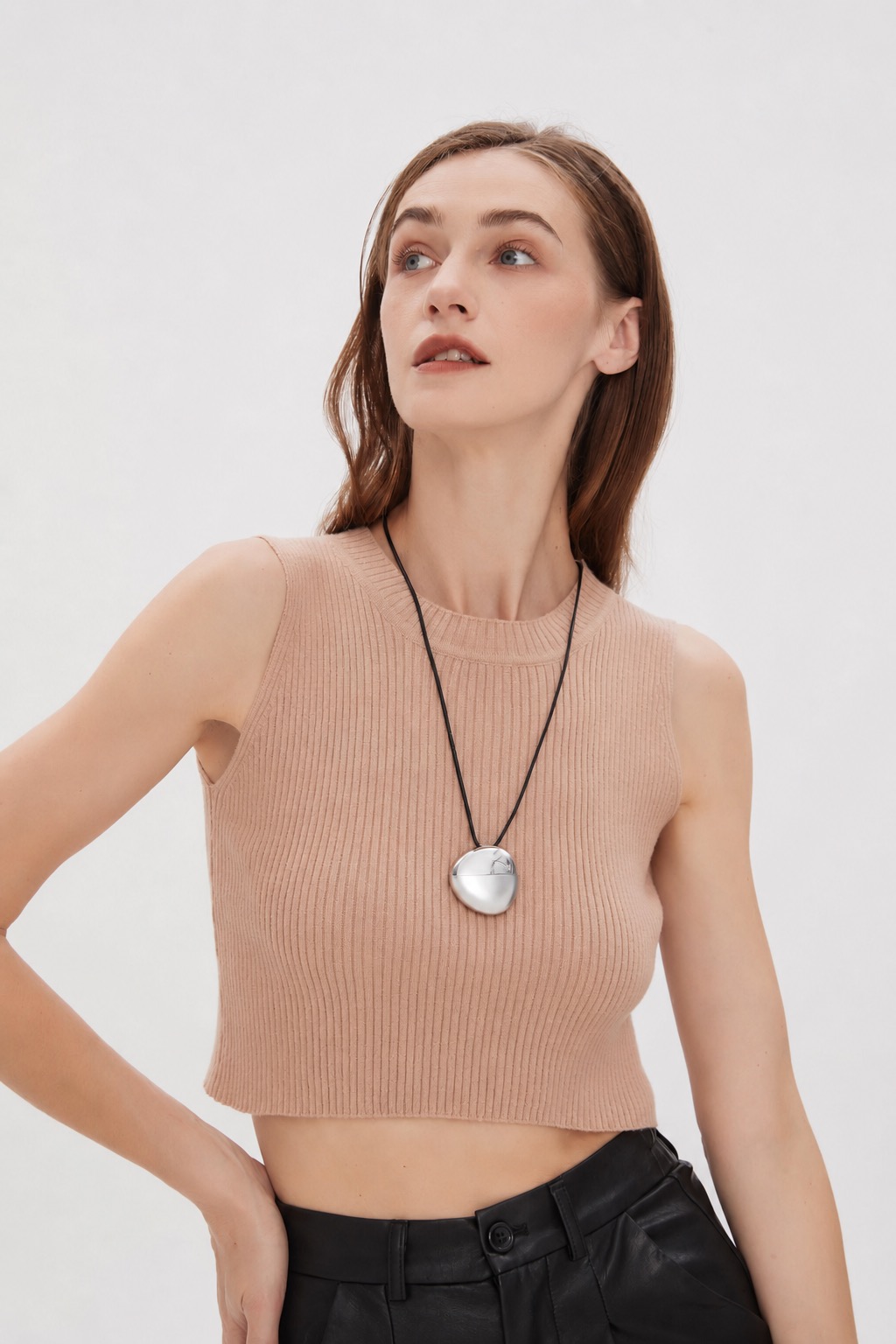
The body placement is doing the heavy lifting. A smart pendant lands at the chest, which is symbolically loaded before the device even does anything. We already associate necklaces with memory, intimacy, protection, and personal meaning. Add colour-changing behaviour and suddenly the object reads like emotional jewellery, not just wearable tech.
That is the difference between an AI necklace and another screen. A screen asks you to look down. A necklace asks other people to look at you. Whether that feels exciting or horrifying depends on your relationship with visibility.
How to Style an AI Necklace Without Making It Look Like a Gadget
The easiest styling move is contrast. Do not pair a futuristic jewelry object only with obvious techwear. That can work, but it is also the shortest route to looking like you dressed for a concept board.
With this pendant, the peach ribbed top does something smart. It softens the tech. The black cord adds a graphic line, the silver pendant adds a reflective focal point, and the warm knit keeps the whole thing from becoming too clinical.
For everyday styling, I would use:
- Ribbed tanks, fitted knits, or clean sleeveless tops so the pendant has space.
- Black leather trousers or dark denim to ground the shine.
- A single silver ring or cuff, not a full matching jewellery set.
- Soft neutral colours if you want the pendant colour to stand out.
- Metallic bags or chrome sunglasses only if the rest of the outfit is calm.
This is where wearable tech jewelry becomes genuinely useful. It gives an outfit a narrative without needing a logo. The object says: something is happening here, but it does not explain itself too neatly.
What an AI Emotion Tracking Pendant Can and Cannot Do
An AI emotion tracking pendant can be a reflective tool. It can encourage someone to notice patterns, pause, and consider how their body is responding throughout the day. As a fashion object, it can also make emotional life visible in a way that feels almost sci-fi.
What it cannot do is fully translate a person. Emotions are not clean data points. They are messy, layered, context-dependent, and sometimes deliberately hidden. I would be suspicious of any device that pretends otherwise.
That is why the color meanings for mood necklace framework is actually useful. It keeps the interpretation poetic. Blue can mean calm, but it can also mean distance. Red can mean intensity, but intensity can be desire, stress, embarrassment, heat, or caffeine. The value is not in perfect accuracy. The value is in creating a moment of self-reading.
The Material and Form Breakdown
Key material: polished silver-tone casing, soft black cord, reflective surface.
Key shape: oval pendant, closer to a locket or worry stone than a conventional device.
Colour language: emotional display through changing light or surface tone, depending on the object.
Texture and finish: smooth, minimal, slightly clinical, but softened by the necklace format.
Body placement: chest-level, which makes the device feel intimate rather than purely functional.
Related objects: mood rings, smart jewelry, AI wearable devices, futuristic jewelry, and wearable mood trackers.
This is why I think the object belongs in an Object Guides column. It is not only asking, “does the tech work?” It is asking, “what happens when emotional data becomes an accessory?”
Should You Wear a Mood Necklace in Public?
Yes, if you understand that it is a signal, not a confession. A mood necklace can invite curiosity. It can also make you feel overexposed if you are not in the mood to be interpreted by strangers, friends, or the person you are trying very hard to act normal around.
That is the fun and the danger of smart jewelry. It turns the private into something semi-public. But fashion has always done that. We dress our moods before we admit them. A colour-changing pendant just makes the metaphor less subtle.
For future alt fashion, this is the sweet spot: emotional, technological, wearable, and slightly uncanny. Not everything needs to be useful in the productivity sense. Sometimes an object is useful because it gives your outfit a pulse.
FAQ
What do colors mean on a mood necklace?
Mood necklace colors usually work as symbolic shorthand. Blue often suggests calm, green balance, yellow alertness, amber excitement, red intensity, purple sensitivity, and black or grey low charge or ambiguity.
What is an AI pendant?
An AI pendant is a wearable device worn like a necklace that may use sensors, software, or connected systems to interpret patterns and display information through light, colour, or app-based feedback.
How does emotion tracking jewelry work?
Emotion tracking jewelry may use sensor inputs, colour displays, or algorithmic interpretation. It should be treated as a reflective aid, not as a perfect emotional diagnosis.
Is smart jewelry fashionable?
Smart jewelry is fashionable when the device works with the body instead of looking like a gadget forced onto it. Pendants, rings, cuffs, and ear-worn objects tend to work best because fashion already understands those placements.