
How to Dress Up a Basic Outfit Without Losing the Plot
Learn how to dress up a basic outfit with texture, contrast, belts, bags, jewelry, and styling friction instead of buying another ideal self.
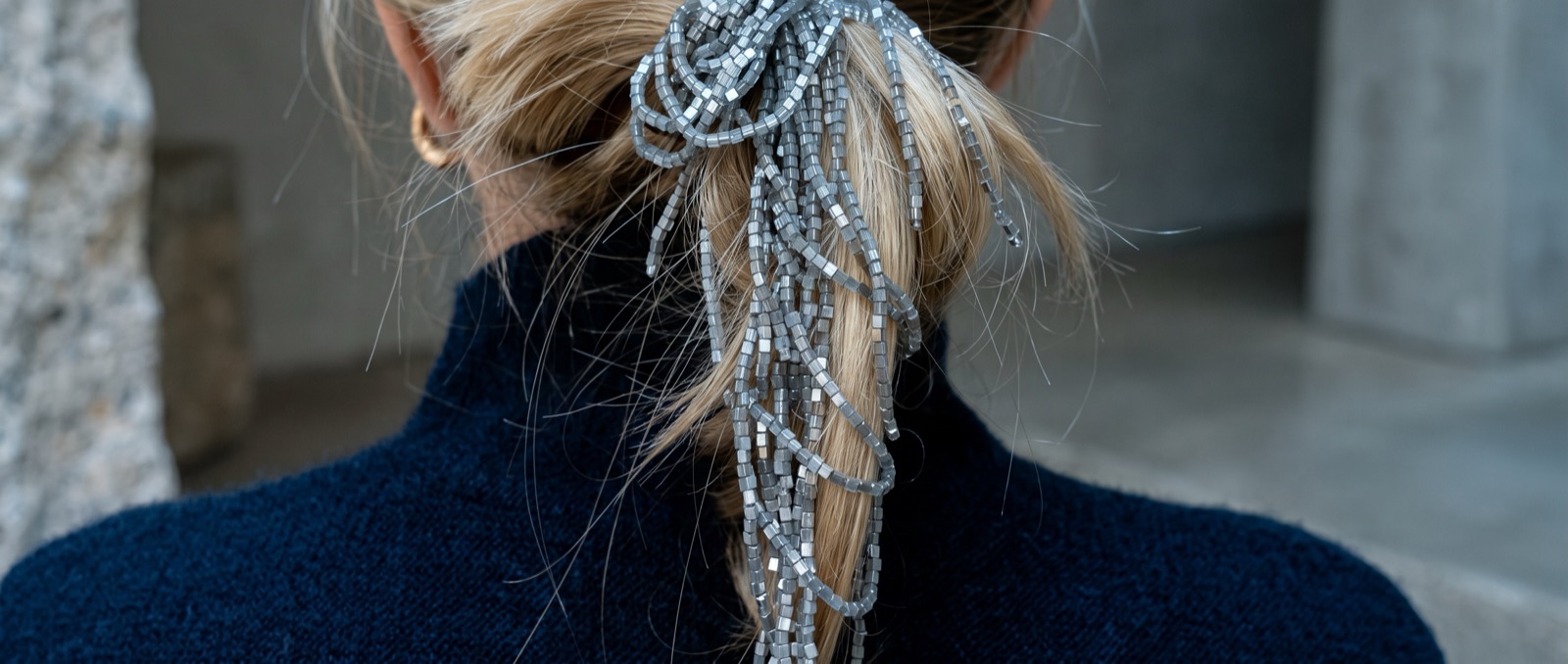
Most full wardrobes are not full because people own too many clothes. They are full because every rail is carrying a fantasy version of the self: the shirt for the sharper person, the slip dress for the person who somehow has better dinner plans, the denim set for the person who looks casually expensive at 9 a.m. on a Tuesday.
I think this is why the question of how to dress up a basic outfit is more interesting than it looks. It is not really about making a white tee “pop.” It is about learning how to stop buying your way into a personality and start using the clothes already sitting there, waiting for a better sentence.
Basics are not boring by default. They become boring when they are asked to do everything alone.
Start With One Point of Friction
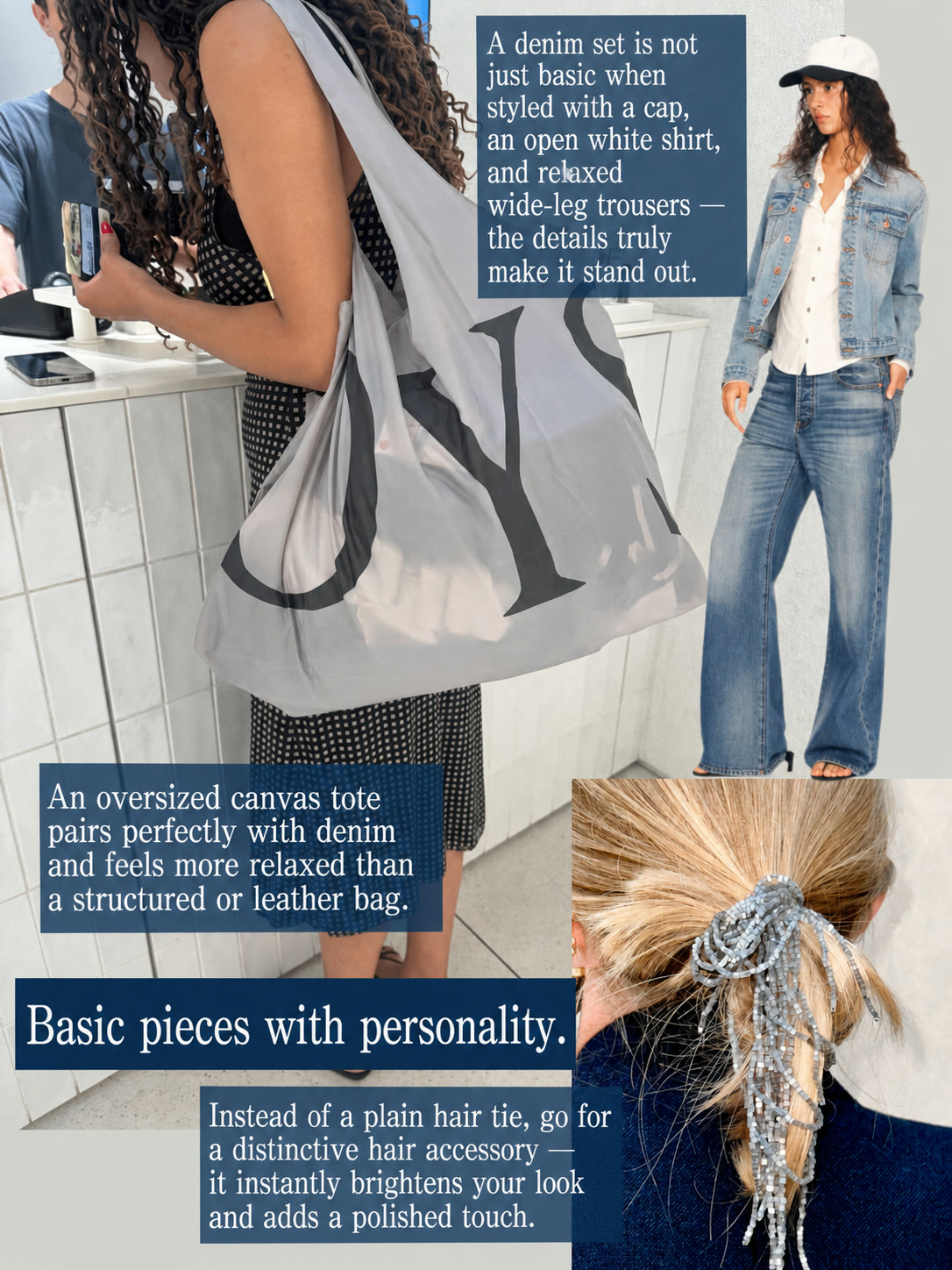
A basic outfit needs one thing that interrupts the flatness. Not chaos for the sake of chaos. Just friction: a fabric that does not quite behave, a bag that looks lived-in, a belt that cuts the softness, a hair accessory that makes the whole thing feel a little more chosen.
That is why denim on denim can work when it is not treated like a costume. A denim jacket and wide-leg jeans are familiar, almost too familiar, but a cap, an open white shirt, and a relaxed canvas tote change the temperature. The outfit stops saying “denim set” and starts saying someone understands proportion.
This is the first rule of dressing up basic outfits: do not add more clothes before you add more point of view.
If you already own the white shirt, grey tee, tank dress, jeans, and cardigan that appear in every Vogue wardrobe essentials guide, the missing piece is rarely another essential. It is the styling logic that makes the essential feel specific to you.
Use Weight to Make Simple Clothes Look Intentional
Light clothes need weight. Soft clothes need structure. Quiet clothes need an anchor.
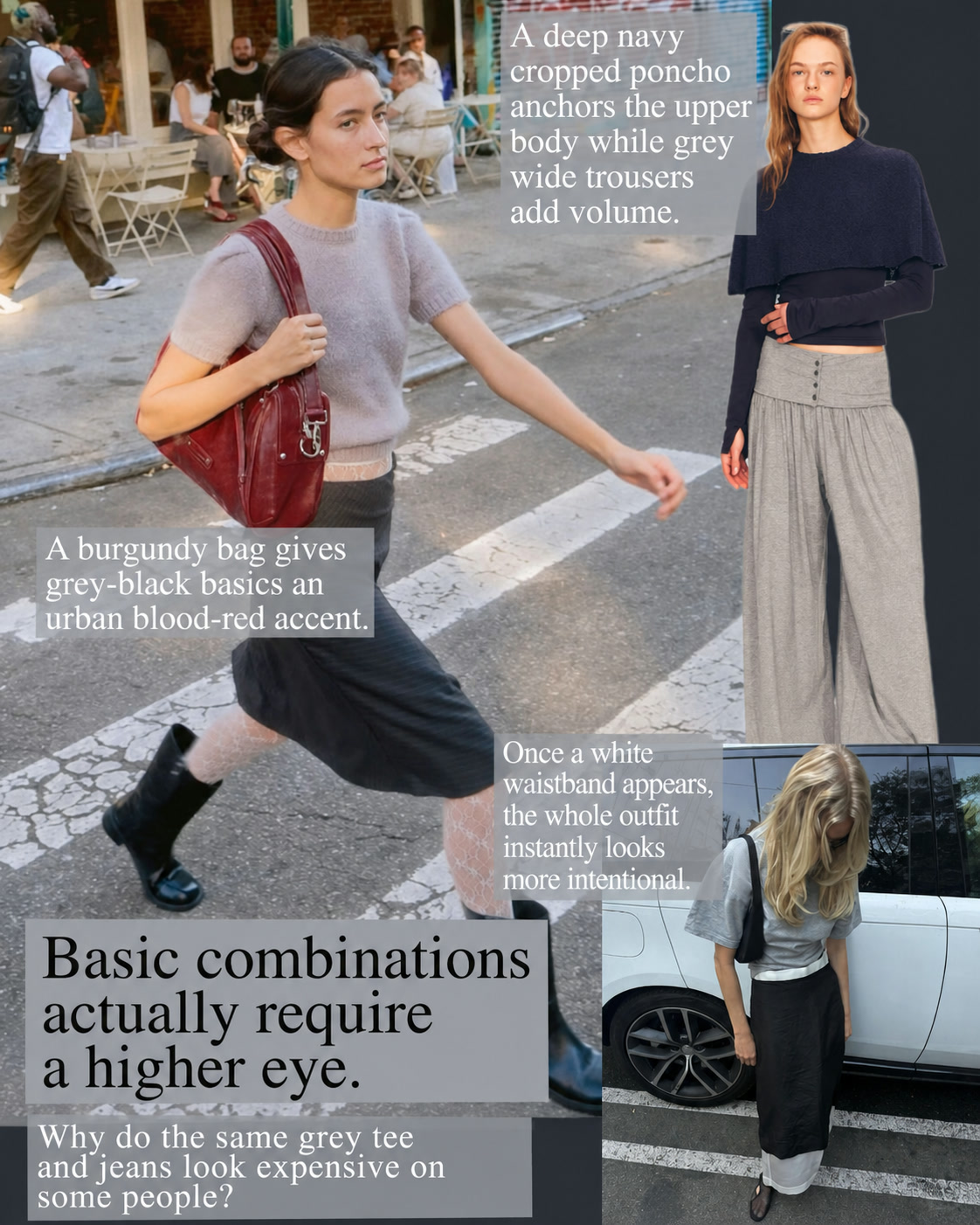
A grey tee and black skirt can look anonymous in one context and quietly expensive in another. The difference is often weight distribution. A burgundy bag gives the outfit a darker accent. A deep navy cropped poncho makes the top half feel grounded. A white waistband breaks the line just enough to stop the grey and black from turning into visual fog.
This is why outfit formulas matter. Not because fashion should become maths, but because formulas let you repeat a feeling without repeating the same outfit.
Try this:
- Soft base plus hard accessory
- Loose silhouette plus one clean line
- Monochrome outfit plus one low, dark accent
- White or grey basics plus a belt, bag, or shoe with visible weight
Once you start looking for weight, you understand why a black bag can save an all-white look, or why loafers make a soft skirt feel less helpless. The anchor tells the eye where to land.
Texture Is Often More Important Than Color
People tend to ask what color to add. I think the better question is what texture is missing.
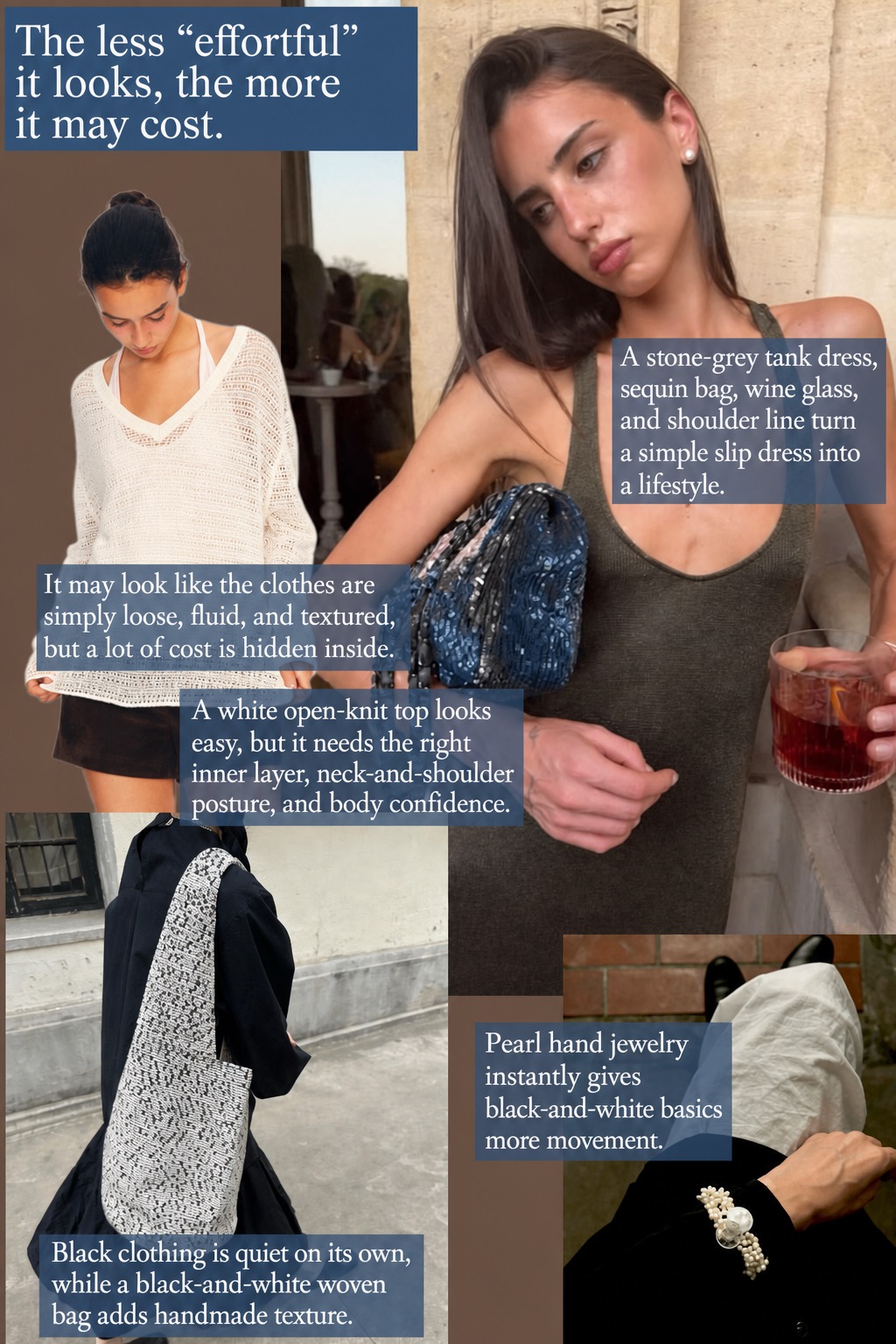
A stone-grey tank dress can read plain until it meets a sequin bag, a glass in hand, and a sharper shoulder line. A white open-knit top looks easy, but it only works when the inner layer, neckline, and body posture are considered. A black outfit becomes less flat when a woven bag introduces handcraft texture. Pearl hand jewelry can make black and white basics feel less like uniform and more like gesture.
This is the quiet secret behind many good basic outfit ideas: the clothes are simple, but the surfaces are not.
Instead of asking, “What should I buy?” ask:
- Is this outfit matte everywhere?
- Does anything have shine, grain, weave, rib, or pile?
- Is the bag too clean for the clothes?
- Are the shoes too polite for the mood?
- Does the jewelry echo the outfit, or does it shift it?
The best closet staples are not the ones that shout. They are the ones that accept interruption.
Black Can Act Like Punctuation
There is a reason black accessories appear again and again in good white outfit ideas. Black gives a sentence its full stop.
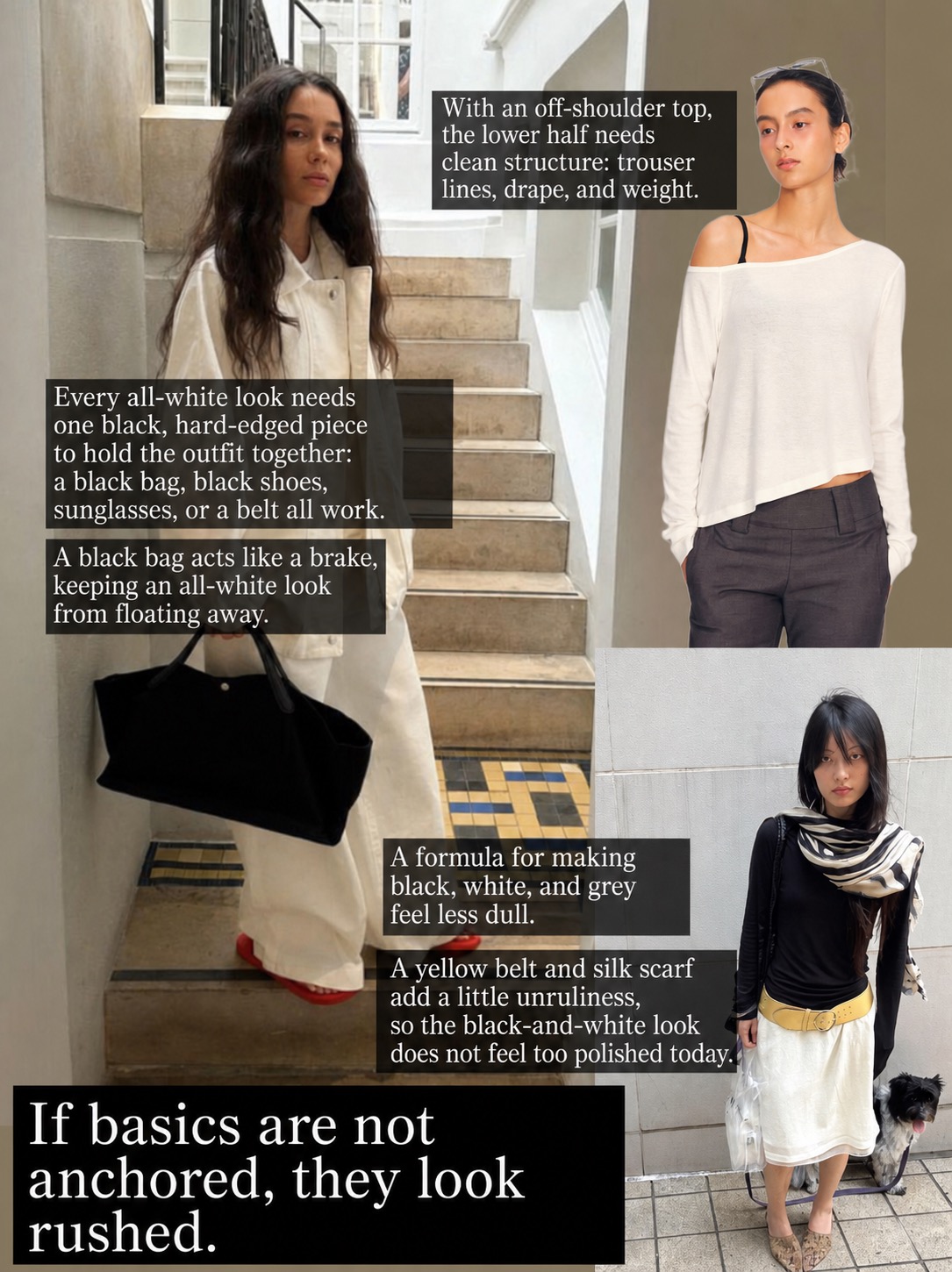
An all-white outfit can float away if nothing holds it down. A black bag, black shoes, sunglasses, or a belt can give it a harder edge without ruining the softness. This is especially useful when the outfit is built from pale pieces: white denim, cream knits, loose cotton, or soft shirting.
But black does not have to make everything severe. Add a yellow belt, a silk scarf, a woven bag, or a textured shoe and the look gets some unruliness back. That is where basic outfits become personal. The point is not to look perfectly edited. The point is to look like the edits were yours.
Let Accessories Suggest a Life
The most convincing way to dress up basics is to let the accessories imply a life beyond the mirror.
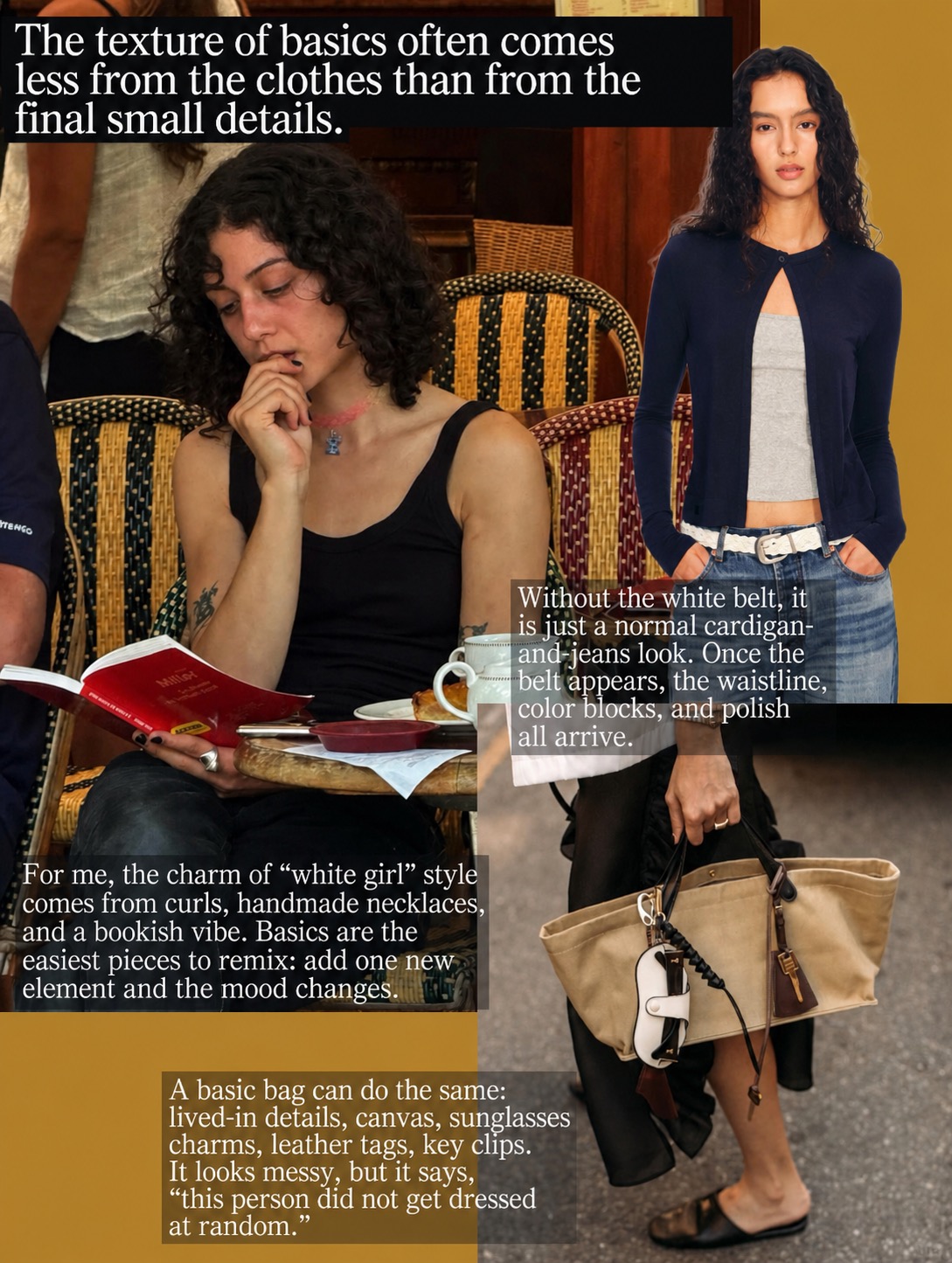
A white belt changes a cardigan-and-jeans look because it introduces a waistline and a little polish. A handmade necklace changes a black tank because it brings in a bookish, intimate mood. A canvas bag with sunglasses charms, leather tags, and key clips may look messy, but it creates evidence of a person who moves through the world.
That is the difference between styling and decorating. Decorating adds objects. Styling builds implication.
If your wardrobe already has enough clothes, use the next outfit as a remix exercise. Take one basic base and add only one new idea:
- A belt in a color you normally avoid
- A textured bag instead of a smooth one
- A hair tie or scarf that feels slightly too pretty
- A shoe that is heavier than the outfit expects
- A piece of jewelry that looks inherited, handmade, or oddly sentimental
This is also the most sustainable wardrobe move, not in the sanctimonious sense, but in the practical one. Rewear outfits become easier when the styling changes the story.
The Real Formula
Here is the formula I would actually use:
Basic base + one anchor + one texture shift + one personal clue.
For example:
- White shirt, loose jeans, black belt, woven tote
- Grey tee, black skirt, burgundy bag, silver jewelry
- Tank dress, sequin bag, pearl bracelet, slick hair
- Cardigan, jeans, white belt, lived-in canvas bag
The basic base keeps the outfit wearable. The anchor gives it structure. The texture shift makes it less flat. The personal clue stops it from looking like a shopping cart.
FAQ
How do you make basic outfits look expensive?
Use better contrast before you buy more clothes. A sharp belt, heavier shoe, textured bag, clean neckline, or intentional jewelry choice can make basics look more considered than adding another trend item.
What accessories dress up a basic outfit?
Belts, structured bags, textured totes, sunglasses, hair accessories, metal jewelry, pearl details, and shoes with weight are the most useful. Choose one or two rather than wearing every accessory at once.
How do you style basics without buying more clothes?
Change the relationship between pieces. Tuck or untuck, add a belt, switch the bag, change the shoe, layer a scarf, or move jewelry from invisible to central. The point is to create a new sentence from the same nouns.