
Oakley Smart Glasses Were Weird Before AI Looked Normal
A guide to Oakley RazrWire, the 2005 Bluetooth eyewear that makes today's Oakley smart glasses feel less sudden and more inevitable.
Oakley smart glasses did not become interesting the moment AI arrived. That is the easy version of the story, and frankly, it is a little too neat. The more useful story starts earlier, with a pair of Bluetooth sunglasses from 2005 that looked like a prop from a telecom future we were not quite stylish enough to deserve.
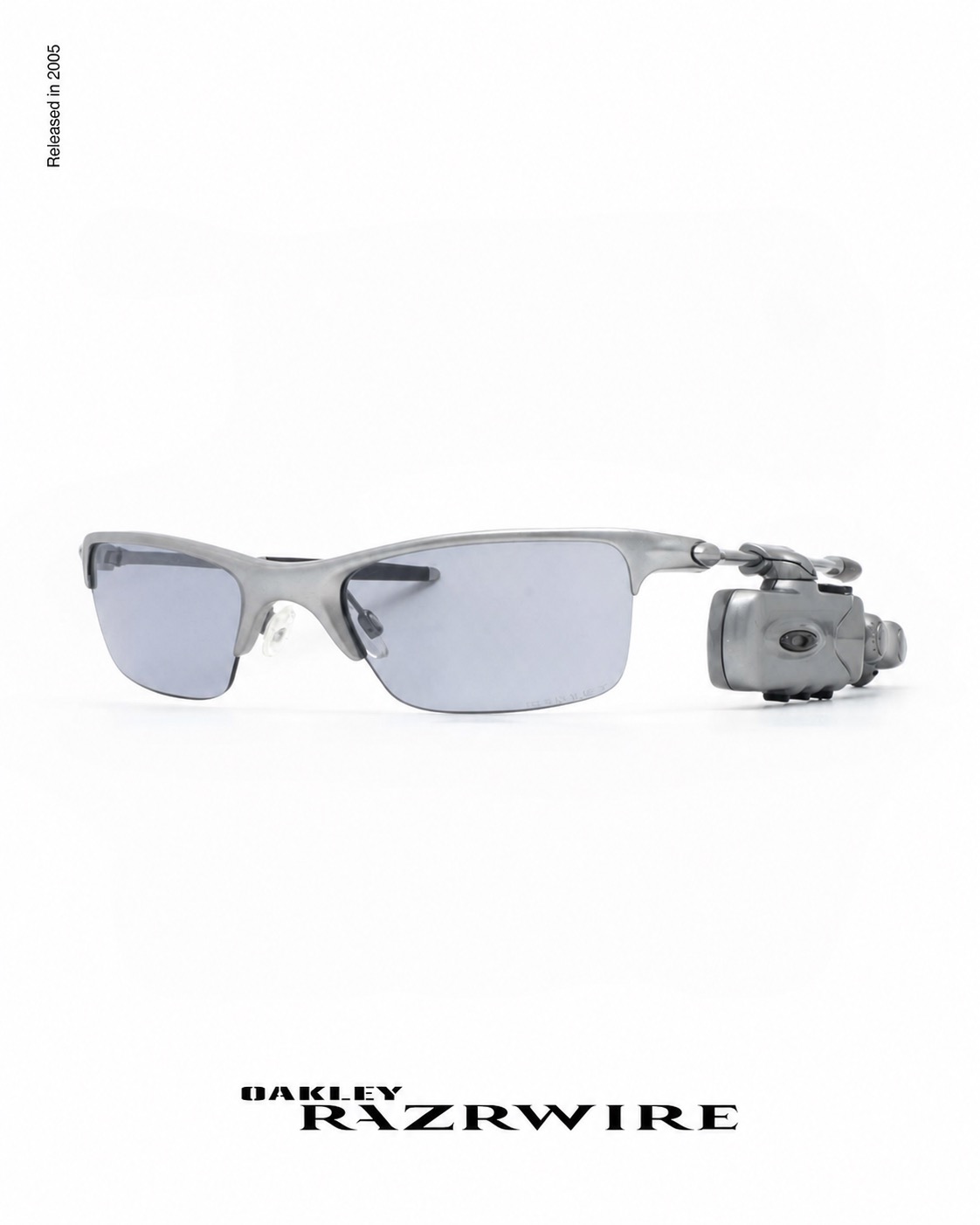
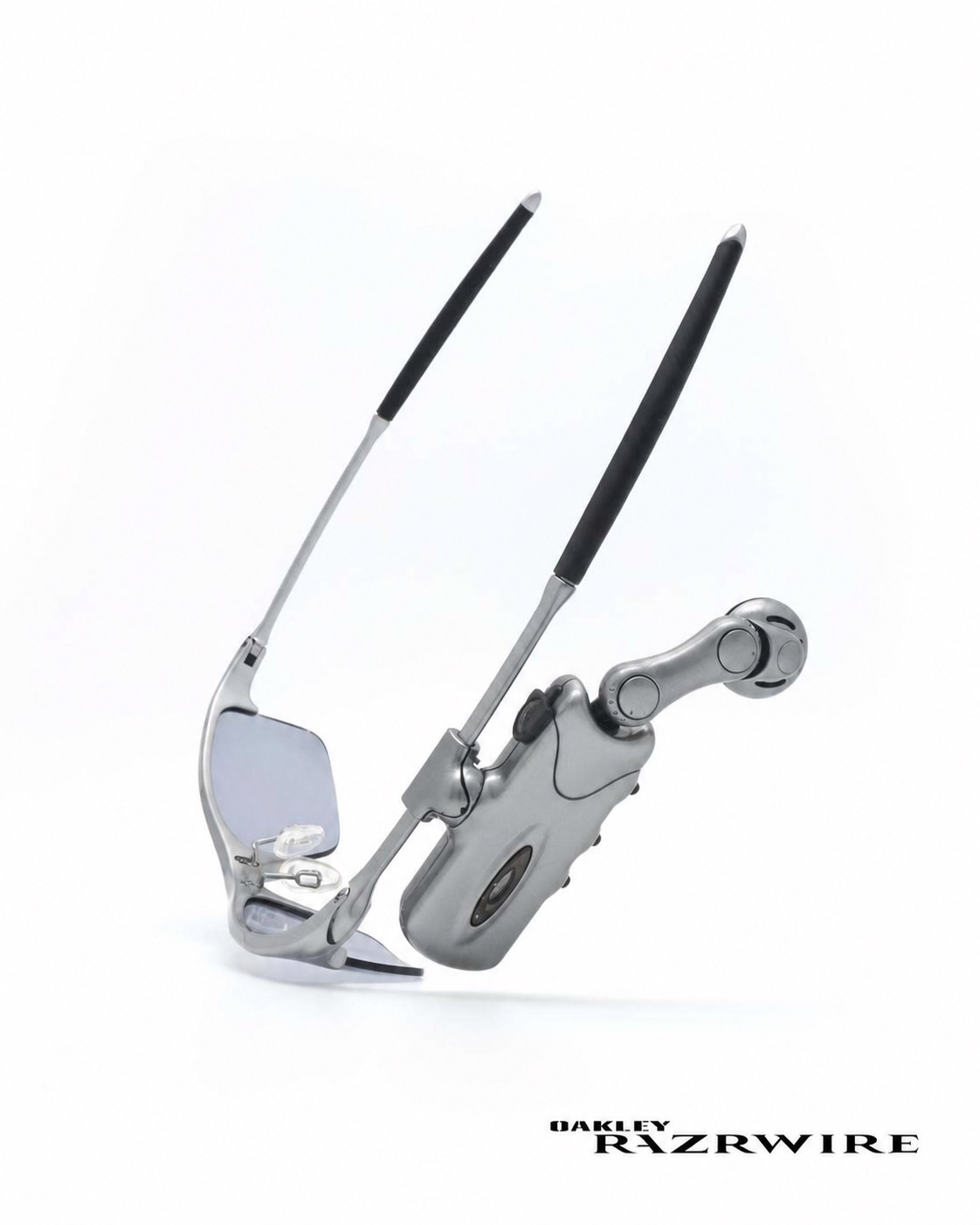
The Oakley RazrWire is strange in the best possible way. It is eyewear, phone accessory, headset, sports object, status object, and Y2K sunglasses fantasy all at once. It does not look like a device trying to blend in. It looks like a device that assumes your face is an acceptable place for technology to announce itself.
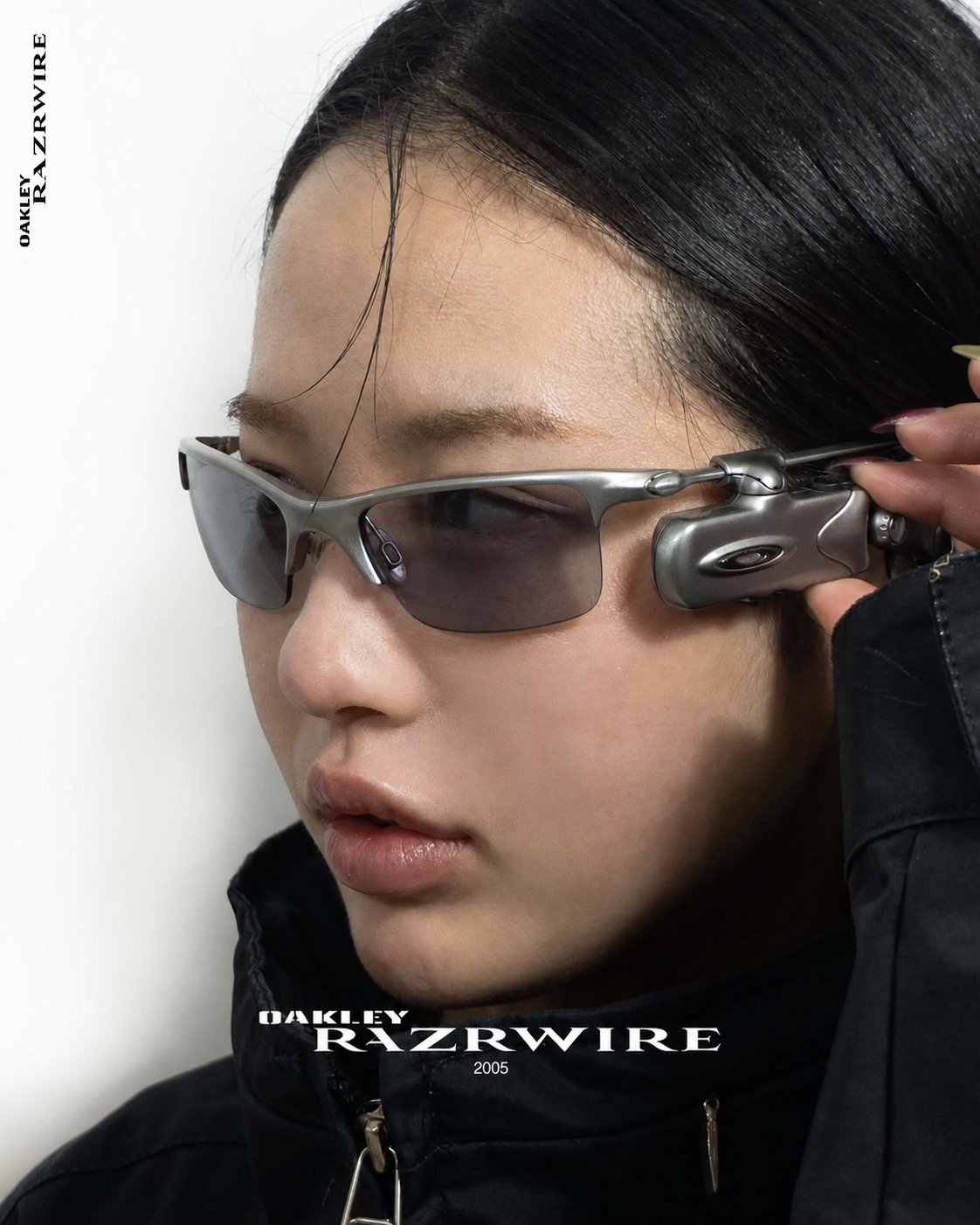
That is what makes it so useful now. In 2025, Meta and Oakley introduced Oakley Meta glasses as performance AI eyewear, which makes the current smart glasses conversation feel modern, useful, and inevitable. But RazrWire reminds us that the aesthetic problem was already there two decades ago: how do you put technology on the face without making the wearer look like a beta test?
RazrWire Was Not Subtle, and That Was the Point
The obvious reading is that Oakley RazrWire was simply an early Bluetooth sunglasses experiment. That is true, but it undersells the object. According to the MIDO archive on the Motorola and Oakley launch, RazrWire combined Oakley eyewear with Motorola wireless technology in 2005, using the RAZR name at a time when the Motorola RAZR V3 was one of the most recognisable phones in culture.
That detail matters. This was not generic wearable tech glasses. This was Oakley attaching itself to one of the sharpest consumer-tech symbols of the millennium. The name alone does a lot of branding work: RAZR for the phone, Wire for the wireless communication promise, and Oakley for the performance eyewear silhouette.
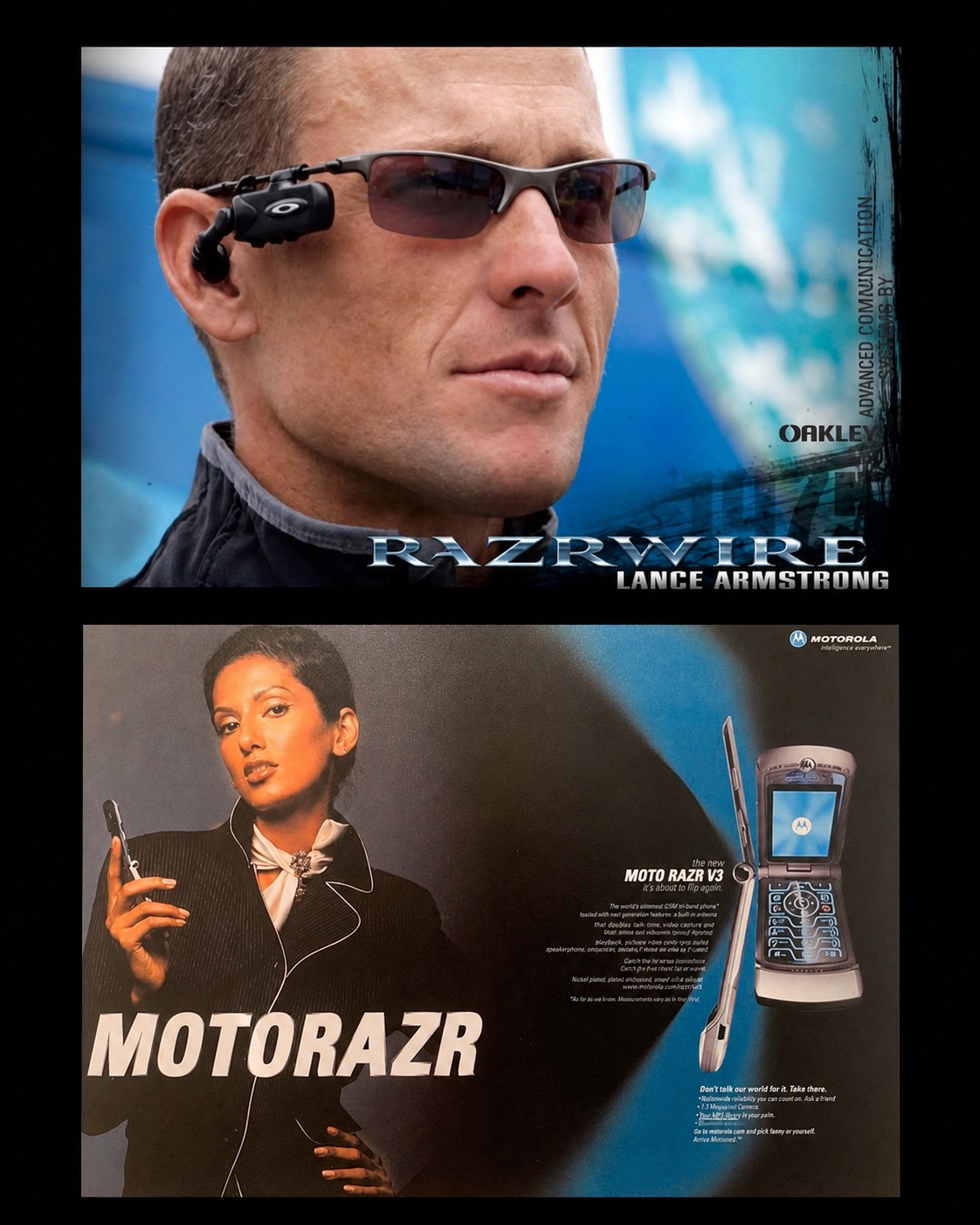
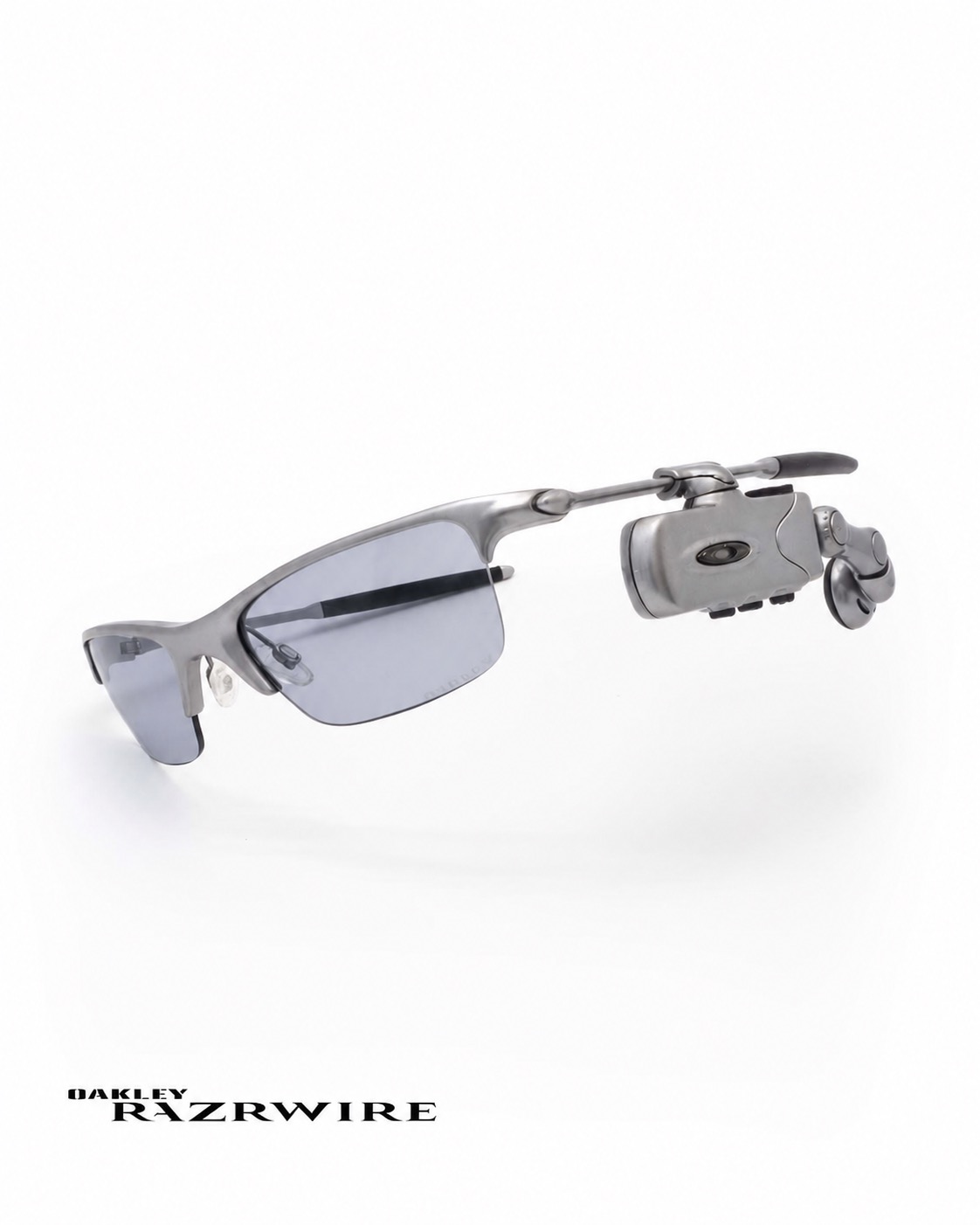
The result is not pretty in a soft way. It is angular, metallic, and slightly overconfident. The Bluetooth module sits visibly on the temple. The earpiece is not hidden. The sunglasses do not pretend to be classic. They look like they belong to someone who thinks a headset can be a personality trait.
And honestly? That is what makes them compelling.
The Manual Is Part of the Aesthetic
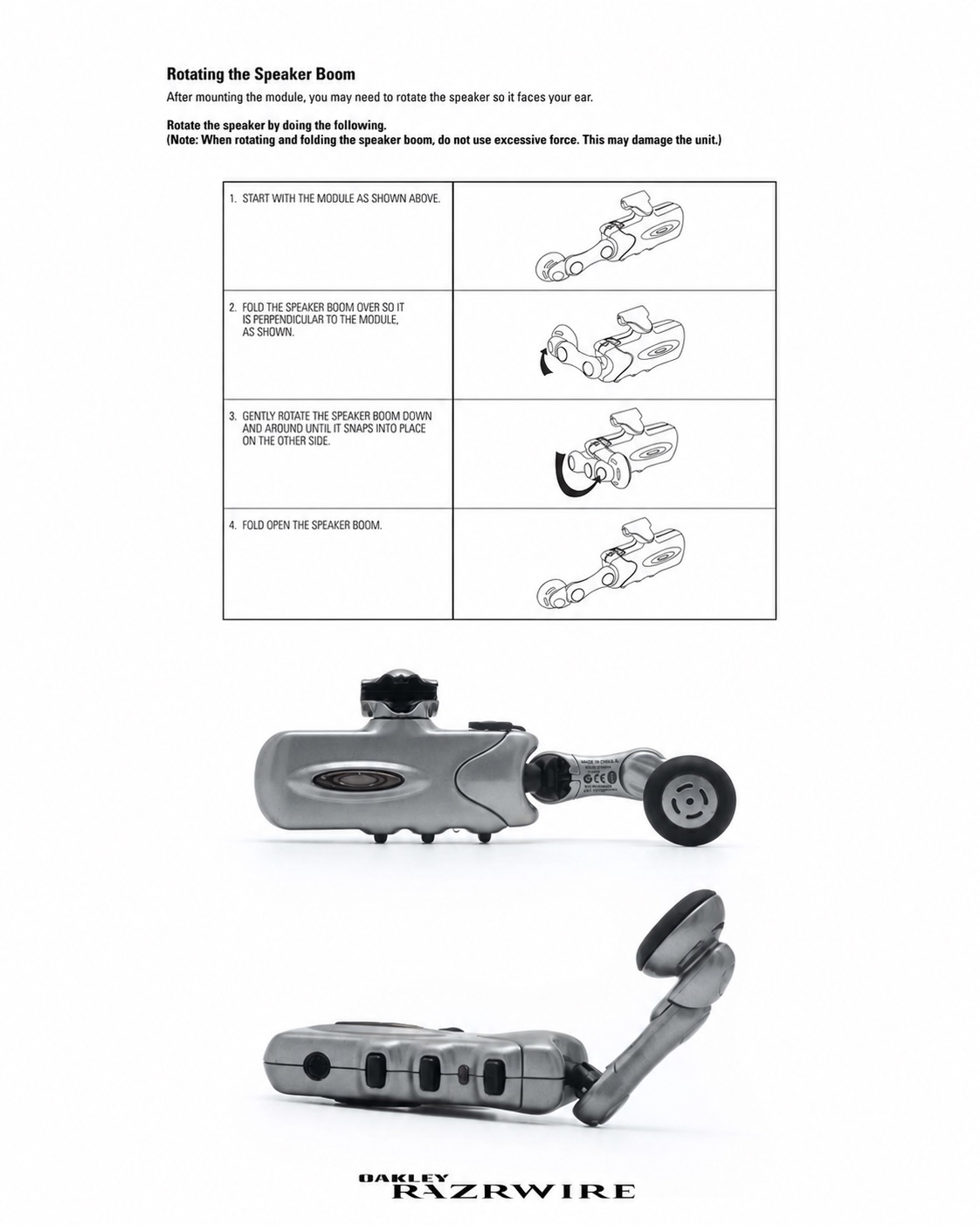
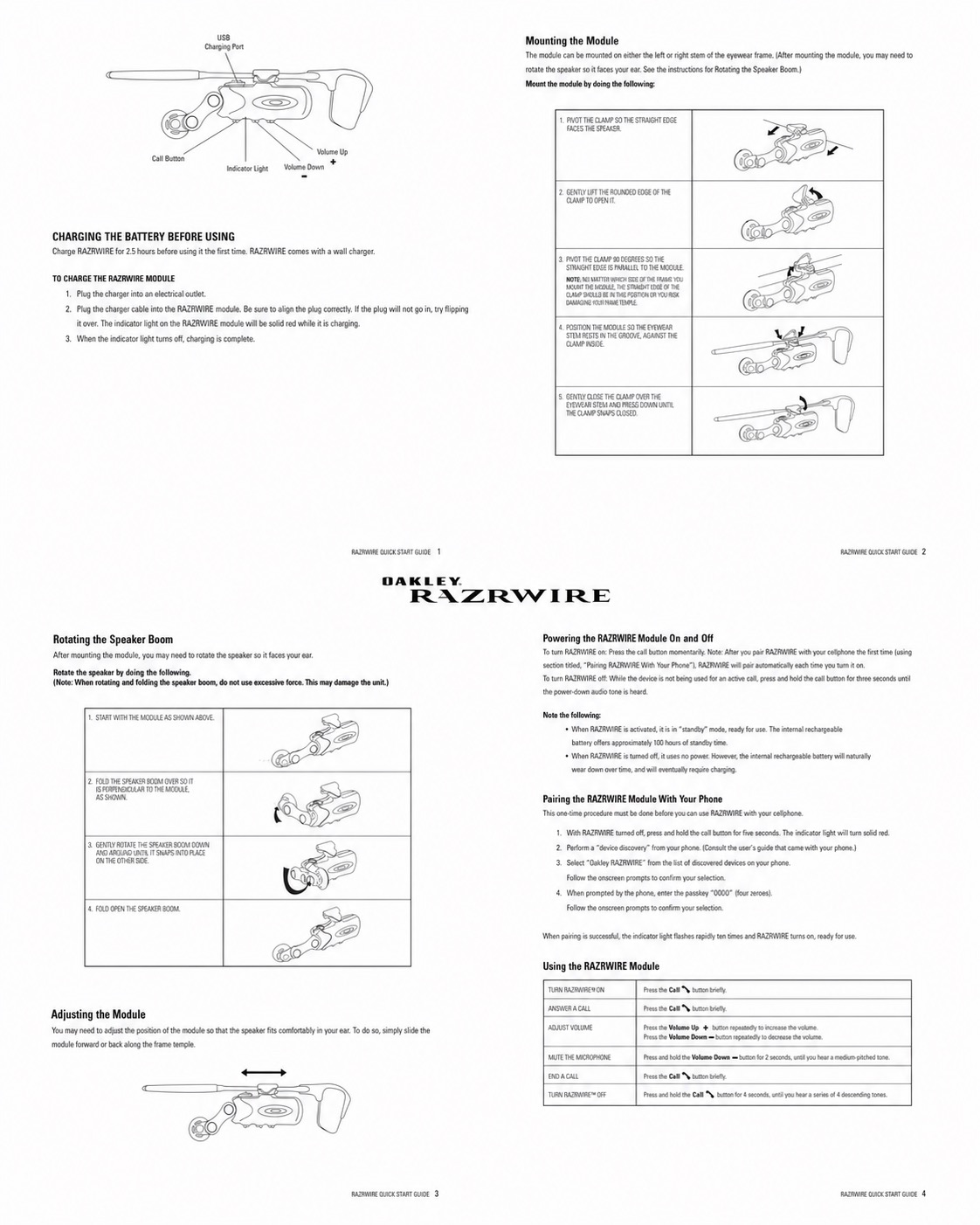
The product imagery tells one story, but the manual pages tell another. RazrWire was not just a look; it was a system. You had charging instructions, button diagrams, volume controls, module mounting, pairing steps, speaker-boom rotation, and little arrows explaining how this object was supposed to behave around the head.
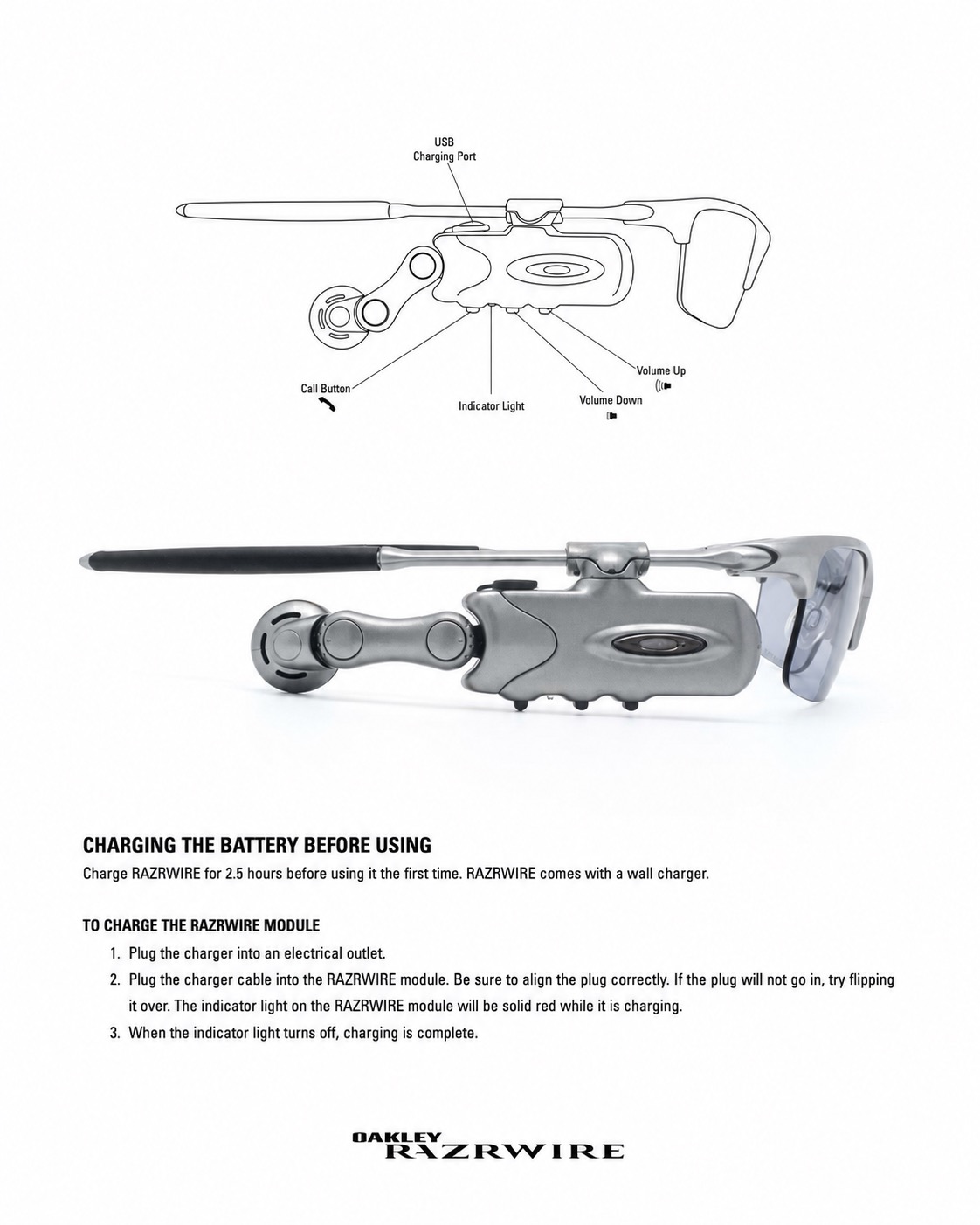
That is where the object becomes more interesting than a normal pair of cyberpunk sunglasses. It had to teach people how to wear its future. The manual is almost tender in that way. It assumes the wearer needs to learn a new relationship between the face, the phone, the ear, and the hand.
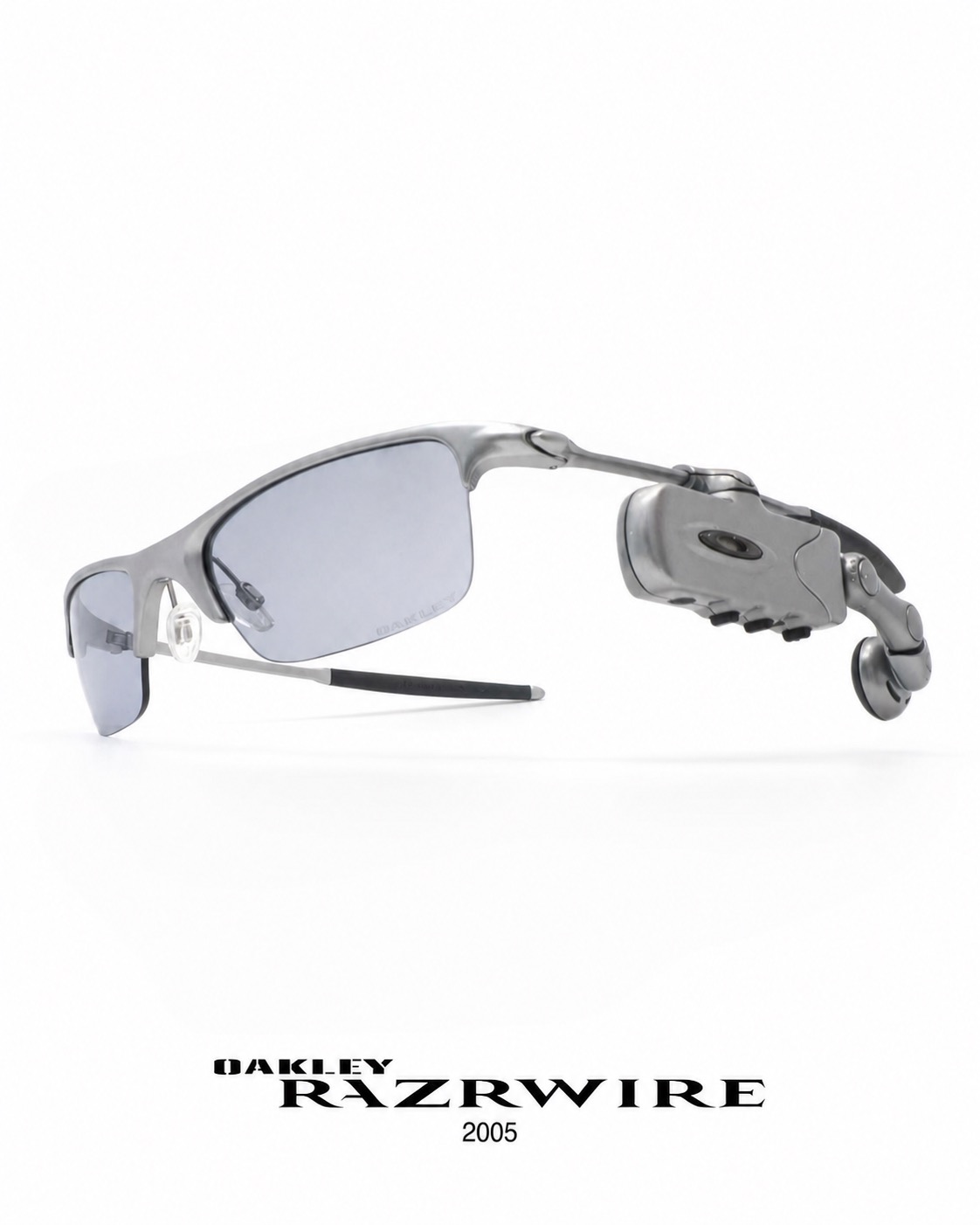
This is the part of smart glasses that still matters. The technology can improve, the cameras can shrink, the AI assistant can get smoother, but the body still has to negotiate with the object. Does it sit comfortably? Does it look intentional? Does it make you feel powerful, ridiculous, or both?
Fashion has always thrived on contradictions, but you want to know the biggest plot twist here? A lot of the current smart glasses conversation is still trying to solve the same contradiction RazrWire wore out loud.
Before Smart Glasses, There Were MP3 Glasses
RazrWire also belongs to a wider Oakley experiment with media and eyewear. A year earlier, Oakley announced THUMP, an MP3 player built into sunglasses, in what the company called a world-first music player incorporated into eyewear. That context is important because Oakley was not dabbling in wearable tech as a one-off gimmick. It was repeatedly testing whether eyewear could carry digital behaviour.
This is why oakley smart glasses should not be treated as a clean 2020s invention. The lineage is messier and more interesting. Oakley Thump, Oakley RazrWire, bluetooth sunglasses, MP3 sunglasses, performance eyewear, and now AI glasses all sit in the same family of questions.
What happens when glasses stop being a passive frame and become an interface?
What happens when sound, communication, and identity move onto the face?
Who gets to look futuristic without looking like they are auditioning for a bad remake of a movie nobody asked for?
Material and Form
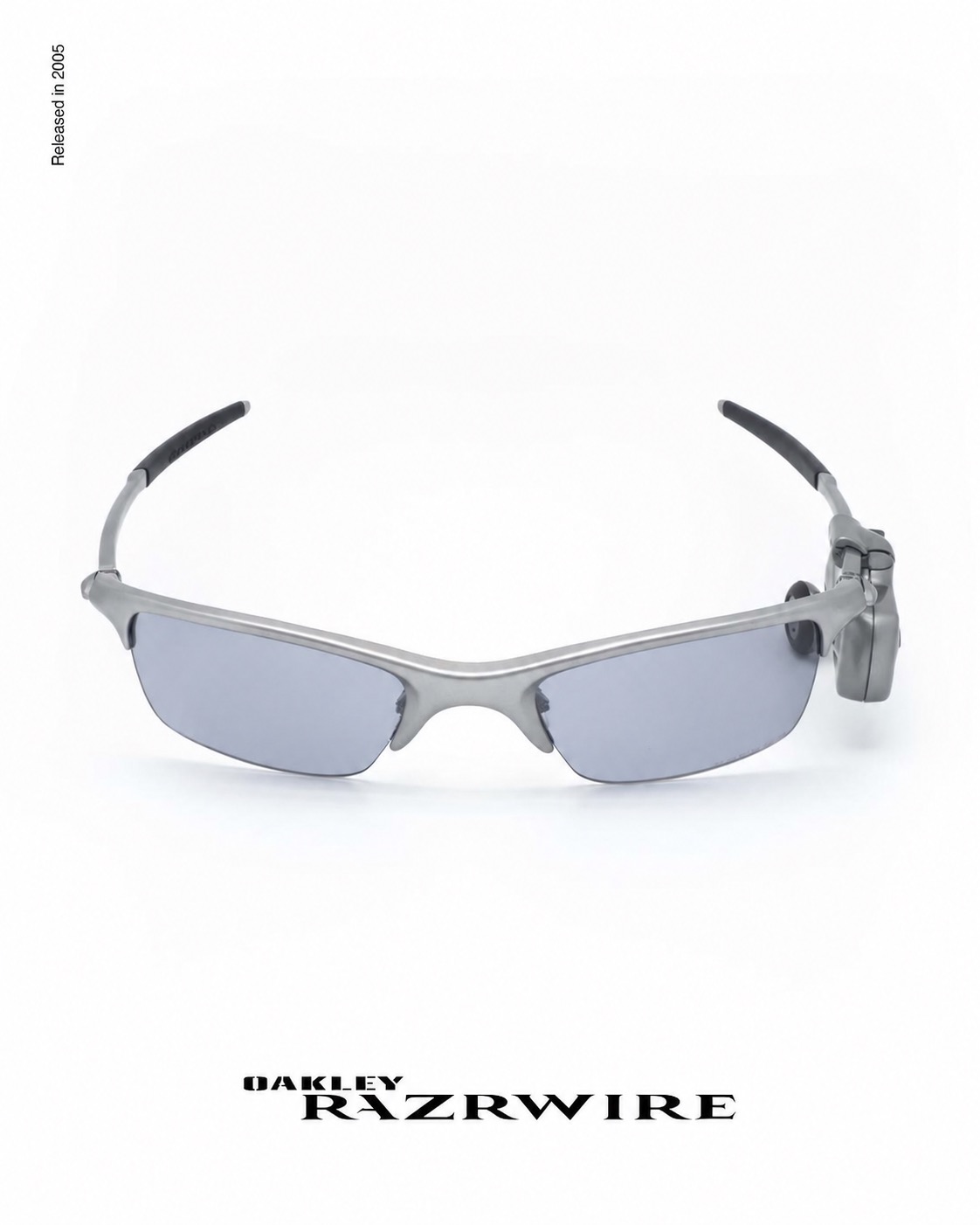
The material language is very millennium futurism: silver, grey, translucent lens tint, black rubber tips, exposed hinges, visible modules. It is not invisible tech. It is object tech.
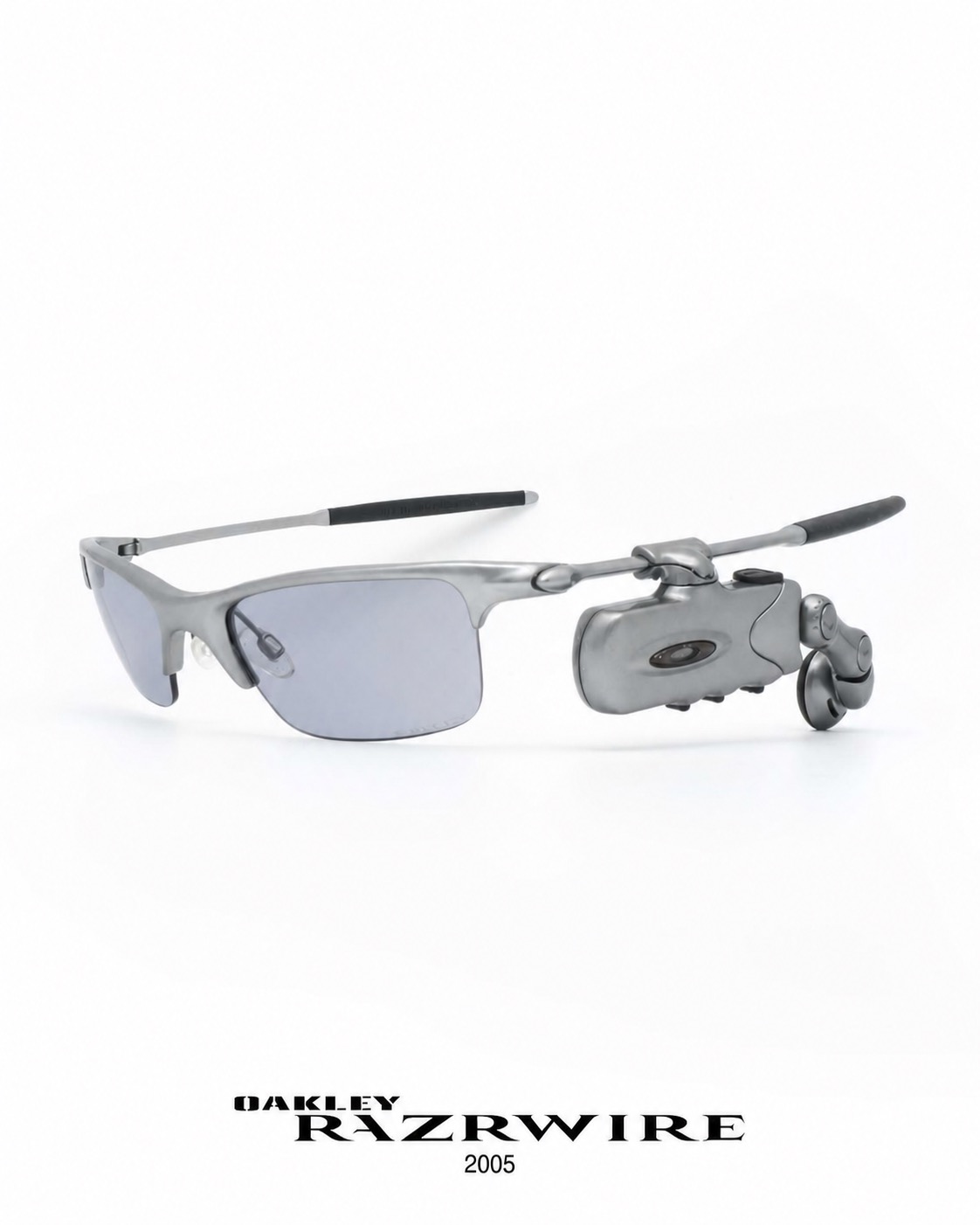
The key shape is the mechanical appendage. The frame itself is recognisably Oakley, but the Bluetooth module changes the emotional register. It makes the sunglasses look equipped. Not decorated, equipped.

The colour language is doing exactly what Y2K sunglasses tend to do well: cool-toned metal, icy lenses, and just enough black to make the silver feel sharper. It is not warm. It is not soft. It has that early-2000s faith in hardware, back when consumer technology still looked like it had opinions.
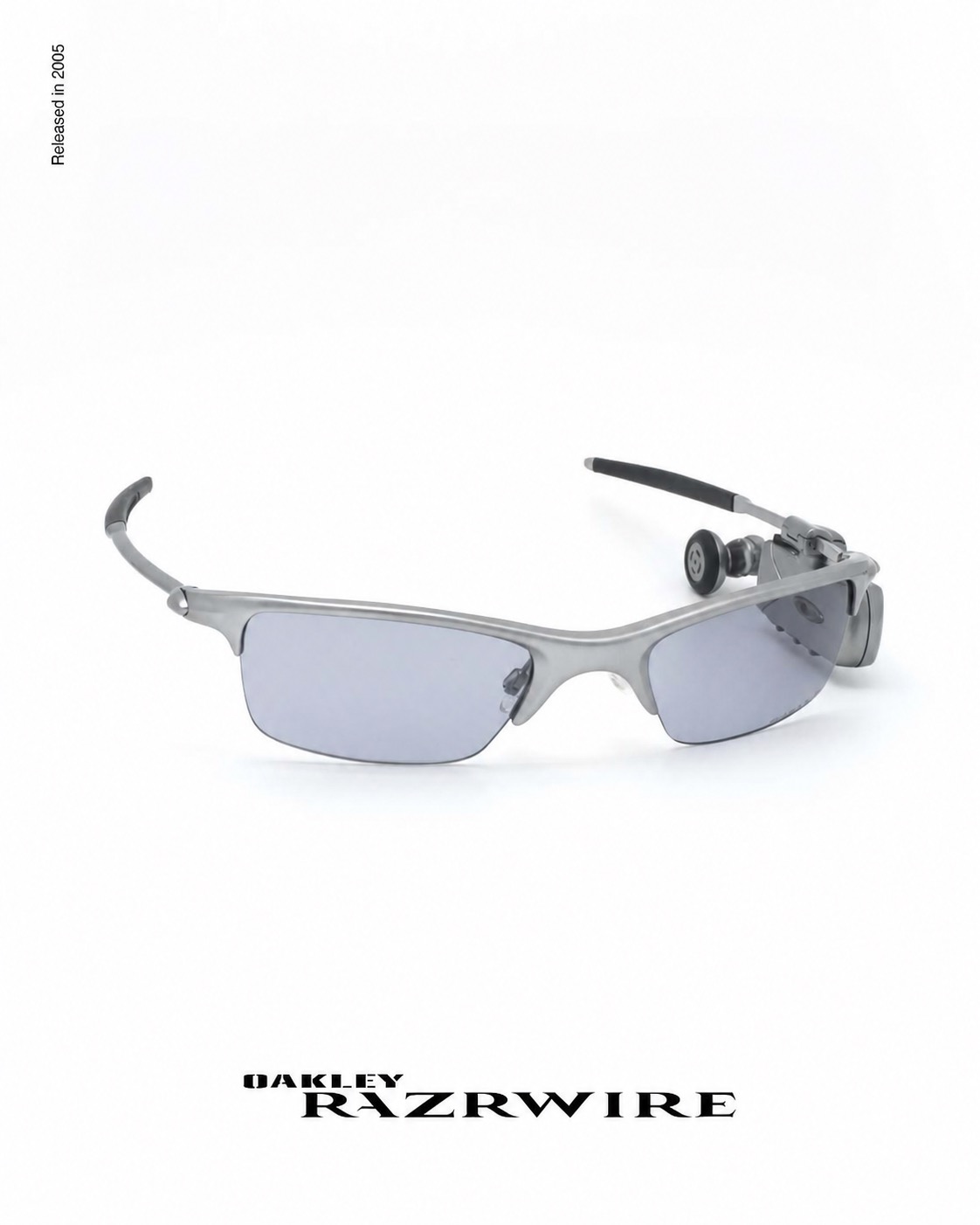
Body placement is the real story. These are not just worn on the face; they claim the ear, the temple, and the side profile. That is why they read differently from ordinary archive sunglasses. The tech changes the silhouette from frontal to 360-degree.
Why They Still Look Current
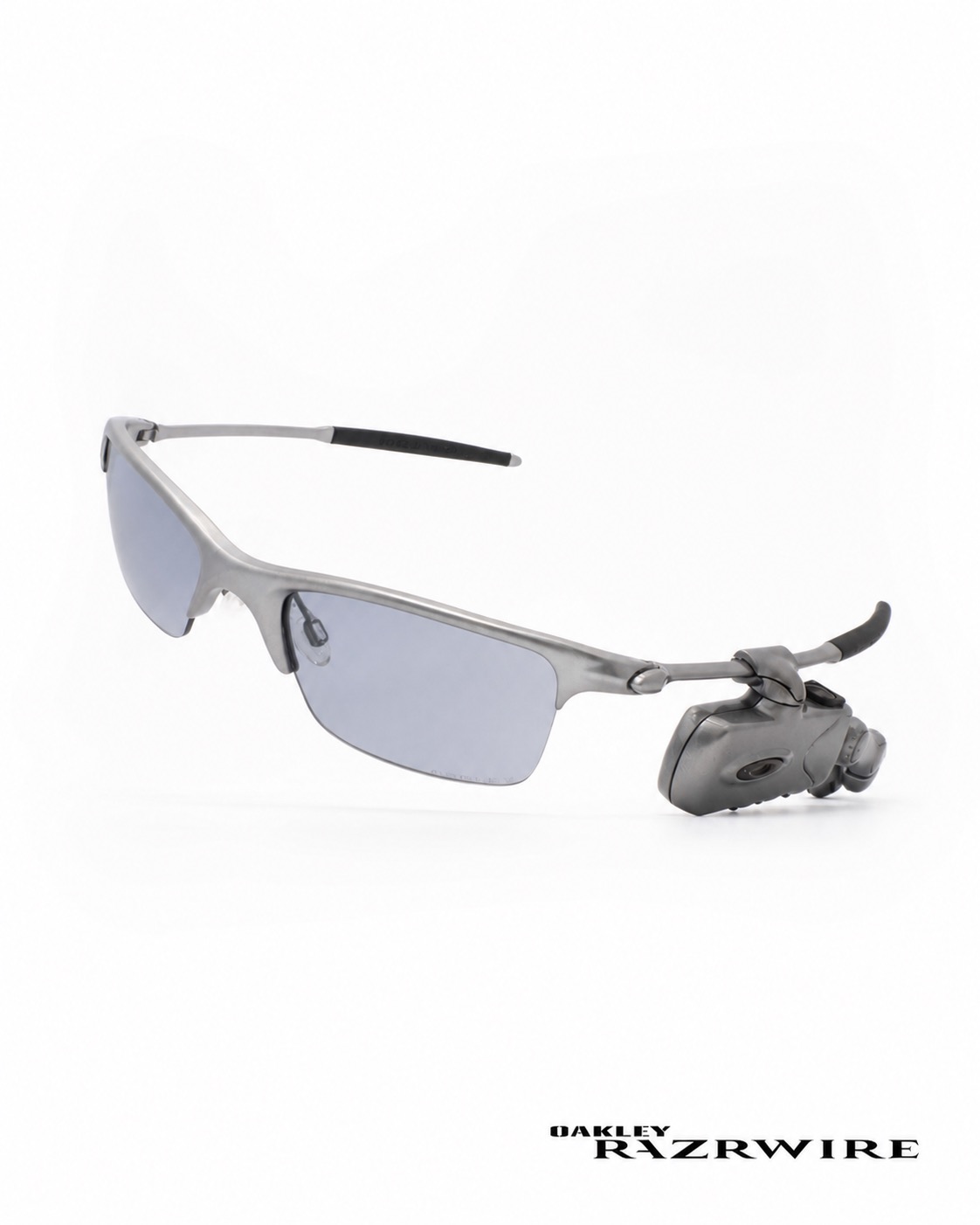
The RazrWire still looks current because fashion has caught up to its awkwardness. In 2005, the visible Bluetooth headset was corporate, sporty, or deeply try-hard depending on who wore it. Now, the same awkwardness reads as archive texture. The very thing that once made it look too technical is what makes it feel interesting again.
This is happening now because the line between device and accessory has become harder to police. We already dress around headphones, phone cases, smart watches, camera straps, and chargers. Wearable tech accessories are not separate from fashion anymore. They are part of the silhouette.
There is also the no-core angle. RazrWire is difficult to place neatly. It is not just techwear sunglasses. It is not simply archive sunglasses. It is not pure cyberpunk sunglasses either, although it can definitely live in that styling universe. It resists easy categorisation, and that resistance is why it feels expensive in a cultural sense, even when the object itself is rooted in very practical phone-era technology.
How I Would Style RazrWire Now
I would not style RazrWire with a full cyber outfit unless the goal is editorial drama. For real life, the glasses are already doing enough. Pair them with a black technical jacket, a close-fitting knit, washed grey denim, or a sharply cut white tank. Let the glasses be the unreasonable object.
For a more Y2K sunglasses read, keep the outfit low-rise, fitted, and a little glossy: bootcut trousers, a bomber, a narrow belt, maybe a metallic bag. For a more contemporary wearable tech glasses read, strip it back. Clean tailoring, matte black, no extra hardware. The less you compete with the module, the more deliberate it looks.

The styling mistake would be treating the glasses like a costume prop. The stronger move is to let them interrupt a normal outfit. That is where future alt fashion becomes wearable: one object does the conceptual work, while the rest of the look keeps you in the real world.
Are Oakley RazrWire Sunglasses Collectible?
They have the right ingredients: a specific launch year, a recognisable collaboration between Oakley and Motorola, an association with the RAZR-era phone universe, a visible tech function, and an unmistakable silhouette. That does not automatically make every pair valuable, but it does make the object culturally legible.
Collectors like objects that explain their era without needing too much translation. RazrWire does that. It is 2005 in hardware form: Bluetooth optimism, performance eyewear, silver futurism, and the belief that the next interface might sit right on your face.

The Real Lesson of RazrWire
The real lesson is not that RazrWire predicted today’s smart glasses perfectly. It did not. The technology landscape has changed too much for that kind of tidy hindsight.
The better lesson is that fashion and technology keep returning to the same negotiation. We want devices to be powerful, but we also want them to make sense on the body. We want convenience, but we do not want to look swallowed by hardware. We want the future, but ideally not in a way that makes us feel like a conference demo.
That is why Oakley RazrWire still matters. It shows the awkward, fascinating middle stage between gadget and fashion object. And if current Oakley smart glasses feel more acceptable now, it is partly because older objects like RazrWire already did the embarrassing, brilliant work of making wearable tech visible.
FAQ
What is Oakley RazrWire?
Oakley RazrWire is a 2005 eyewear and Bluetooth headset collaboration between Oakley and Motorola. It combined Oakley sunglasses with a removable Bluetooth communication module.
When did Oakley RazrWire come out?
Oakley RazrWire launched in 2005, during the same cultural moment that made the Motorola RAZR V3 one of the defining phones of the millennium tech era.
How did Oakley RazrWire work?
RazrWire used a Bluetooth module attached to the eyewear stem. The module included call and volume controls, an earbud, and a rotating speaker boom designed to work with a compatible mobile phone.
Are Oakley RazrWire sunglasses collectible?
They can be collectible because they connect Oakley archive sunglasses, Motorola RAZR-era design, and early wearable tech glasses in one object. Condition, completeness, and functioning hardware still matter.
What were early smart glasses trying to solve?
Early smart glasses and Bluetooth sunglasses were trying to bring communication, audio, and interface behaviour closer to the face. RazrWire is useful because it shows how awkward and visually strong that experiment looked before AI made the category feel mainstream again.