
How outfit details make basic looks feel intentional
A guide to outfit details: statement brooches, ruffles, polka dots, coloured bags, geek chic styling and small design choices that make simple outfits feel sharper.
The thing about outfit details is that they are never really just details. A brooch, a ruffle, a pair of narrow glasses, a strange tote, a slightly wrong shoe: these tiny decisions are where an outfit develops a point of view.
This is why I get impatient with the idea of “elevated basics.” Most of the time, the phrase is just a polite way of saying expensive plain clothes. A white top, a black skirt, a grey trouser, a little tank. Fine. Useful. Necessary, even. But if nothing in the look catches, interrupts or redirects the eye, it can start feeling like the outfit has been sanded down for maximum approval.
Good outfit details create friction. They make the basic piece look chosen instead of merely worn. They also make a simple outfit much harder to copy because the personality is sitting in the tiny decisions, not the headline item.
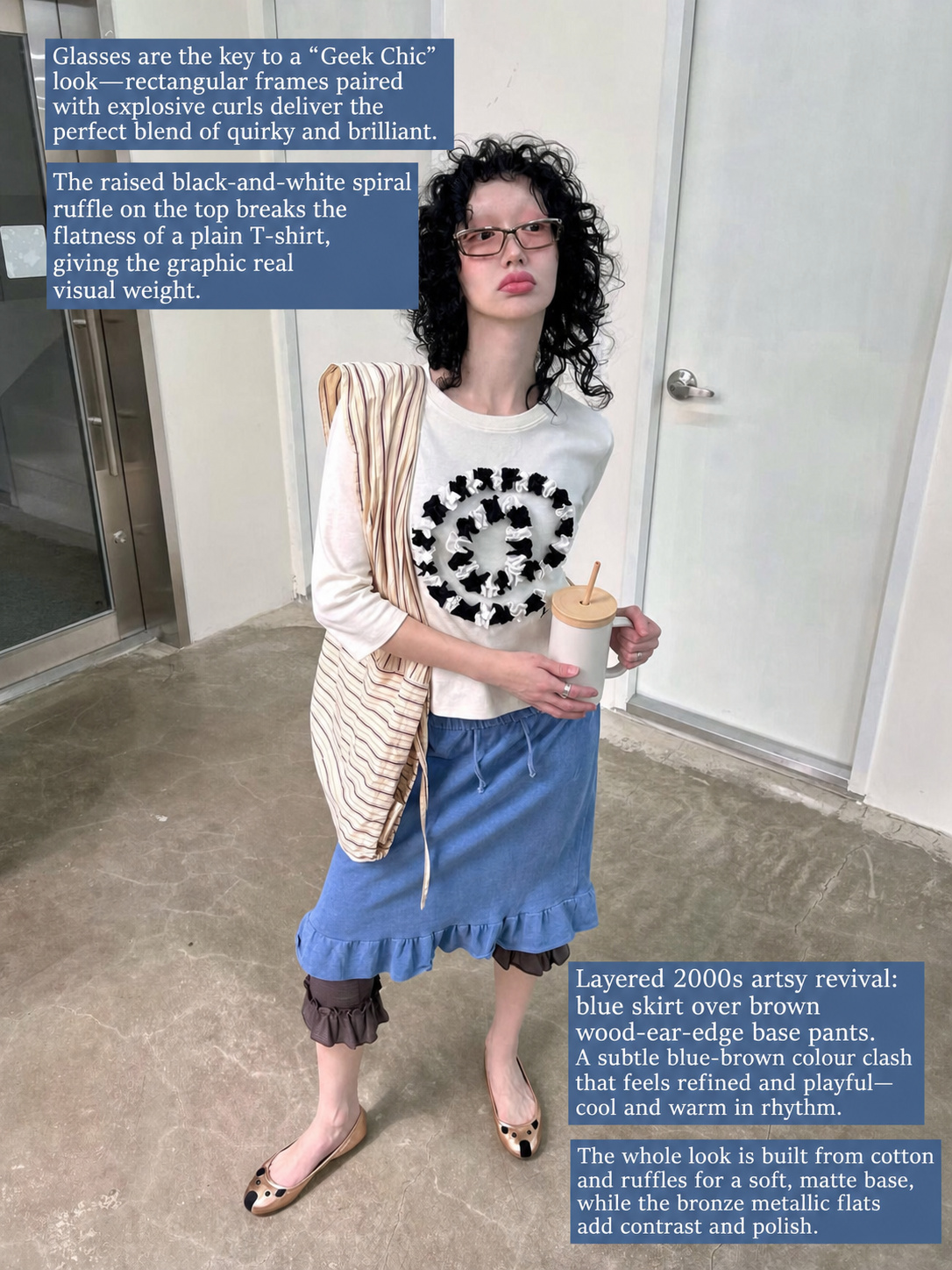
The best details make basics less obedient
The first look works because nothing is technically difficult, but every piece has a little behavioural problem. Red glasses. Blue skirt. Brown ruffle. A striped tote. Pointed shoes that feel too shiny and too grown for the rest of the outfit. This is geek chic outfit ideas territory, but not the costume version with a pleated skirt and a cardigan pretending to be personality.
The glasses are the key. They frame the face and immediately make the look more specific. The ruffled spiral on the top keeps the tee from going flat. The layered skirt breaks up the blue with a slightly fussy brown edge. On paper, the outfit should not be this coherent. In practice, the details create a rhythm.
This is how to make a basic outfit more interesting without buying a whole new wardrobe. Start with a plain shape, then add one detail that pulls the outfit into a clearer identity. The point is not to decorate everything. The point is to make the eye stop somewhere.
A brooch is not old-fashioned when the outfit has tension
I love a statement brooch outfit when it refuses to be polite. A brooch can look antique, ladylike, ceremonial or slightly absurd depending on where it lands. Put it on a clean black tank and a polka-dot skirt, and suddenly it feels less like vintage jewellery and more like a styling weapon.
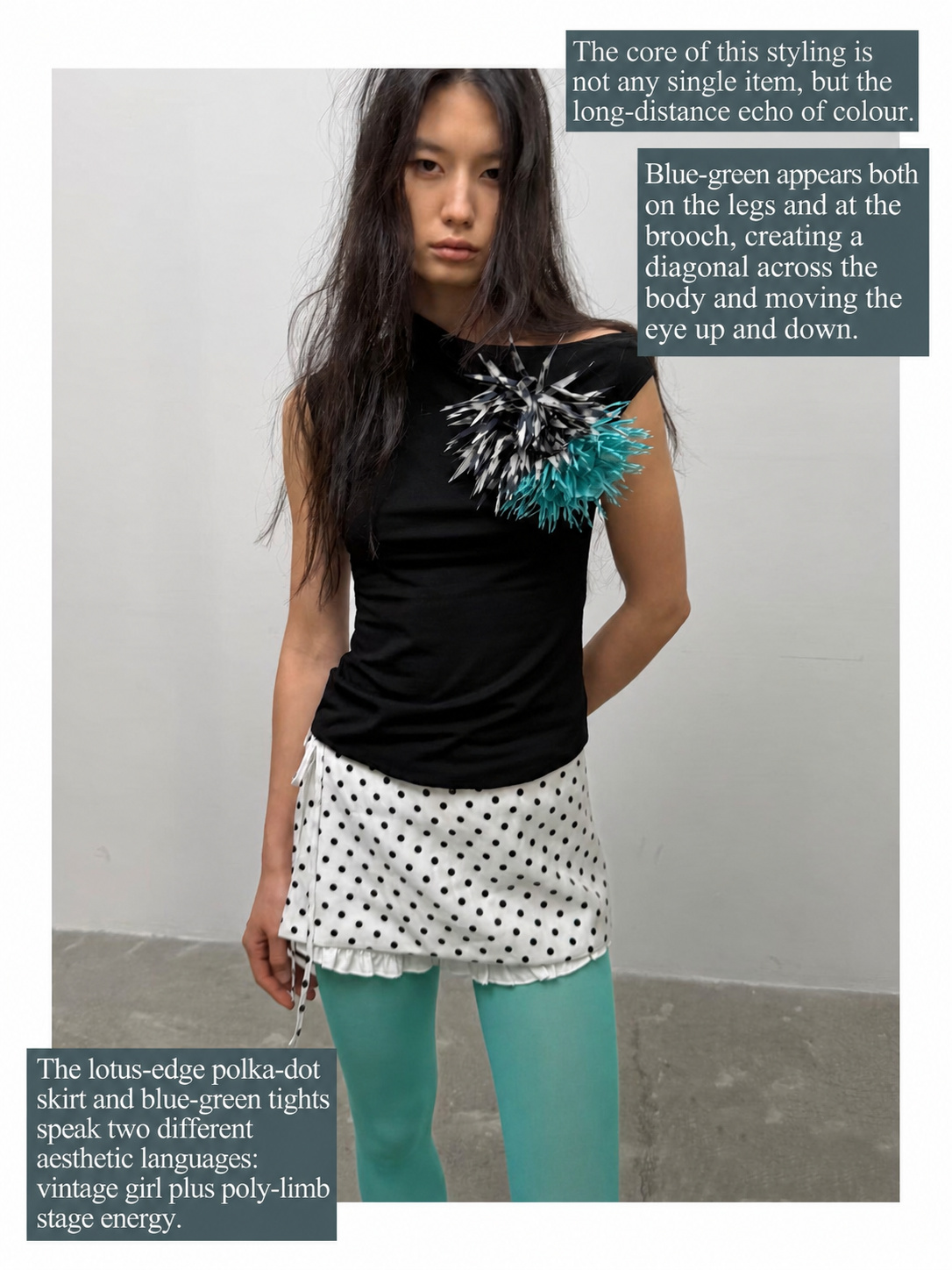
The blue-green brooch works because it connects the top half to the tights without becoming matchy-matchy. It makes the eye move vertically: brooch, skirt, legs. The polka-dot skirt and blue tights are already speaking in different fashion languages, but the brooch gives them a reason to be in the same room.
If you are wondering how to style statement accessories, this is the part people often miss. The accessory does not need to match every item. It needs to mediate between them. It should explain why two otherwise unrelated pieces can coexist.
Use one accessory to guide the silhouette
A brooch can also change the body’s architecture. In the black-and-grey look, the statement brooch pulls attention toward the hip and breaks up the flatness of the trousers. Without it, the outfit would be clean but slightly predictable: black top, grey trousers, black shoes. With it, the whole look gets a deliberate off-centre pulse.
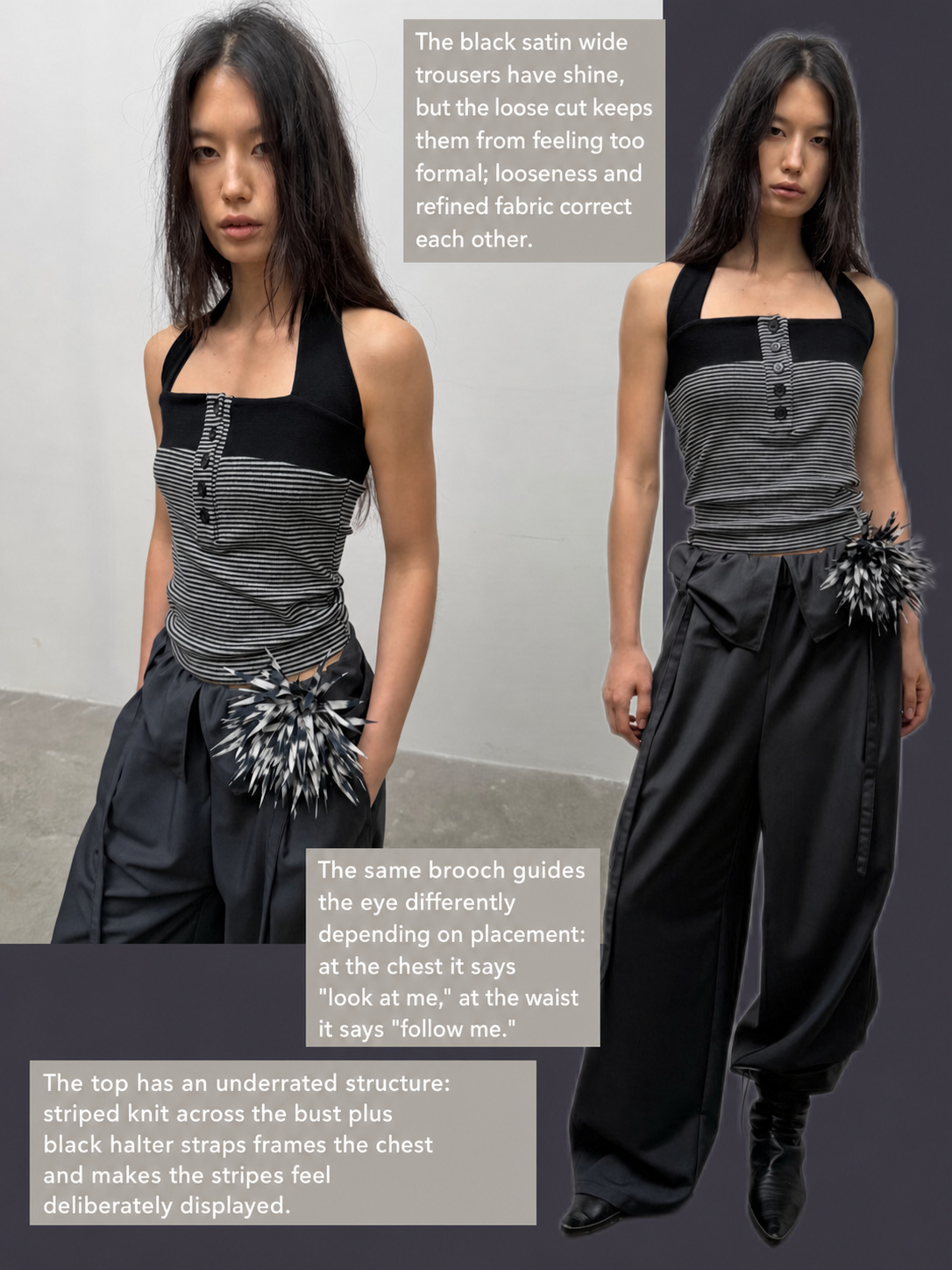
This is what outfit ideas with accessories should actually be teaching. Accessories are not just final touches. They are tools for moving visual weight. A necklace pulls the eye up. A brooch can pull it sideways. A belt cuts the body horizontally. A bright bag changes the colour hierarchy. A shoe can make a sweet outfit feel awkward, strict or street.
The top also matters here. The halter shape and stripped knit texture expose the shoulders, which stops the look from becoming too heavy. The brooch then sits against that minimal base like punctuation.
White dresses need a little wrongness
A white dress can easily become too clean. Pretty, yes. Also, a little blank. The white layered dress works because the outfit keeps interrupting its own innocence: grey tassel boots, diagonal blue sash, embroidery, ruffle edges, a slightly ceremonial shape.
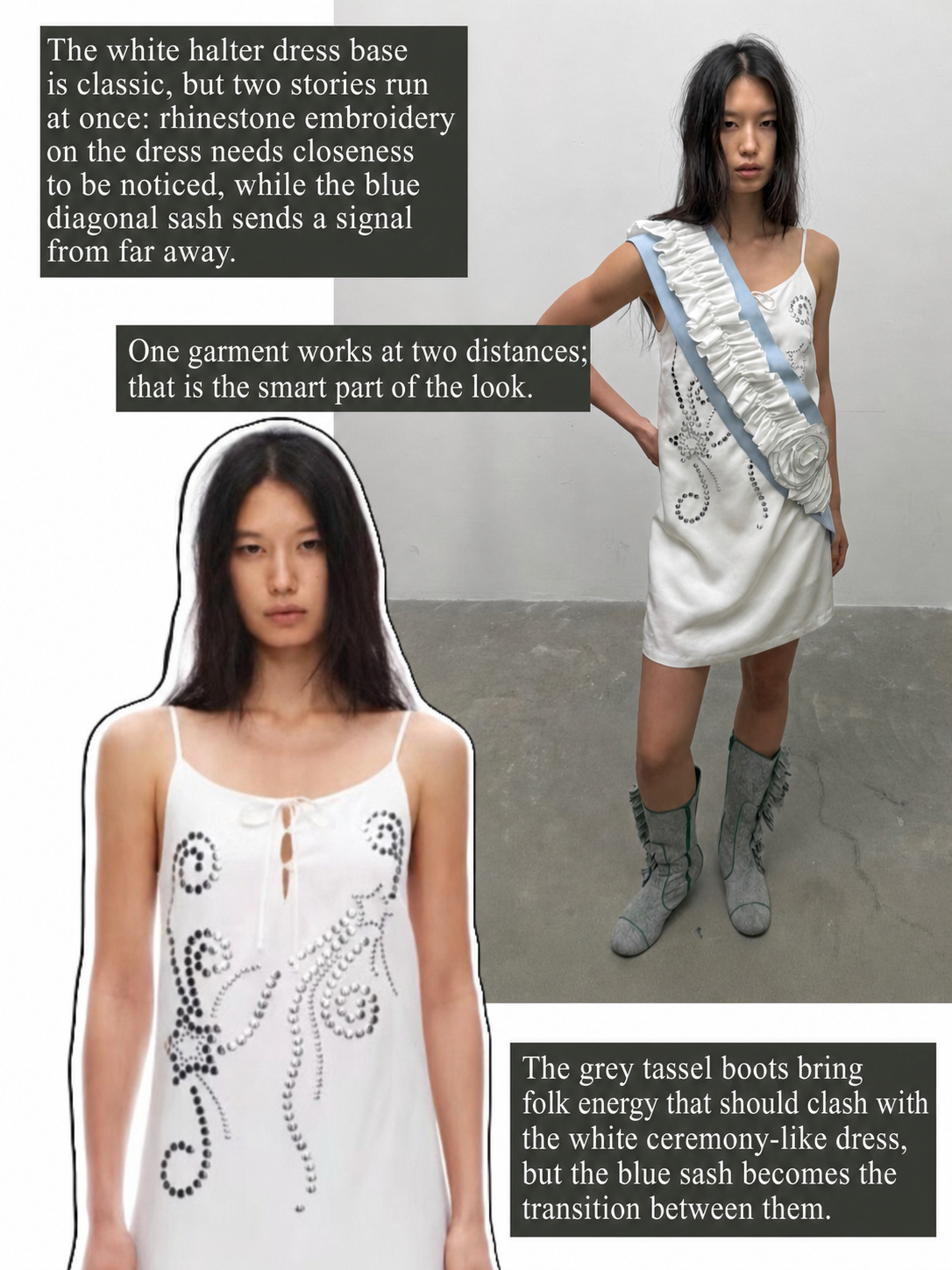
This is how to style small design details in outfits when the base is romantic. You need one piece that challenges the mood. The boots add folk energy. The sash cuts across the body and makes the dress less precious. The embroidery gives the white surface texture instead of letting it become bridal or overly sweet.
One garment can work at two distances: the silhouette from far away, the detail from up close. That is a useful way to judge whether a piece is worth building around. If it only looks good in a product photo, it might not survive real life. If it has a readable shape and a close-up detail, it has more staying power.
Colour needs a calm base to look intentional
The green tote bag is doing the most, which is exactly why the clothes around it stay quiet. Grey, white and simple shapes allow the bag to become the character.
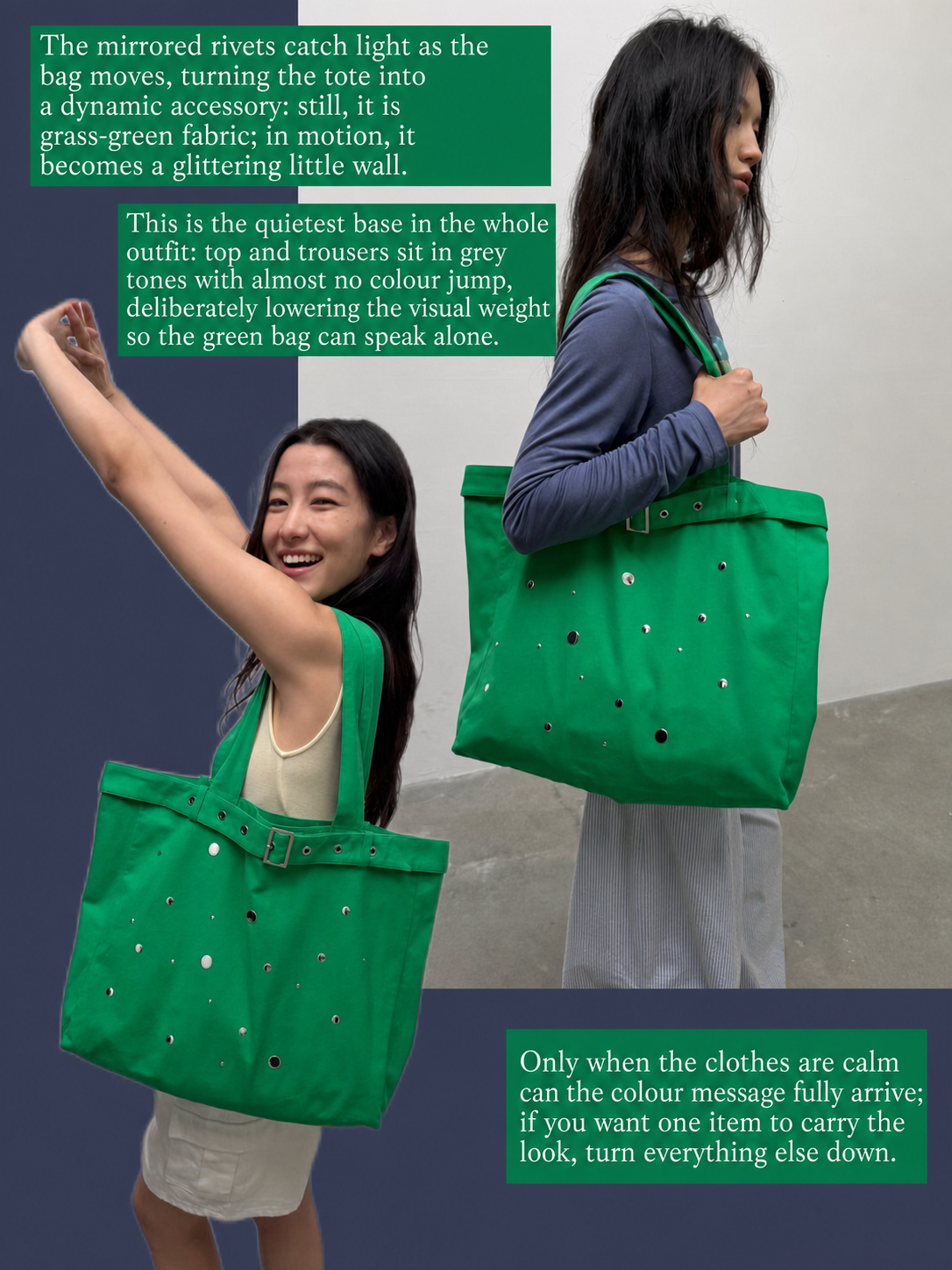
A green tote bag outfit can go twee very quickly if everything else starts competing for charm. Here, the rivets catch light like tiny badges. The colour is loud, but the styling is not. That is the balance. The bag gets to be playful because the clothes give it enough air.
I would use this rule for almost any bright accessory: if the bag is the point, let the outfit create a clean sentence around it. Not boring. Clean. There is a difference. A plain tank, calm skirt, simple shoes and one strange bag can look far more styled than five quirky pieces fighting for attention.
A graphic tee can become a detail, not the whole outfit
Graphic tees are often treated like the outfit’s personality, which is why so many graphic tee outfits feel lazy. The brown top here is useful because the football-style side panels and star lettering are controlled. They bring reference, but they do not hijack the look.
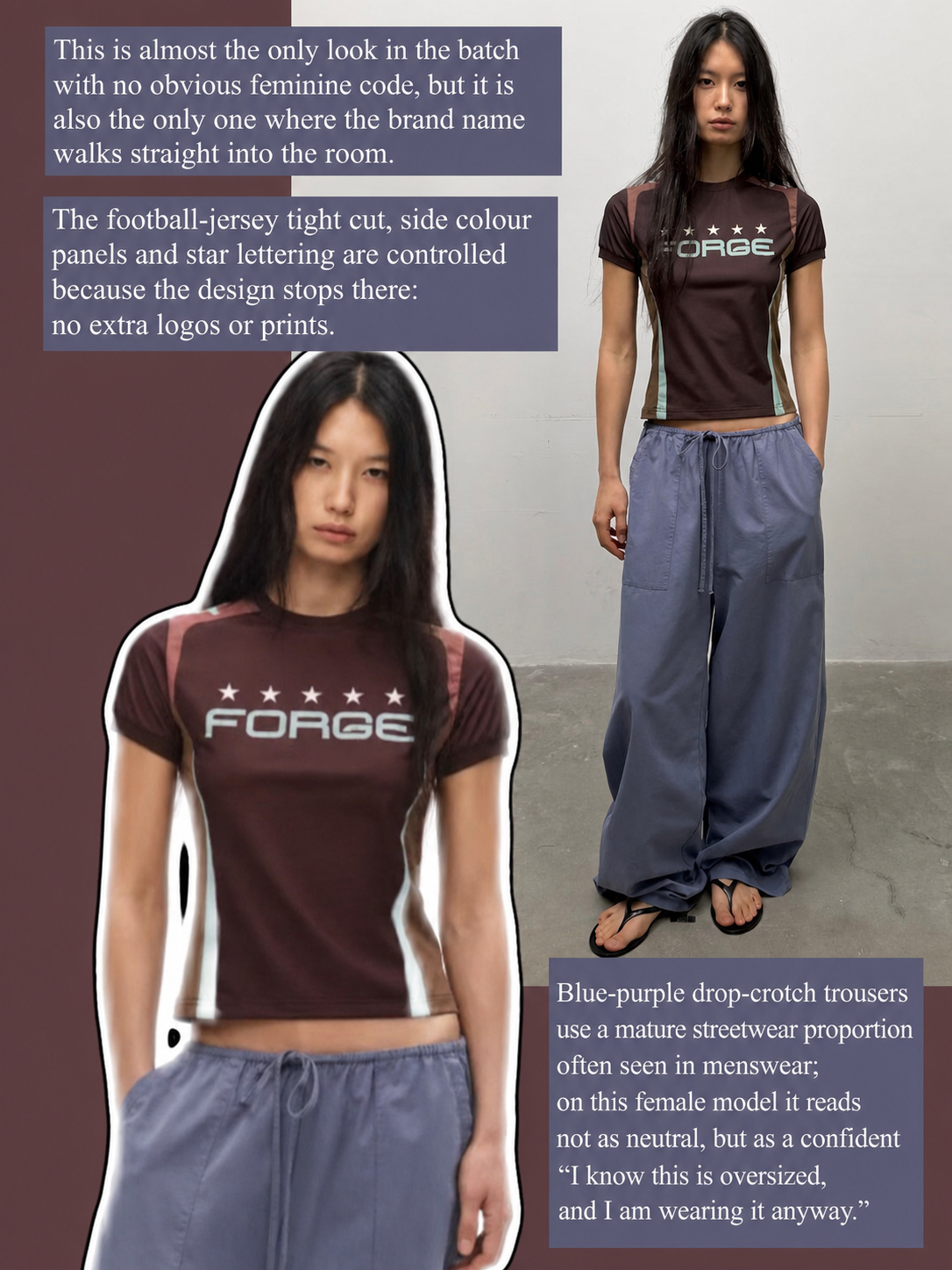
The blue-purple trousers are what make the look sharper. They pull the tee away from nostalgia and into something more deliberate. The colour clash is not dramatic, but it is enough to stop the outfit from reading as random.
This is the no-core part of it for me. The look is not trying to become one searchable aesthetic. It borrows from sport, teenage graphics, loose street trousers and a slightly feminine model pose. It is not cleanly taggable, which makes it better.
Small reference clashes make a look smarter
The white tee and black shorts outfit could have been nothing. Then the gold-button necklace, sheer socks and flats turn it into a small reference system: military, academy, street, a tiny wink at dress-up.
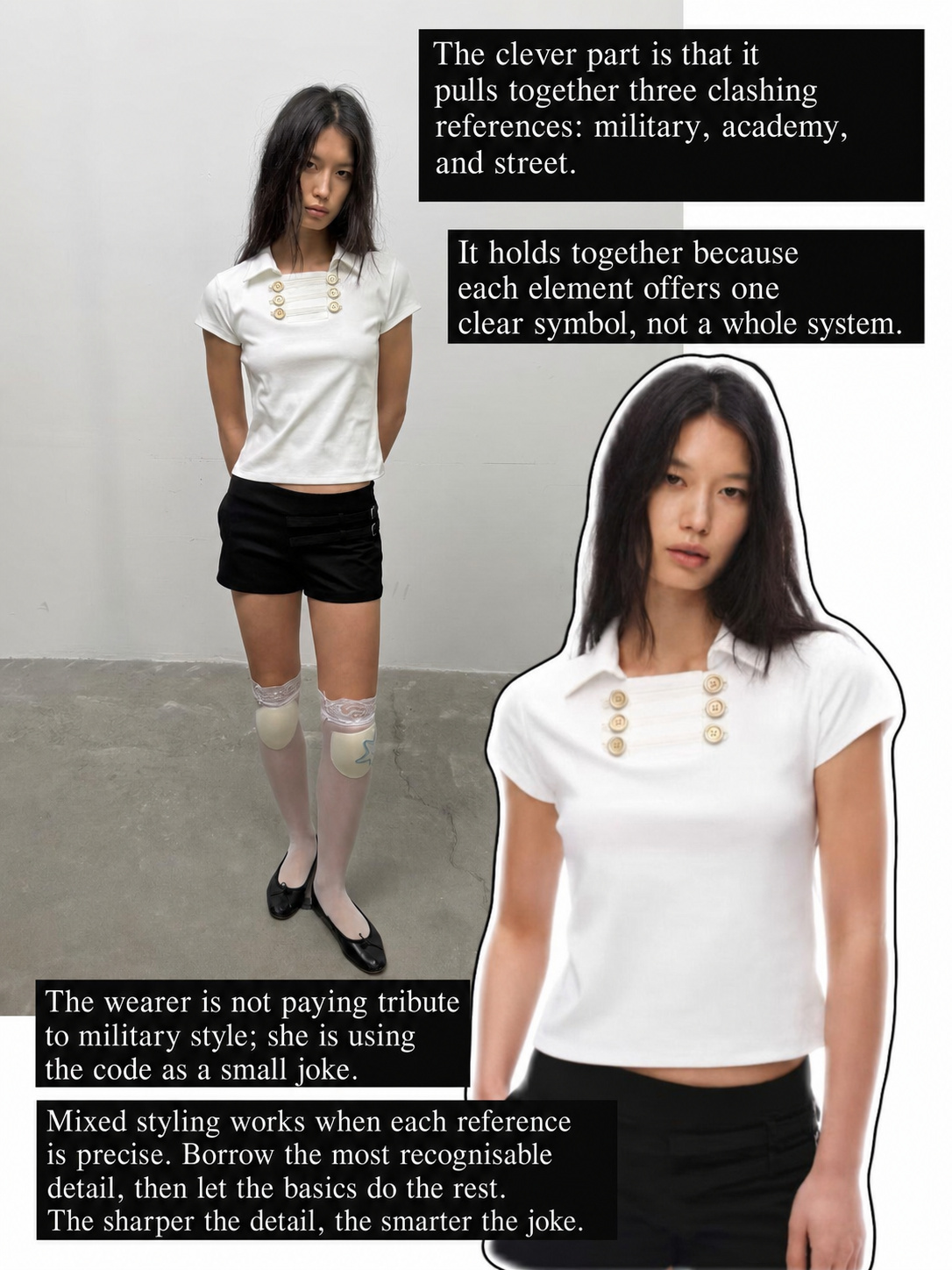
This is where what accessories make an outfit look intentional becomes a real question. Intentionality does not always mean polish. Sometimes it means the elements recognise each other. The gold buttons echo order. The socks and flats soften it. The shorts keep it casual. The wearer is not paying tribute to military styling; she is using the code as a small joke.
I think that is the smartest way to use references now. Do not wear the whole costume. Take one recognisable symbol and let it rub against something else.
Soft details can still have a subcultural edge
The final look sits in a very fresh mint-green world, but it avoids becoming syrupy because the styling has sharper undercurrents. Platinum hair, pale skin, green polka dots, ruffled texture, a soft oversized surface. It is sweet, but not naive.
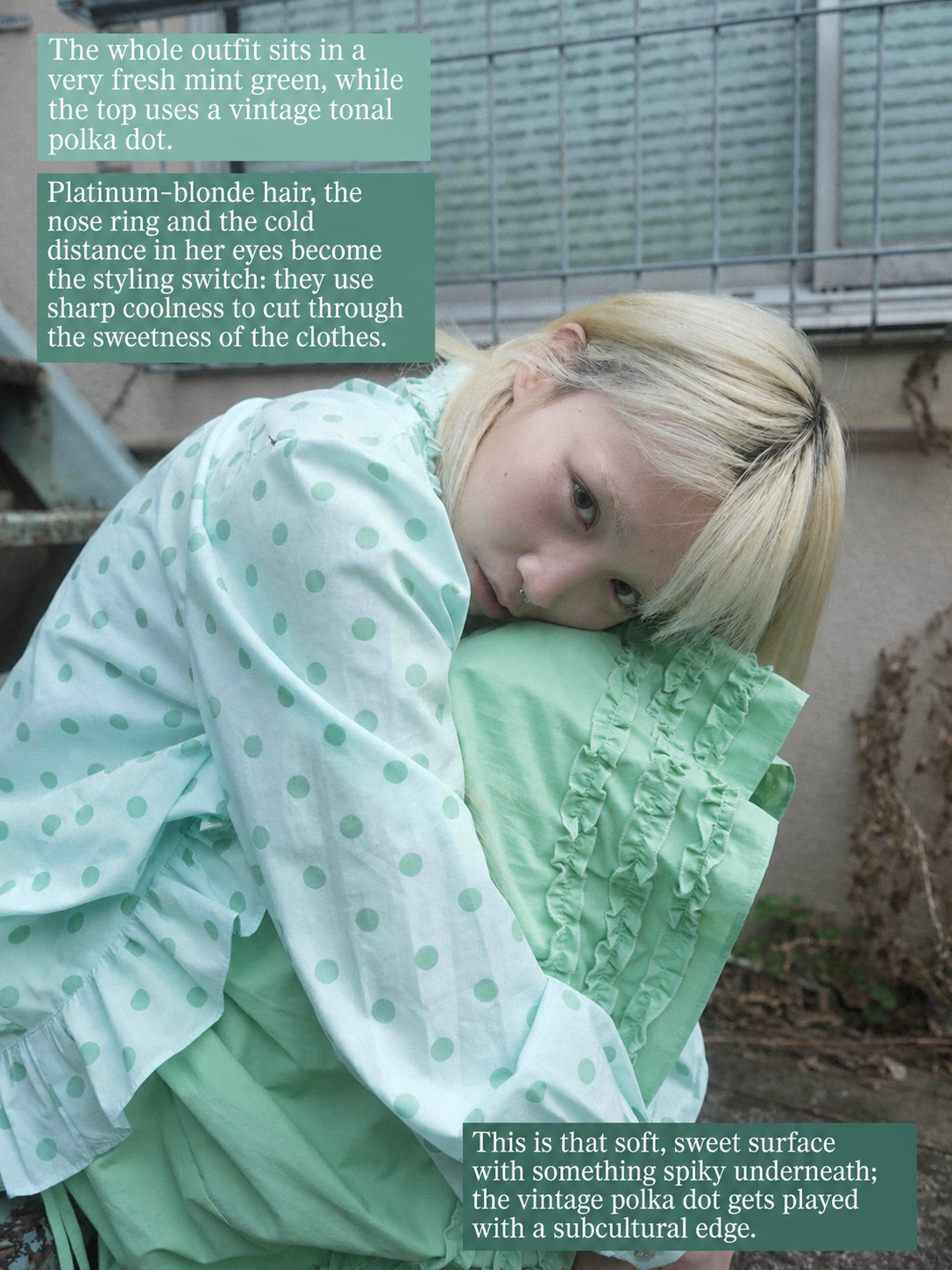
Polka dot outfit ideas can become retro too quickly when styled in the obvious way. Here, the dot is less pin-up and more strange softness. The layered green tones create a tonal bubble, but the hair and gaze cut through it.
This is the detail lesson I keep coming back to: softness needs an edge, and edge needs texture. The most interesting outfits understand both.
Styling rules I would actually use
If the base outfit is simple, choose one detail that changes the reading of the whole look: glasses, brooch, sash, ruffle, bag, sock, shoe or necklace.
If an accessory is loud, make the clothes calmer.
If the clothes are romantic, add one awkward or severe detail.
If the outfit feels too referential, remove one themed item and keep the smallest signal.
If the outfit feels boring, do not immediately add colour. Add placement: a brooch at the hip, a scarf across the body, socks under flats, a bag in a colour that refuses to blend in.
FAQ
What are outfit details?
Outfit details are the smaller styling choices that change how a look reads: jewellery, brooches, glasses, bags, socks, shoes, ruffles, stitching, textures, buttons, seams and placement. They make simple outfits feel intentional.
How do I make a basic outfit more interesting?
Add one specific detail that creates contrast. Try red glasses, a statement brooch, coloured tights, a textured bag, ruffle layers, visible socks or a shoe that feels slightly unexpected.
How do I style statement accessories without overdoing it?
Let the accessory do one clear job. It can connect colours, shift the silhouette, add humour or interrupt a romantic outfit. Keep the rest of the look calm enough that the accessory reads as a choice, not clutter.
What makes geek chic outfit ideas look modern?
Modern geek chic works best when it avoids costume styling. Use narrow glasses, odd colour combinations, layered basics, awkward shoes, ruffles or brooches, but keep the outfit grounded in wearable pieces.