
Are AI Smart Glasses Becoming Fashion Accessories?
INMO MAGIC AI Glasses J uses Jackson Wang's fashion-first design to ask whether AI glasses can become part of personal style, not just wearable hardware.
TL;DR
- INMO presents MAGIC AI Glasses J as fashion-first AI smart glasses designed with Jackson Wang and INMO X WHL.
- The product’s camera, visual AI, translation, and open-ear audio matter here because they are placed inside an object meant to be read as part of a look.
- Fashion can make AI glasses easier to imagine as a personal choice, but it cannot by itself prove comfort, adoption, or social acceptance.
- The real test is whether people will want this technology on their face in public, not whether the launch can make it look futuristic.
Are AI smart glasses becoming fashion accessories, or are we just calling them fashion now because the technology finally has a celebrity attached to it? The launch is also in the September 20–23 briefing, and the wider category already sits among futuristic tech accessories.
I ask because INMO’s MAGIC AI Glasses J are being presented as something more interesting than a pair of glasses with a lot of technology hidden inside them. They are fashion-first AI smart glasses, designed by Jackson Wang and INMO X WHL, and the pitch seems to be that you should be able to imagine them as part of a look before you start thinking about what the camera, the AI, or the open-ear audio actually do. Which is funny when you think about how much of the smart glasses conversation has been about features, privacy, and whether anyone wants a camera on their face. The product is asking us to look at the frame first. I am not sure that is a small change.
Why Are Glasses a Natural Fashion-Tech Object?
Glasses are already one of the easiest pieces of technology to turn into fashion. They sit on your face, which is basically the most socially visible part of your body after whatever you are wearing, and they have always carried a message about the person choosing them. Serious, academic, mysterious, expensive, sporty, slightly intimidating, allergic to eye contact. You can do a lot with a pair of glasses before they have even helped you see better. So when an AI glasses brand says fashion-first, it is not just saying the frame comes in more than one colour. It is saying the object wants to enter the identity system fashion has built around us.
What Does MAGIC AI Glasses J Add to the AI Glasses Conversation?
And this is where MAGIC AI Glasses J gets more interesting than a normal product announcement, at least to me. INMO says the glasses have an 8MP first-person camera, visual AI, real-time translation, and open-ear audio in its official product page. It is saying these things belong inside an object that can be worn out in the world without constantly announcing itself as a gadget. Look, speak, listen, capture. Keep your phone in your pocket. Move through the day with the glasses on. That is the language on the launch page, and it is very carefully not the language of a spec sheet.
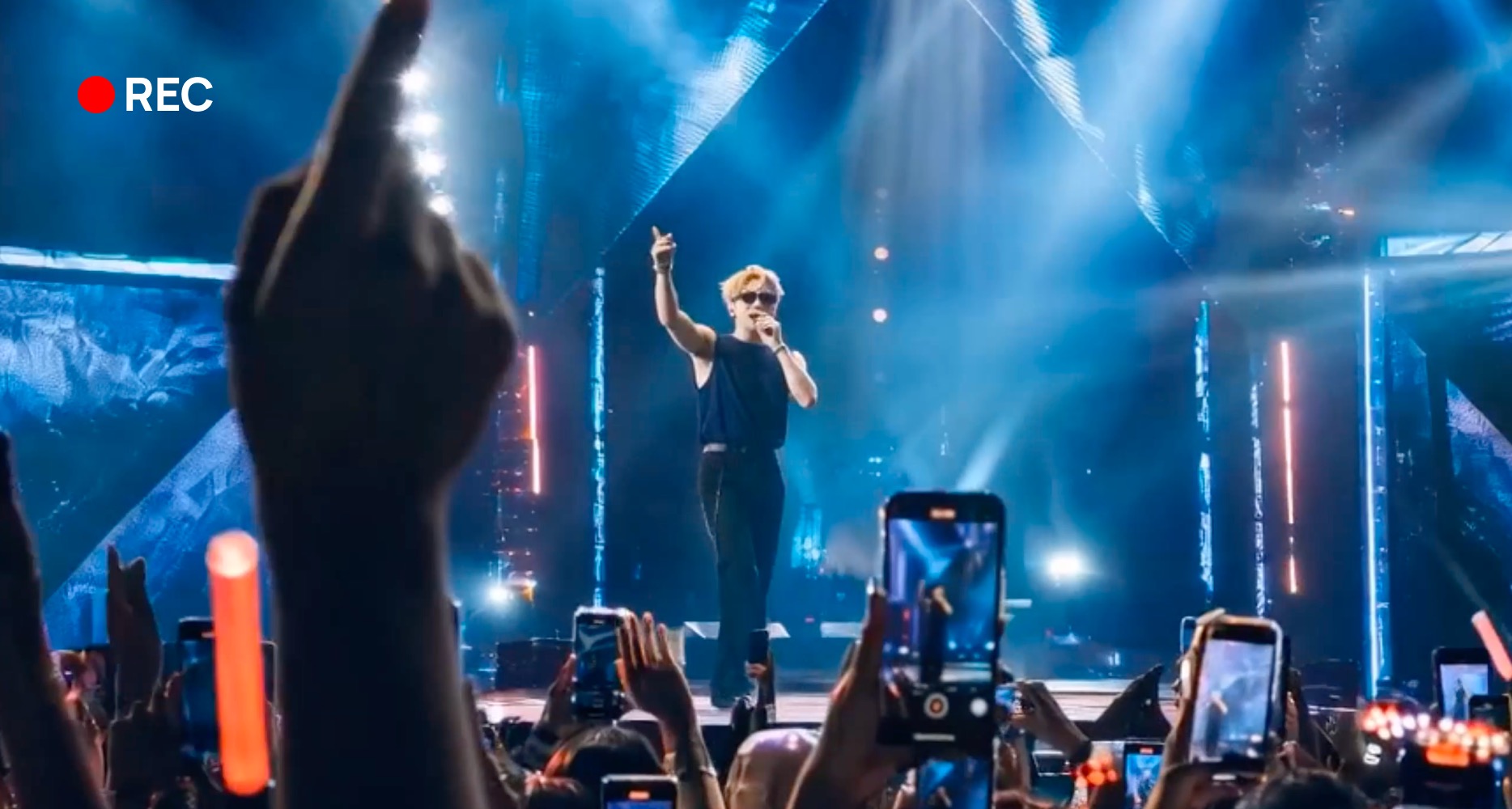
It is not quite the language of fashion either. It is the language of fashion tech, which is this increasingly strange area where a product has to convince you that it is useful, aesthetically legible, and somehow connected to your personality before you have even decided whether it works. Fashion is being asked to make the technology feel like a choice. Not a thing that happened to you because every object around you has become connected, but a thing you picked because it looks right with the rest of your life.
Why Does Jackson Wang’s Design Credit Matter?
The Jackson Wang part is obviously important. I do not mean that a celebrity name automatically makes a product fashionable. It does not. We have all seen collaborations where the famous person is basically a decorative sticker placed over a product that was already finished. But design credit changes the story slightly. It gives the glasses a person with an existing visual identity, taste, and audience to orbit around. The product is not only being introduced as AI glasses. It is being introduced through the question of what Jackson Wang would design, or at least what the brand wants us to imagine he would design.

The phrase “Jackson Wang AI glasses” sounds like a search shortcut, but it also describes the launch’s actual logic. Before you know what the object does, you are given a person, a mood, and a visual context for wanting it. This is why I keep thinking about the phrase smart glasses fashion, even though it sounds like the sort of search term someone would type when they are trying to work out whether this is a real category yet. Are these glasses, wearable computers, camera accessories, headphones, or styling objects with a list of useful functions attached? The answer is probably all of them, which is also the problem.
How Does the Frame Change the Way People Read AI Glasses?
When a product is trying to be several things at once, the most visible thing usually wins. With MAGIC AI Glasses J, the visible thing is still the frame. There is no giant watch face turning your wrist into a notification centre. The product is taking a less visually aggressive route. It is putting the camera, the AI assistance, the translation, and the audio into something that can sit beside the face without replacing it.
Which sounds lovely until you remember that less visible does not mean less socially complicated. A camera that is part of a pair of glasses may be easier to wear than a camera that looks like a camera, but the people around you still have to decide what they think is happening. A voice-controlled object may feel more natural to the person wearing it, but it still changes the social meaning of speaking to yourself in public. And open-ear audio may let you hear calls, music, and AI responses while surrounding sounds remain audible. Fine. But what does that actually feel like when you are talking to someone who knows you are also listening to something else? What does it mean to be in the room and slightly outside it at the same time?
What Does Fashion Add Beyond the Feature List?
This is where I think fashion’s role becomes more serious than just making the object look nice. Fashion can make a new technology easier to place in your imagination. It can give you a scenario for it. A night out. A trip. A conversation in another language. An unexpected thing you want to capture without stopping the moment to take out your phone. The launch keeps returning to these little movements through the day, and I understand why. It is much easier to picture a device when it has been attached to an outfit, a journey, or a social situation than when it has been described as a list of functions.
But the scenario is doing more work than the feature list. The 8MP first-person camera becomes a way of keeping hold of your point of view. Visual AI becomes a reason to ask about whatever is in front of you without opening a separate search session. Real-time translation becomes a promise that you can stay closer to a conversation instead of looking down at another screen. Open-ear audio becomes a way of keeping the world audible while the product is still doing something for you.
Those are all carefully chosen explanations, obviously. They take a technical function and attach it to a social desire: stay in the moment, stay connected, keep your hands free, do not look like you are disappearing into your device. That is where AI glasses fashion starts to make sense as a cultural project. The product is not asking fashion to hide the technology completely. It is asking fashion to give the technology a less embarrassing way to be visible.
What Does the Fashion-First Framing Leave Unresolved?
And this is also why I do not think the fashion framing is just superficial packaging, even though there is absolutely some packaging going on. INMO MAGIC AI Glasses J is trying to persuade you that a camera, AI assistance, translation, and audio can coexist with a face, a hairstyle, an outfit, and the annoying reality of being seen by other people. The fashion question is not whether the glasses are fashionable in exactly the same way as a shoe or a bag. It is whether they can be read as part of someone’s visual language instead of as evidence that they have strapped a computer to their head.
The design credit gives the product a route into a conversation that is usually controlled by product reviewers and technology companies. The object can be discussed through silhouette, styling, and cultural placement. It can be photographed in a way that makes the glasses feel like an accessory before anyone has asked how the translation works. That does not solve the practical questions. It changes which questions arrive first.
It also changes what we mean when we say AI glasses. The old mental image is still some version of a futuristic gadget: technical, slightly awkward, and designed around the promise that the future has arrived before anyone has decided whether they wanted it. The fashion-first version is less interested in looking futuristic. It wants to make the future look familiar enough to wear. Instead of asking you to become the kind of person who wears a computer, it asks whether your existing style can absorb a computer without having to change its whole personality.
Maybe that is why the glasses have to be designed as fashion smart glasses instead of simply being good smart glasses. The word fashion is doing emotional work. It makes the product feel more personal, more considered, and less like a piece of infrastructure that has somehow become wearable. It also gives the company a way to talk about the camera and AI without starting with the most intimidating version of the conversation. You are not being asked to think about a machine. You are being asked to think about what you might wear when you are travelling, meeting people, moving through a city, or trying to hold onto a moment.
But, okay, a product can be designed for personal style and still fail to become part of anyone’s personal style. It can be genuinely intriguing and still be too expensive, too noticeable, too complicated, or too socially strange for everyday life. MAGIC AI Glasses J is listed at $299 on INMO’s official product page, which puts it in that uncomfortable space where the purchase is not casual but the product still has to justify itself as more than a novelty. The launch gives us a clear picture of what the glasses are supposed to make possible. It does not tell us whether anyone will reach for them every morning, and it cannot.
Can AI Smart Glasses Become Part of Personal Style?
That is the part I keep coming back to. If these glasses work as a fashion-tech object, it will not only be because the camera takes good first-person images or because the translation works in the way the product description promises. It will be because people decide the technology belongs on their face, in public, with the rest of the outfit. That is not just a hardware decision. It is a social and aesthetic one.
So, are AI smart glasses becoming fashion accessories? MAGIC AI Glasses J is clearly trying to make that happen. It puts the frame, the styling, and the celebrity design story right next to the camera, AI, translation, and audio. Maybe that is enough to make the object feel like something you can choose rather than something you are expected to accept.
Or maybe this is just what we do every time a piece of technology wants into a new part of culture. We give it a better outfit, find a person with enough taste to introduce it, and see whether the rest of us stop noticing how strange it is. I genuinely want to know whether these glasses will end up changing what people wear, or whether they will simply become another very good-looking way to talk about the future.
Frequently Asked Questions
What Are INMO MAGIC AI Glasses J?
They are presented by INMO as fashion-first AI smart glasses designed with Jackson Wang and INMO X WHL. The official launch materials describe first-person capture, visual AI, real-time translation, and open-ear audio.
Why Does This Article Call Them Fashion Accessories?
Because the launch frames the glasses through silhouette, styling, and design credit as well as through their technical functions. Here, fashion describes the product’s positioning and cultural question, not a verdict that the glasses will become a lasting everyday accessory.
Does This Article Prove That People Will Wear Them Every Day?
No. It analyzes how the product is presented as a fashion-tech object and does not independently test comfort, adoption, sales, or changes in daily habits.