
Aesthetic styles explained through Citypop, Vaporwave, Y2K and core aesthetics
A sharp guide to aesthetic styles through Citypop, Vaporwave, Y2K and core aesthetics, with visual language, mood, cultural tension and styling logic.
Aesthetic styles are not just pretty moodboards with better lighting. At their best, they are visual systems: colour, texture, nostalgia, fantasy, technology, memory, music, architecture, clothing and internet behaviour all mashed together until they start to feel like a world.
At their worst, they become folders. Citypop becomes “retro Japanese neon.” Vaporwave becomes “pink statue and grid.” Y2K becomes “chrome butterfly and tiny sunglasses.” Core aesthetic becomes any noun with “-core” stapled to the end because the internet needed another drawer to put itself in. I understand the impulse, but I also think it flattens the whole point.
The useful way to read aesthetic styles is not to ask, “What objects belong here?” It is to ask, “What feeling is this style organising, and what kind of person does it allow me to perform?”
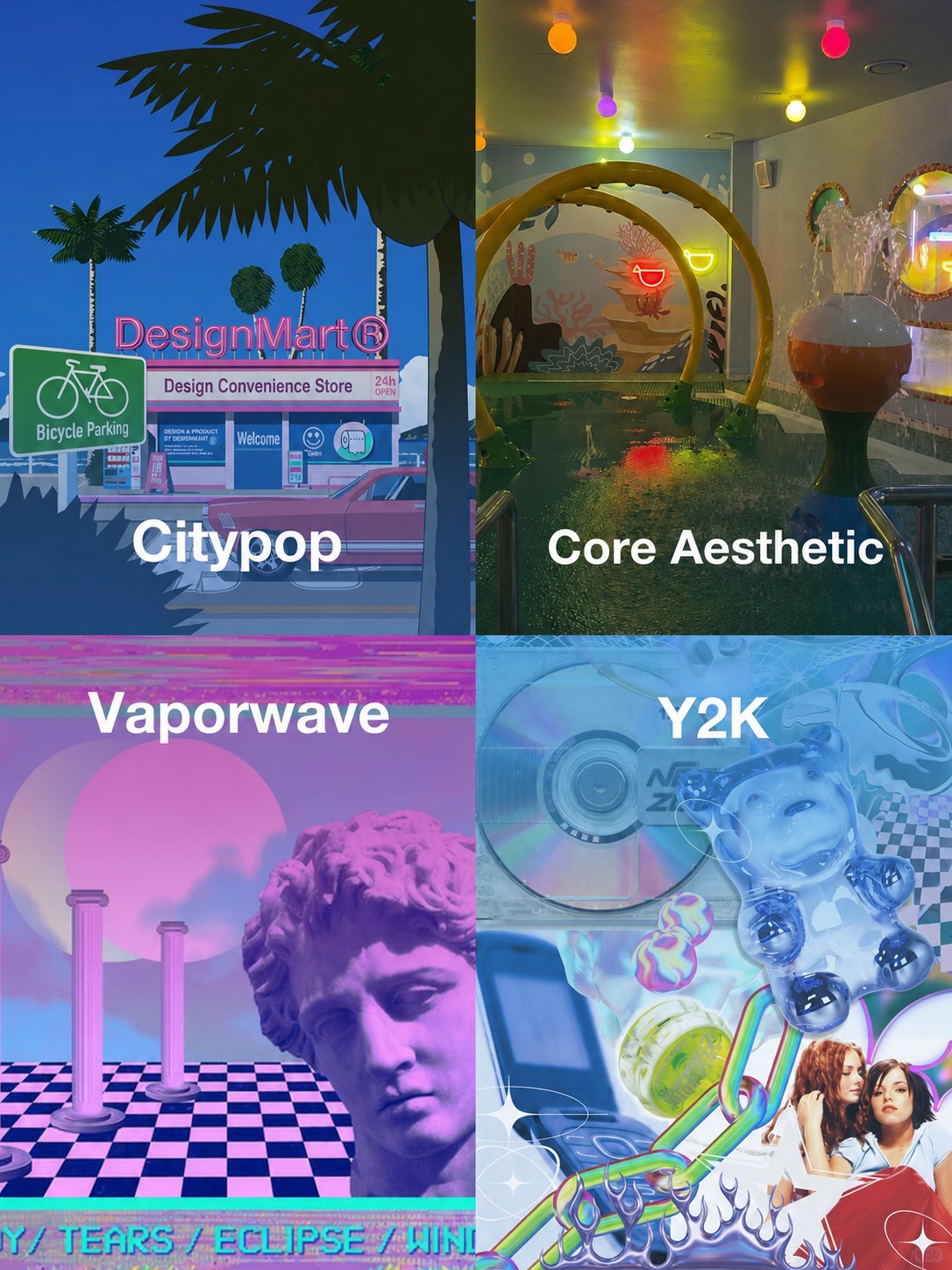
Citypop: optimism with a city glow
Citypop aesthetics are built around a specific kind of urban fantasy. The colour is warm, the night is glossy, the city feels safe enough to wander through and every reflection seems to suggest that modern life might actually be glamorous. It is not just a music reference. It is a mood of movement, leisure and clean metropolitan desire.
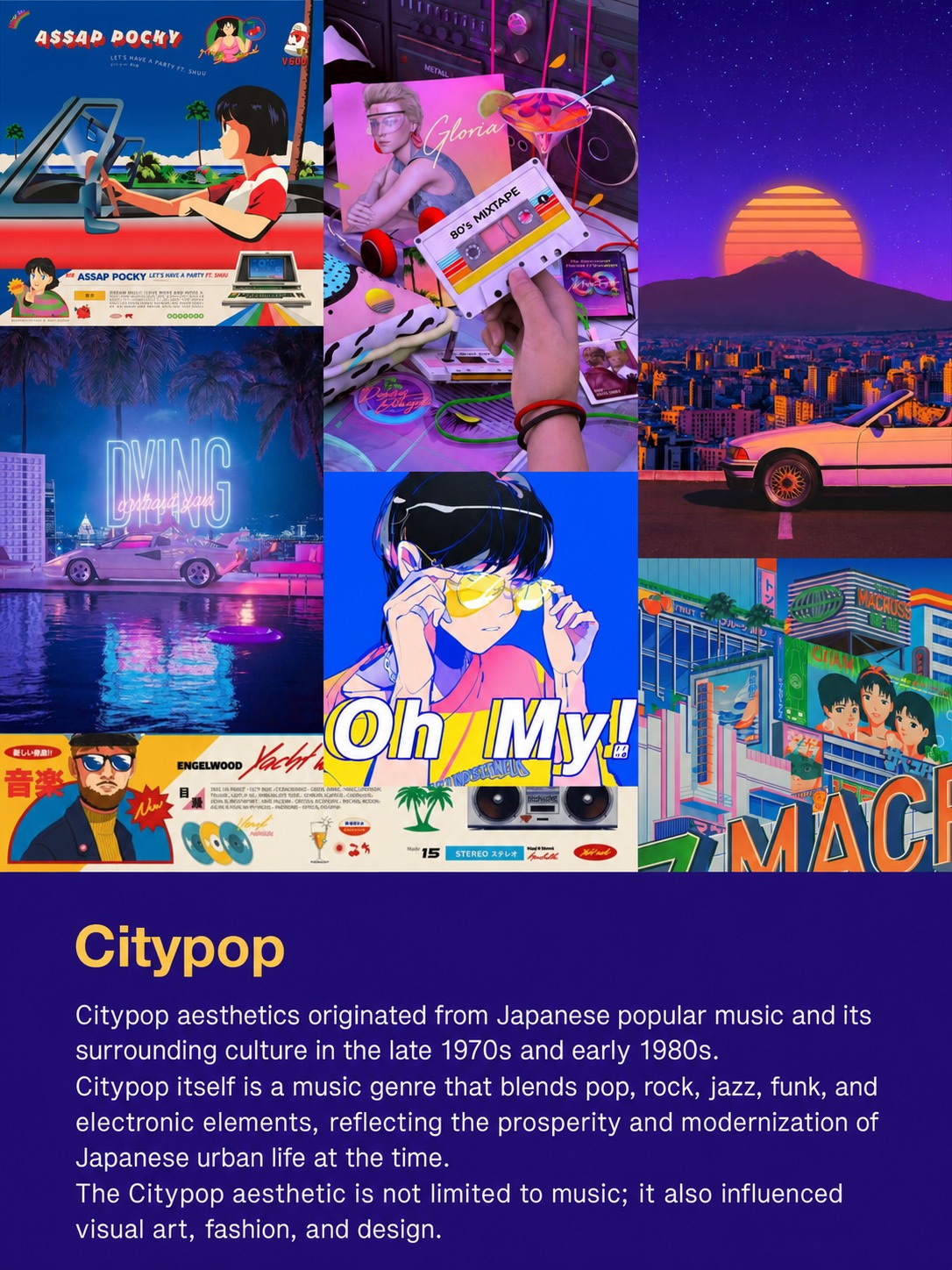
The fashion logic is easy to misunderstand. Citypop is not about dressing like a literal album cover. It is about borrowing the feeling: bright but not childish colour, smooth silhouettes, relaxed summer styling, a little nightlife polish and enough nostalgia to make the present look softer than it is.
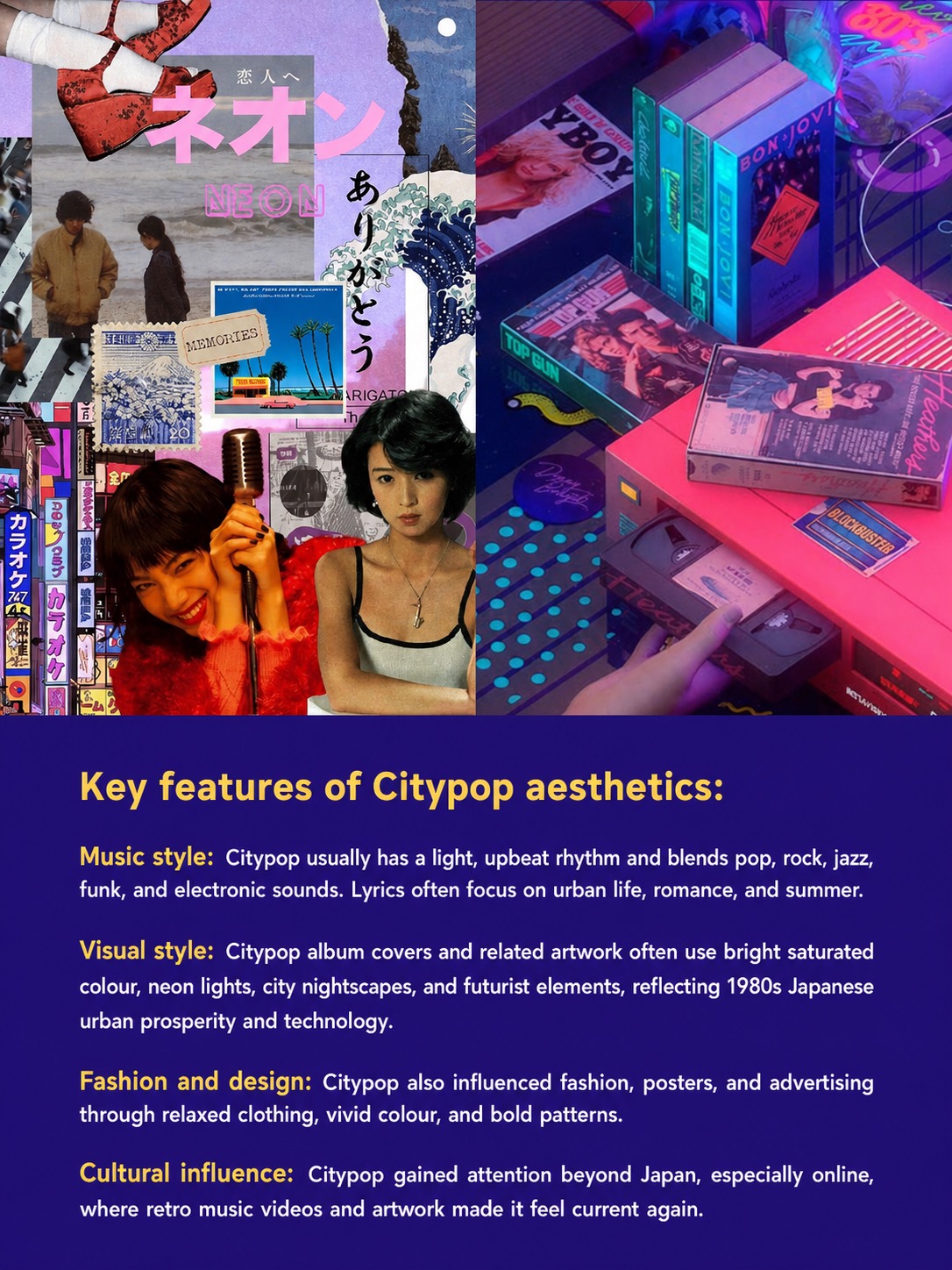
I like Citypop because it offers nostalgia without complete retreat. It does not want to disappear into the past. It wants the past to make the city feel more cinematic. That is why it can still work in contemporary styling: a saturated top, glossy accessory, loose trouser, soft blazer or retro sneaker can carry the mood without turning the outfit into cosplay.
Vaporwave: nostalgia with a glitch in it
Vaporwave is what happens when nostalgia stops being cosy and starts looking suspicious. It uses the visual debris of old consumer culture: early computer graphics, mall architecture, statues, tropical signs, VHS colour, pixel softness, impossible pools, smooth corporate surfaces. Everything is dreamy, but it is not innocent.
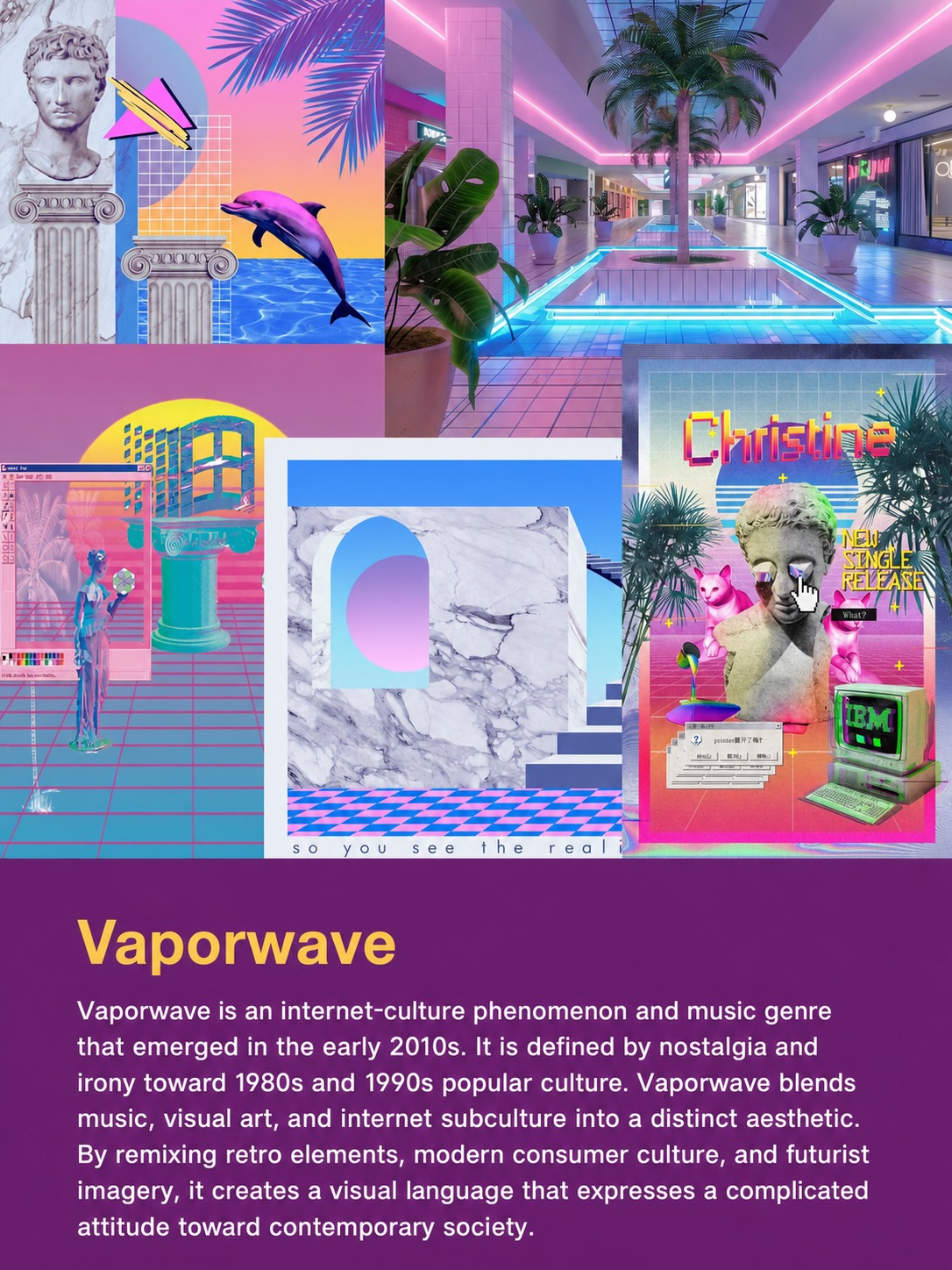
This is the aesthetic style that understands artificial beauty. A Vaporwave image often looks pleasurable and dead at the same time, which is exactly why it is compelling. It is not simply saying “remember the 80s and 90s.” It is asking why those synthetic surfaces still feel emotionally sticky.
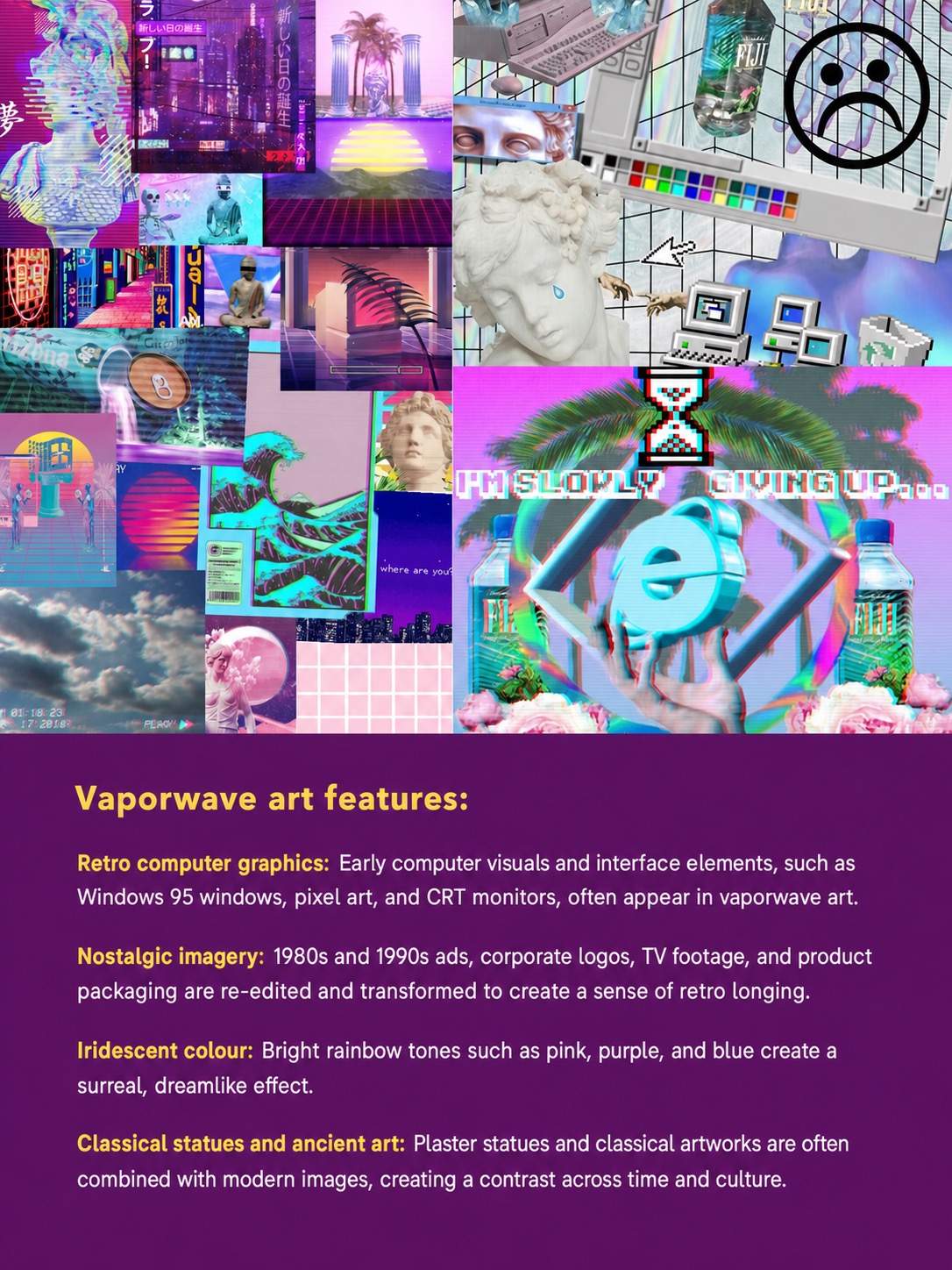
In fashion, Vaporwave works best through finish rather than costume. Iridescent fabric, washed-out purple, plastic shine, soft gradients, retro graphics and synthetic-looking accessories can all point toward it. But I would avoid wearing every cue at once. The quickest way to kill an aesthetic is to make it explain itself too loudly.
Y2K: the future as a shopping mall fantasy
Y2K aesthetic is not subtle, and I do not think it needs to be. It is built on the strange optimism of the early digital era: shiny gadgets, metallic accessories, tiny bags, platform shoes, glossy pink, cyber references, butterflies, low-rise silhouettes, pop-star styling and the belief that technology might make everything hotter.
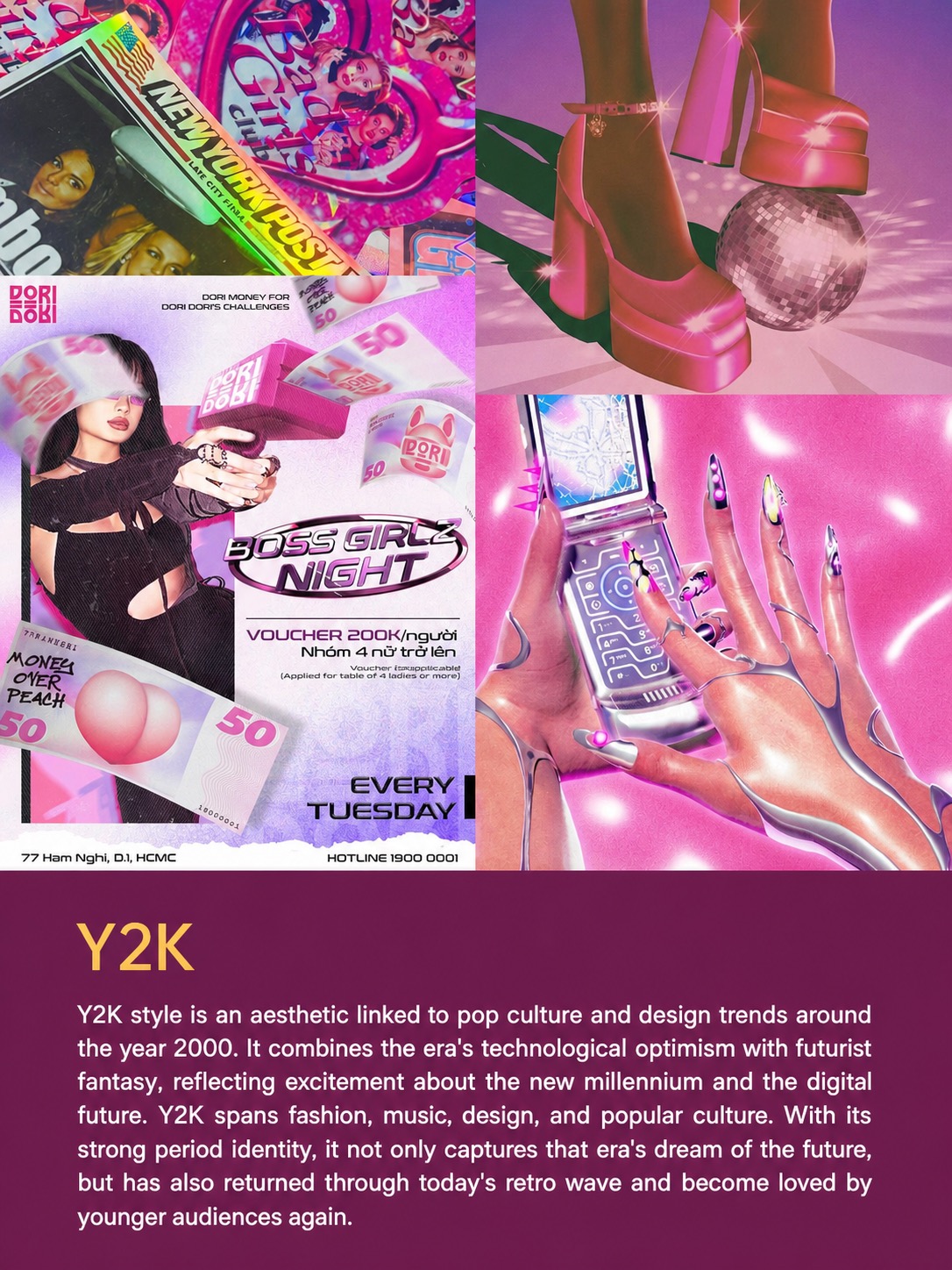
That is why Y2K keeps returning. It gives people a version of the future that is silly, sexy and purchasable. The fantasy is not some abstract utopia. It is a flip phone, a shiny lip, a small bag, a glittering top, a shoe that looks slightly impractical and a sense that the world might be more fun if everything had a reflective surface.
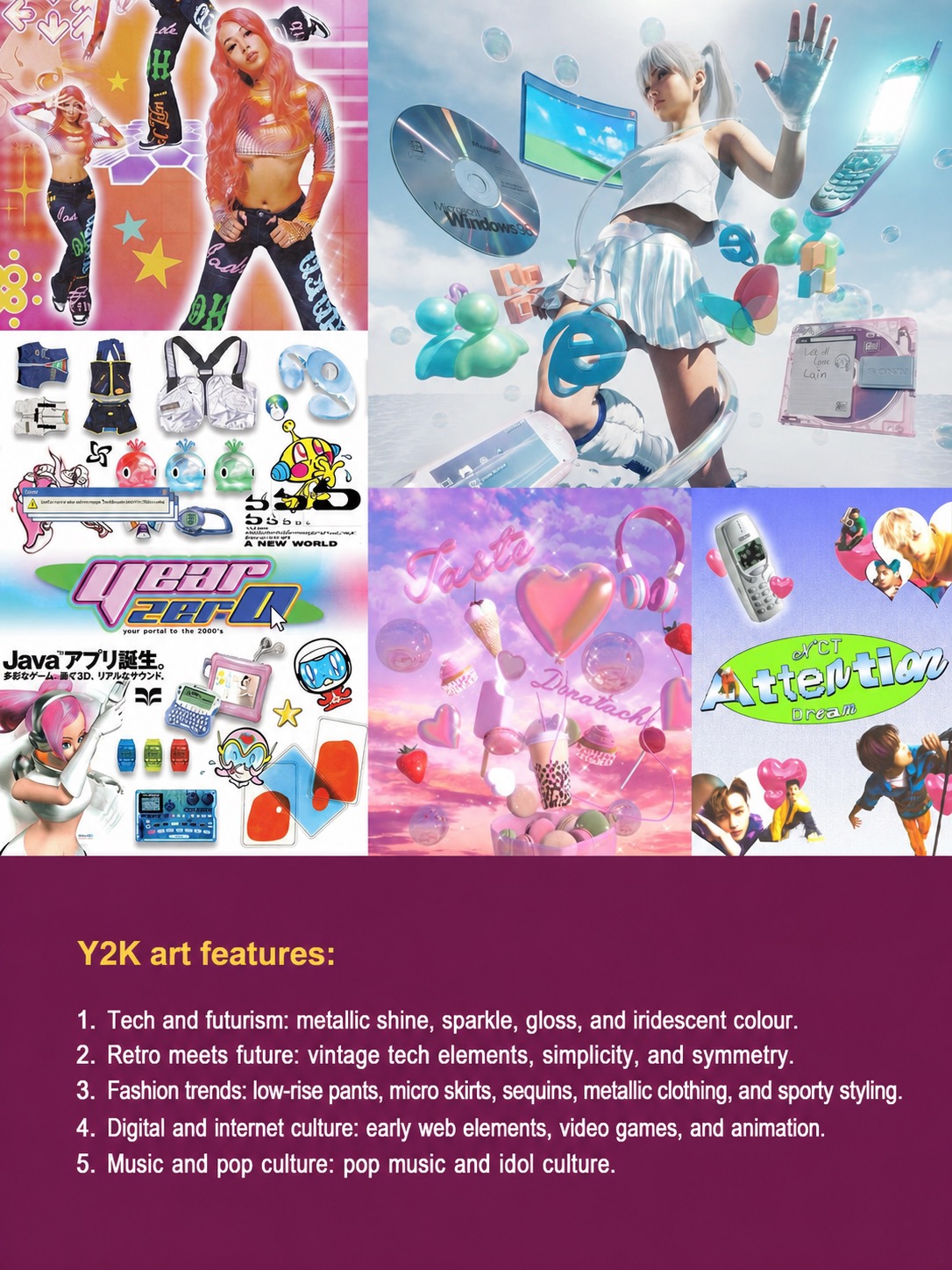
Of all these aesthetic styles, Y2K is probably the easiest to wear badly because the codes are so recognisable. I would keep it selective. One metallic bag. One glossy shoe. One low-slung proportion. One pop colour. The aim is not to look like a themed party. The aim is to steal the optimism and leave behind the obvious costume.
Core aesthetic: when the internet turns mood into taxonomy
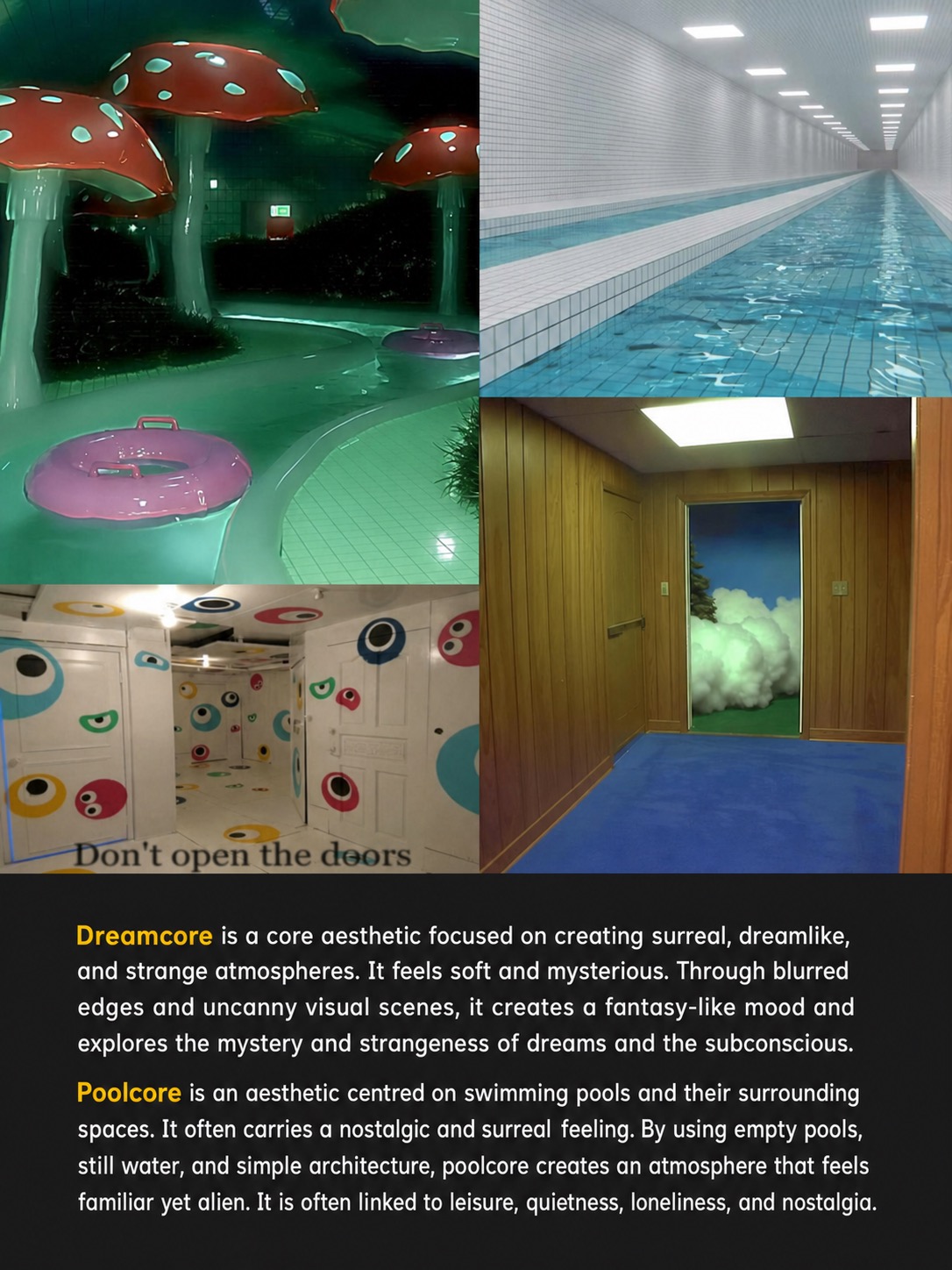
Core aesthetic is less a single look and more a classification habit. Dreamcore, Poolcore, Weirdcore, Cottagecore, Balletcore, Blokette, Office Siren, Mermaidcore, Gorpcore: the list keeps mutating because the internet loves turning atmospheres into searchable categories.
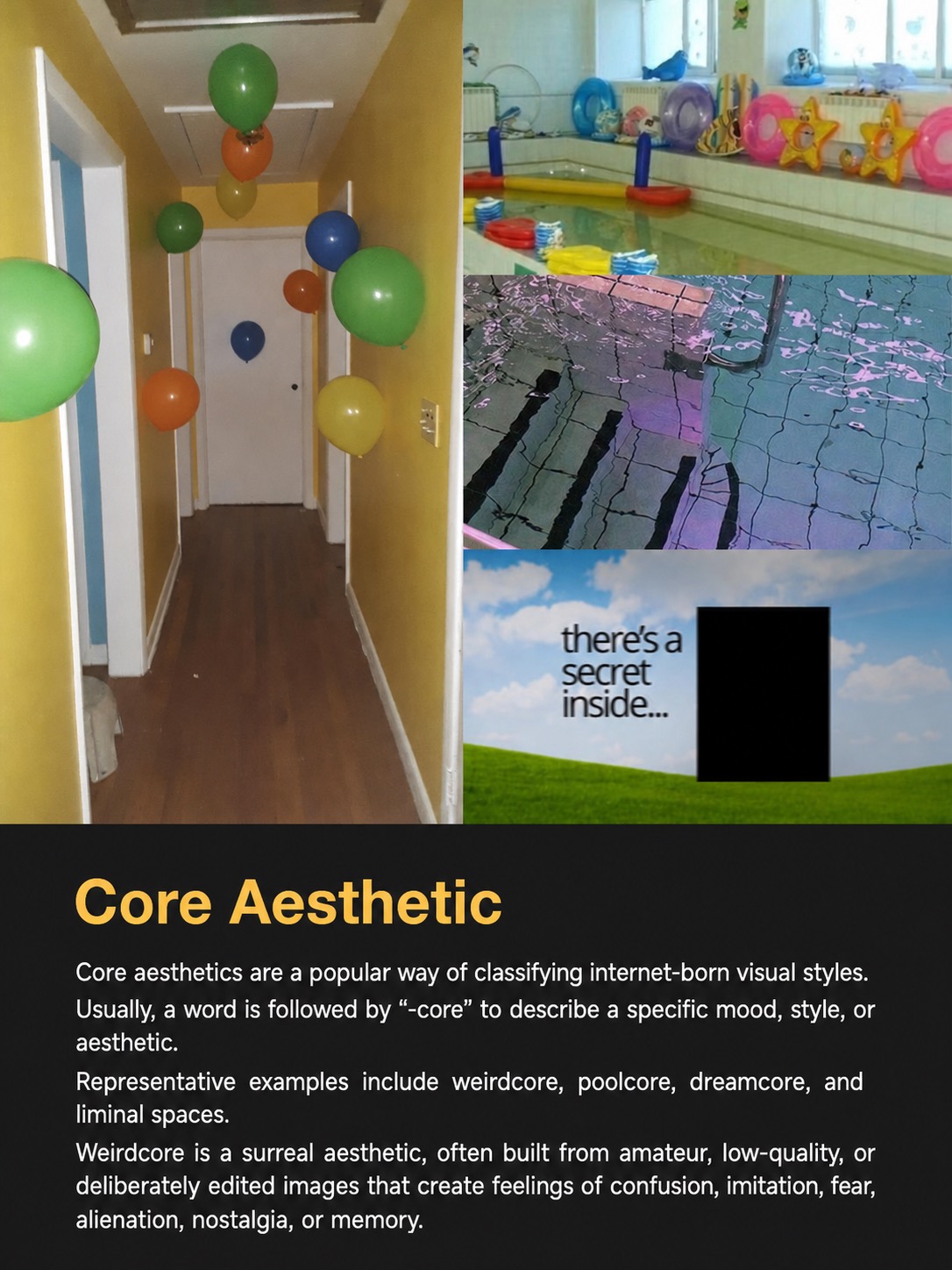
I have mixed feelings about this. On one hand, naming an aesthetic can help people find language for a feeling they already had. That matters. Taste becomes easier to discuss when there are words for it. On the other hand, the “-core” machine can make everything feel pre-packaged. The moment a mood becomes a label, it becomes easier to imitate and easier to drain of meaning.
Dreamcore and Poolcore are good examples because they are not really about clothes first. They are about atmosphere: empty rooms, strange pools, childhood places made uncanny, softness with something wrong underneath. If you try to turn that directly into an outfit, it can get silly fast. But if you translate the feeling instead, it becomes more interesting: watery colour, smooth plastic surfaces, strange proportions, surreal accessories, garments that feel a little too clean or a little too off.
The difference between an aesthetic and a costume
Here is where I get strict. An aesthetic style is useful when it gives you a lens. It becomes boring when it gives you a uniform. Citypop does not require you to dress like a retro album cover. Vaporwave does not require a purple grid. Y2K does not require every metallic butterfly you can find. Core aesthetics do not require you to obey the label like a school assignment.
The better move is translation. Ask what the style is doing visually, then decide which part belongs on your body, in your room, in a photo, in an outfit or in a piece of writing. That is how aesthetic styles stay alive. They need interpretation, not obedience.
For future alt fashion, this matters because so many adjacent aesthetics touch the same territory: futurism, nostalgia, digital culture, synthetic surfaces, post-human styling, cyber accessories, strange softness, artificial colour. If everything becomes one big aesthetic soup, nothing means anything. The task is to keep the distinctions sharp without becoming precious about them.
How to use aesthetic styles without losing your own taste
I would start with one visual cue and one emotional cue. The visual cue might be colour, texture, silhouette, object or finish. The emotional cue might be optimism, unease, glamour, nostalgia, artificiality, softness or alienation. If you have both, the look usually feels intentional.
For Citypop, try saturated colour plus relaxed urban polish. For Vaporwave, try iridescent finish plus synthetic nostalgia. For Y2K, try metallic shine plus playful digital confidence. For Core Aesthetic, try one atmosphere and then resist making it too literal.
That last part matters most. The goal is not to be perfectly legible to an algorithm. The goal is to dress, design or curate in a way that has enough clarity to communicate and enough friction to still feel like you.
FAQ
What are aesthetic styles?
Aesthetic styles are visual systems built from colour, objects, textures, references, moods and cultural signals. They help organise a look or atmosphere, but they work best when treated as a lens rather than a strict costume rule.
What is the difference between Citypop and Vaporwave?
Citypop usually feels warmer, brighter and more urban, with a sense of nightlife, music and metropolitan optimism. Vaporwave is more synthetic and uncanny, using retro computer graphics, mall-like spaces, statues, pools and nostalgic consumer imagery.
Why is Y2K such a popular aesthetic style?
Y2K is popular because it turns early digital optimism into a very wearable fantasy: metallic accessories, pink gloss, platform shoes, retro gadgets and playful cyber details. It is nostalgic, but it also still feels energetic.
What does core aesthetic mean?
Core aesthetic refers to the internet habit of naming and grouping visual moods with “-core” labels. It can help people describe specific atmospheres, but it can also flatten taste when every feeling becomes a trend category.
How do I use aesthetic styles in outfits?
Use one or two cues instead of copying the whole moodboard. Choose a colour, texture, accessory or silhouette that captures the feeling, then keep the rest of the outfit grounded enough to feel personal.