
Why French style still sells the fantasy of effortlessness
A wiki-style editorial on French style, French girl style, Parisian style and the brand logic behind A.P.C., Lemaire, Jacquemus and Rouje.
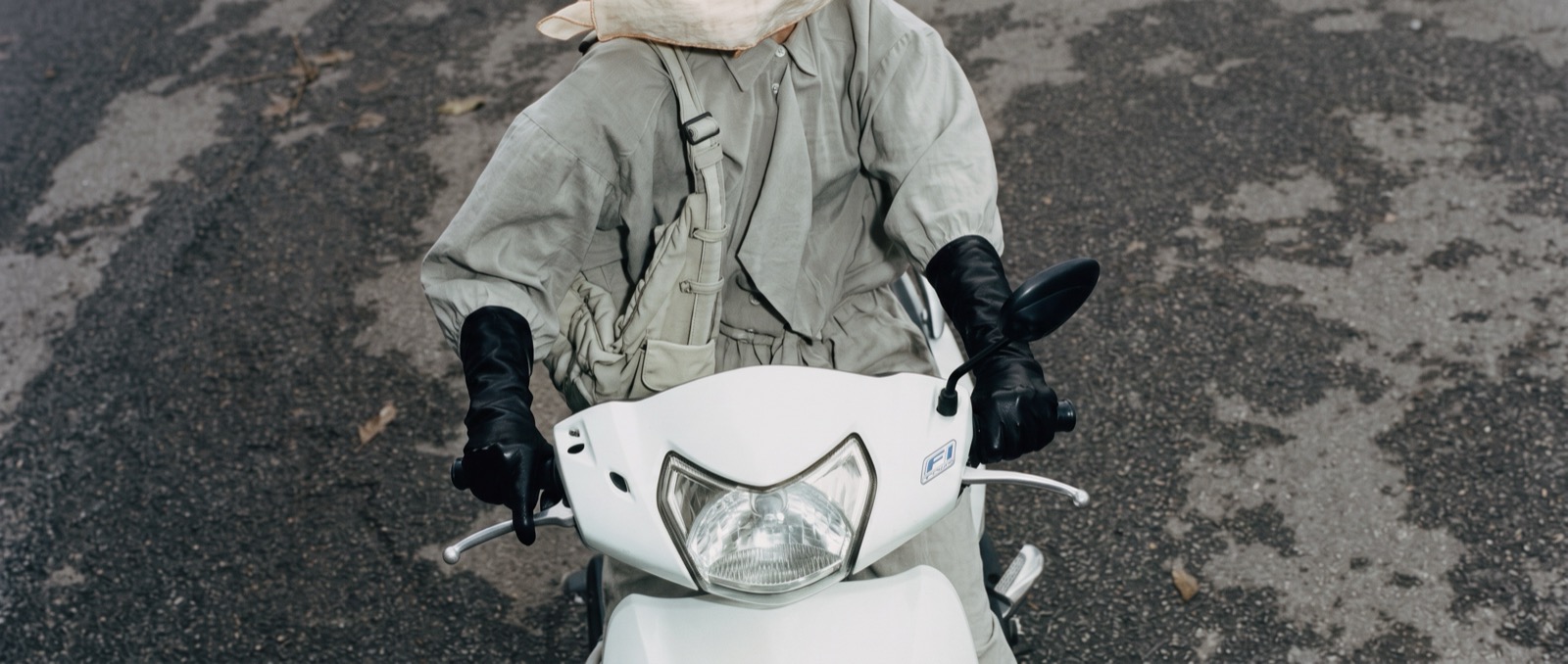
French style is one of fashion’s most successful myths because it manages to look like it is refusing to sell you anything while selling you everything. A white scooter, a black dress, a cigarette-adjacent mood, a bare face, a quiet coat, a basket bag, a slightly bored expression. The fantasy is not simply that the clothes are chic. The fantasy is that the wearer did not try.
That is where the whole thing becomes fascinating and slightly suspicious. Because of course she tried. The no-makeup makeup, the half-tucked shirt, the denim that looks accidental but fits perfectly, the brand that says less while charging more: this is not the absence of styling. It is styling that has been trained to hide its labour.
So when I ask why they all look so French, I am not really asking about nationality. I am asking why fashion keeps returning to Frenchness as a shortcut for taste.
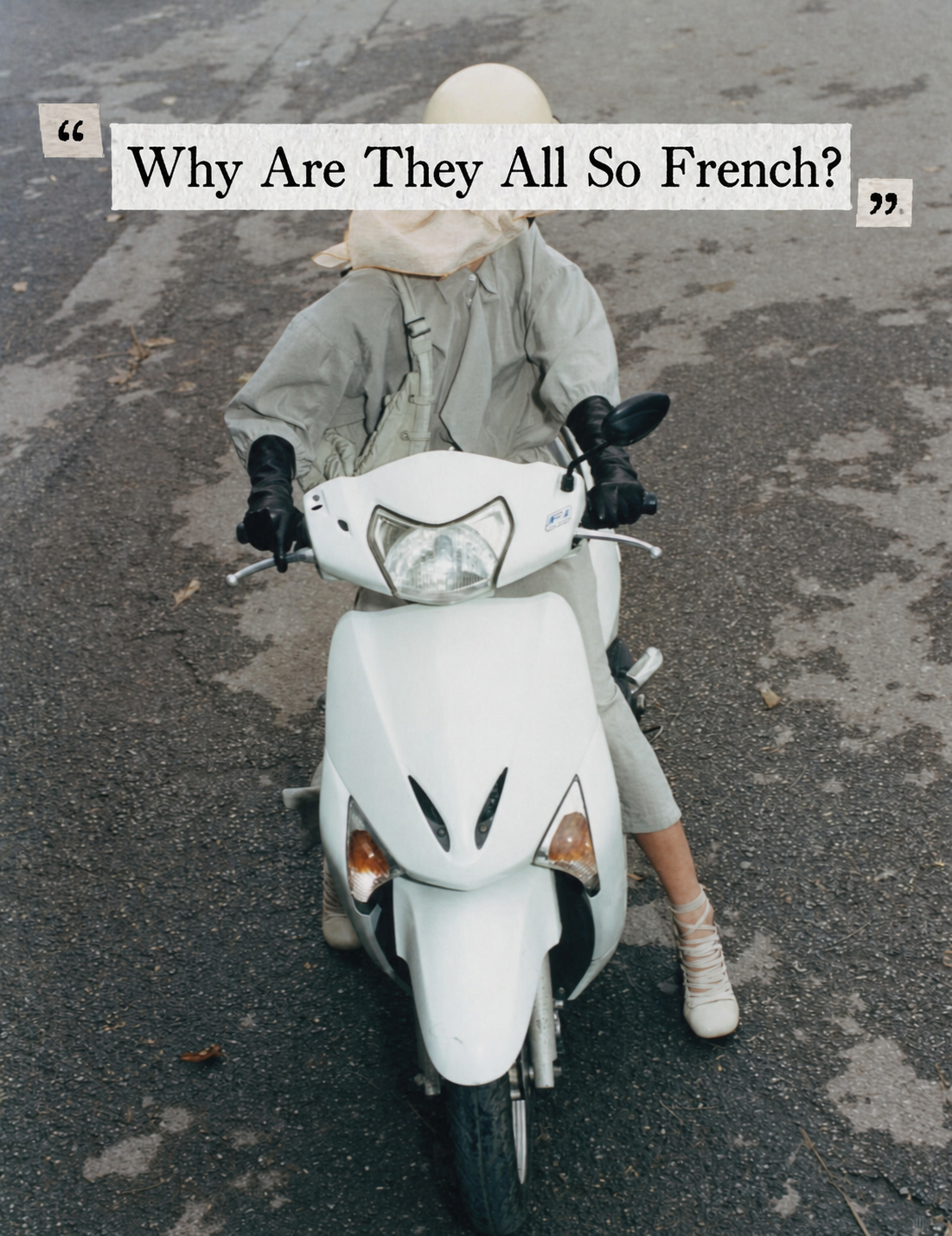
French style is not one look
The lazy version of French girl style is easy to parody: striped top, red lipstick, ballet flat, basket bag, messy fringe, cigarette, black blazer, blue jeans. It is so over-coded that it can feel like a costume purchased from the internet’s collective imagination.
But the more useful version of french style is not one outfit. It is a set of visual behaviours:
- remove one decorative thing before the look becomes too polished
- make the colour palette feel lived-in rather than loud
- let the body appear natural, but never uncontrolled
- treat quality as something implied rather than announced
- allow sensuality, but keep it slightly withheld
That is why the aesthetic travels so well. It is not asking everyone to wear the same skirt. It is offering a method for looking culturally fluent without looking desperate.
A.P.C. and the anti-luxury mood
A.P.C. is useful because it explains the quiet side of french minimalist style. The brand’s language is not about fantasy excess. It is about restraint, denim, simple coats, clean shirts, muted colour and the refusal to look too excited.
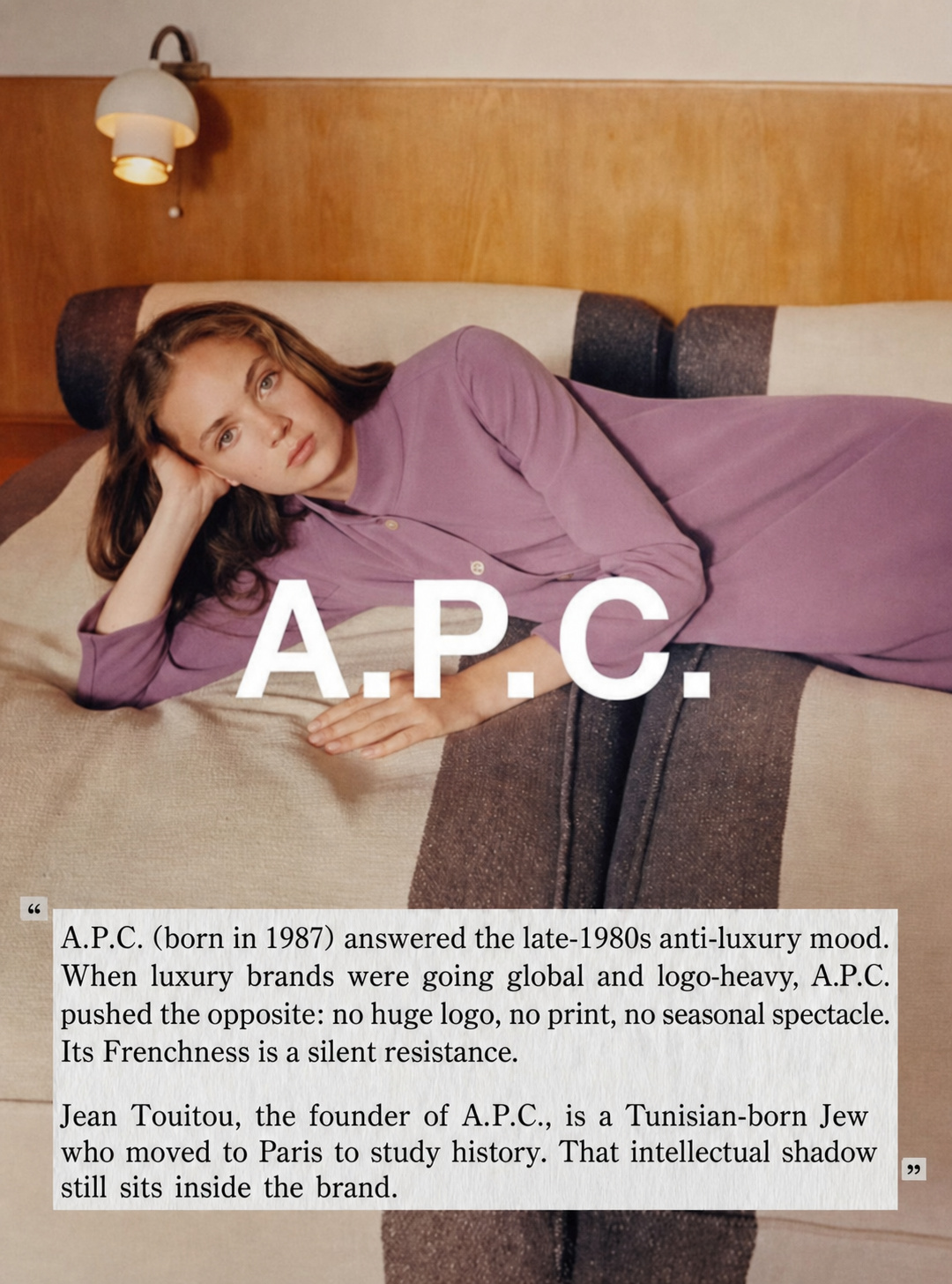
The image frames A.P.C. as a response to late-1980s anti-luxury mood, and that feels right as a visual reading. When luxury brands were becoming louder and more global, A.P.C. offered a smaller, cooler form of status: the person who does not need to perform wealth because the right people will recognise the code.
That is the most powerful trick inside a lot of french fashion style. It turns understatement into access. You are not meant to look like you bought the outfit for attention. You are meant to look like attention would be faintly embarrassing.
I do not think that makes the look more authentic. It just makes the performance more subtle.
Lemaire and the discipline of calm
Lemaire takes the quiet code somewhere more architectural. It is less “Parisian girl on a pavement” and more controlled movement, soft tailoring, wrapped shapes, pale neutrals and clothing that seems allergic to clutter.
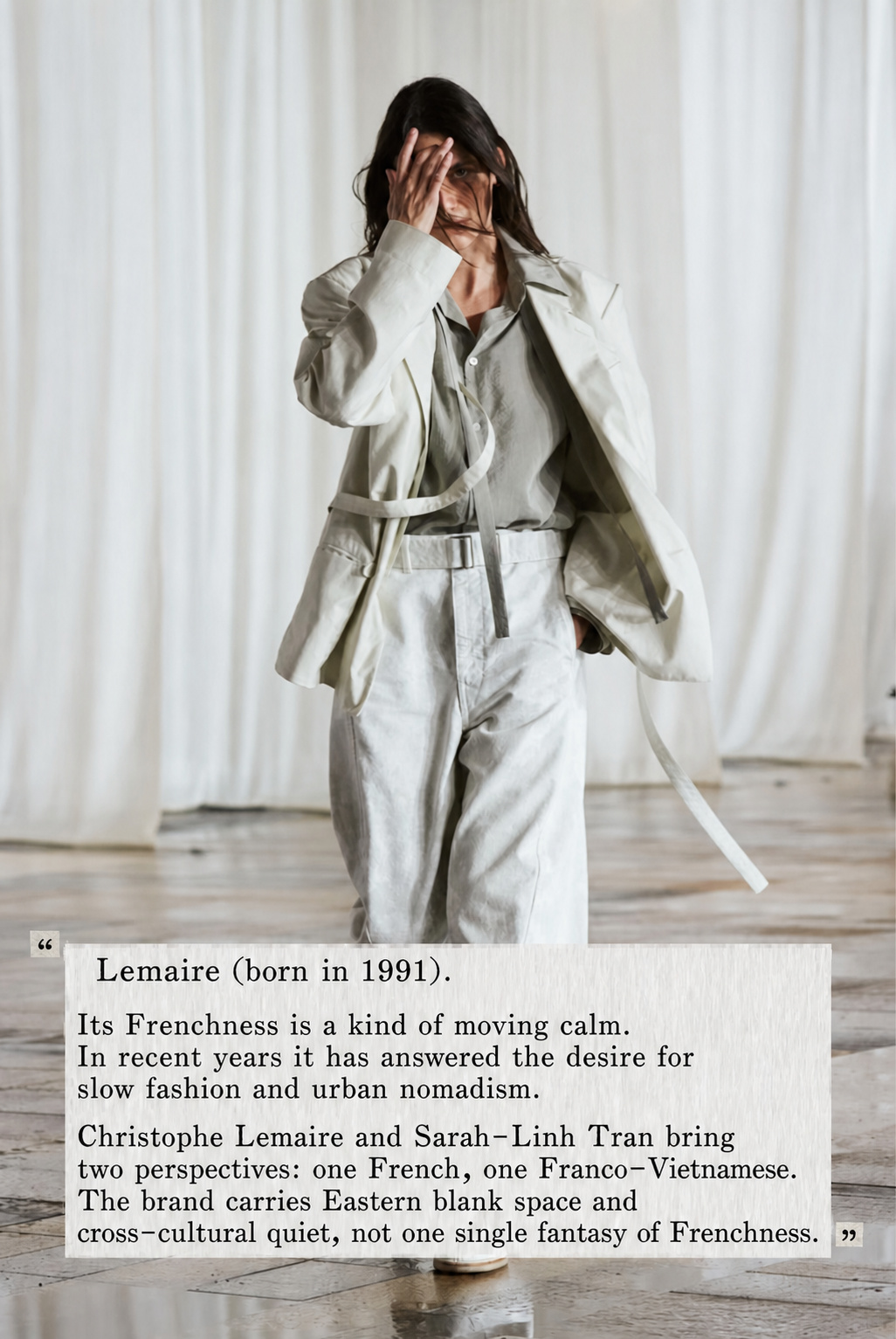
This is the part of French style I respect most: the discipline. Lemaire style understands that a calm outfit still needs construction. The fabric has to fall correctly. The waist has to be considered. The sleeve has to move. The palette can be quiet, but the shape cannot be vague.
There is a difference between minimal and empty. Minimal style edits. Empty style forgets to have an opinion.
The best Lemaire-adjacent looks are not trying to be sexy in the obvious way. They create distance. They make the wearer look private. And privacy, in an age of overexposure, has become its own luxury signal.
Jacquemus turns Frenchness into spectacle
Jacquemus complicates the French style myth because the brand is not quiet in the A.P.C. or Lemaire sense. It is sunlit, playful, agricultural, sensual, highly visual and built for the image economy. And yet it still reads French.
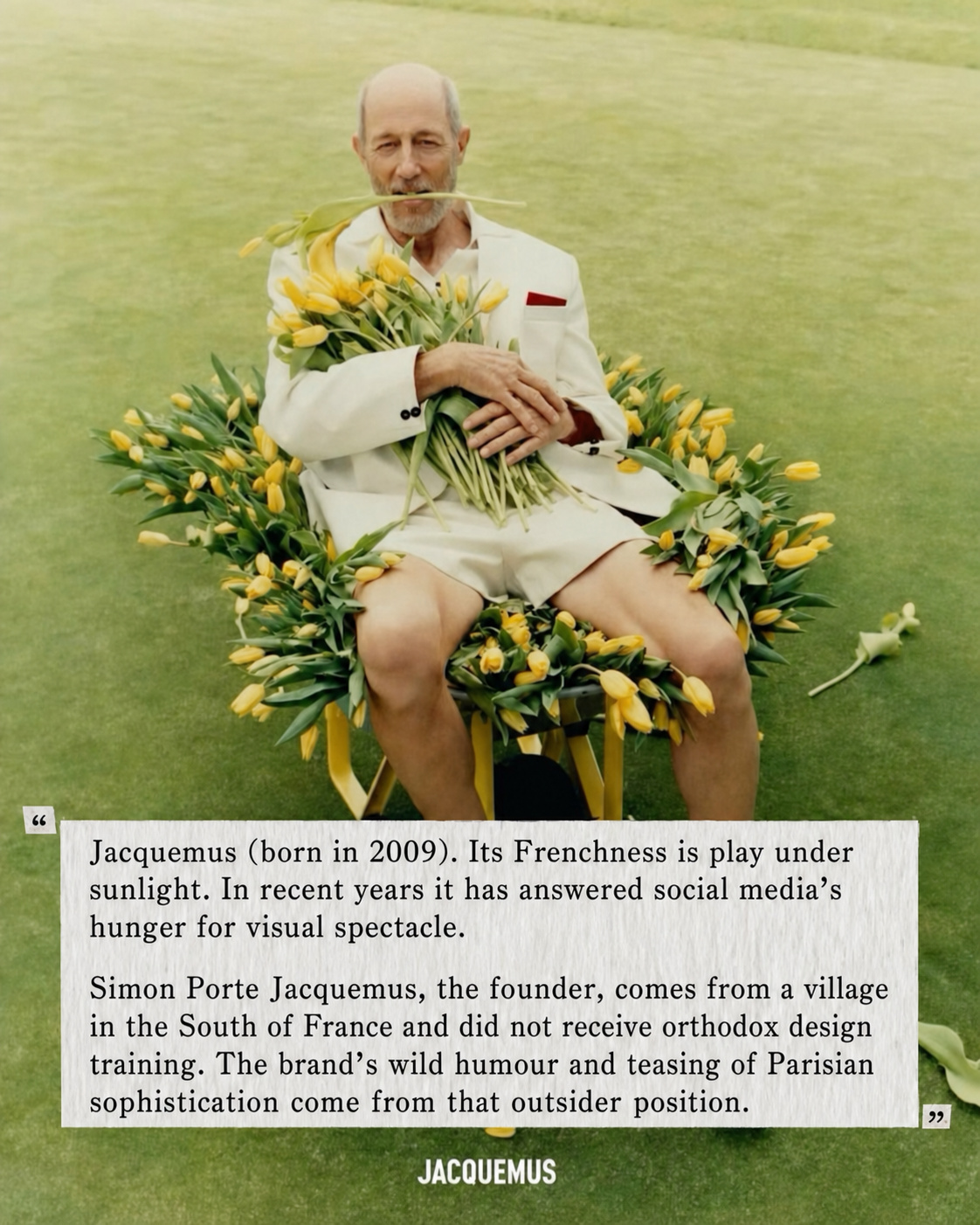
That is because Jacquemus moved Frenchness away from Parisian restraint and into provincial fantasy. Instead of the woman smoking outside a cafe, you get lavender fields, tiny bags, huge hats, Mediterranean colour, market-day sensuality and a body that looks like it belongs in sunlight.
This is where why is french style so popular becomes easier to answer. Frenchness is flexible. It can mean anti-luxury restraint, intellectual minimalism, countryside sensuality or perfectly packaged nonchalance. The common thread is not one silhouette. It is the belief that taste should look inherited, not assembled.
Of course, Jacquemus is assembled. Very assembled. The genius is that it makes the assembly feel emotional.
Rouje and the packaged Paris girl
Rouje is where french girl style becomes most literal. Jeanne Damas turned the Parisian girl into a brandable identity: wrap dresses, red lips, little cardigans, vintage denim, floral dresses, market baskets, soft hair, romantic normality.
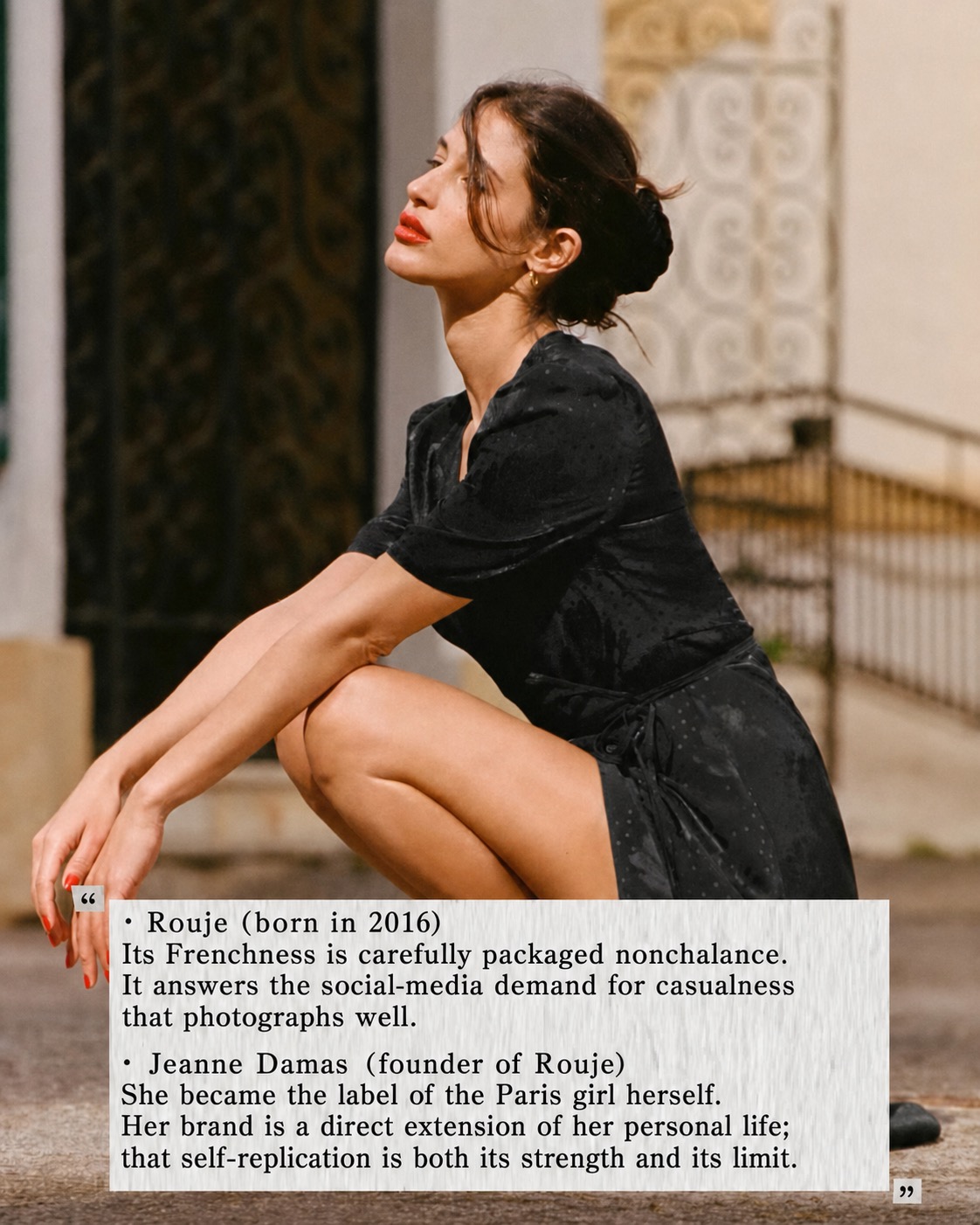
The image calls Rouje “carefully packaged nonchalance,” and that is the whole argument. Rouje is not pretending to invent a new silhouette language. It is selling a believable life. A version of womanhood that looks casual, photogenic, sensual and accessible enough to imitate.
This is both its strength and its limit. When the founder’s personal image is the brand’s strongest reference, the fantasy can feel intimate. But it can also become narrow. The Parisian girl becomes one body, one mood, one type of ease, one version of desirability repeated until it hardens into a label.
That is the trap of parisian girl style. It tells women to be effortless, then gives them a very specific script for how effortlessness should look.
Why brands keep borrowing Frenchness
Brands borrow Frenchness because it solves a marketing problem. It makes a product feel cultured without needing to explain too much. A plain cardigan becomes French. A basket bag becomes French. A slightly undone button becomes French. A muted campaign becomes French. Suddenly the consumer is not buying clothes. She is buying the right kind of restraint.
This is why do brands look French even when they are not French. The code is portable. It can be applied through casting, lighting, colour, location, hair, copy, product names and styling. You do not need the Eiffel Tower. In fact, please do not use the Eiffel Tower. You need controlled imperfection.
That phrase is basically the whole business model: controlled imperfection.
The useful part of French style
I am critical of the myth, but I am not immune to it. The useful part of French style is that it teaches editing. It understands that clothes do not need to announce every idea at once. It values proportion, fabric, posture, skin, hair, negative space and the quiet confidence of not over-explaining yourself.
The problem comes when editing becomes an identity rule. When French girl style tells everyone to become one type of woman: slim, undone, sexually available but never trying, cultured but not too serious, stylish but apparently above fashion. That is not style. That is a narrow fantasy wearing good denim.
So I would keep the method and reject the mythology.
Keep the attention to proportion. Keep the good coat. Keep the unforced styling. Keep the sense that one wrong thing can make the outfit better. But do not confuse looking French with having taste. Taste is not a passport.
FAQ
What is French style?
French style is a fashion aesthetic built around restrained styling, natural-looking polish, quiet sensuality, edited basics, good proportion and the fantasy of effortlessness. It can range from minimalist brands like A.P.C. and Lemaire to more romantic or sunlit brands like Rouje and Jacquemus.
Why is French style so popular?
French style is popular because it sells taste without looking too eager. It makes clothing feel culturally fluent, understated and personal, even when the look is highly constructed.
What is French girl style?
French girl style is the more feminine, lifestyle-driven version of French style. It often uses jeans, cardigans, wrap dresses, red lips, ballet flats, basket bags, floral dresses and undone hair to create an image of casual Parisian ease.
What brands represent French style?
A.P.C., Lemaire, Jacquemus and Rouje each represent a different version of French style: anti-luxury basics, quiet architectural minimalism, sunlit spectacle and packaged Parisian nonchalance.