
Hajime Sorayama and the fantasy of the chrome body
A wiki-style fashion essay on Hajime Sorayama, the Sorayama robot, gynoid art, chrome robot aesthetics and why the mechanical body keeps shaping fashion imagery.

Hajime Sorayama’s chrome bodies are difficult to look at casually. That is the point. They are polished, reflective, exaggerated, glamorous, cold, eroticised, mechanical and almost offensively smooth. They do not ask whether the body can become machine-like. They assume it already has, then make the machine flirt back.
I think that is why the Sorayama robot keeps returning as a visual reference in fashion and pop culture. It sits right at the pressure point between futurism and desire. A robot body should be functional. Sorayama makes it vain. A machine should be efficient. He makes it pose. A chrome surface should feel industrial. He makes it feel like skin.
That contradiction is the whole aesthetic. The chrome robot aesthetic is not simply about silver metal. It is about turning the body into an object that reflects the world while refusing softness.
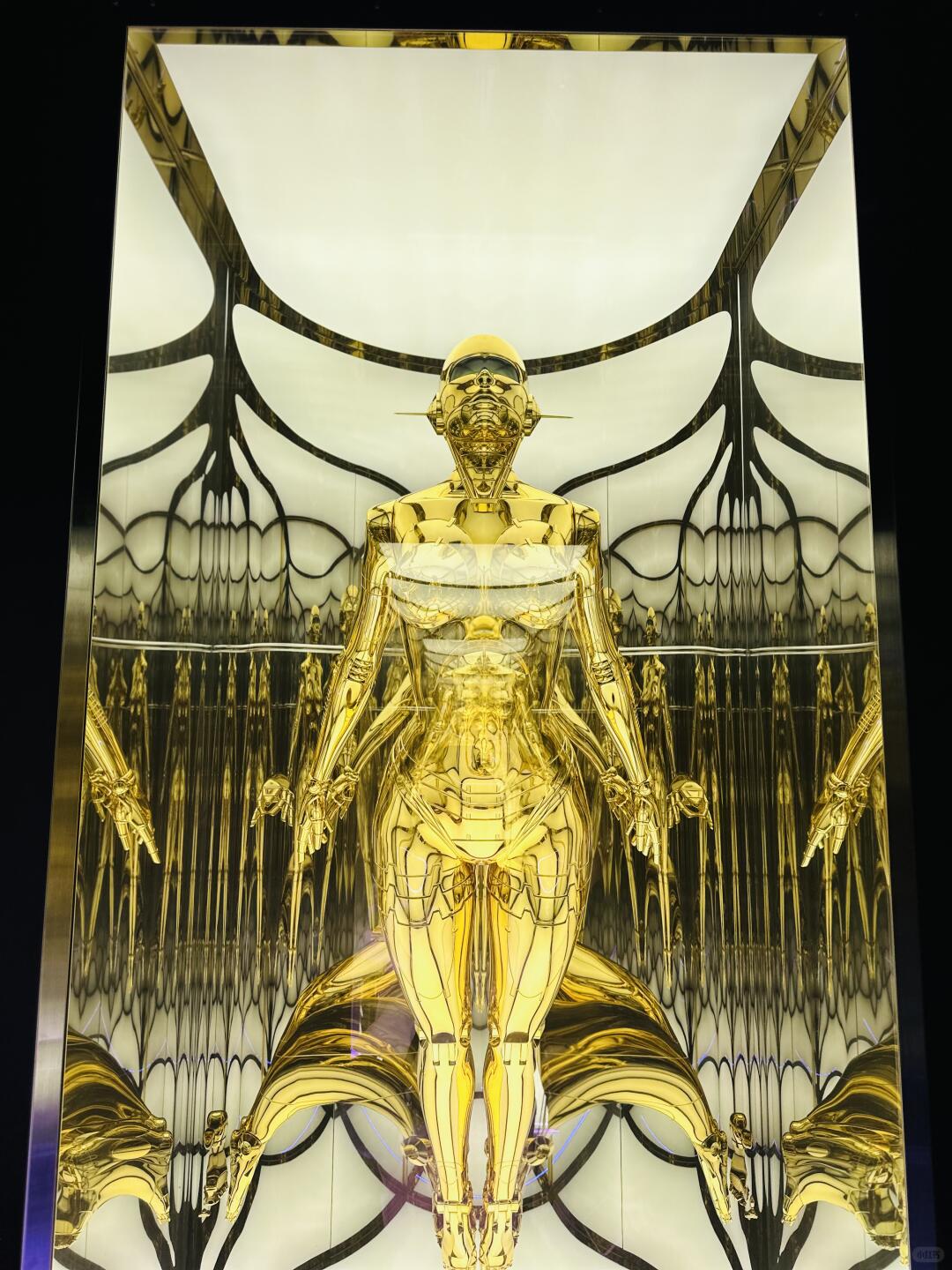
What is Hajime Sorayama known for?
Hajime Sorayama is best known for highly polished erotic robot imagery, especially the female robot figures often discussed through the “Sexy Robot” visual language. The important part is not only the subject. It is the finish. His bodies look airbrushed into impossibility: chrome limbs, hard reflections, smooth curves, mechanical joints, pin-up poses and surfaces that make the human body feel both present and erased.
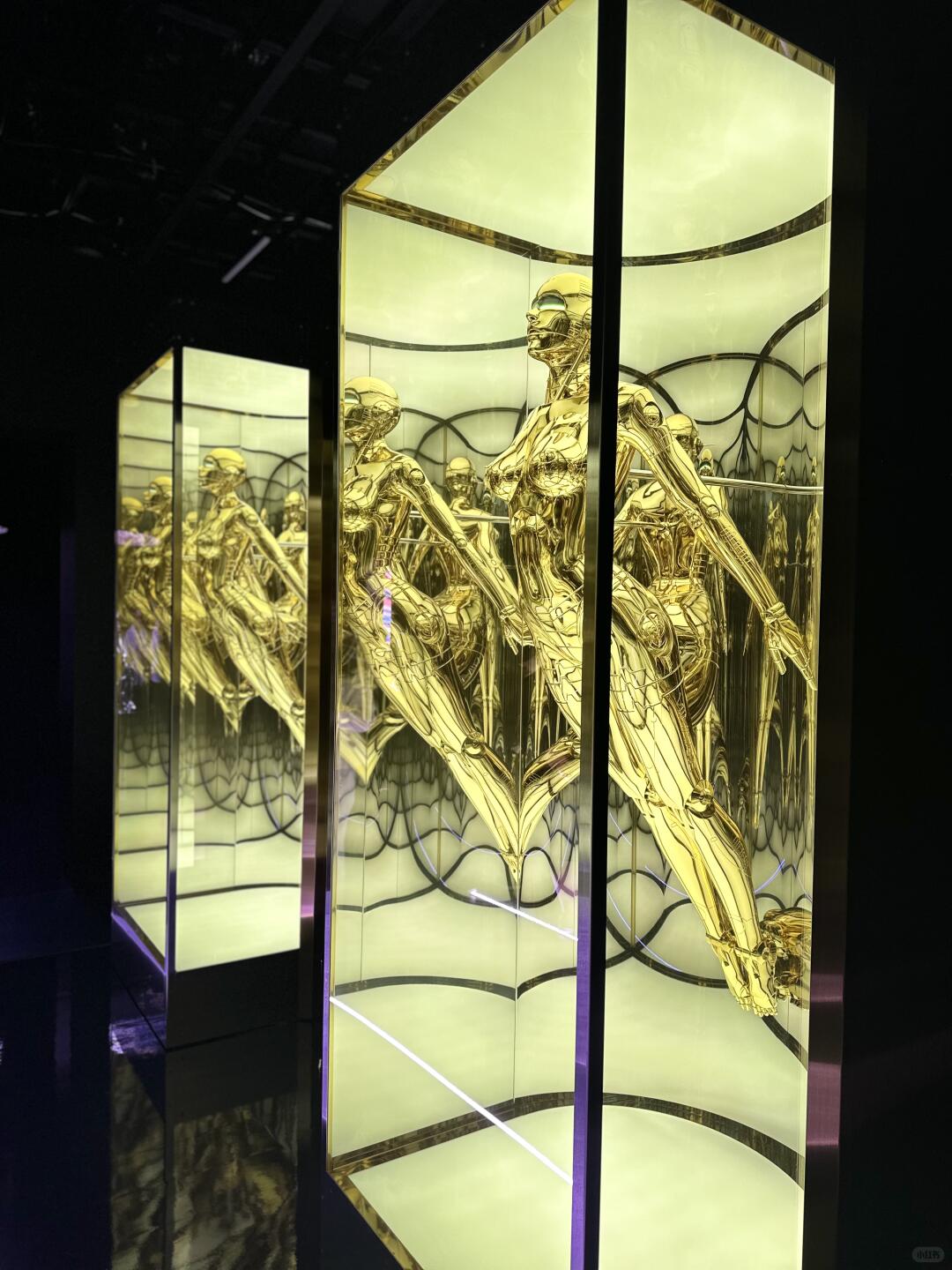
That is why his work matters so much to fashion imagery. Fashion loves a body that can be styled, polished, posed and transformed. Sorayama’s robot takes that logic to its extreme. The body becomes a styling surface with no softness left to resist the gaze.
There is something thrilling about that, and something unsettling. Both reactions are useful.
The gynoid is not neutral
Gynoid art is never just “robot art.” The gendering matters. The bodies are feminised through curves, posture, shine, legs, breasts, hips, lips, heels, arching backs and pin-up composition. The machine is not presented as a neutral technological object. It is presented as a desirable woman-object built from industrial fantasy.
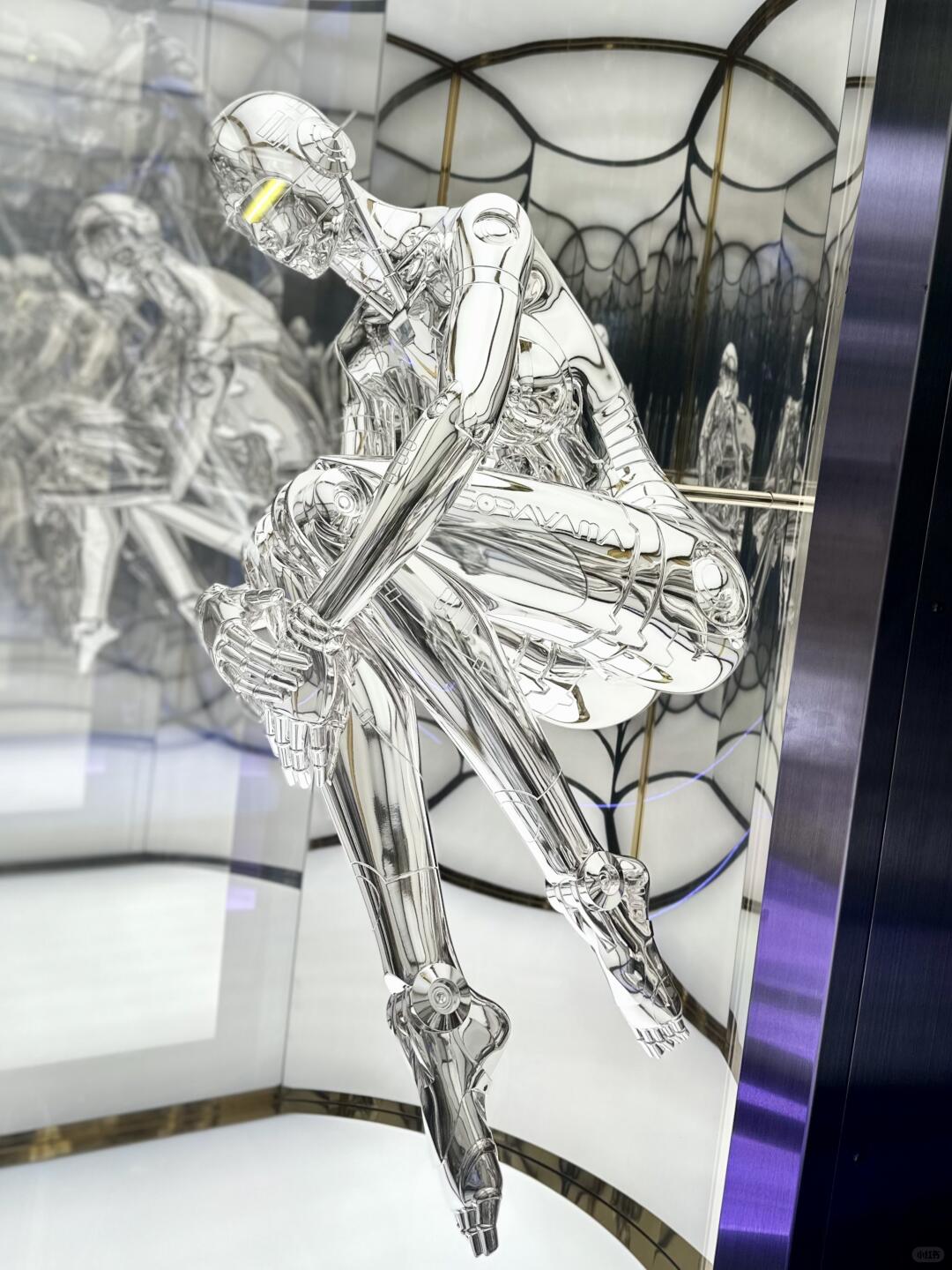
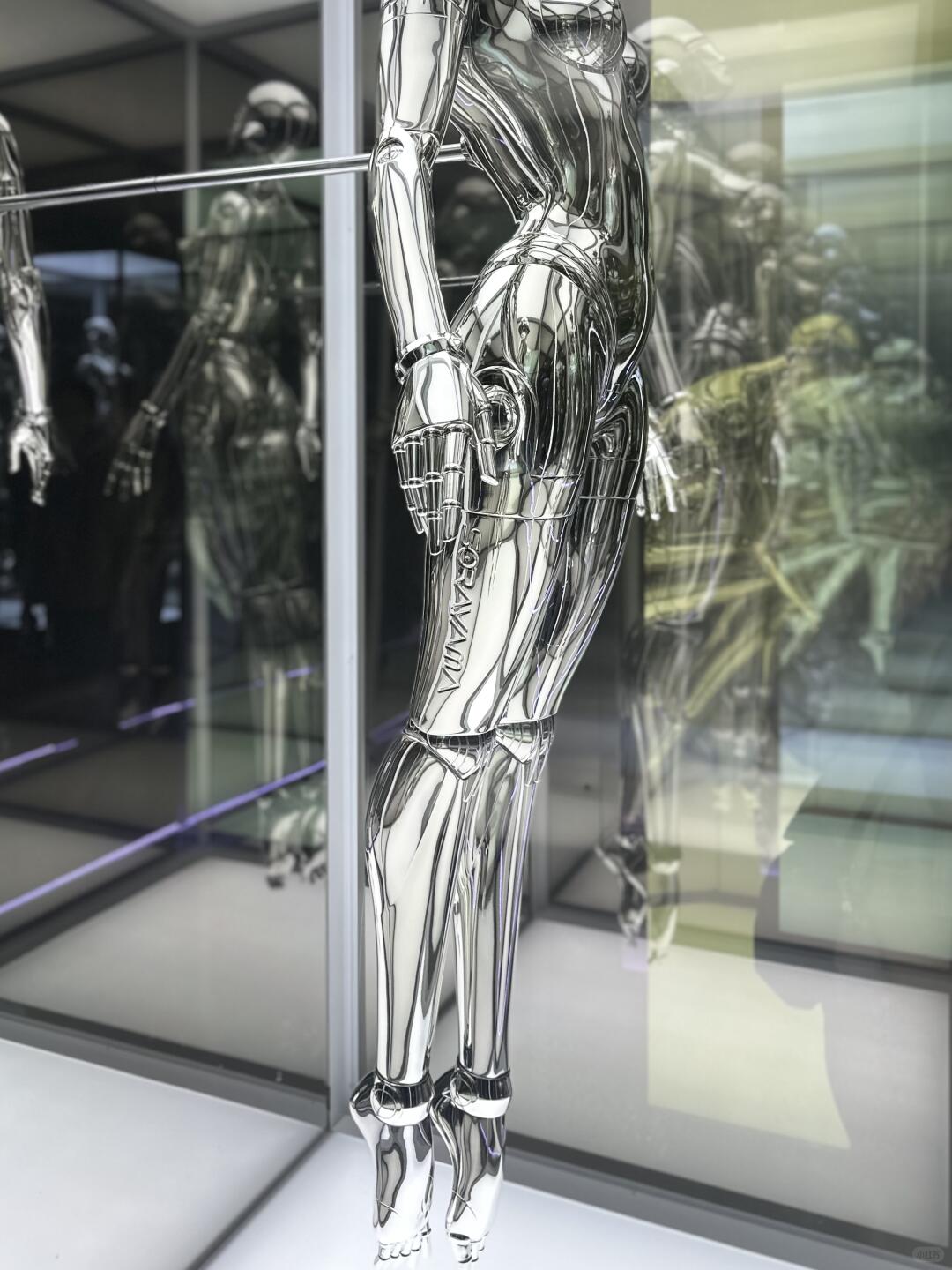
This is where why are Sorayama robots sexualized becomes the wrong question if we ask it too innocently. They are sexualized because the work is built around the tension between mechanical perfection and human desire. The robot body promises control, availability, surface, shine and immortality. It also exposes how easily femininity gets redesigned as a product.
That does not mean the images are simple. They are too visually intelligent for that. But I do think the discomfort is part of the work, not an accident around it.
Chrome turns the body into a mirror
Chrome is doing more than making the robot look futuristic. It changes the politics of looking. A matte robot would feel industrial. A chrome robot reflects everything around it, which means the viewer is always implicated in the image. The body becomes a mirror, and the act of looking becomes part of the surface.
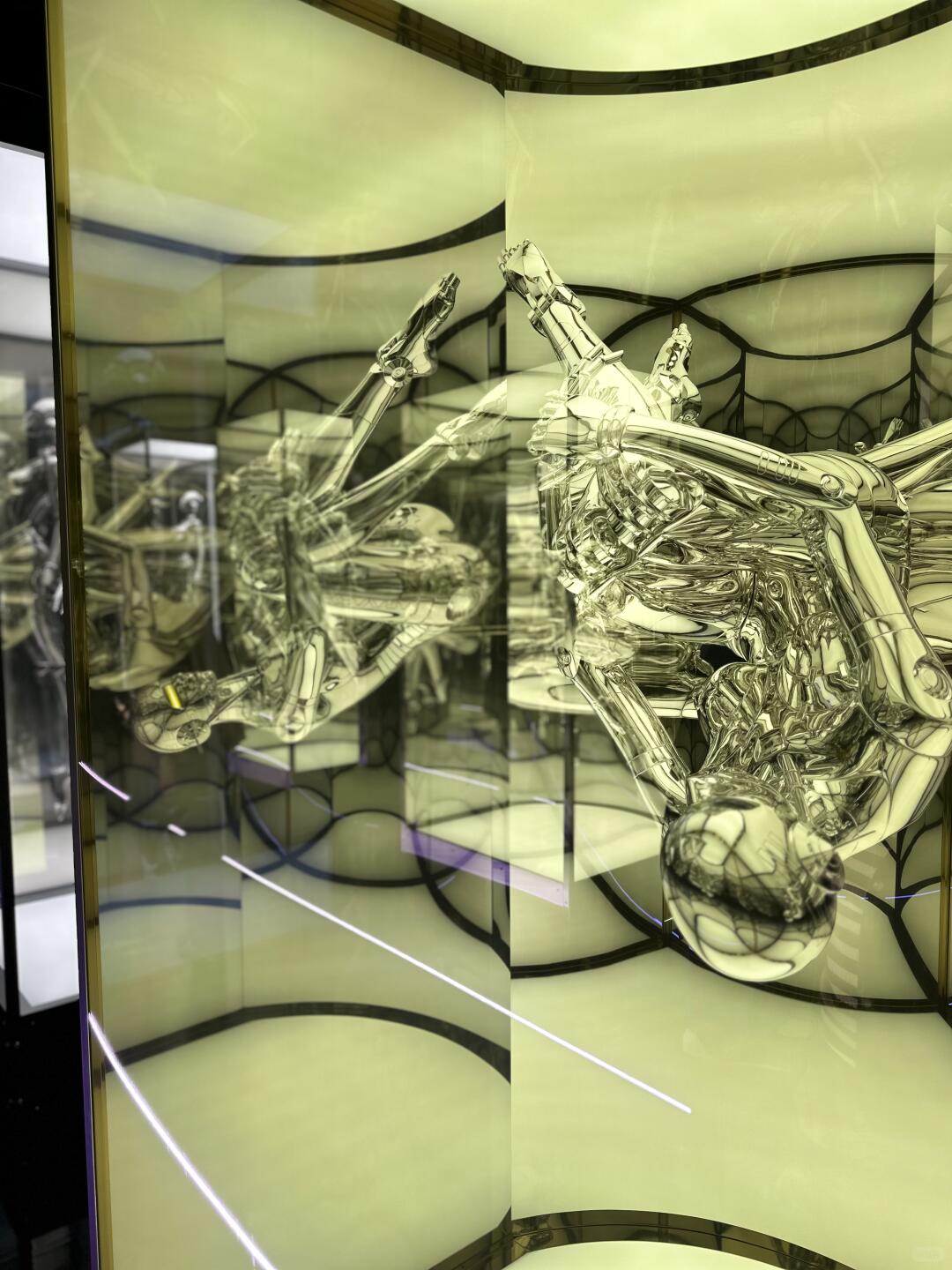
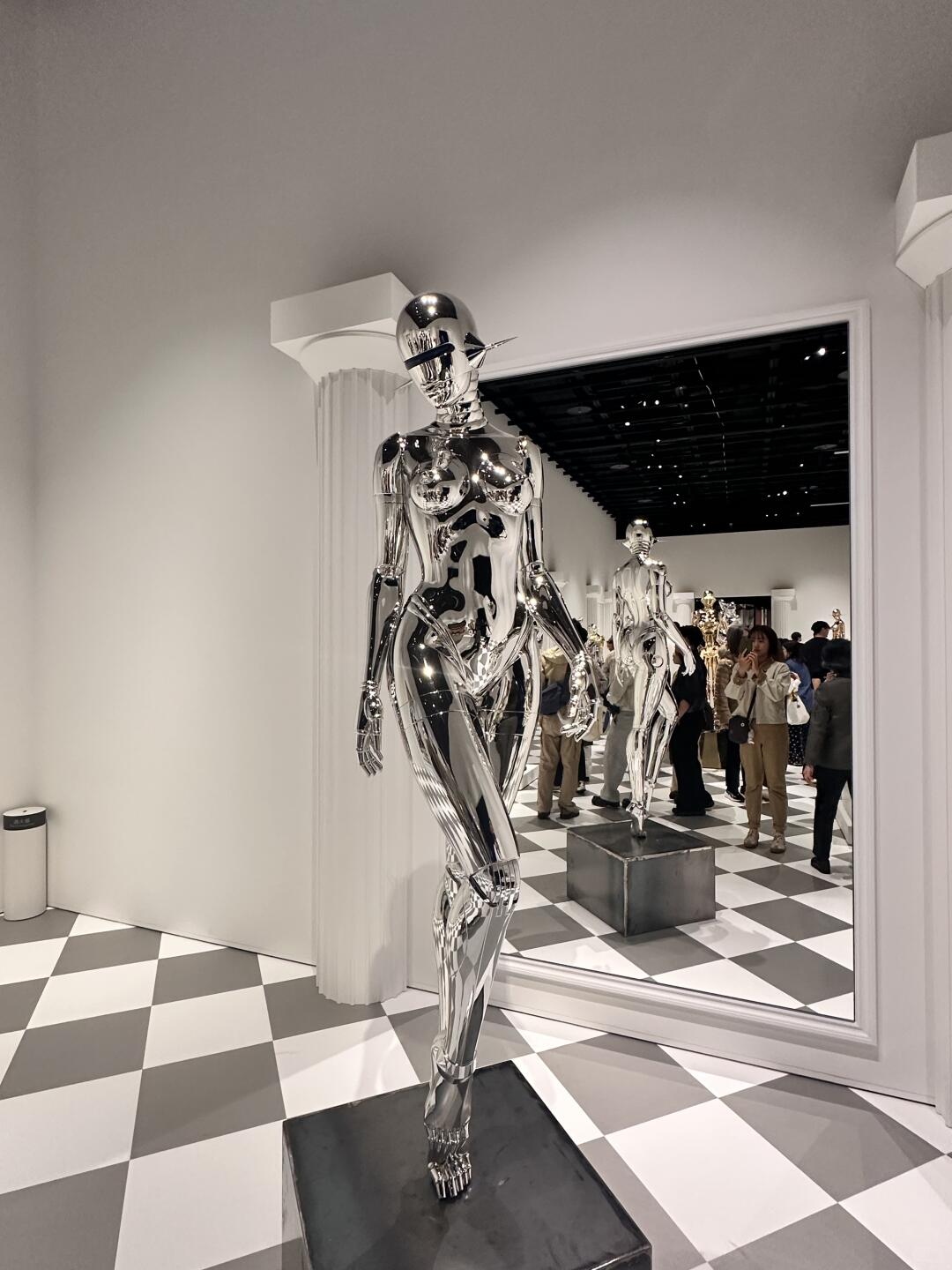
This is why chrome keeps showing up in robot fashion aesthetic references. Chrome is not shy. It is difficult to photograph badly because it turns light into drama. It makes curves sharper, limbs colder, and every surface more expensive-looking. In fashion terms, chrome behaves like extreme glamour. It removes the everyday from the body.
The problem is that chrome can also erase texture. Skin has pores, warmth, marks, softness, age, friction. Chrome gives you the fantasy of a body without biography.
The pose keeps the machine human
The mechanical body only becomes seductive because it keeps borrowing from human posture. A standing figure is one thing. A figure arching, bending, twisting, crossing legs, lifting an arm or posing like a performer is something else entirely.
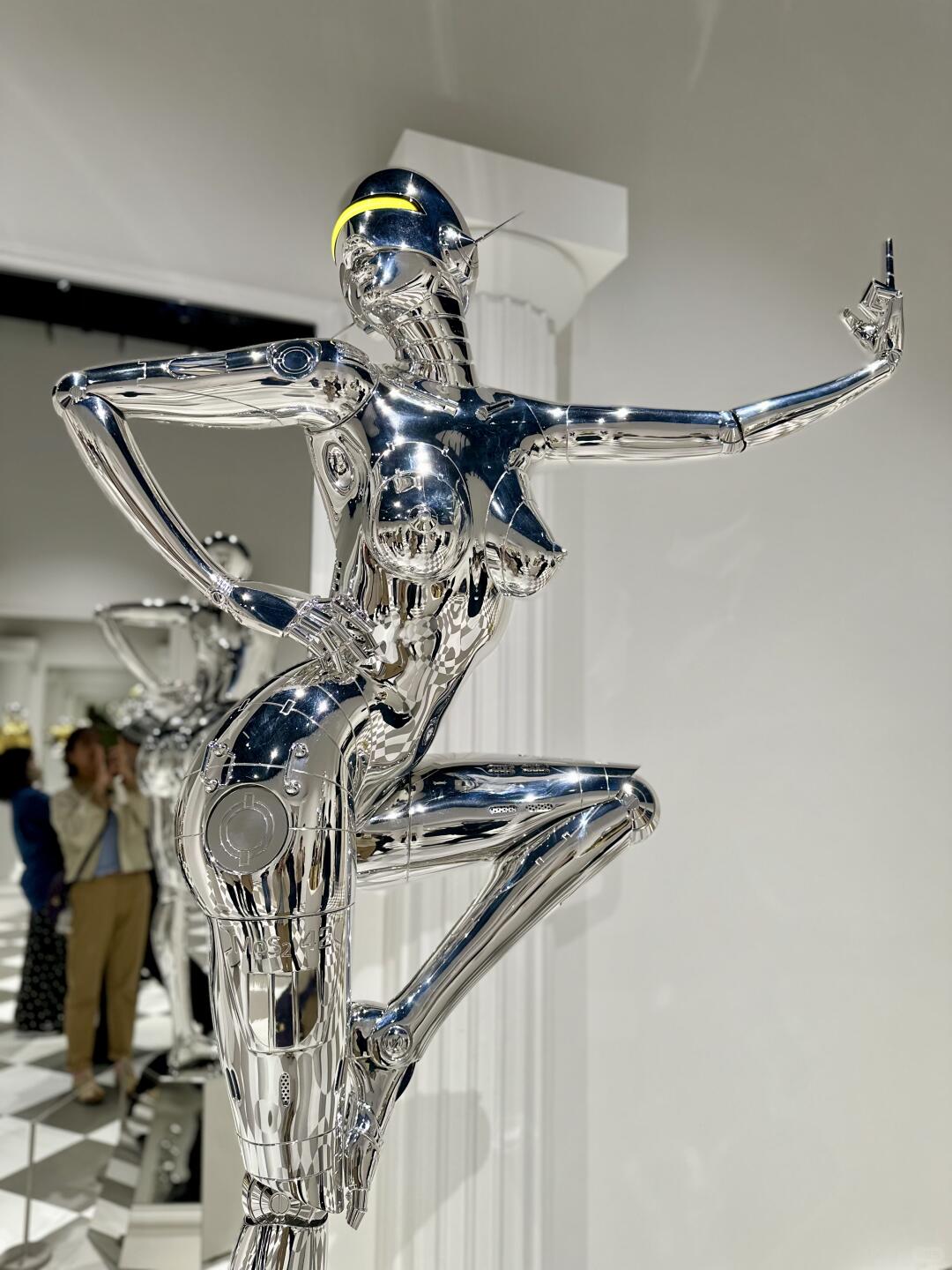
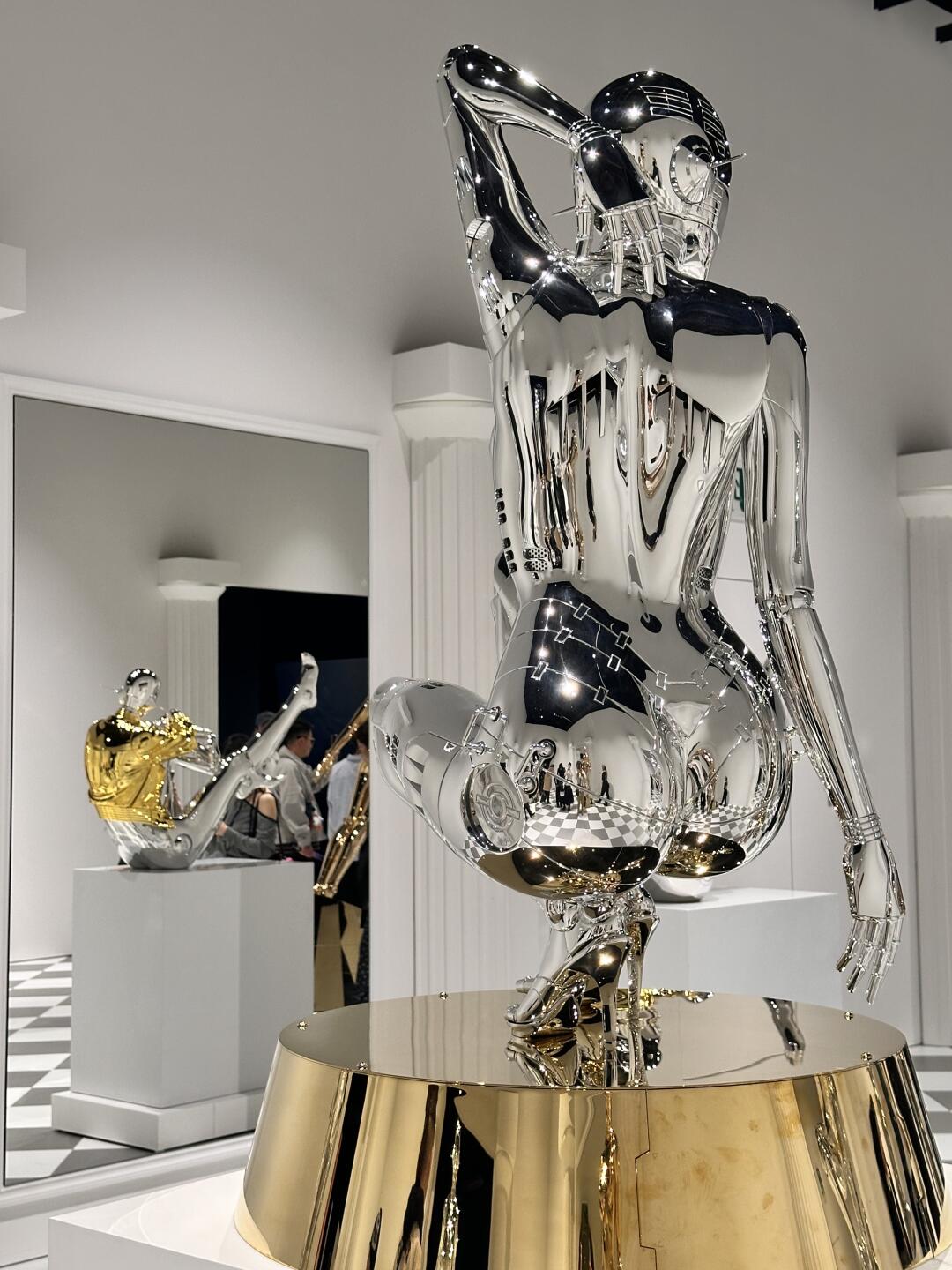
This is the core trick of the sexy robot aesthetic. The material says machine. The pose says body. The reflection says object. The silhouette says woman. The viewer has to hold all of those readings at once.
Fashion understands this instinctively. A runway look is rarely just fabric. It is body language, lighting, surface, fantasy, posture and an implied audience. Sorayama’s robot aesthetic takes those ingredients and removes the human mess from the middle.
The exhibition body becomes spectacle
The gallery images make the scale of the fantasy clearer. These are not just illustrations translated into objects. They are bodies staged as spectacle: chrome figures on platforms, mirrored cases, illuminated rooms, checkered floors, crowds looking on.
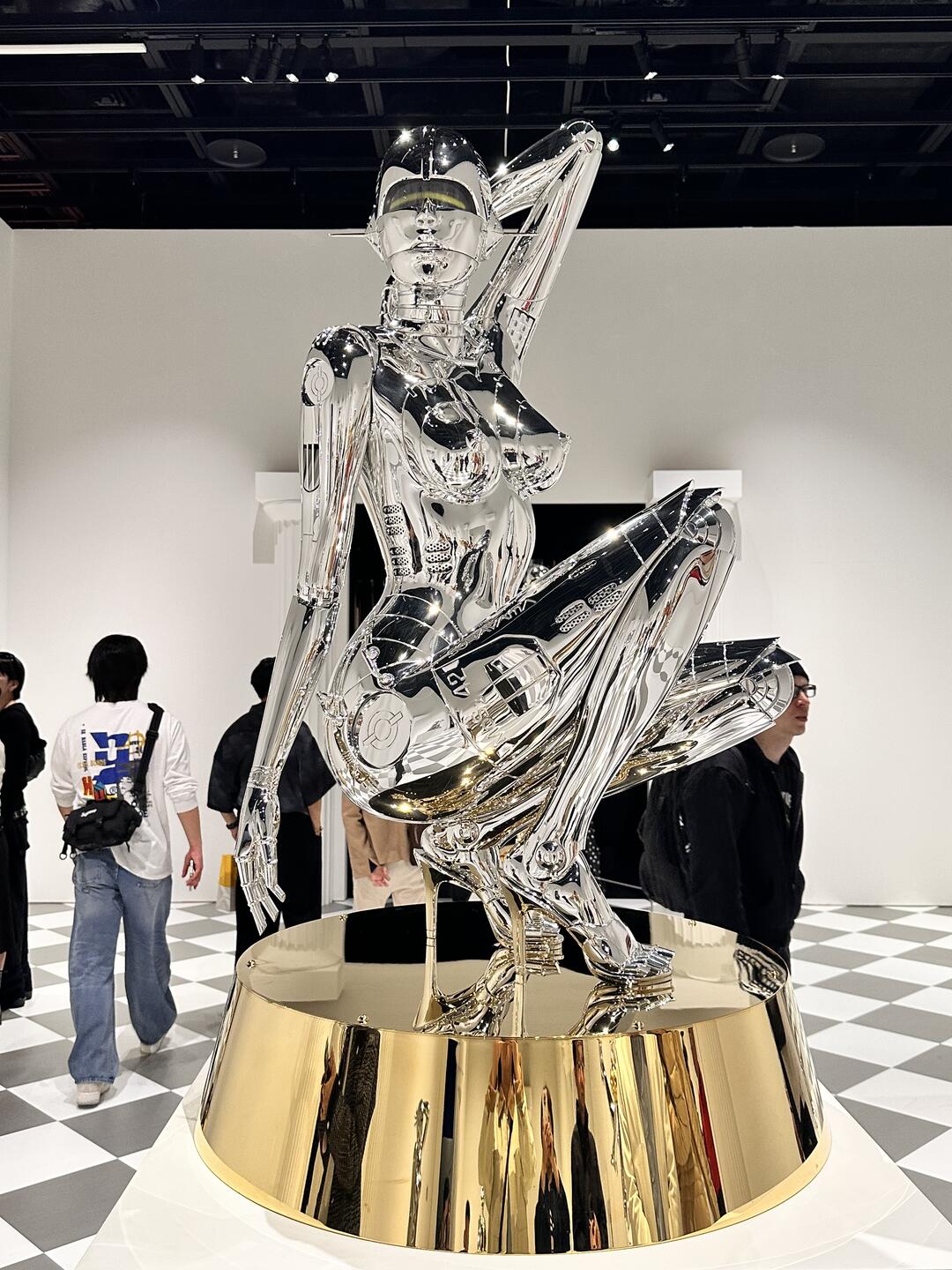
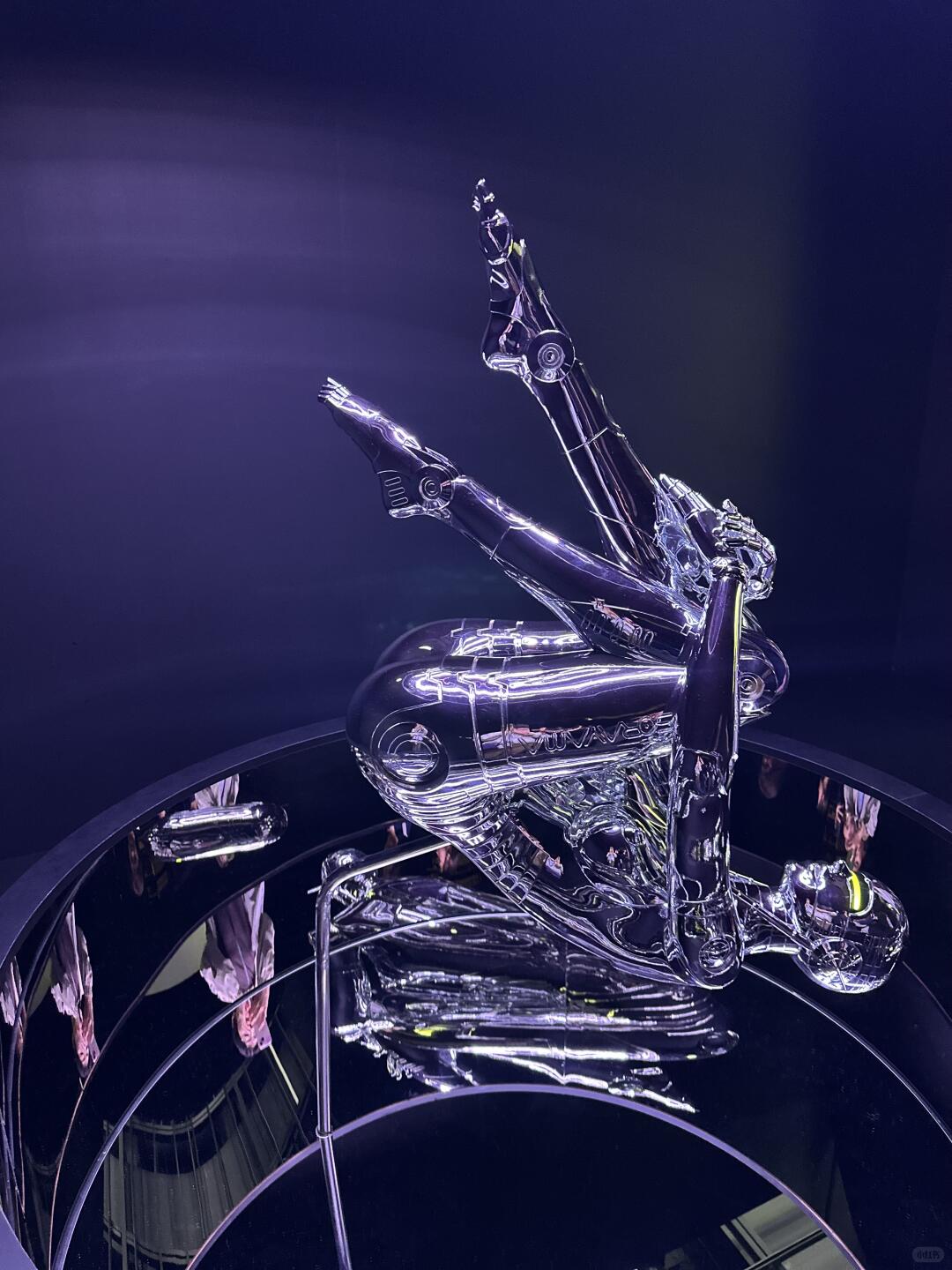
The spectacle matters because it changes the robot from private fantasy into public architecture. It becomes something people walk around, photograph, scale themselves against and consume as an environment. This is where the cyborg aesthetic becomes spatial, not just visual.
For future alt fashion, that shift is important. The body is no longer only wearing futuristic objects. The body becomes the futuristic object.
Why fashion keeps borrowing this language
Fashion borrows from Sorayama because the visual vocabulary is instantly legible. Chrome body. Mechanical joints. High shine. Feminised robot. Future desire. Cold glamour. It gives designers, stylists and image-makers a shortcut to a post-human mood.
But the better use of this language is not simply putting someone in a silver bodysuit. That is too literal. The better translation is about surface and tension:
- mirrored accessories
- sculptural metallic jewellery
- chrome shoes
- glossy black and silver styling
- rigid corsetry
- body-contouring panels
- reflective eyewear
- smooth hair and hard light
- silhouettes that make the body feel designed rather than dressed
That is how chrome robot bodies influenced fashion aesthetics: not only through costume, but through the idea that the body can be engineered into an image.
The drawings are softer, which makes them stranger
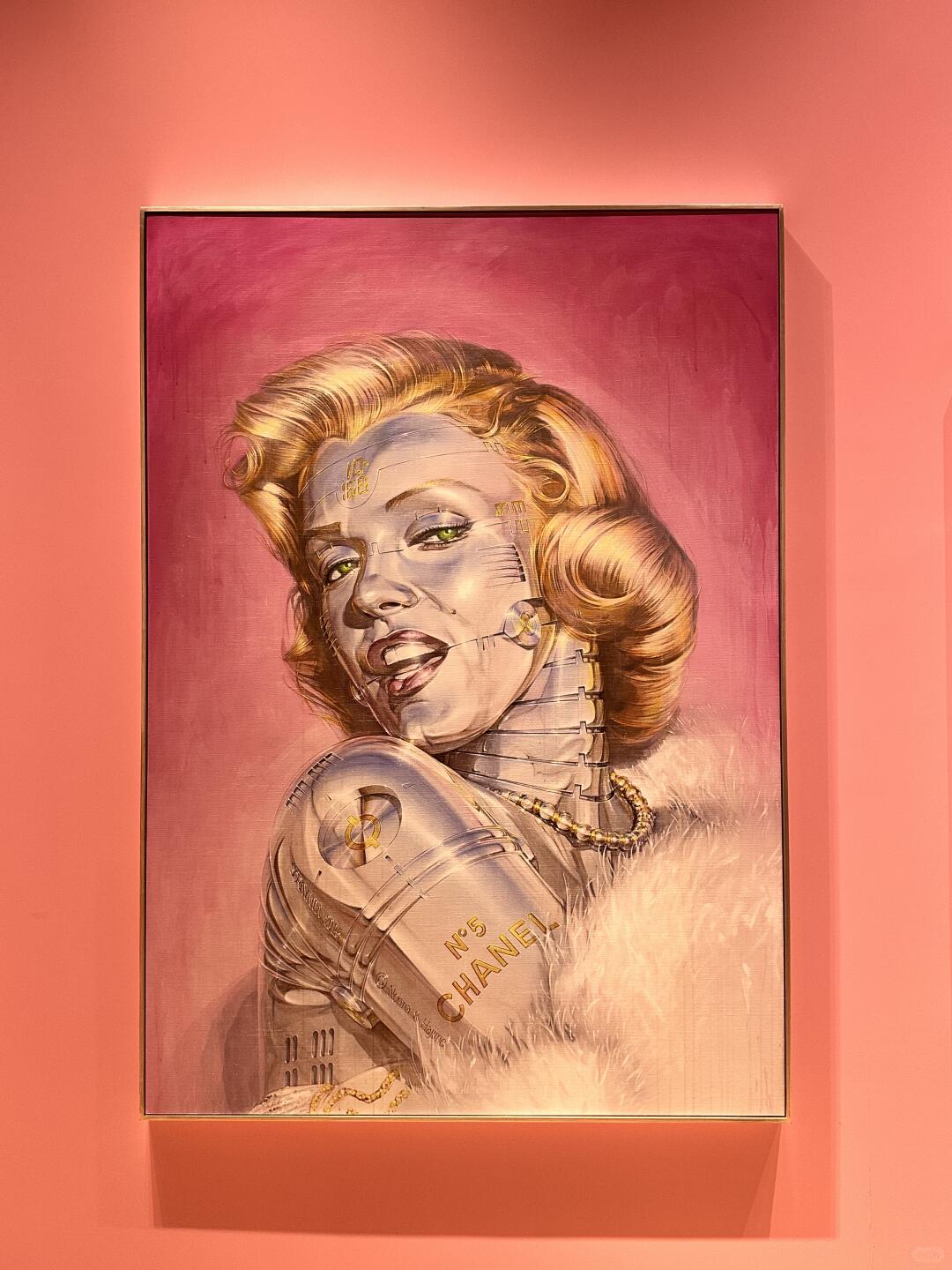
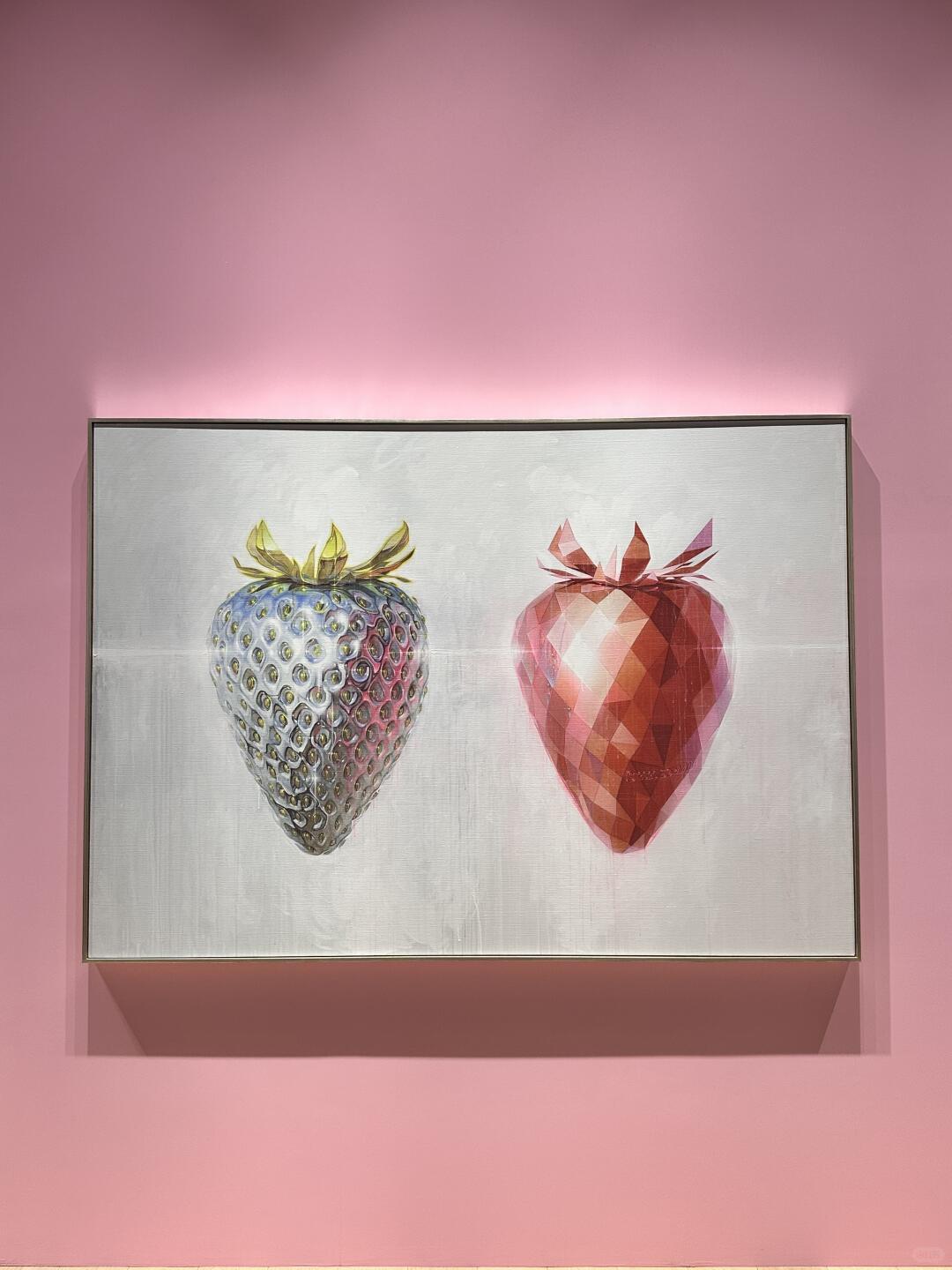
The painted works complicate the chrome sculptures because they bring back atmosphere. Clouds, halos, flowers, old Hollywood hair, city scenes, soft colour. The robot remains hard, but the setting becomes sentimental.
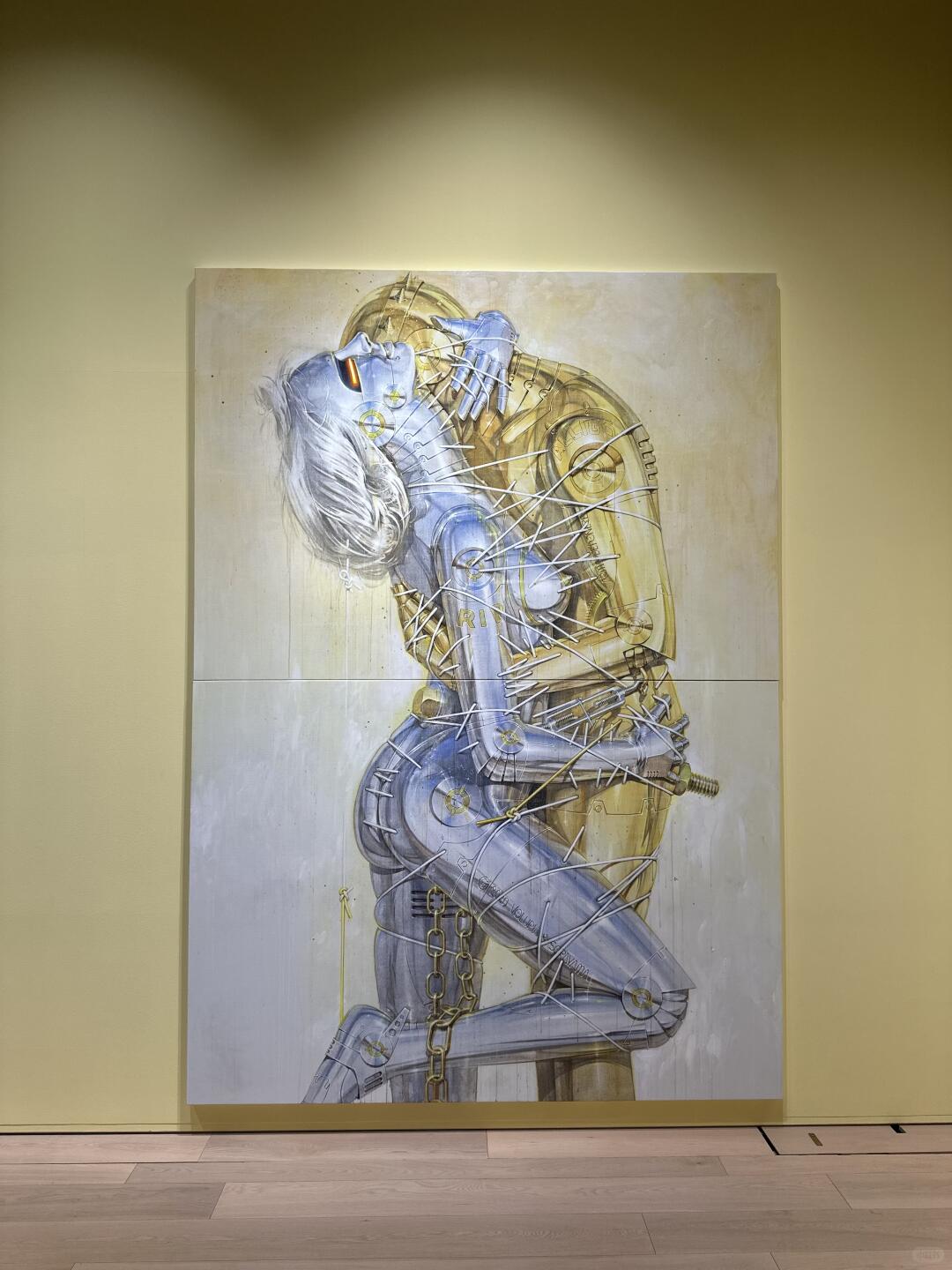
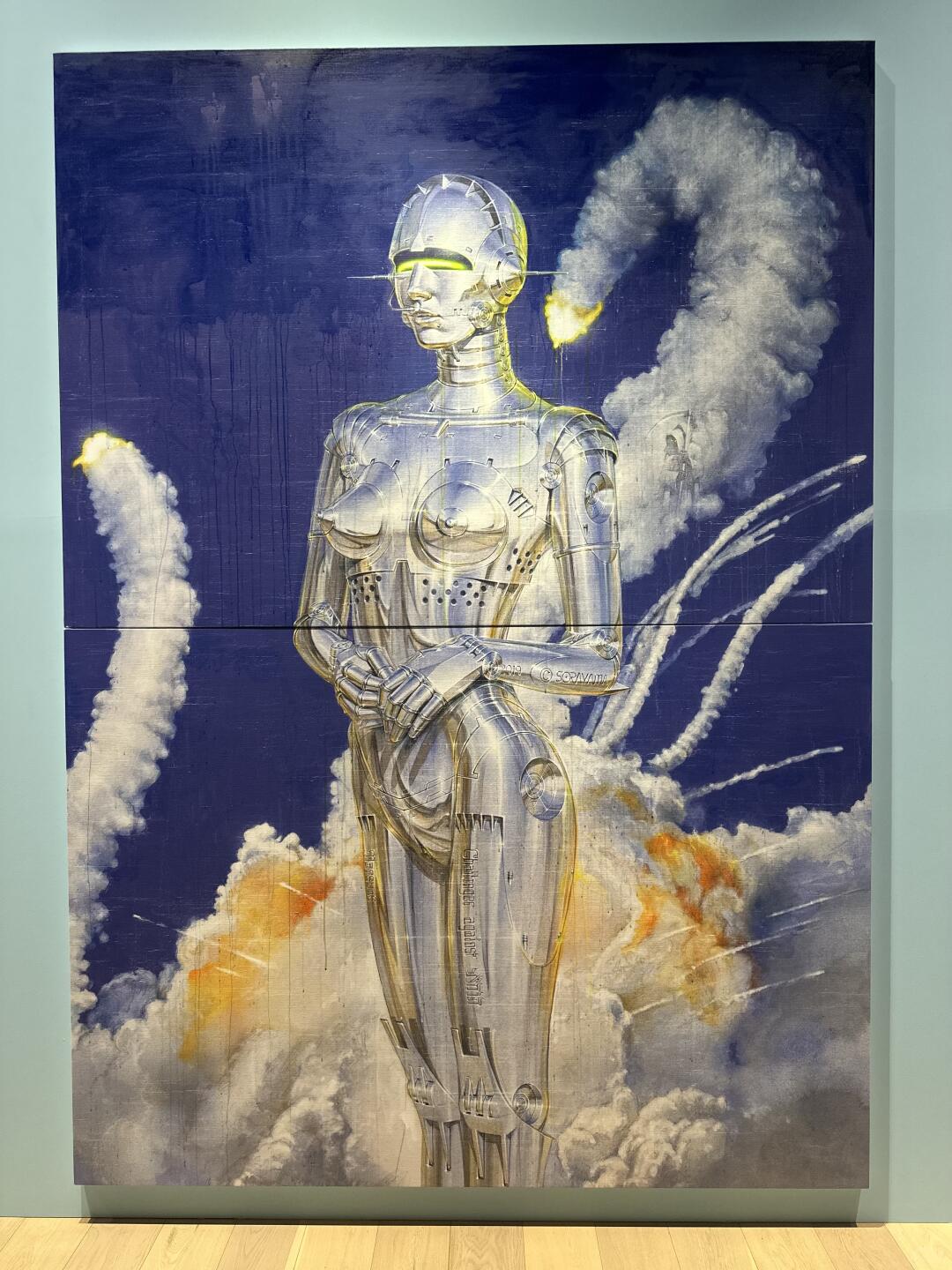
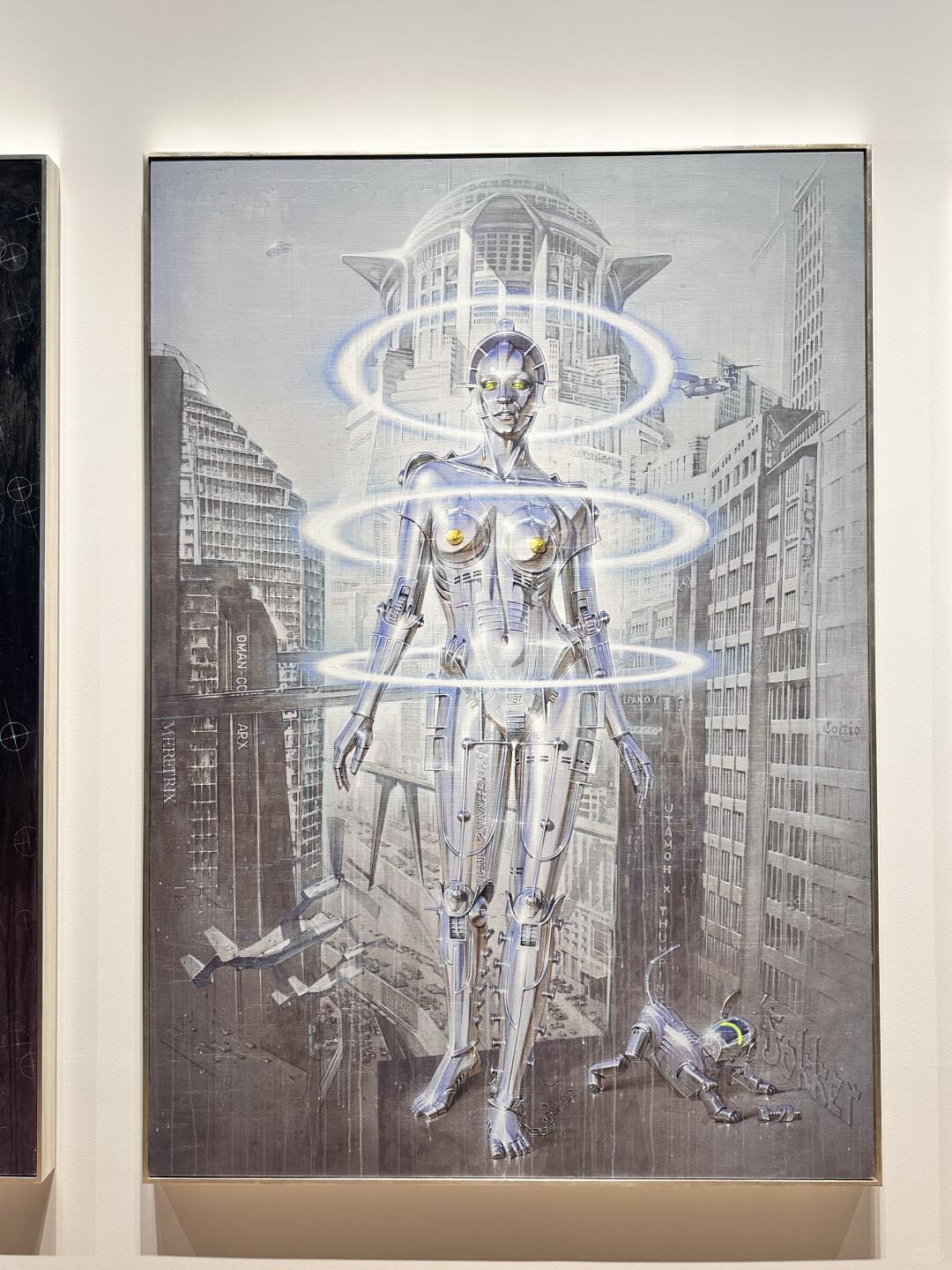
This is where the work becomes more interesting than a simple fetish for metal. The machine is placed inside romantic, cinematic or almost religious visual codes. A chrome body with clouds behind it feels less like a product and more like an idol. A robot with halo-like rings becomes futuristic saint, mechanical pin-up and technological ghost all at once.
I do not think fashion has fully exhausted this side of the reference. The industry borrows the shine constantly, but it does not always borrow the contradiction: cold surface against soft fantasy.
The studio-room images reveal the obsession
The desk and studio images are visually dense in a completely different way. They show accumulation: figures, posters, drawings, models, maps, toys, scraps, references, surfaces, fragments. This is the opposite of the polished chrome body, and that contrast matters.
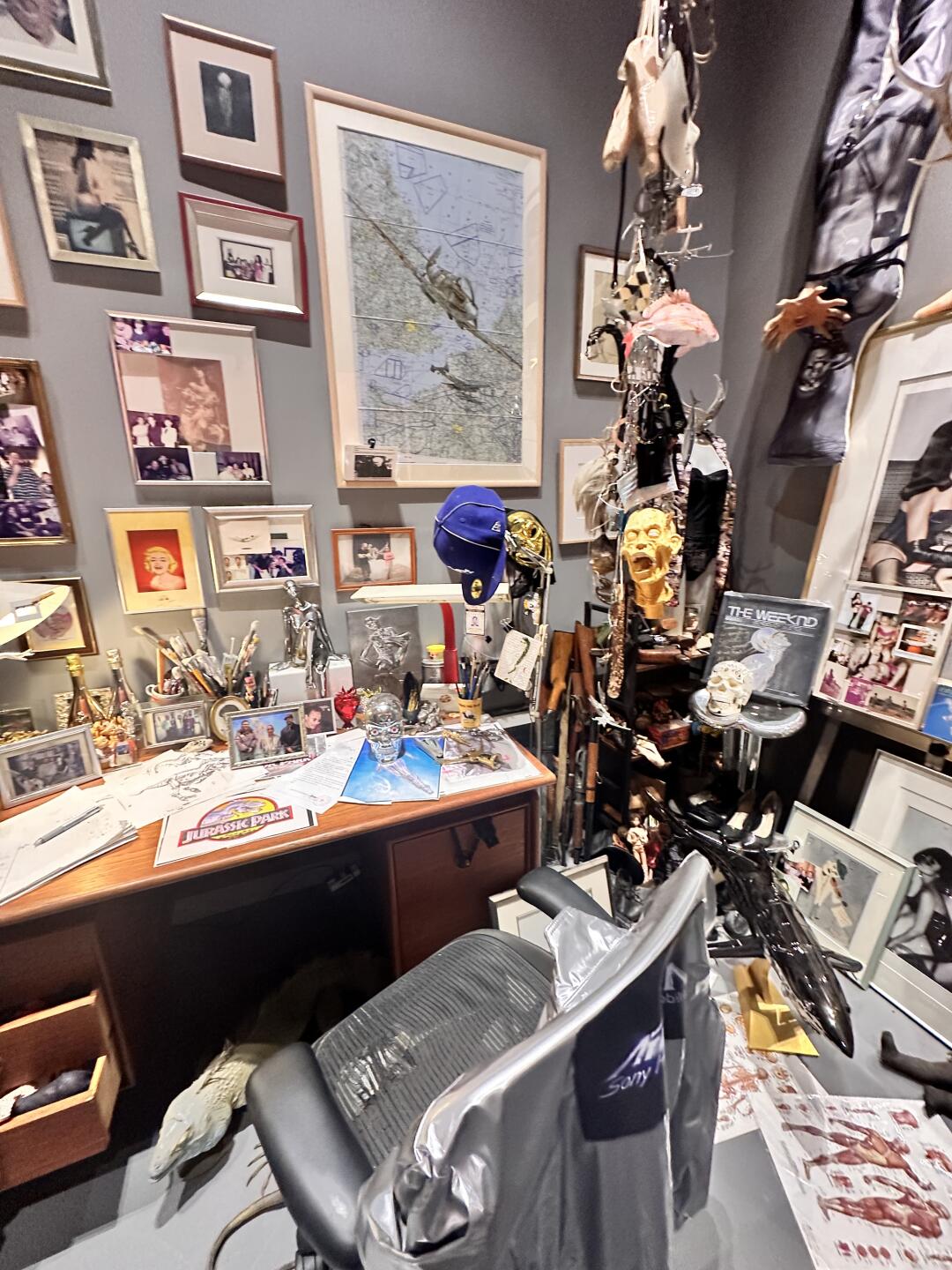
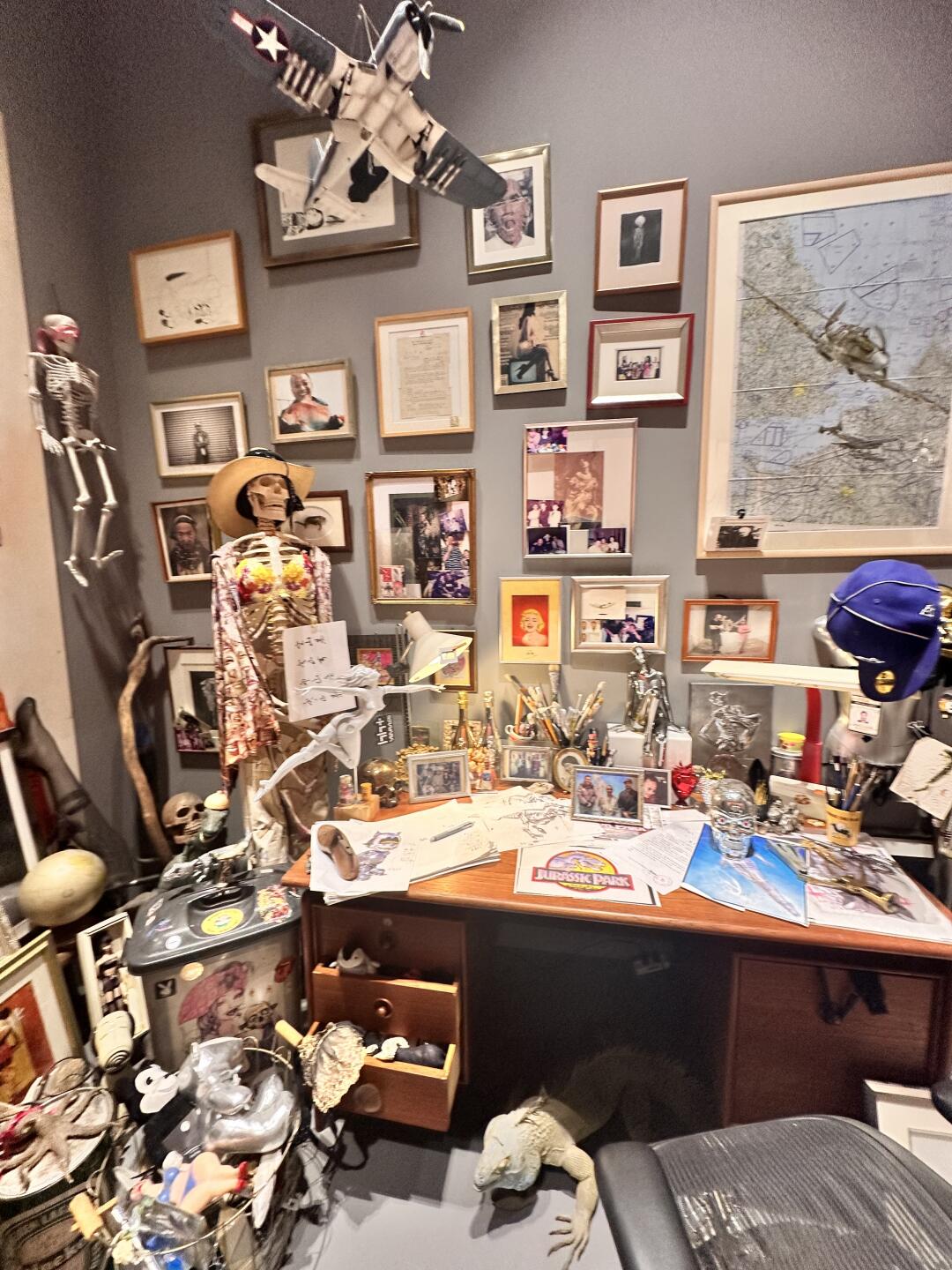
The finished robot looks impossibly smooth, but the visual world around it is crowded. That is often how strong aesthetics work. The final image looks clean because the obsession behind it is not clean at all.
This is a useful lesson for styling, too. If you want a convincing chrome robot aesthetic, do not just buy one metallic piece and call it futuristic. Build a reference system. Think about light, posture, surface, skin, hardness, reflection, silhouette, objecthood and how much humanity you want to leave visible.
The poster makes the fantasy portable
The final poster image turns the Sorayama universe into a graphic signal: chrome body, night skyline, blue-purple light, futuristic typography, exhibition-scale branding.
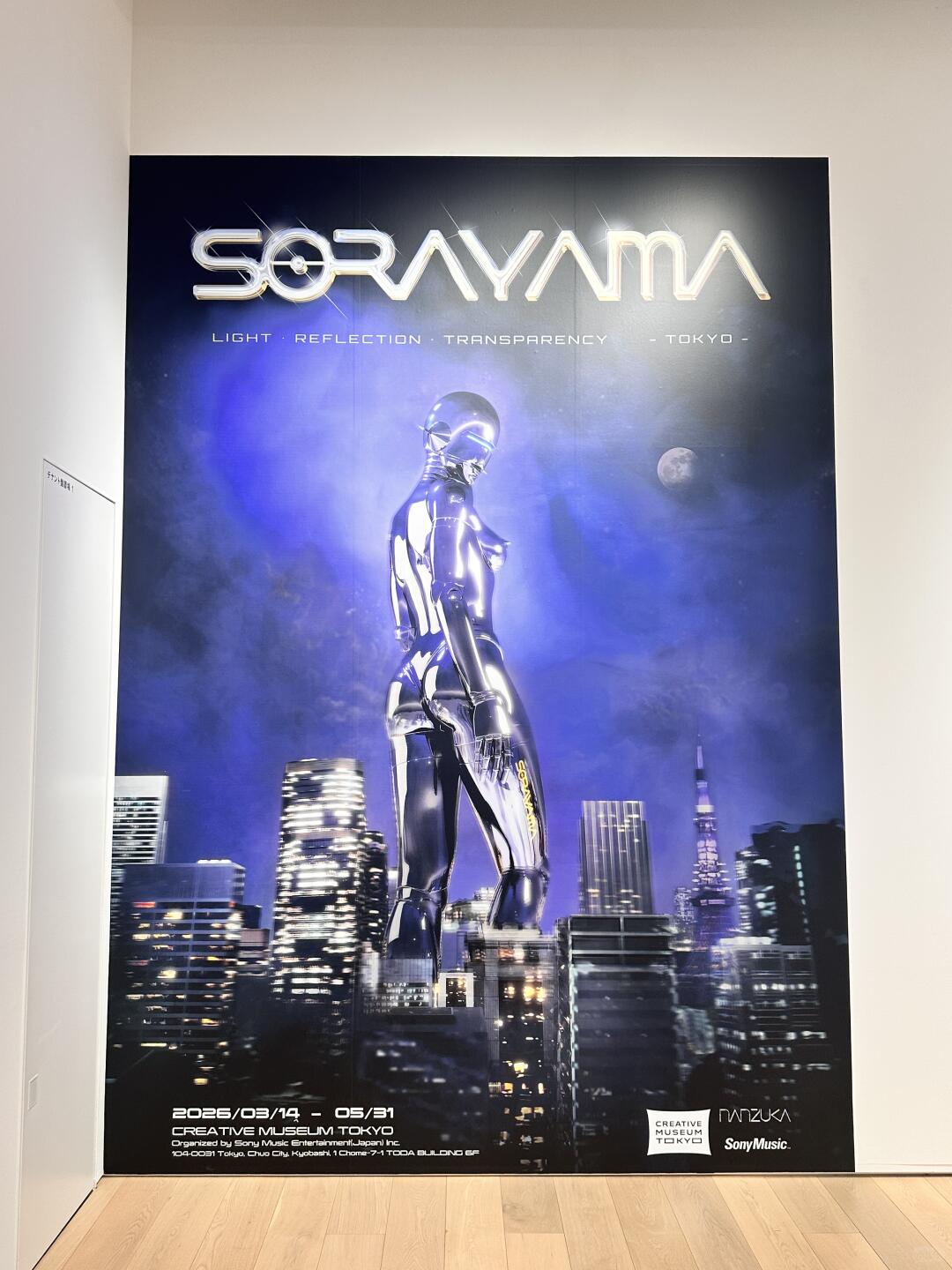
This is the version most easily absorbed by fashion mood boards. It is instantly readable. Chrome against night. Woman-machine against city. Futurism as glamour rather than engineering.
And that is why Hajime Sorayama remains such a useful reference for future-facing style. His work understands that futurism is not only about technology. It is about desire, projection, surface and the fantasy that the body can be redesigned until it becomes untouchable.
How to use the Sorayama reference without making it costume
Use chrome as an accent before using it as a full body. A silver ear cuff, sculptural earring, mirrored bag, metallic shoe or hard eyewear can carry the reference without turning the look into cosplay.
Pair metal with softness. Chrome works harder against cotton, skin, sheer fabric, grey knit, black leather or pale satin than it does against more obvious futurist styling.
Keep the silhouette controlled. Sorayama’s bodies are extreme because they are precise. If the outfit is too loose everywhere, the reference disappears.
Think in reflections. Shiny surfaces need light, spacing and contrast. A chrome accessory in a flat outfit can look random. A chrome accessory in a look with black, white, skin, gloss or sharp tailoring starts to make sense.
Do not ignore the discomfort. The sexy robot aesthetic is powerful because it is not neutral. If you borrow from it, understand that you are borrowing a fantasy about gender, machine perfection and the body as object. That does not mean you cannot use it. It means the reference has teeth.
FAQ
What is Hajime Sorayama known for?
Hajime Sorayama is known for highly polished robot imagery, especially chrome female robot figures associated with the Sexy Robot visual language. His work combines mechanical surfaces, pin-up poses, erotic glamour and futuristic body fantasy.
What is the Sorayama robot aesthetic?
The Sorayama robot aesthetic is built around chrome bodies, reflective surfaces, mechanical joints, feminised silhouettes, pin-up posture, hard light and the tension between machine perfection and human desire.
Why are Sorayama robots sexualized?
Sorayama robots are sexualized because the work deliberately combines mechanical bodies with human erotic codes: curves, pose, shine, glamour, lips, hips and performance. The tension between object, machine and desirable body is central to the aesthetic.
How can this aesthetic influence fashion?
It can influence fashion through chrome accessories, metallic jewellery, sculptural silhouettes, mirrored shoes, glossy black styling, rigid corsetry, reflective eyewear and body-contouring pieces that make the body feel engineered rather than merely dressed.