
When Cyberpunk Has to Sleep
R WEAR's Ghost in the Shell collaboration turns cybernetic-body ideas into a black recovery-wear set, then asks what rest looks like in a real wardrobe.
TL;DR
- R WEAR’s Ghost in the Shell collaboration translates a cyberpunk world into a black recovery-wear set rather than a graphic T-shirt.
- Triporous and the double-layer mesh give the clothing a material and functional story, but the brand’s performance claims are not the same as personal proof.
- The eye mask and storage pouch make the collaboration about a bedtime routine, not only about wearing a licensed property.
- The real test is whether the set can belong in ordinary rest and an actual wardrobe after the first excitement fades.
What Does the Cybernetic Body Have to Do With Sleep?
I have a soft spot for clothes that seem to have a second job.
Not shapewear. Not a blazer that is supposedly going to make me look like I have my life together. I mean the pieces that quietly promise to change the conditions of my day: a cardigan that makes a long flight feel less hostile, a pair of shoes that lets me walk further than I planned, a sleep set that is asking to do something more than keep me warm.
This is where I find myself with R WEAR’s collaboration with Ghost in the Shell.
At first glance, it sounds like the kind of thing we have all seen before: a beloved cyberpunk property, a black garment, and a logo placed somewhere discreet enough to feel cool. But this is not a graphic tee that lets you wear your fandom for an afternoon. It is a recovery-wear set for the hours when nobody is supposed to see you at all.
Which is, honestly, much more interesting.
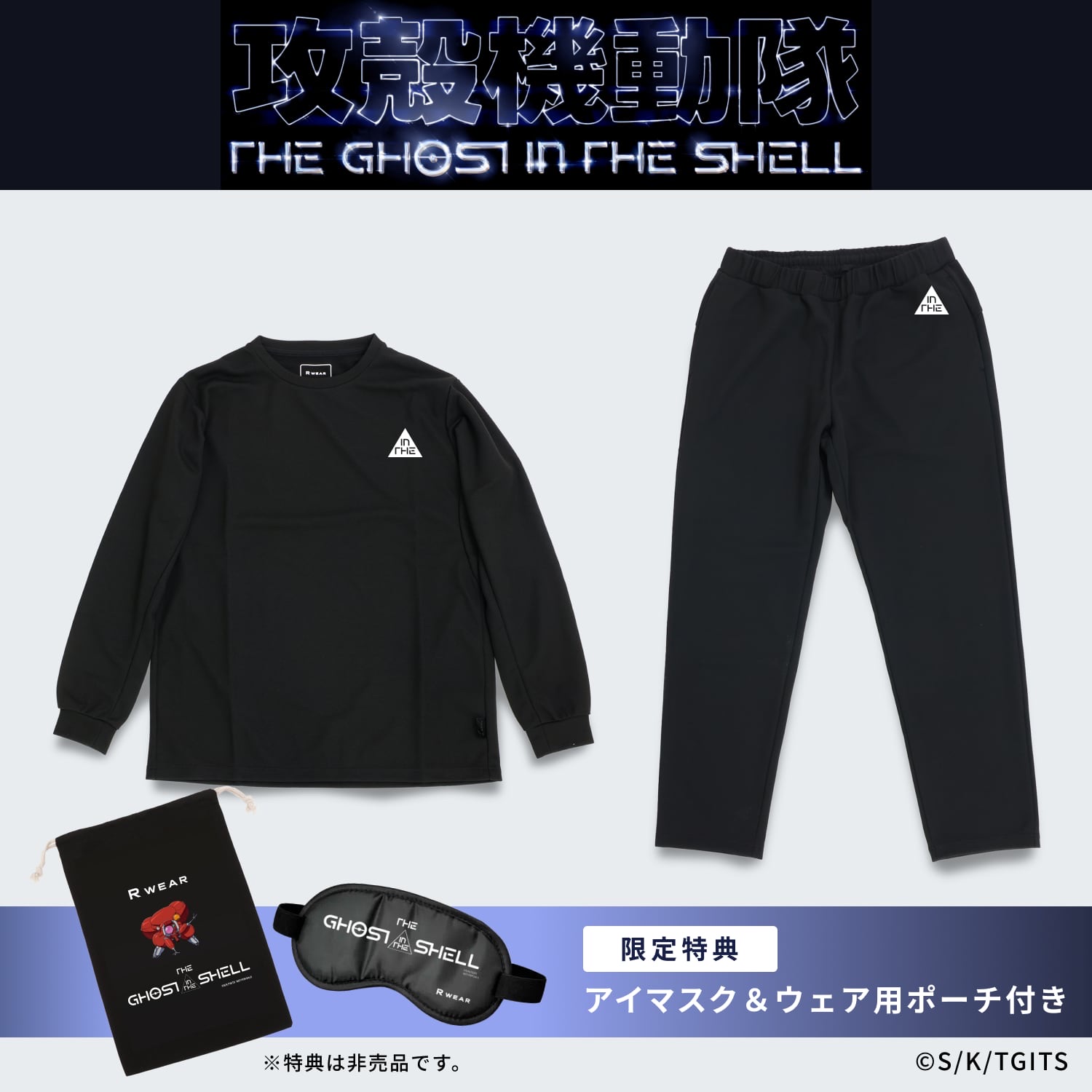
The Relaxing Mesh set is a black long-sleeve top and a pair of long pants. There is also a version with an eye mask and a drawstring storage pouch. The collaboration is being framed around rest and everyday wear rather than costume, which means the Ghost in the Shell connection is not only living on the surface of the garment. It is being asked to move into the body, into a bedroom, into the slightly unglamorous business of going to bed.
And I love when fashion gets forced into an ordinary situation.
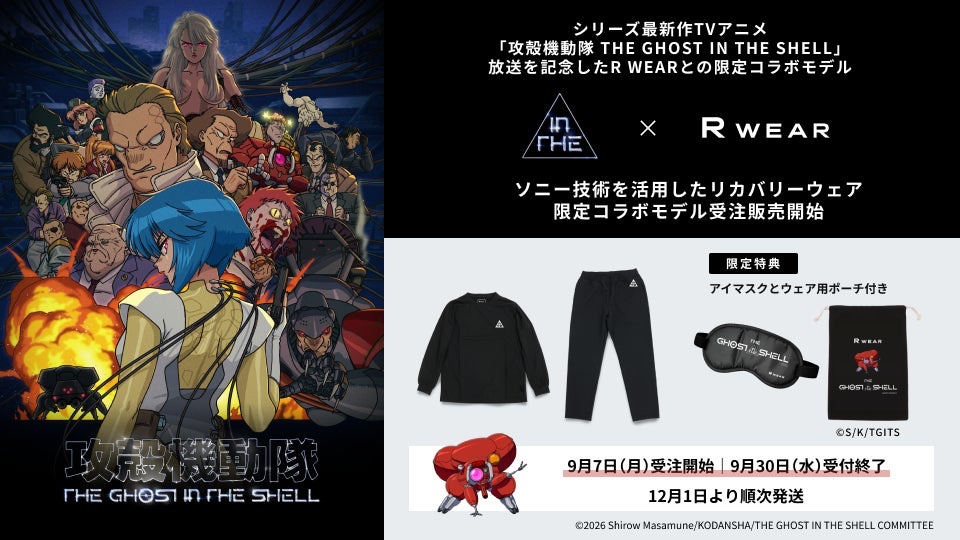
In Ghost in the Shell, the body is never just the thing carrying the clothes. It is a system. It is networked, replaceable, vulnerable, enhanced, and constantly negotiating the question of where the self begins and ends. Motoko Kusanagi is a full-body cyborg, which is a very dramatic way of saying that her relationship with maintenance is probably more complicated than mine.
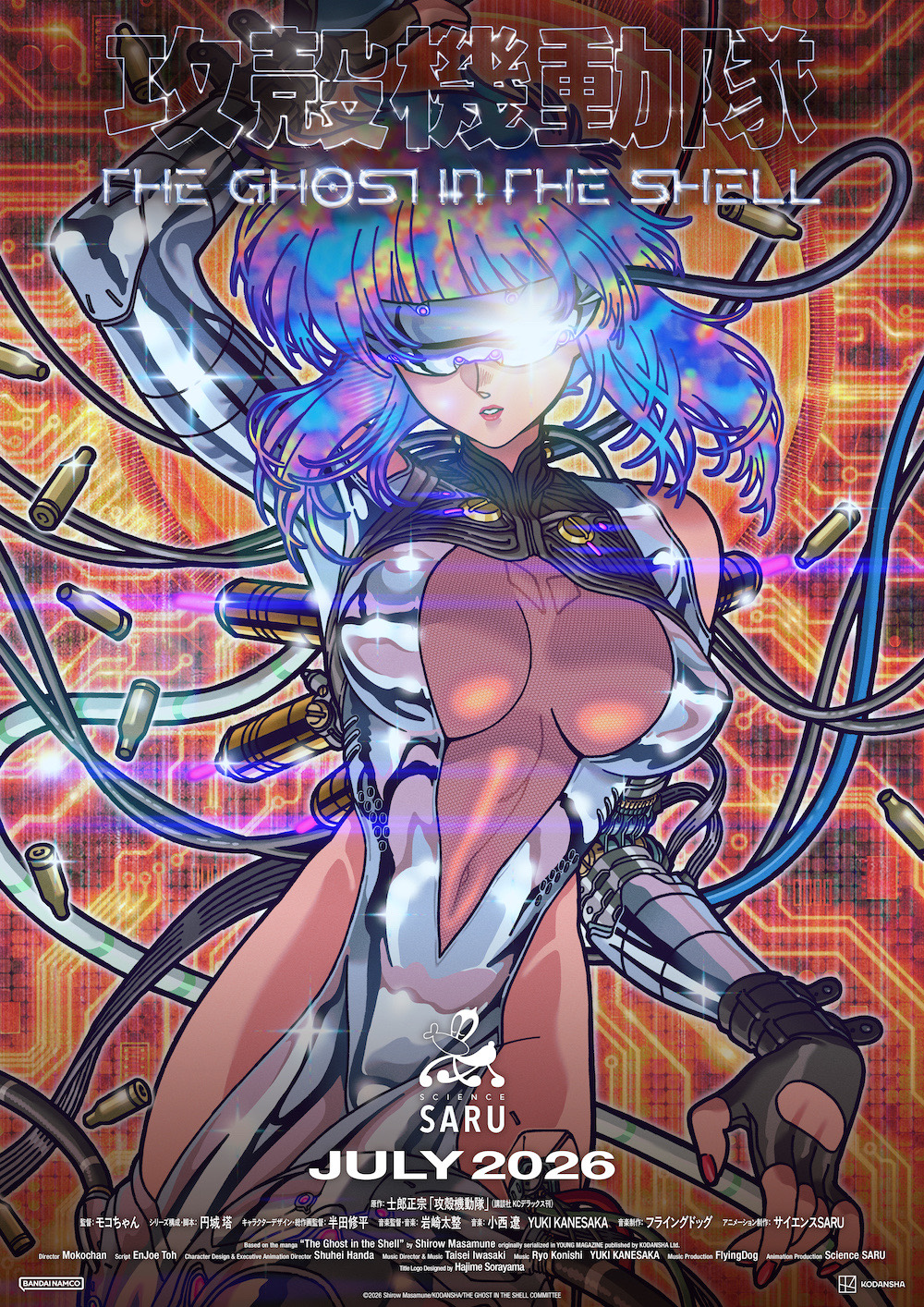
My own maintenance usually looks like washing my face, putting my phone on the other side of the room, and realizing I have been wearing the same sweatshirt for three days.
So what happens when that cybernetic imagination is translated into something designed for sleep?
The answer is not a glowing bodysuit or a tactical uniform. It is a black matching set. This feels almost funny until you think about what sleep actually asks of our clothes. They need to disappear a little. They need to stay close without demanding attention. They need to let us move between bed, kitchen, bathroom, sofa, and the inevitable late-night glass of water without making us feel like we have abandoned our own standards completely.
This is a very particular kind of design problem. It is not about looking futuristic. It is about making the future feel quietly useful.
The black colour helps. Of course it does. Black is the easiest way to make almost anything feel intentional, from a slip dress to a pair of old leggings to the outfit you put on when you are travelling and want to look like you have not been travelling for eleven hours. Here it also keeps the collaboration from becoming too literal. The Ghost in the Shell world is present, but it is not shouting from the chest.
There is room for the garment to become part of a life instead of a souvenir from someone else’s.
How Does the Material Make This More Than a Graphic Collaboration?
The product’s material story is doing a lot of the cultural translation here.
R WEAR describes the fabric through Triporous, a porous carbon material made from rice husks and developed from Sony’s material technology. The Relaxing Mesh fabric uses a double-layer structure: a softer layer close to the skin and an outer mesh layer intended to release moisture. It is a very practical inside-and-outside arrangement, but it also gives the set a satisfying logic. The body gets the gentle part. The outside deals with the rest of the world.
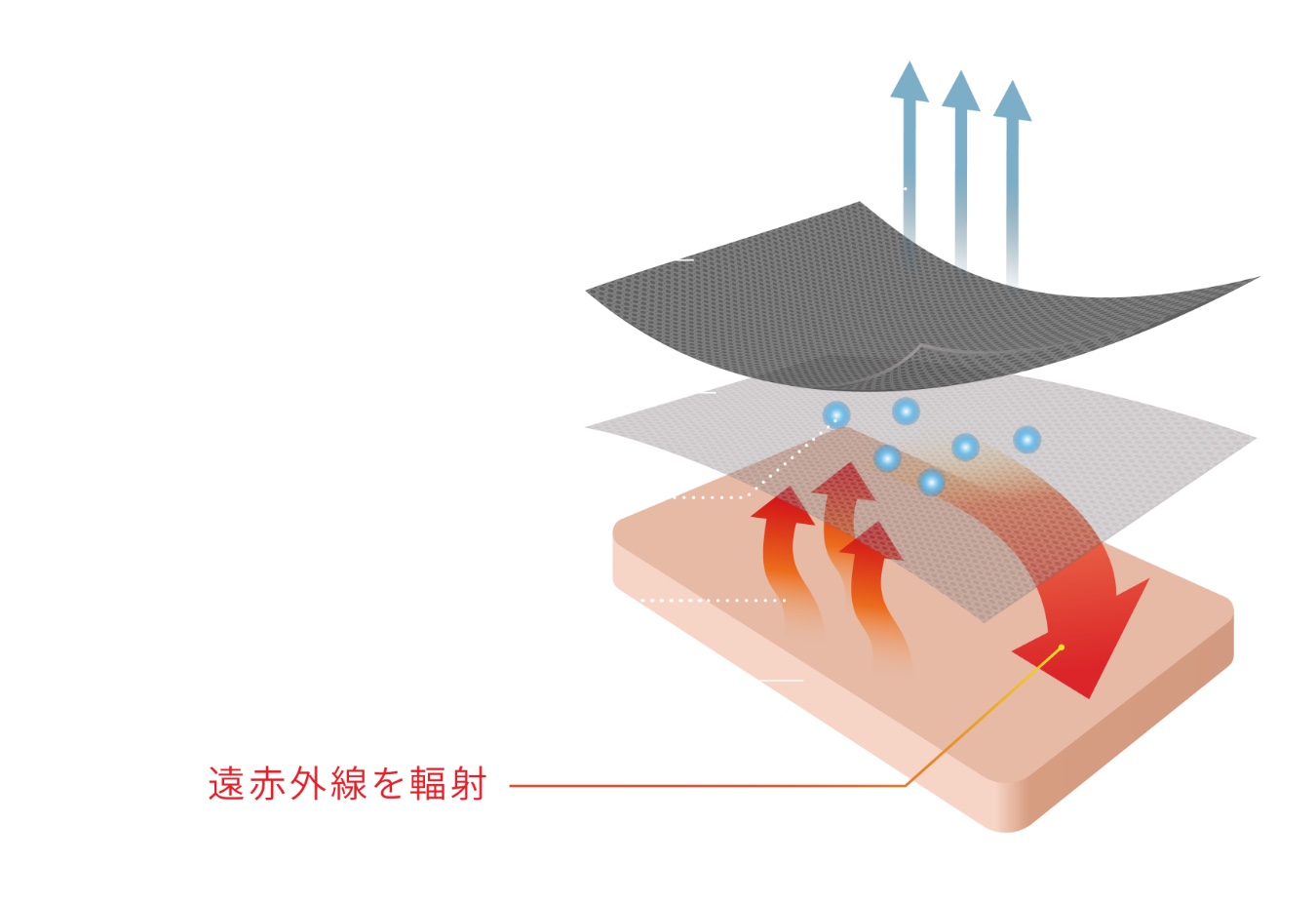
This is the point where a collaboration like this can either become more than licensing or quietly collapse back into it.
If the only connection to Ghost in the Shell were the black colour and a printed emblem, the product would still be attractive to a certain kind of fan. But the material language gives the collaboration somewhere else to go. The franchise’s imagination of a body being engineered, maintained, and kept functional is being translated into a fabric that is supposed to participate in recovery and comfort.
Supposed to is important here.
R WEAR’s recovery and medical-device language belongs to the brand’s product claims. It is not the same as having a stranger on the internet promise that one pair of pyjamas changed her sleep, her circulation, or her entire emotional relationship with Monday morning. Those are different categories of information, and I would prefer that we keep them that way.
But that does not make the material story meaningless. Clothing has always asked us to believe in a relationship between fabric and body. We buy linen because we want to feel cooler, wool because we want to feel held, silk because we want to feel like we are not answering emails in bed. Sometimes the promise is technical. Sometimes it is emotional. Usually it is both.
The interesting question is not whether a technical material makes the garment futuristic enough. It is whether the material gives us a reason to keep reaching for it after the first excitement wears off.
Why Do the Eye Mask and Pouch Matter?
The eye mask and pouch are small details, but they tell me more about the collaboration than the logo does.
An eye mask changes the set from clothing into a routine. The pouch gives the accessories somewhere to live. Suddenly this is not just a top and pants that happen to be connected to a fictional world. It is a little domestic system. You put it on, cover your eyes, put the mask away later, and try to create a boundary between being available and being asleep.
That boundary is very hard to maintain now. We have made rest into another thing that can be tracked, optimized, scored, and turned into a morning report. We can know our sleep stages, our heart rate, our readiness, and the exact number of times we apparently woke up at 3:17AM. We can also know, with great certainty, that we should be sleeping while continuing to look at our phones.
A screen-free sleep uniform feels almost radical by comparison.
Not because it solves anything. It does not. A pouch cannot make you put your phone down. An eye mask cannot force your nervous system to become peaceful on command. But the set is at least imagining rest as a physical condition instead of another data point.
That feels very close to the best parts of Ghost in the Shell: the tension between a body as information and a body as something you still have to live inside.
What Are You Actually Buying With the R WEAR Set?
The official R WEAR product listing lists the full version with the eye mask and pouch at ¥45,000, while the set without them is ¥42,000. It is made to order, with preorders running until September 30 and shipping planned for early December. The product is also currently limited to Japan.
This is not an impulse purchase. It is not the thing you add to your cart while buying socks because you were already there. There is a wait. There is a significant price. There is a decision to make about whether a recovery-wear set can occupy enough space in your actual life to justify being more than a very beautiful object.
And that is where my fantasy self starts talking.
She is imagining the perfect evening. The black set is freshly washed. The eye mask is waiting in its pouch. The room is clean. The phone is nowhere nearby. Perhaps there is a cup of tea, although we both know I will forget about it and find it cold an hour later. In this fantasy, I am a person who understands the value of rest and has made it look extremely good.
What I like about this collaboration is that it does not ask us to pretend the fantasy is completely stupid. The fantasy of becoming a more rested person is not nothing. Neither is the desire to make the hours at home feel considered. Clothing can help us mark a change in state, even if it cannot do the entire job for us.
But it is still worth asking whether we are buying the object or the promise attached to it.
That question has saved me from plenty of clothes that were beautiful in theory and annoying in my closet. The item was never the problem. The future self I had assigned to it was simply too busy, too elegant, or too committed to wearing it to be real.
The R WEAR set is at its most convincing when it is allowed to be specific. It is a black long-sleeve and pants set with a material system, a sleep accessory, a pouch, a price, a wait, and a limited place to buy it. It does not need to be everything. It needs to be a thing someone might actually wear on a Tuesday night when there is laundry on the chair and the next day begins too soon.
That is a much harder test than looking good in a campaign image.
Can a Cyberpunk Idea Survive Bedtime?
There is something lovely about taking a cyberpunk idea and asking it to survive bedtime.
Not the exciting part of bedtime. Not the cinematic part. The part where you are cold but do not want another blanket, where the waistband of your old pyjama bottoms has suddenly become an enemy, where you are carrying your eye mask from room to room because you have not yet decided whether you are actually going to sleep.
If the Ghost in the Shell world is about bodies that are constantly maintained, connected, and questioned, this collaboration makes a quiet argument for maintenance too. Not as optimization. Not as becoming a better machine. Just as the small care required to remain inside a body for another day.
Maybe that is why the domestic version of cyberpunk feels more interesting to me than another futuristic silhouette. It takes the fantasy out of the city and puts it beside the bed. It asks whether a technological imagination can make space for softness without losing its identity.
I do not know if the set will make anyone sleep better. That is not something a product page can settle for us. But I do know that the idea of a fictional body-maintenance system becoming a piece of clothing for ordinary rest is more thoughtful than another licensed print.
And if you are going to buy a fantasy, perhaps it is better when the fantasy includes coming home, taking off the day, and giving your body somewhere comfortable to go.
For the larger questions of identity and the cybernetic body behind this collaboration, read our Ghost in the Shell guide and our introduction to posthuman fashion.