
Retro Street Style for Summer: A Practical Styling Guide
Use setting, mood and personal details to build retro summer street-style outfits with polos, low-rise jeans, mini skirts and long boots for daily wear.

Early Japanese street style around Shibuya, Chinese Y2K looks, the polished drama wardrobes in My Girl and the pared-back outfits in Friends all belong to different moments. I am using them as strong screen and street references rather than pretending they form one exact historical category.
For this edit, I wanted to narrow the idea down to street style.
Many of the retro outfits I collect lean in that direction. My suspicion is that, outside scripted wardrobes and magazine editorials, much of what now reads as authentic period style comes from street photography. That naturally makes the street influence feel stronger.
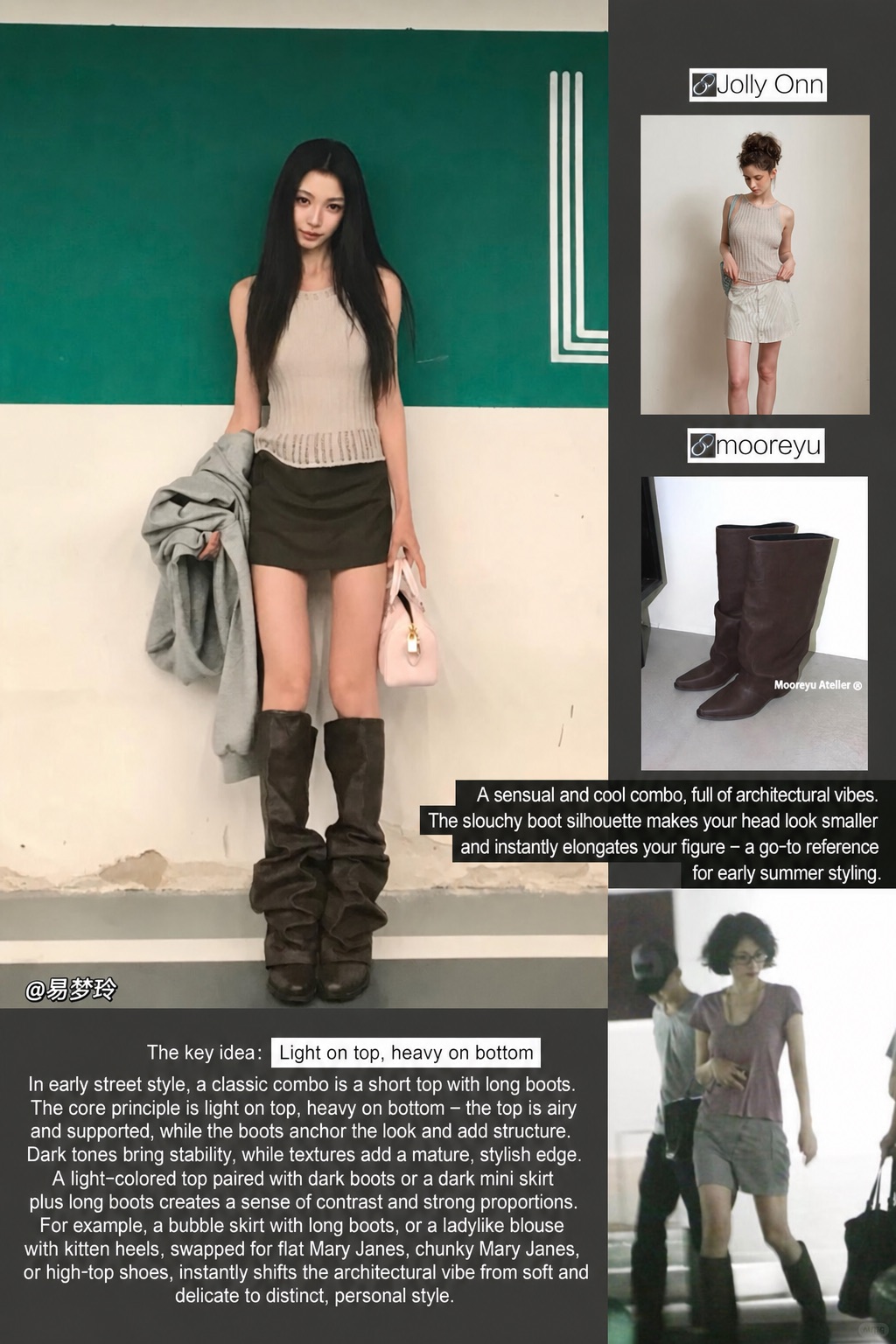
The formula has only two parts: retro mood and street style.
I also chose it because different outings call for different clothes. For commuting, museums or galleries, I tend to prefer an intellectual look. For a park or picnic, especially when I do not want to stand out too much, I might choose something softer and quieter. Amusement parks, music festivals, Shibuya and the streets of Shanghai can all take a stronger street look.
One setting never belongs to only one style. A polished, intelligent outfit can work in Shibuya because it still carries an urban, commuter quality. Streetwear works there for the opposite reason: a city also has a casual, public and unpredictable side.
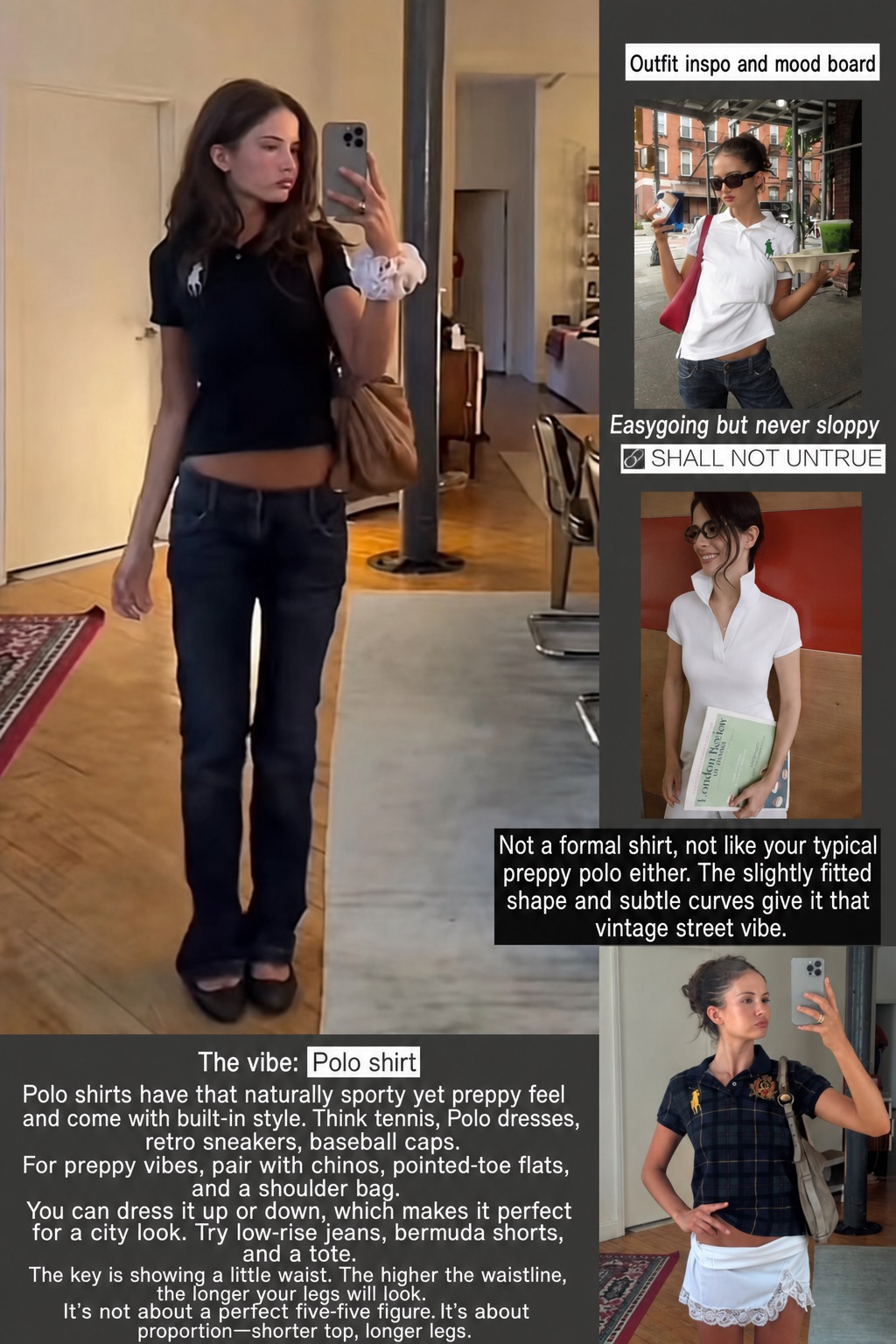
That overlap is what makes this useful. Choose one quality that already belongs to the destination, then add whatever mood you are in.
Disney parks and Universal Studios, for example, are casual places, which already aligns with the relaxed core of street style. If you care more about the stories behind those places, the direction changes. A love of fairy tales can lead to a retro feminine look, while Harry Potter can push the outfit toward an old-school collegiate style.
What you are thinking about and what you love both matter. Mood matters.
Clothes and settings always answer each other. The right surroundings can amplify a style, but what you want to wear and what you want to show still belong to you.
Here is one small way to find your own style. I love scarves, so I wear them with streetwear, feminine looks and sportswear. A personal detail used on a small scale will not overturn the larger style. Sometimes it creates exactly the right tension. Repeat that process and your own smaller language starts to emerge from the bigger category.
Back to street style: it works anywhere casual, unhurried and genuinely street-facing.
Yes, if there is a street, you can basically wear it.
This edit does not include much classic American streetwear. Most of the references come from older street photography, including the Japanese street-style documentation that flourished in the late 1990s and 2000s.
Useful pieces include T-shirts, camisoles, tank tops, mini skirts, polka dots, midi skirts, asymmetric tops, low-rise jeans, cargo trousers, polo shirts, tall boots, ballet flats, heels and kitten heels.
Sources
- Collecting All Things Fashion: The Costume Institute Library - The Metropolitan Museum of Art, accessed July 16, 2026
- 1990-1999 - Fashion History Timeline, The Fashion Institute of Technology, accessed July 16, 2026
- 2000-2009 - Fashion History Timeline, The Fashion Institute of Technology, updated December 2, 2025