
Dark Romantic Fashion and the Architecture of Black
Learn how dark romantic fashion uses black textures, architectural volume and sculptural hats to create distance, movement and emotional power.
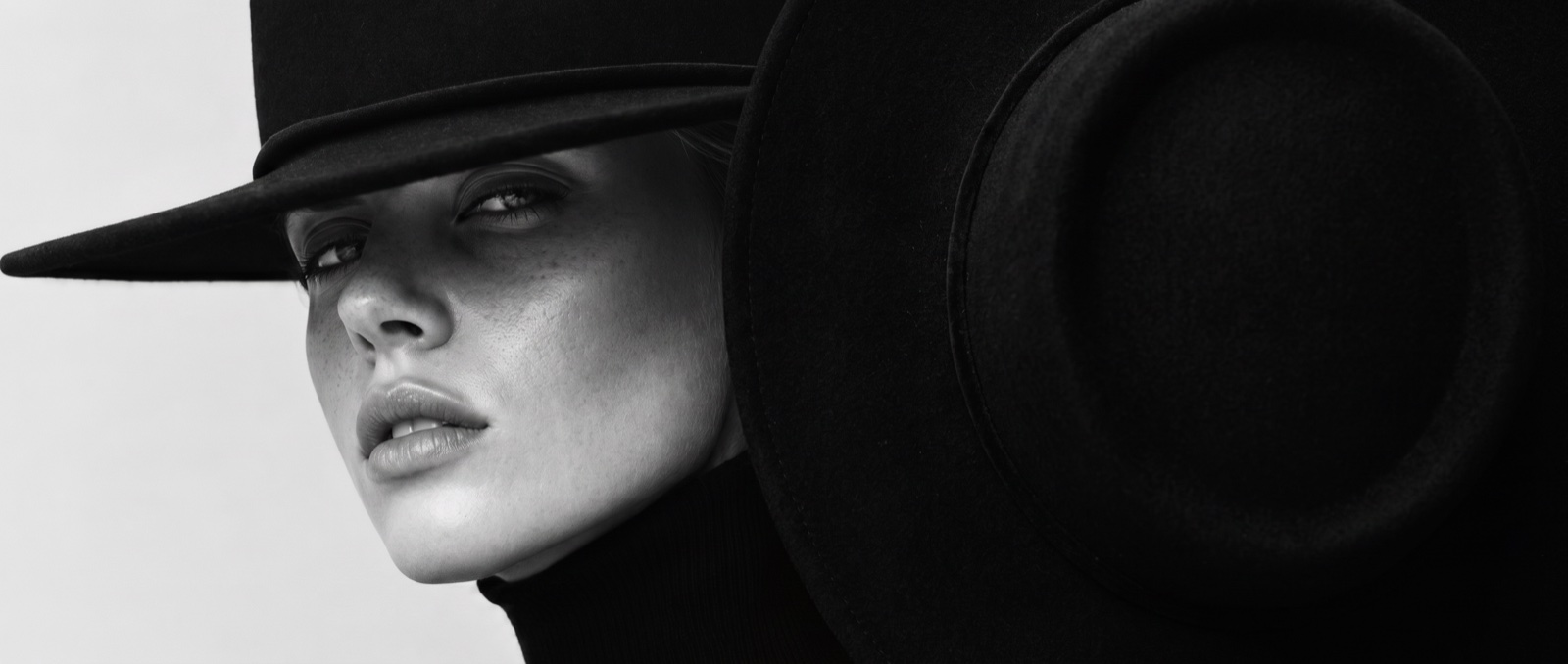
Dark fashion often arrives with an extreme coldness. It can feel severe enough to be physical, as if the eye has touched metal. In the gender-blurring black tailoring of Yohji Yamamoto and Comme des Garçons, and in images associated with the Gothic witch, beauty is rarely gentle. It comes with the sensation of living toward death.
I think of it as a walking samurai blade.
This is not simply a preference for black clothes — and it is not the same as stacking statement silver jewelry for shock value. The look depends on how black fabric controls light, how the silhouette builds distance around the body, and how a hat can turn the head into the highest point of an architectural composition.
Black needs more than one surface
An all-black outfit becomes legible when it contains at least two kinds of black. A matte shirt can sit beside glossy silk, beads, sheer mesh, felted wool, or worn leather. Each material catches a different amount of light, creating depth without introducing another colour.
Yohji Yamamoto’s work is a useful historical reference because fabric has always been central to his practice. The Victoria and Albert Museum notes his use of asymmetric cuts, unusual silhouettes, custom textiles, and garments that challenge gender stereotypes. The Met’s collection also shows how he has worked with coarse texture, layering, felted wool, wood, metal, and reflective details.
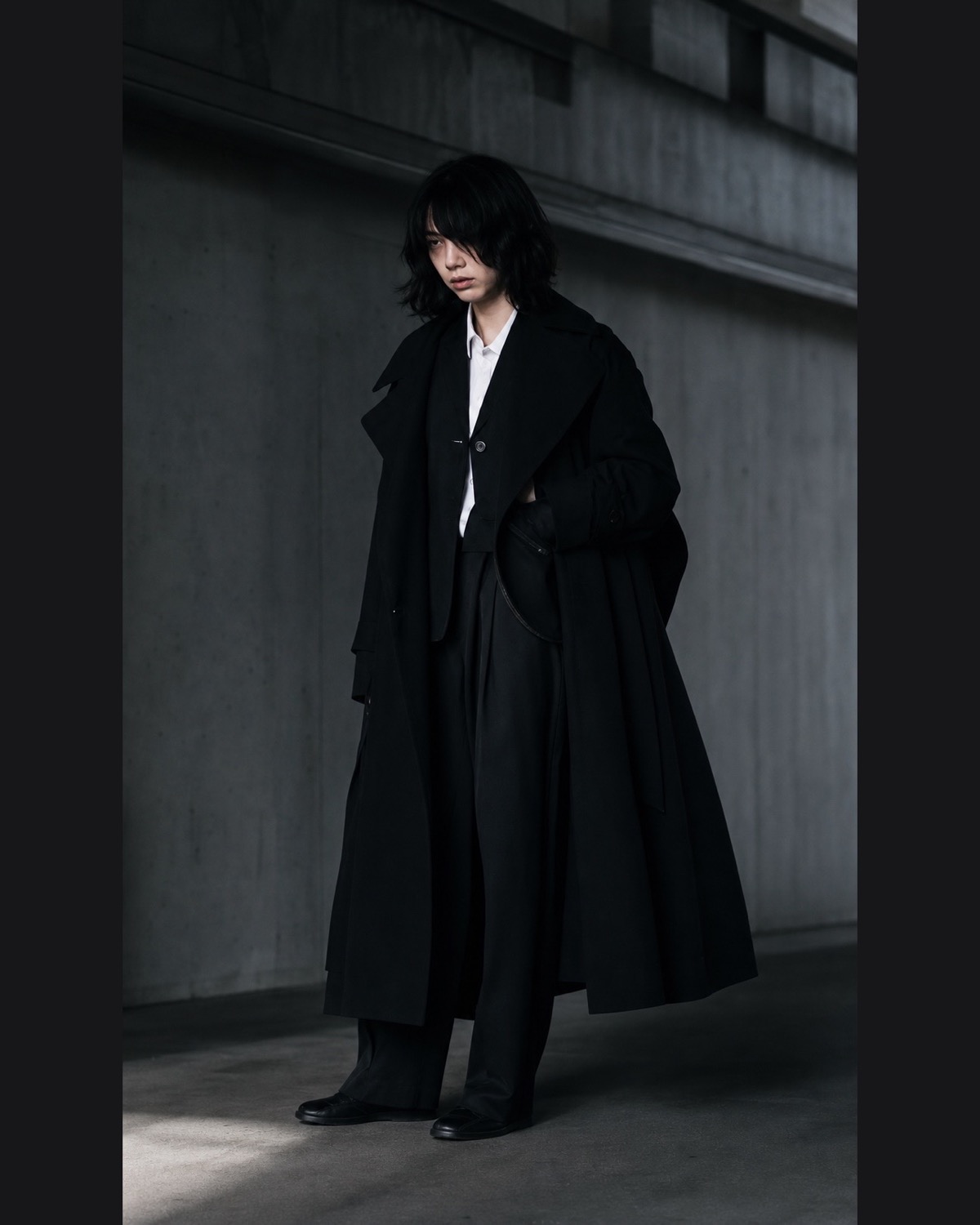
Visual reference: Instagram; AI-generated reconstruction.
In summer, one solemn black piece may be enough. A long black skirt, structured vest, or sheer robe can sit over a white shirt or close-fitting T-shirt. The white area gives the eye somewhere to rest while the black item keeps its severity.
Build a silhouette from head to foot
Dark romantic dressing is most convincing when the outline feels designed. Think of the body as a sequence of widths. A narrow hat, broad shoulder, and narrow skirt create one rhythm. A wide brim, fitted waist, and full hem create another.
This is why hats matter so much. A fedora, pillbox, angled brim, or folded witch-like shape changes the geometry before the clothes are even considered. It can make a familiar black suit feel ceremonial, or make a long dress look less soft.
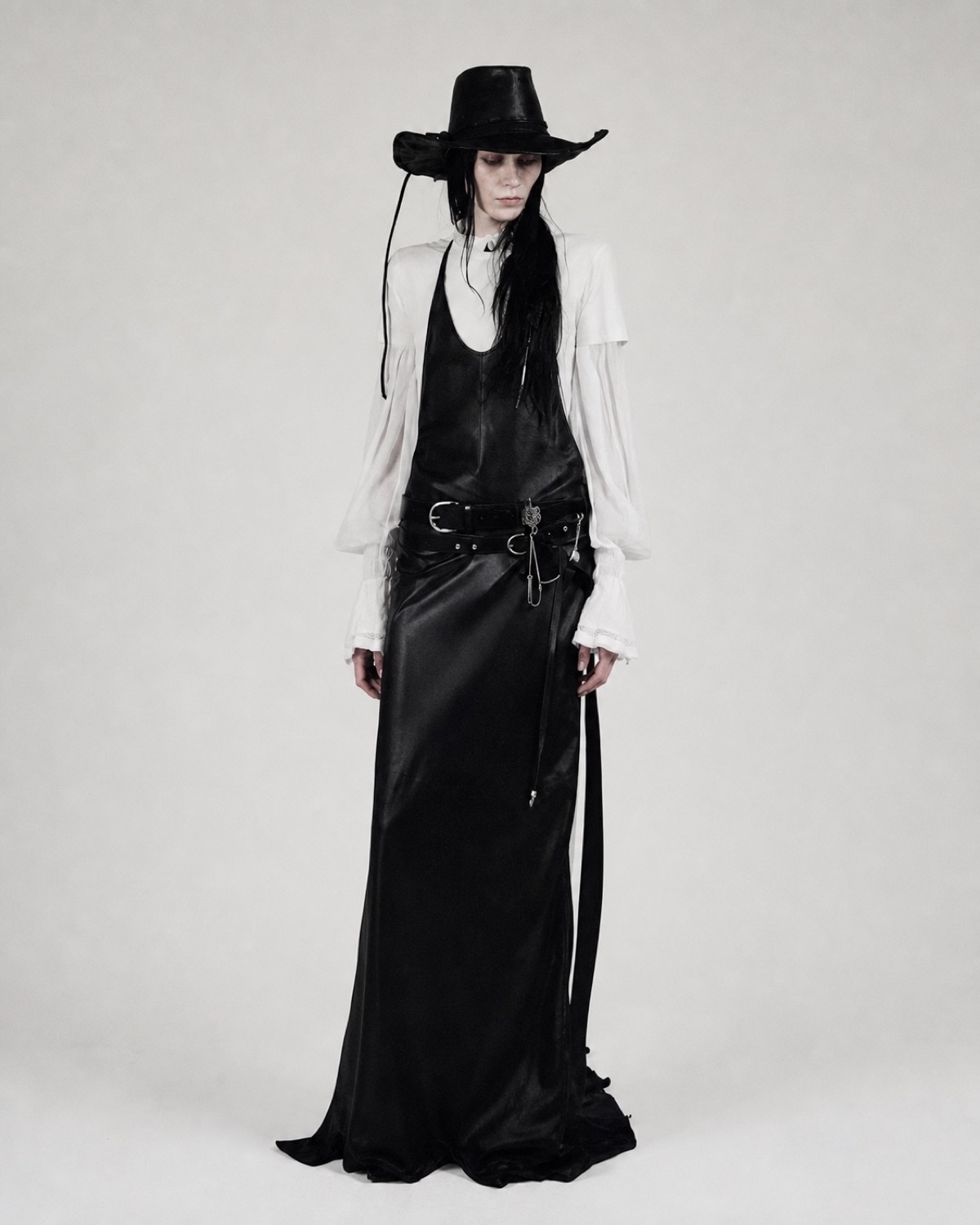
Visual reference: Instagram; AI-generated reconstruction.
Rei Kawakubo’s work for Comme des Garçons offers another way to understand this structure. The Met describes her use of principally black monochrome and oversized, loose-fitting forms that create space between skin and fabric. That empty space is not a lack of design. It is part of the shape.
The hat as an emotional object
I have always thought that hats are emotional accessories. For someone who does not want too much social contact, a deep crown and lowered brim can establish exactly the right distance. The face remains visible, but access to it feels controlled.
A fedora is practical because the brim does not need to be theatrical. It can sharpen the perceived outline of the cheekbones and jaw while still working with an everyday suit or black dress. Seen from a distance, the hat sets the tone before any small detail can be recognised.
Borsalino is a relevant example, but its history should be stated carefully. Giuseppe Borsalino founded the hat atelier in Alessandria, Italy, in 1857. According to the brand, human skill remains central to its manufacturing, and its contemporary hats continue to be produced through a long artisanal process. The name became strongly associated with felt hats and cinema during the twentieth century.
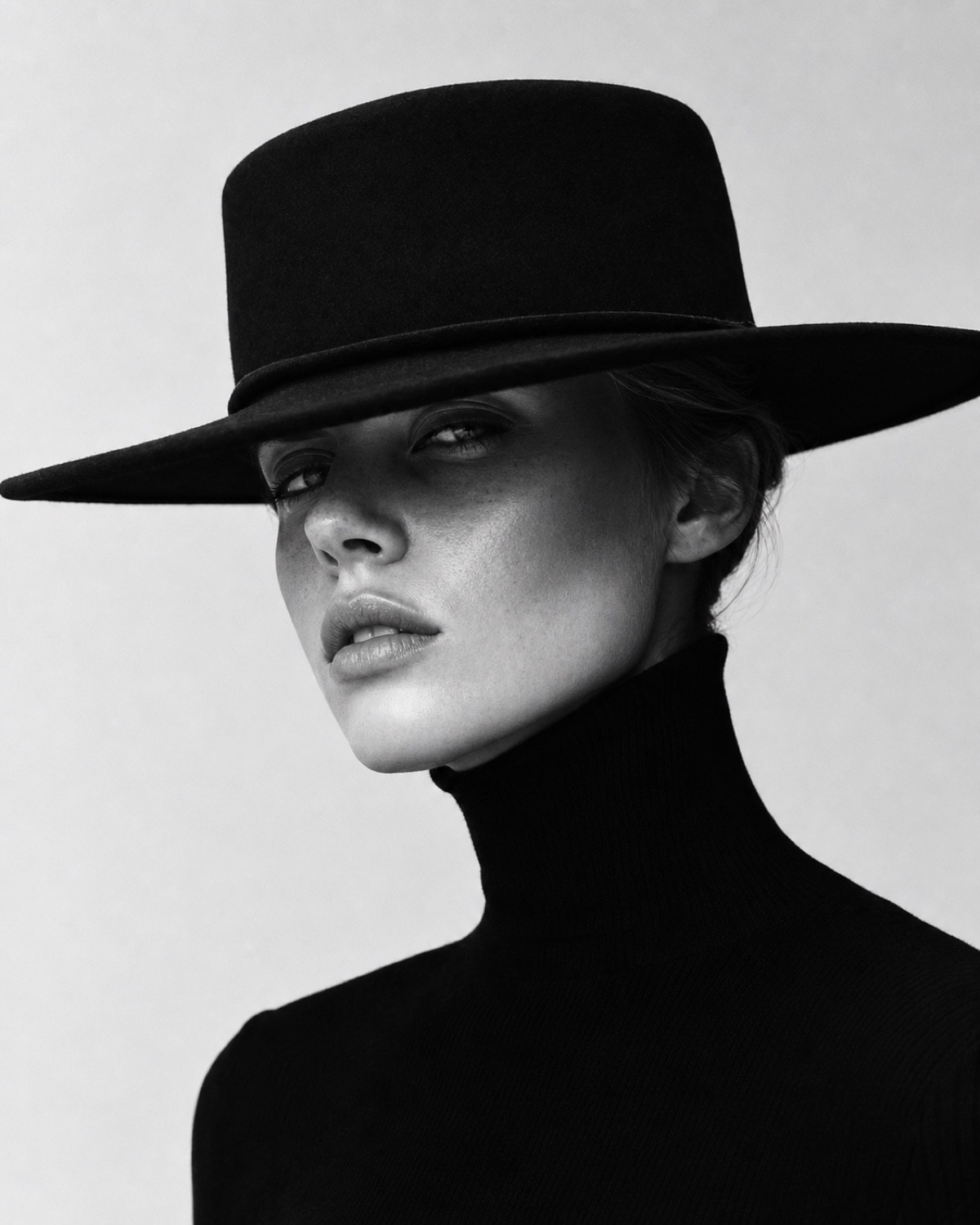
Visual reference: Instagram; AI-generated reconstruction.
The brand feels luxurious to me because it lets the wearer whisper rather than announce status. That is an opinion, not a measurable fact. The same applies to its reputation as aristocracy within the hat world. The attraction is inwardness: restraint, grief, dignity, and a controlled outline held in the same object.
From tailoring to ghostliness
Black tailoring can establish the base, but sheer fabric prevents it from becoming too literal. A layer of black mesh over a white shirt creates shifting grey where the fabrics overlap. Pleats, veils, and translucent skirts also move more readily than heavy wool, bringing a ghostlike quality to the outfit.
The contrast is important. A completely rigid look can feel like uniform. A completely soft look can lose the blade. Pair a hard shoulder with a floating hem, or a precise hat with a translucent skirt. The eye should feel both control and instability.
Jewellery can play the same role in miniature. Black beads, a silver pin, or one reflective surface breaks up matte tailoring without turning the look into conventional ornament. The point is not sparkle for its own sake. It is a narrow line of light against a dark field.
Why dark fashion feels powerful
To me, dark aesthetics are a coded form of power. They do not need a logo or a recognisable uniform. Their authority comes from proportion, restraint, and the refusal to make the body immediately available.
The most affecting dark, genderless clothes transform the body from an object to be displayed into a surface for a story. A coat can obscure sexed proportions. A skirt can behave like architecture. A hat can produce distance. Black becomes less a colour than a method of constructing an inner scene.
That is why dark fashion is not merely an outfit. At its best, it is an artificial spiritual environment, built around a person and carried into the world.
Fact-check notes and sources
- Borsalino’s official history confirms the 1857 founding in Alessandria and the company’s long association with felt hats, craftsmanship, and cinema.
- Borsalino on its current craft process says a hat can take up to seven weeks and more than fifty steps. The exact list of celebrity wearers in the source commentary was not repeated because it could not be confirmed as a complete set from an authoritative source.
- The Victoria and Albert Museum documents Yamamoto’s textile practice, asymmetric form, and challenges to gender stereotypes.
- The Met’s Rei Kawakubo exhibition documents her use of monochromatic black, oversized form, and hybrid gender references.