
Decorative Earbuds: Are They Accessories With Sound, or Earbuds With a Prettier Shell?
How to evaluate decorative earbuds: the difference between an accessory-first and an audio-first approach, and how to tell which one you're buying.
Decorative earbuds sit in a strange gap between two familiar categories. They are not earbuds in the way a sealed in-ear monitor is — evaluated by driver size, codec support, and noise cancellation. They are not jewelry in the way a drop earring is — evaluated by metal purity, stone quality, and craftsmanship. They live somewhere in between, and the problem is that most people do not know which end to evaluate from. Start with whether they truly read as earbuds that look like earrings, then cross-check the open-ear styling logic in how to style cyberpunk ear cuffs with open-ear audio.
The question behind every purchase in this category is deceptively simple: is this a fashion accessory that happens to play sound, or is this an earbud that happens to have a nicer shell? The answer changes what you should expect, what you should pay, and how you should judge whether the product is good. This is a framework for making that distinction before you spend the money.

What “audio jewelry” actually means
The phrase audio jewelry meaning varies depending on who is using it. For some brands, it means earbuds with a metallic coating or a gemstone-shaped case — jewelry as a visual metaphor. For others, it means wearable audio objects built from the same materials and to the same proportions as actual ear jewelry — jewelry as a literal design standard.
The difference is not semantic. It determines everything downstream: whether the product is designed around the ear or around the audio driver, whether the materials are cosmetic or structural, and whether the wearing experience feels like putting on a piece of jewelry or inserting a device.
Futuristic jewelry earbuds, earphones like jewelry, earbuds as accessories — all of these phrases describe the same category from slightly different angles. What unifies them is the expectation that the object will function as both an audio device and a style object. Where they diverge is in which function comes first.
Two approaches, two evaluation frameworks
The accessory-first approach
An accessory-first product is designed as a piece of ear jewelry that includes audio capability. The design process starts with form, material, and wearing proportion — how it looks on the ear, how it interacts with the face, how it pairs with other accessories — and then engineers the audio components into that form.
What you gain: The object looks and feels like an accessory. It sits on the ear at jewelry scale. The materials — real metal, real stone, real electroplating — behave like jewelry materials under light and touch. It integrates with outfits the same way an earring does. You can wear it without playing audio and it still makes visual sense.
What you give up: Audio performance is constrained by the form. Because the design prioritizes wearing proportion and material quality over driver housing and seal, the sound is functional rather than competitive. Bass extension is limited. Isolation is minimal or absent. The audio is a baseline capability — calls, podcasts, casual listening — not a primary selling point.
How to evaluate: Judge it the way you judge accessories. Does the material feel real? Does the proportion suit the ear? Does it look intentional in an outfit? Then verify: does the audio clear the bar for your daily tasks?

The audio-first approach
An audio-first product is designed as an earbud with a more attractive exterior. The design process starts with driver, seal, and signal processing, and then wraps the result in a more visually appealing shell — a metallic coating, a translucent housing, a colored resin, a branded pattern.
What you gain: Better audio for the price. Because the design prioritizes acoustic performance, the driver housing, seal, and tuning are optimized for sound. Noise cancellation, bass response, and codec support are typically stronger. The product competes with other earbuds on audio terms.
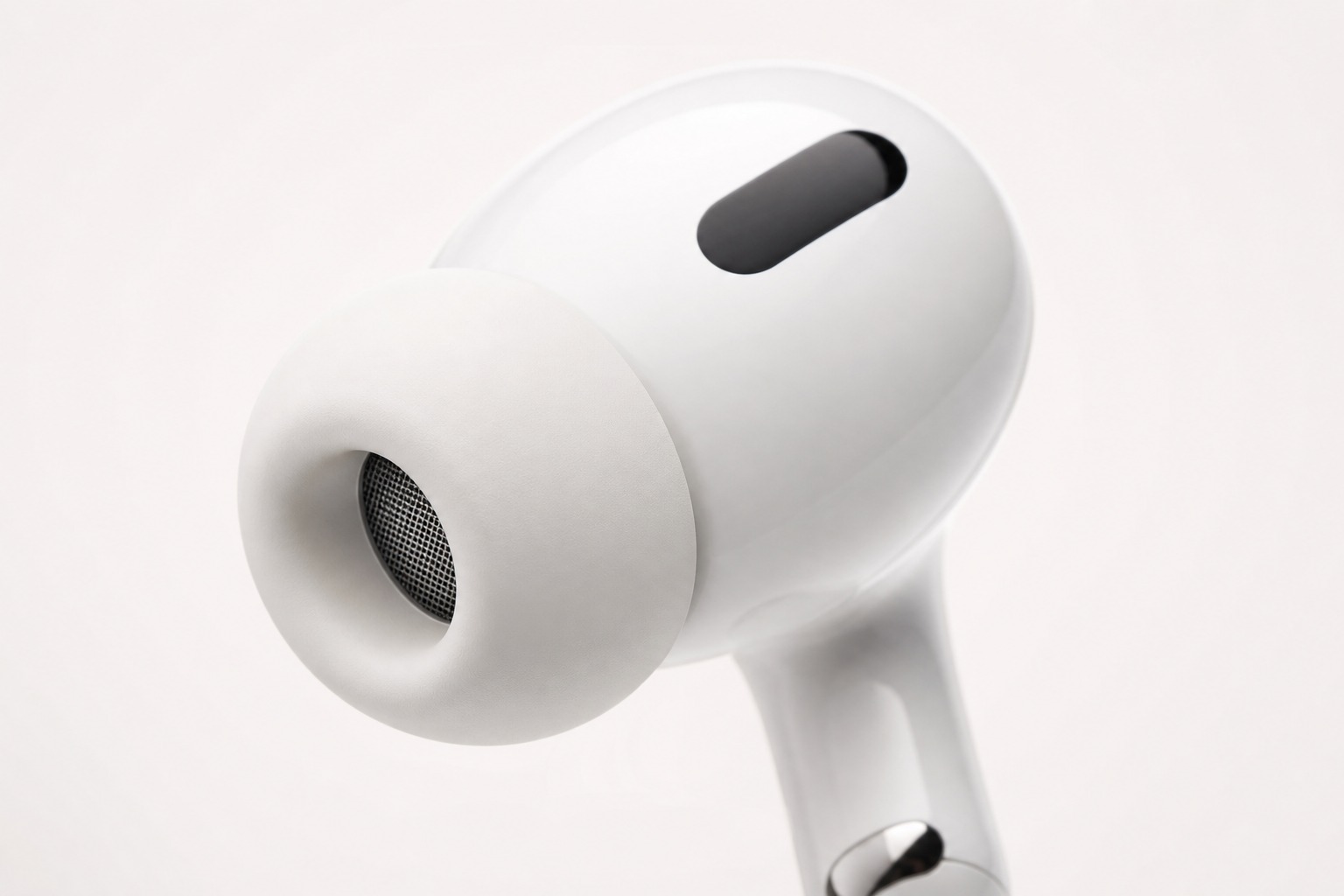
What you give up: The object looks like an earbud, because it is one. A metallic coating does not change the fundamental form factor — the stem, the ear tip, the case shape. Jewelry like gadgets that take this approach can be visually improved earbuds, but they are rarely mistaken for actual jewelry by a stranger across a table.
How to evaluate: Judge it the way you judge earbuds. How does it sound? How does it seal? How is the ANC? Then add: does the finish hold up, and do I like how it looks?
Smart jewelry vs earbuds — which comparison matters
The question of smart jewelry vs earbuds is really a question about where the product sits on the spectrum between these two approaches.
A smart ring with a health sensor is smart jewelry — the jewelry came first, the technology was added. An earbud with a gold-colored stem is a decorated earbud — the audio came first, the decoration was added. Neither is wrong, but they belong to different evaluation frameworks. Judging a smart jewelry product by audiophile standards is as misguided as judging a performance earbud by jewelry craftsmanship standards.
Decorative earbuds, as a category, include products from both ends. The name does not tell you which approach the product took. Your evaluation framework should.
Jewelry earbuds vs open earbuds — why the format matters
One technical distinction is worth understanding before choosing: jewelry earbuds vs open earbuds.
Traditional earbuds use a sealed or semi-sealed fit. A silicone tip enters the ear canal, creates a seal, and delivers sound in isolation. This format is optimized for audio performance — bass, isolation, noise cancellation — but it means the object is partly inside the ear. That constrains the decorative surface to whatever is visible outside the canal, which is usually a stem or a small faceplate.
Open earbuds sit on or around the ear without entering the canal. The entire object is visible, which means the entire surface is available as a design canvas. Open formats sacrifice seal-dependent audio performance (deep bass, active noise cancellation) but gain wearing comfort and full-surface visibility. For the accessory-first approach, this is a significant advantage: the object can look like an earring, a cuff, or a clip rather than like a device with a tip inserted.
The format choice is not about better or worse. It is about which priority — audio fidelity or wearable aesthetics — the product was built to serve.

What the accessory-first approach looks like in practice
For a concrete example, OFHUNGER’s Electronic Gems line is a useful reference point because it sits clearly on the accessory-first side of the spectrum.
The Silver-White Zircon is an open earphone built as ear jewelry. The body is 18K white gold plated copper — real electroplating, not a cosmetic coating. The surface is a faceted white zircon — a real mineral, not a printed pattern. The proportion is that of a drop earring, scaled to the earlobe rather than to the audio driver inside it. There is no logo on the wearing face. The charging case opens and presents the pair the way a jewelry box does. At USD 310, the price is explained by the materials and the wearing experience, not by the audio specification.

The audio is open-ear, which means no seal, no noise cancellation, and limited bass extension. It handles calls, podcasts, playlists, and ambient listening cleanly — the daily baseline. It does not compete with sealed in-ear monitors on sound. That is the trade-off of the accessory-first approach, and in this product, the trade-off is explicit: audio is the capability, the accessory is the identity.
To see how the product reads on real people rather than in a product photo, the OFHUNGER Style page collects community images in real outfits and lighting — a direct answer to the question of whether the accessory-first approach actually looks like jewelry in practice. For all available stone and metal combinations, browse the full collection.
How to decide which approach is right for you
The choice between accessory-first and audio-first decorative earbuds is not a quality judgment. It is a priority judgment. Two questions resolve it:
Question 1: Would you wear these without playing audio? If the answer is yes — if the object looks and feels like something you would put on your ear as part of your outfit even on a silent day — you are buying an accessory with sound. Evaluate accordingly: material, proportion, outfit integration first, audio baseline second.
Question 2: Would you buy these if they looked ordinary but sounded better? If the answer is yes — if the audio performance alone justifies the purchase and the visual design is a bonus — you are buying a prettier earbud. Evaluate accordingly: audio quality, seal, features first, visual design second.
Most regretted purchases in this category come from applying the wrong framework. An accessory-first product judged on audiophile standards will disappoint. An audio-first product judged on jewelry standards will disappoint. The product did not fail. The expectation did.
Know which question you answered yes to, and buy from that side of the line.