
Earbuds That Look Like Earrings: How to Choose Audio That Works as Jewelry
A five-part test for judging whether earbuds look like earrings on the ear, plus a scene-by-scene guide to when one piece can do both jobs.
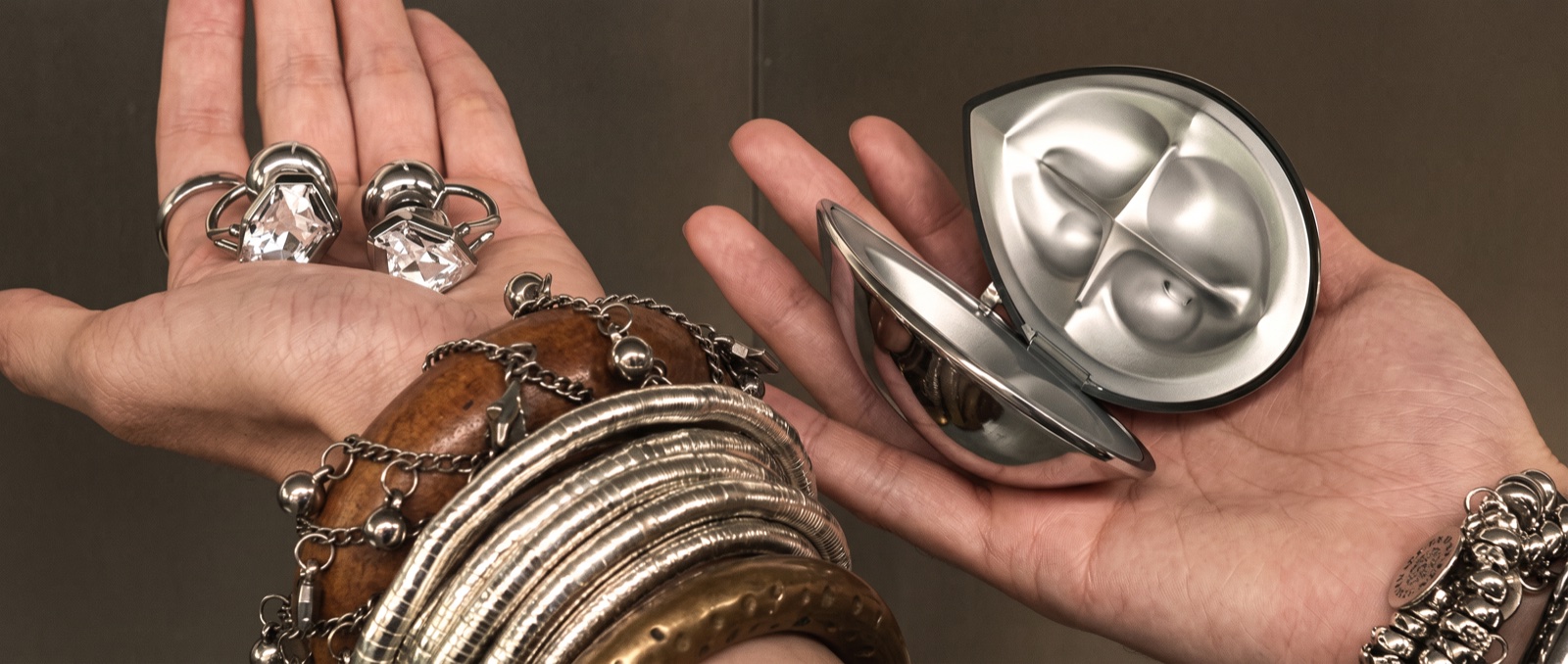
Earbuds that look like earrings are not defined by having decoration on them. A metallic coating on a conventional earbud stem does not make it an earring. What makes an audio object read as jewelry on the ear is a combination of five things: a silhouette that is recognizable as an earring from across a room, a surface material that behaves like jewelry under light, a proportion that fits the ear the way a drop or a stud does, a visual relationship with the outfit around it, and enough audio function to justify wearing it over a piece of pure jewelry. When all five are present, the object can work as both earring and earphone in certain situations. When any one is missing, it is a decorated device — which is a different product, serving a different purpose— the same visual test used when styling cyberpunk ear cuffs with open-ear audio — is a combination of five things: a silhouette that is recognizable as an earring from across a room, a surface material that behaves like jewelry under light, a proportion that fits the ear the way a drop or a stud does, a visual relationship with the outfit around it, and enough audio function to justify wearing it over a piece of pure jewelry. When all five are present, the object can work as both earring and earphone in certain situations. When any one is missing, it is a decorated device — which is a different product, serving a different purpose.
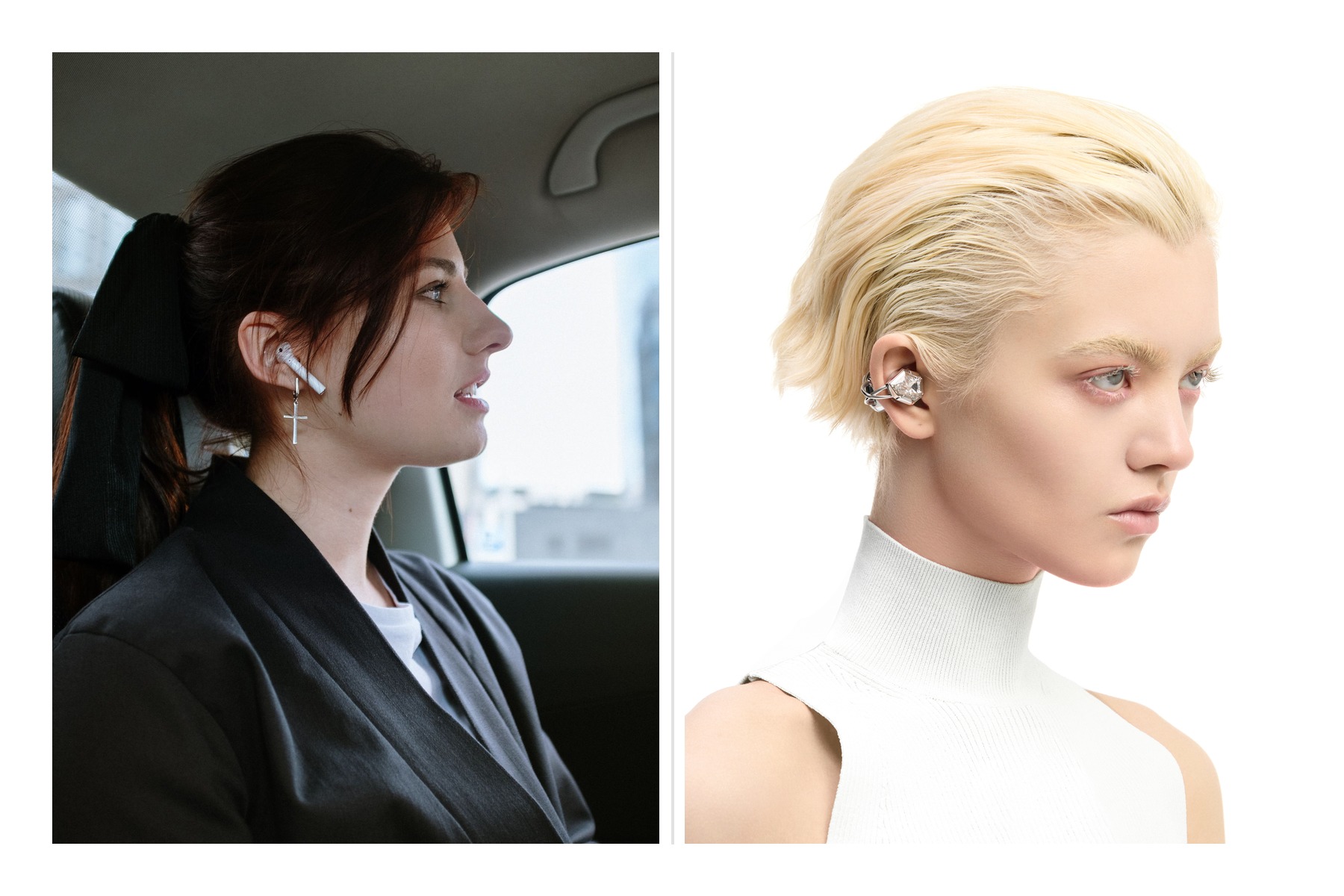
What are jewelry earbuds — and what are they not?
Jewelry earbuds are wearable audio objects designed as ear jewelry first and as audio devices second. The design process starts with how the piece looks and feels on the ear, then fits audio components into that form. This is the opposite of a conventional earbud with a nicer shell, where the audio architecture comes first and the exterior is styled afterward.
That distinction — accessory-first versus audio-first — is the single most important thing to understand before evaluating any product in this category. A deeper breakdown of how the two approaches differ in practice, what you gain and give up with each, and how to tell which one you are looking at is covered in our guide to evaluating decorative earbuds.
A few adjacent categories are worth distinguishing briefly. Ear cuff earbuds clip to the cartilage rather than sitting on the lobe — a different wearing position and a different visual effect; for a practical styling guide to that format, see how to style cyberpunk ear cuffs and open-ear audio jewelry. Open-ear earbuds are defined by their audio format (no seal, no ear tip) rather than by their appearance, and most of them look like consumer electronics. Decorative earbuds is the broadest label, covering everything from earphones like jewelry at one end to jewelry like gadgets at the other. And plain ear jewelry — studs, hoops, drops — has no audio function at all.
Jewelry earbuds sit specifically at the intersection where the object is designed to pass as ear jewelry and simultaneously deliver functional audio. If you are orienting yourself within the broader landscape of futuristic wearable objects, our 2026 futuristic tech accessories overview maps where jewelry earbuds sit alongside smart rings, AI glasses, and other emerging categories.
The five-part jewelry earbud test
Use these five criteria to evaluate any earbud that claims to look like an earring. A product that clears all five will read as intentional jewelry on the ear. A product that fails two or more will read as a device with decoration.
1. Silhouette
The silhouette is what registers first — before material, before color, before anyone is close enough to see detail. At conversational distance, the object on the ear should be identifiable as a piece of jewelry, not as a tech product. That means a form that references earring archetypes (drop, stud, sculptural cuff) rather than earbud archetypes (stem, bean, hook).
The test: describe the shape in one word. If the word is “drop,” “gem,” “cuff,” or “pendant,” it has a jewelry silhouette. If the word is “pod,” “bean,” “stem,” or “bud,” it has an earbud silhouette. The silhouette is doing most of the work at the distances where other people actually see you.
2. Finish
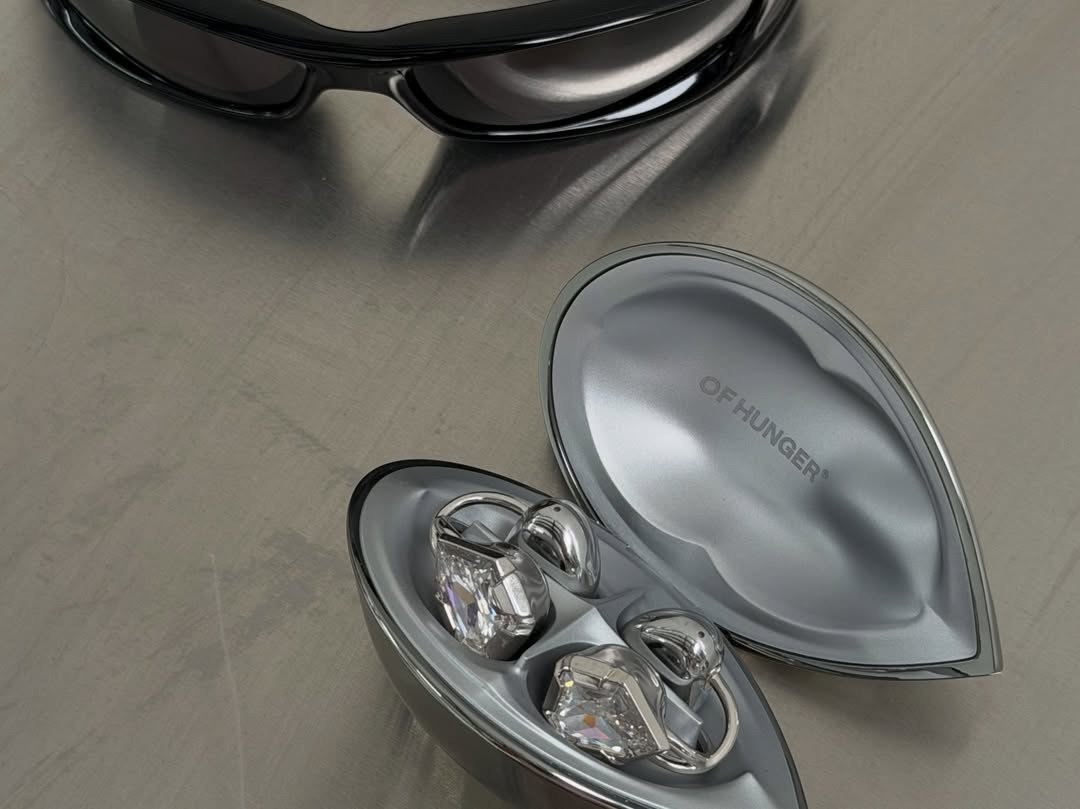
The finish determines whether the object reads as precious or plastic at close range. Gemstone, mineral, and electroplated metal surfaces interact with light variably — they shift, sparkle, or warm depending on the angle and the source. Painted plastic and vacuum-metallized coatings reflect light uniformly and flatly, which is the optical signature of consumer electronics.
The core question is whether the surface behaves like jewelry material or like device casing. For a detailed comparison of how gemstone, chrome, and mineral finishes perform across different lighting conditions, outfit contexts, and hair colors, see our finish-matching guide for elegant wireless earbuds. For the broader material signals that separate luxury-reading tech from ordinary gadgets, see how to judge luxury tech accessories.
3. On-ear proportion
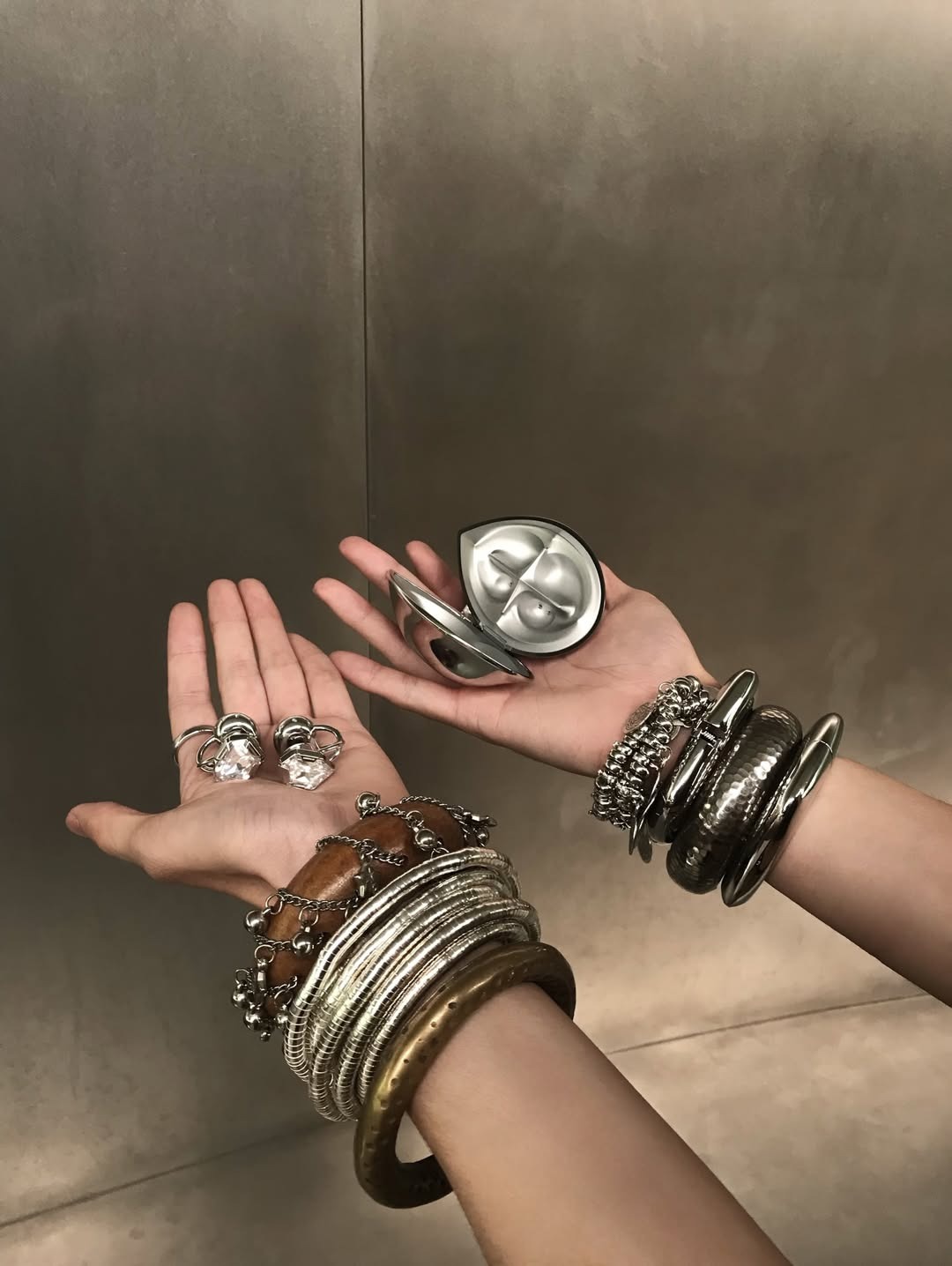
Proportion is the criterion most people feel without being able to name. An object scaled to the audio driver inside it will bulge past the ear’s natural contour and read as a device. An object scaled to the earlobe — matching the visual weight of a drop earring or a cluster stud — will sit inside the ear’s silhouette and read as something that belongs there.
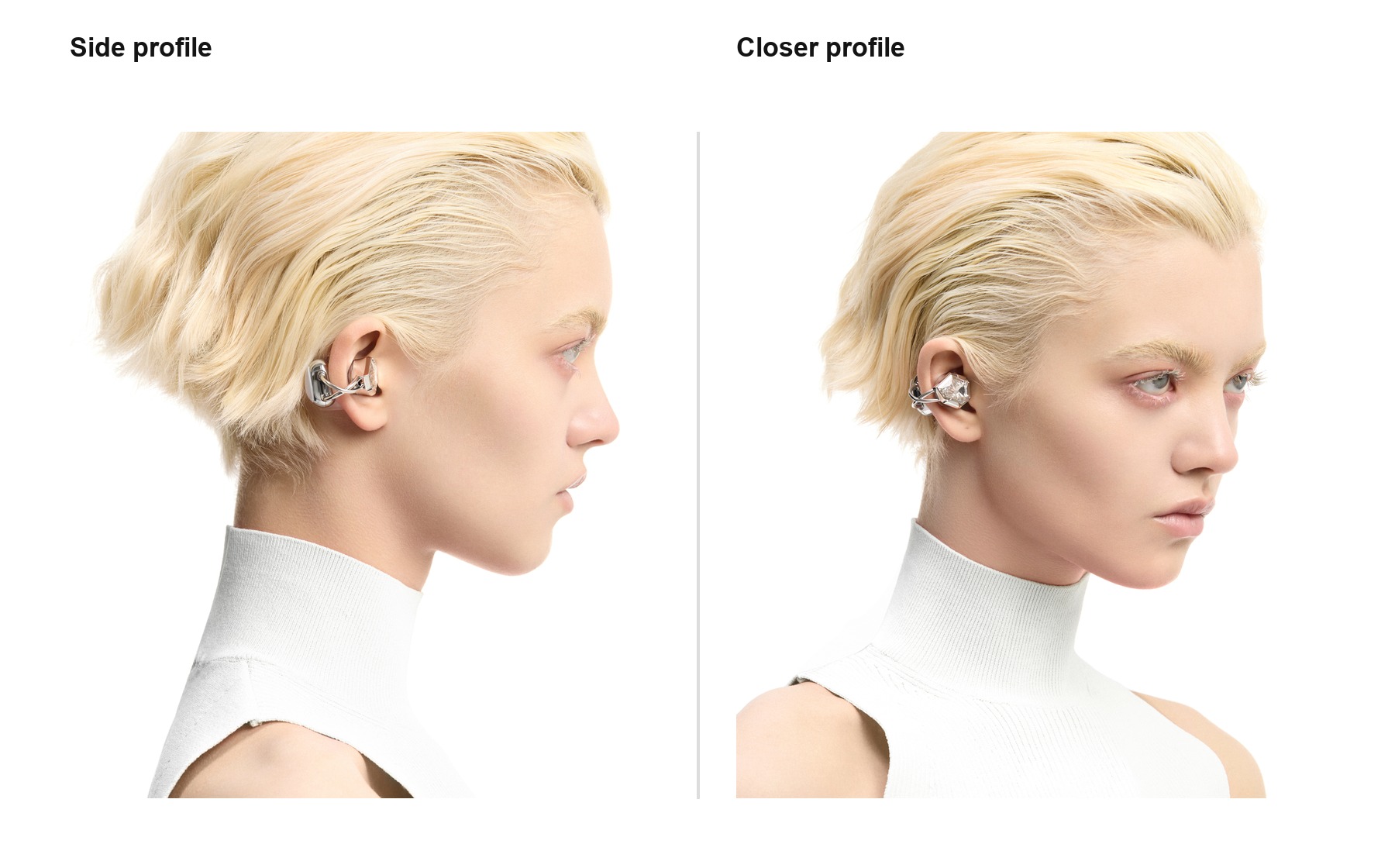
Check three views: front (does it sit within the ear’s outline?), side profile (does it follow the jaw-to-temple line without projecting outward?), and partially covered by hair (is enough of it visible to register as intentional, or does it disappear entirely?).
The interaction between finish and hair color also affects how proportion is perceived — a bright stone against dark hair pops more than the same stone against light hair. That specific variable is covered in depth in the finish and hair-color matching section of our earbuds guide.
4. Outfit integration
An earring does not exist in isolation. It exists in a visual system — alongside skin, hair, clothing, and other metals. Jewelry earbuds need to pass the same test: does the object’s metal tone match the other metals the wearer has on? Does it complement the outfit’s color temperature? Does it sit comfortably alongside existing ear jewelry, or does it crowd the ear?
If you are building an outfit around statement jewelry rather than adding audio to one, the principles in five statement jewelry brands that are easy to style apply directly — metal-tone matching, visual weight balancing, and knowing when one bold piece is enough.
For a deeper framework on what makes audio objects look intentional in an outfit rather than like something forgotten, see our visual guide to stylish headphones. For how a piece integrates into a fixed-palette daily uniform, see capsule wardrobe compatibility.
5. Audio practicality
The last criterion separates jewelry earbuds from pure jewelry. The object must deliver functional audio — clear enough for calls, music, and podcasts in everyday settings. It does not need to compete with sealed in-ear monitors on bass extension or noise cancellation. It needs to clear the bar for daily tasks: commute, desk, errands, dinner.
Most jewelry earbuds use an open-ear format, which means no ear tip, no seal, and no active noise cancellation. The trade-off is comfort and full-surface visibility in exchange for reduced bass and zero isolation. For an honest breakdown of what that means for audio quality and how to think about price in this category, see the audio and price section of our finish guide.
Cleaning is also part of audio practicality. Jewelry earbuds with real metal and stone surfaces require different care than plastic earbuds. Avoid ultrasonic jewelry cleaners (they can damage electronic components). Instead, wipe the metal surface with a dry or slightly damp microfiber cloth after wearing, keep the charging contacts free of skin oil with a dry cotton swab, and store the pair in their case when not in use. Do not submerge them.
When can one object do both jobs — and when do you still need two?
The promise of earbuds that look like earrings is not “throw away your earrings.” It is: in some situations, one piece on each ear can serve as both your accessory and your audio device, which means one fewer object to carry and one fewer decision to make. Here is where that works and where it does not.
| Situation | One piece enough? | Why |
|---|---|---|
| Daily errands and casual outings | Yes | The piece reads as an earring to strangers; you can listen or not. No one notices it is also an audio device unless you tell them. |
| Work and video calls | Yes | Open-ear audio handles calls cleanly; the piece looks professional on camera and does not read as “wearing headphones in a meeting.” |
| Dinner or evening drinks | Usually yes | If the finish and metal tone match the outfit, the piece works as evening jewelry. Under warm interior light, gemstone and metallic finishes tend to read better than in daylight. |
| Formal events (weddings, galas) | Usually no | Formal dress codes often call for specific jewelry — matched sets, fine metals, family pieces. A tech accessory, however beautiful, may not carry the same social weight. |
| Existing ear stack (3+ piercings) | Depends | If the piece occupies the lobe position and the rest of the stack is on the helix or upper cartilage, they can coexist. If the lobe is already part of a coordinated set, adding a different piece may break the visual logic. For more on sculptural ear stacks and the brands that design for layered piercings, see jewelry brands beyond Vivienne Westwood. |
| Athletic or high-movement settings | No | Open-ear formats are not secured for running or gym use. Use sport-specific earbuds and leave the jewelry earbuds for afterward. |
It is worth noting that the idea of earphones functioning as a style object is not limited to wireless jewelry earbuds — even wired earphones are turning back into fashion accessories in 2026, though the styling logic and the use cases are quite different.
For gifting contexts — choosing one of these as a birthday, anniversary, or holiday present — see how to match futuristic gifts to occasions. If the recipient’s style is gender-neutral, the five-filter framework for neutral accessories covers that angle specifically.
How to judge from product photos before buying
This is the most practical section for anyone shopping online. Product photos can make anything look good in isolation. The question is whether they give you enough information to predict what the piece will look like on your ear, in your outfit, under your lighting.
Green flags
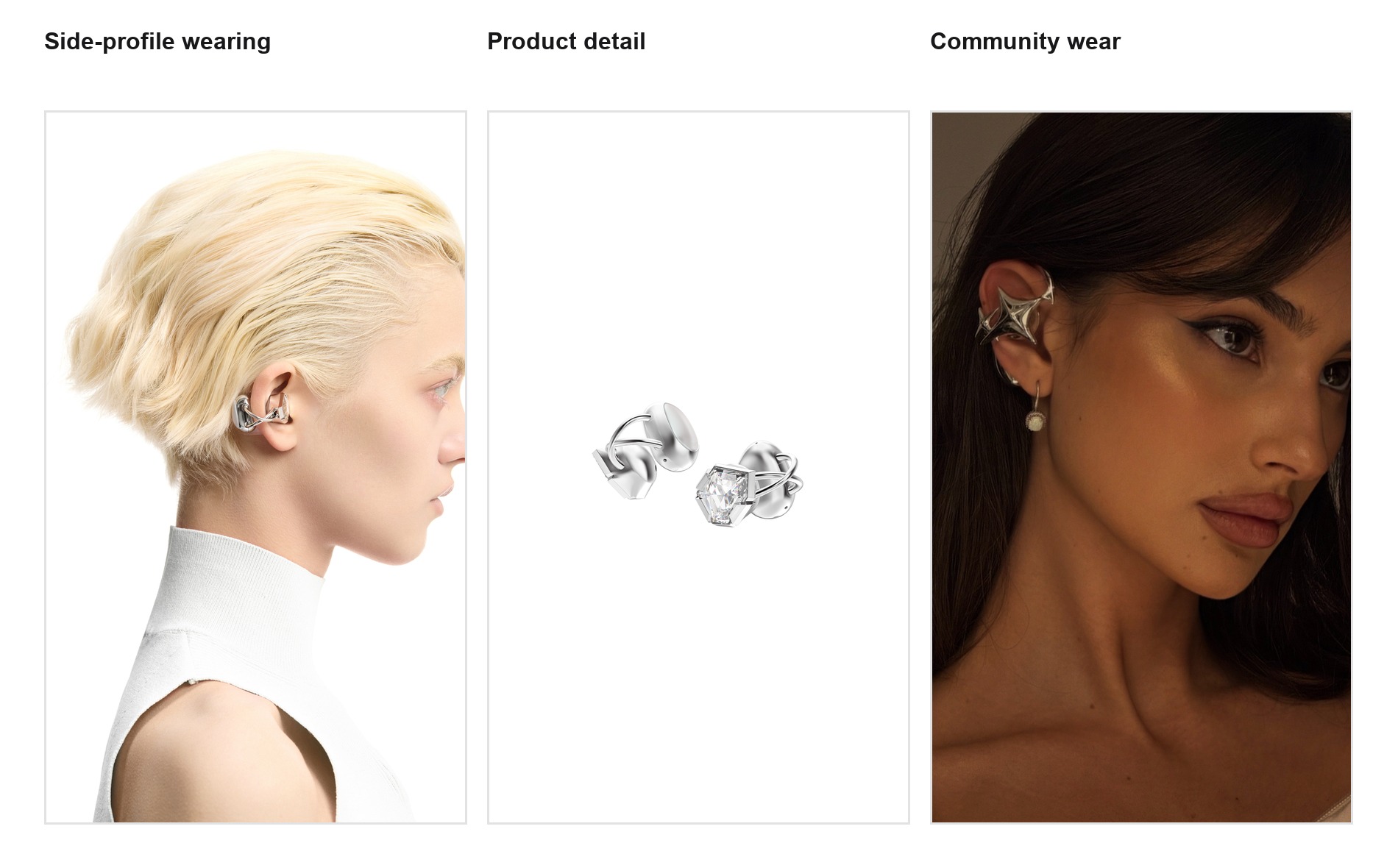
- Side-profile wearing photo. You can see how the piece sits against the jaw, the ear’s contour, and the hairline. This is the view other people actually see.
- Multiple lighting conditions. At least two photos under different light — natural daylight and warm interior — showing how the surface behaves. A single studio shot hides how the material will look in real life.
- Proportion reference. The piece is shown on an actual ear, ideally next to a familiar object (a fingertip, another earring, a coin) or on models with different ear sizes.
- Charging case or storage shown. You can judge daily carry size and presentation quality. A jewelry-like case signals accessory-first design; a plastic cradle signals audio-first design.
- Community or user photos. Images taken by real wearers in uncontrolled settings. These are always more honest than studio renders. The OFHUNGER Style page is an example of what this looks like — community images in real outfits and lighting.
Red flags
- Only white-background 3D renders. No real product, no real ear, no real light interaction. You are judging a rendering, not an object.
- Front-only wearing photos. The front view hides how far the piece projects from the ear. Without a side profile, proportion is unknowable.
- Single model, single outfit, single setting. If every photo uses the same hair, makeup, and clothing, you cannot tell how the piece adapts across different looks.
- No visible material texture. If the close-up shows a perfectly uniform surface with no light variation, the finish may be plastic or digitally smoothed. Real metal and real stone show grain, facet edges, or surface variation.
- No case photo. A missing case shot may mean the case is unremarkable — which often means it is a standard earbud case in a jewelry-shaped product.
For a deeper framework on how ear accessories read on camera — useful if you are also evaluating how these will look in selfies, portraits, or content creation — see our guide to portrait-ready ear pieces.
Two examples of jewelry-first wearable audio
OFHUNGER makes what it describes as wearable tech designed as everyday accessories — open earphones built as ear jewelry. Two of its product lines illustrate two different levels of visual volume within the jewelry earbud category.
Electronic Gems — everyday jewelry volume. The Silver-White Zircon passes the five-part test in order. Silhouette: a faceted gemstone drop, recognizable as an earring from across a room. Finish: 18K white gold plated copper with a real white zircon — metal and stone that shift under light. On-ear proportion: scaled to the earlobe like a drop earring, not projecting past the ear’s contour. Outfit integration: achromatic silver-and-white palette, no logo on the wearing face, compatible with any metal tone already in the outfit. Audio practicality: open-ear format, handles calls, podcasts, and playlists as a daily baseline. The audio is functional, not competitive — the honest trade-off of the accessory-first approach. To see all four stone variants compared by finish and occasion, see our finish-matching guide. To browse the full line, visit the collection.

NEBULA — sculptural volume. The NEBULA in Silver demonstrates that jewelry earbuds are not limited to one visual intensity. The silhouette is larger and more sculptural — each variant is shaped around a design-fiction narrative, with forms that reference architectural and speculative-body aesthetics. It projects past the ear’s contour deliberately, casting visible shadows and reading as a statement piece at wider distances. For editorial, portrait, or art-world contexts, it sits closer to wearable sculpture than to conventional earrings. The full range is browsable in the NEBULA collection. For the broader aesthetic territory this line occupies — organic-tech form, biomorphic silhouette, couture-adjacent design language — see our guide to the organic-tech accessory aesthetic. If the Y3K aesthetic is your visual reference point, the NEBULA silhouette sits squarely in that territory.

Both lines are shown in real-world wear on the OFHUNGER Style page. For occasion-matched recommendations, see the Gift Guide.
Quick buying checklist
Before ordering any earbuds that claim to look like earrings, check these ten points:
- ☐ Silhouette. Can you describe the shape with a jewelry word (drop, stud, cuff) rather than a tech word (pod, bean, stem)?
- ☐ Finish. Does the surface interact with light variably (sparkle, shift, warm), or does it reflect flatly and uniformly?
- ☐ Proportion. In a side-profile wearing photo, does the piece sit within the ear’s natural contour?
- ☐ Metal match. Does the piece’s metal tone match the other metals you typically wear?
- ☐ Logo. Is the wearing face free of visible brand marks?
- ☐ Audio baseline. Does the product handle your daily audio tasks (calls, music, podcasts) clearly enough?
- ☐ Format. Do you understand whether it is sealed or open-ear, and what that means for bass and isolation?
- ☐ Photos. Does the product page include side-profile wearing shots, multiple lighting conditions, and community photos?
- ☐ Case. Does the charging case look and feel like something you would carry as a jewelry object?
- ☐ Cleaning. Do you know how to maintain the surface material without damaging the electronics?
If a product clears all ten, it has earned the label “earbuds that look like earrings.” If it fails on silhouette, finish, or proportion — the three visual criteria — no amount of audio quality or marketing language will make it read as jewelry on the ear.
FAQ
Can jewelry earbuds work with an ear stack? It depends on where they sit. Most jewelry earbuds occupy the lobe — the same position as a first-piercing earring. If your ear stack is built on the helix, upper cartilage, or tragus, the lobe remains available and the pieces can coexist. If your lobe is already part of a coordinated set (matched studs, a curated cluster), adding a different piece may disrupt the visual logic. Test with one ear first.
How should jewelry earbuds be cleaned? Wipe the metal and stone surfaces with a dry or slightly damp microfiber cloth after each wear. Use a dry cotton swab on the charging contacts and the speaker mesh to remove skin oil and dust. Store them in their case when not in use. Do not use ultrasonic cleaners, chemical jewelry dips, or running water — the electronics inside are not sealed against liquid.
Can I wear jewelry earbuds through airport security? Yes. They are small electronic devices, equivalent to conventional earbuds. Security may ask you to remove them for the X-ray belt, the same way you would remove regular earphones. They will not trigger a metal detector alarm any more than a standard pair of metal earrings.
Do jewelry earbuds work with glasses or sunglasses? Open-ear jewelry earbuds typically sit on the lobe, below the temple arm of most glasses. There is no physical conflict in most cases. Over-ear or ear-cuff formats that hook around the upper ear may interfere with thick temple arms — if that is your situation, our eyewear and earwear compatibility notes cover the practical details. If you wear glasses daily, check the wearing position against your frames before buying.