
Self-Portrait Accessories: How to Choose Ear Pieces That Read on Camera
Ear accessories that read on camera — 7 types ranked by portrait distance, from mirror selfies to full-body editorial shots, with side-view and lighting tips.
Most ear accessories fall into one of two traps on camera. They are either too small to register — a delicate chain that vanishes at mid-shot distance — or too large to coexist with the face, pulling the eye away from the subject and toward the object. The ear sits at the edge of the frame in most portrait compositions, which means anything placed there either contributes to the silhouette or clutters it. The same logic that governs earbuds that look like earrings and open-ear cyberpunk ear-cuff styling applies here: proportion, material, and silhouette decide everything.
This is not a “best earrings for selfies” list. It is a portrait-distance guide: which types of ear accessories read at which shooting distances, and what makes each one work or fail on camera.
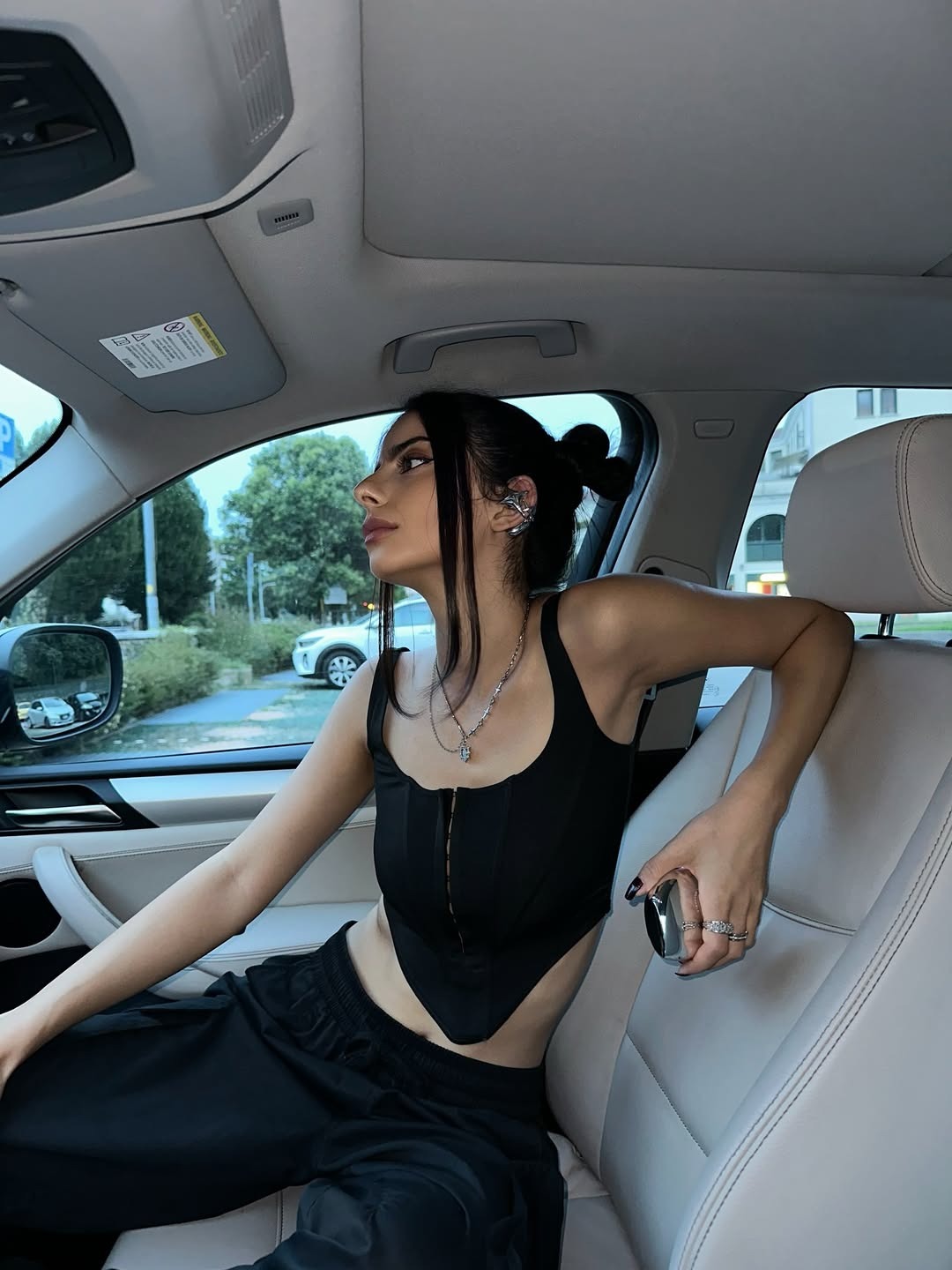
Why most ear accessories fail on camera
Two failure modes share the same root cause: the piece was chosen for how it looks in a mirror, not for how it reads in a two-dimensional frame at a specific distance.
Decorative detail vanishes at distance. A tiny crystal stud, a thin chain, an engraved surface — these read beautifully in the mirror but disappear in any frame wider than a tight crop. A three-quarter portrait at arm’s length renders them invisible. The accessory exists in real life but not in the photograph.
Undifferentiated volume blocks the composition. A large matte object — a padded over-ear headphone, a wide silicone ear hook, an oversized resin cuff — creates a block of flat color that the eye reads as obstruction. It does not add to the portrait; it subtracts from it by covering the jawline, the ear’s contour, or the hairline.
The question before choosing any ear piece for a portrait: does it read at the distance I am actually shooting?
The four things that make ear jewelry photogenic
Before the specific picks, four criteria separate ear accessories that work on camera from those that do not.
1. Side-view readability
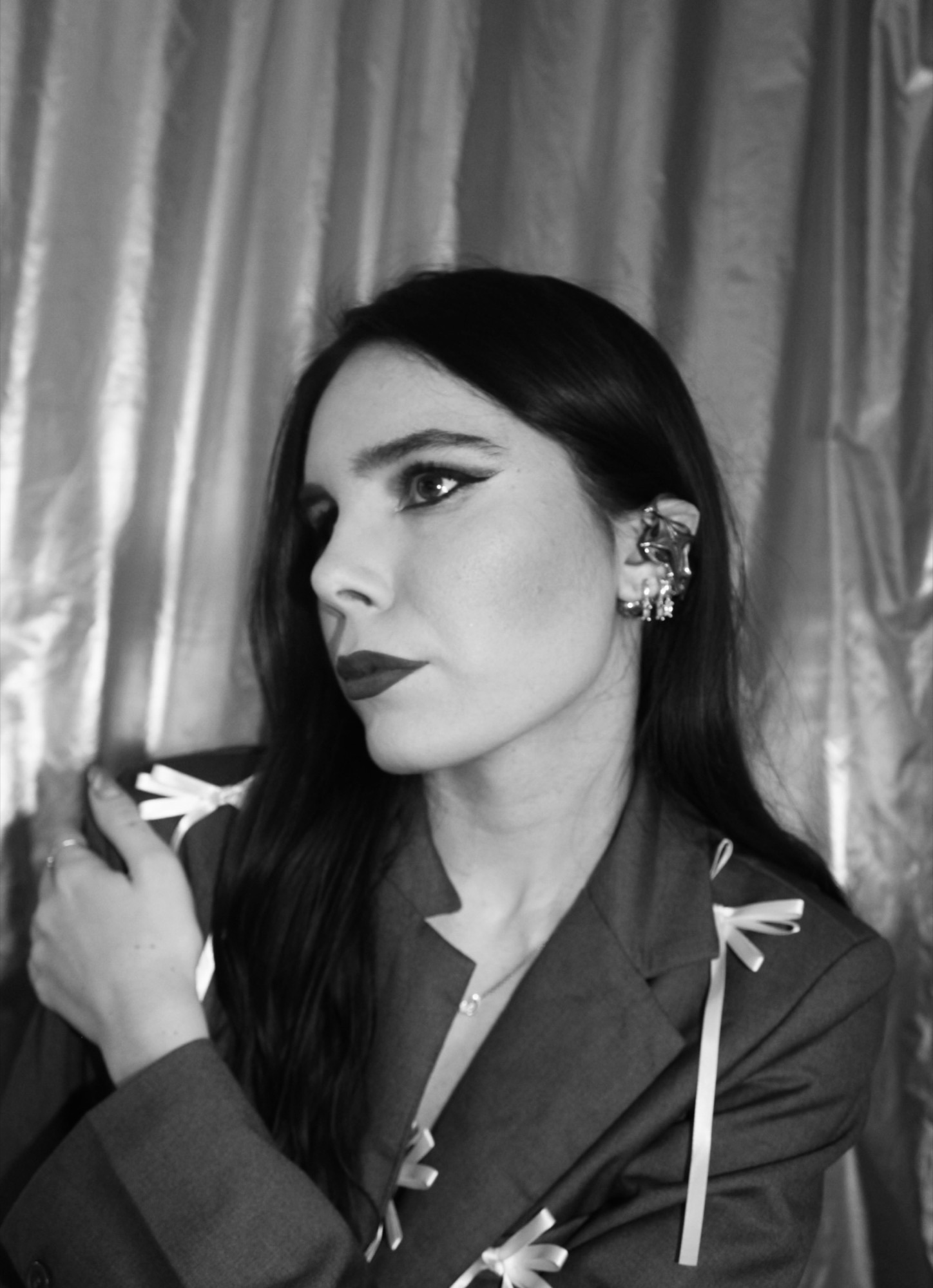
The ear jewelry side view is the defining angle. Most portraits and editorial shots frame the face at a three-quarter or full-profile angle. An ear piece that reads from the side has a silhouette that projects slightly beyond the ear’s natural contour — enough to register as intentional, not enough to block the jawline. At thumbnail size, it should be identifiable as “something is there.”
2. Sculptural presence vs decorative detail
Form — a faceted angle, a protruding volume, a defined edge — translates across distances and resolutions. Texture — engraving, micro-pavé, filigree — requires proximity. In a portrait, the camera is always farther than the mirror. Ear pieces that work lean toward sculpture: geometric cuts, architectural profiles, volumes that cast their own small shadows. Those shadows are what make the object three-dimensional in a two-dimensional frame. This is what makes facial architecture jewelry portrait-ready where flat decorative earrings are not.
3. Material behavior under light
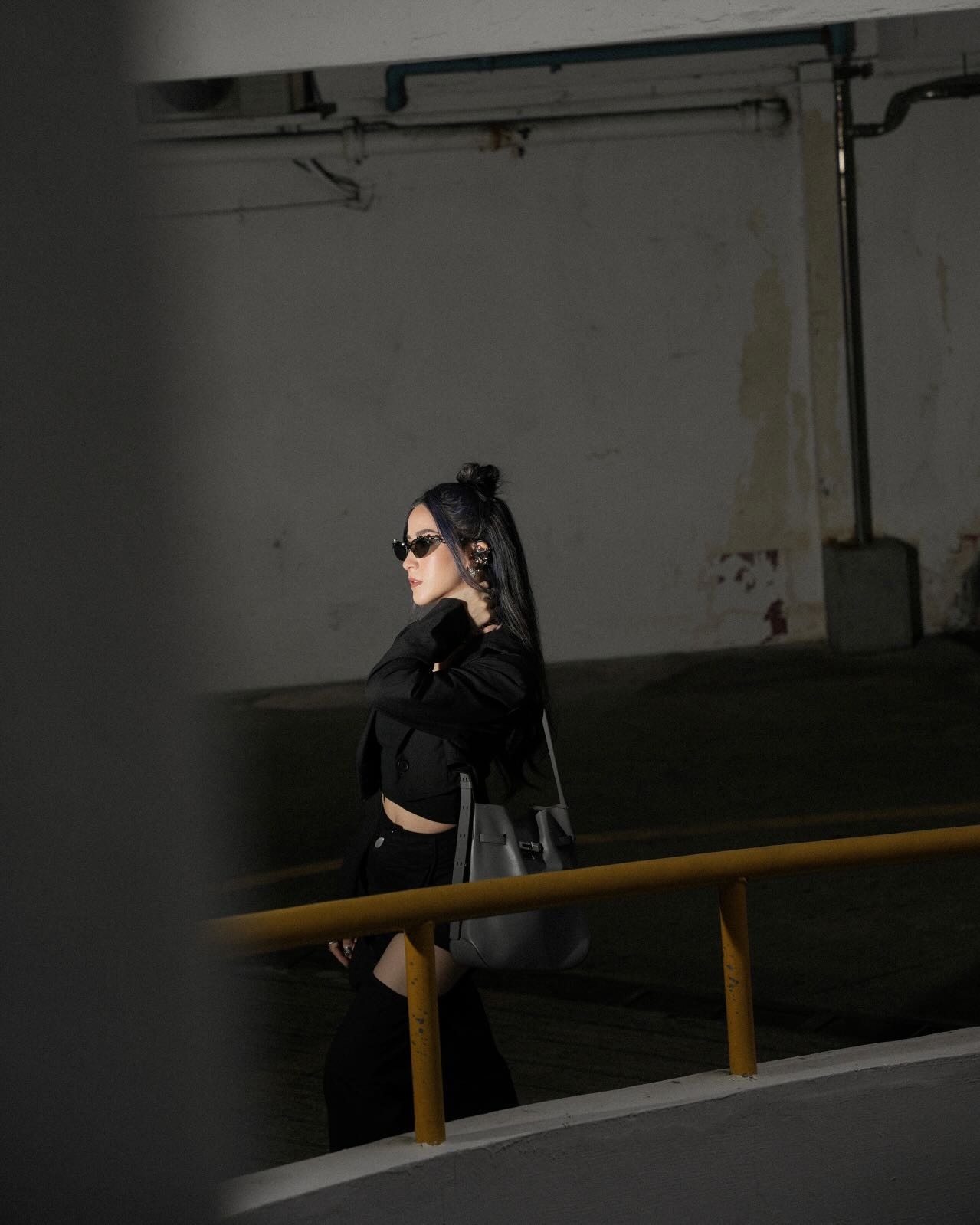
Plastic surfaces reflect light uniformly — flat and device-like. Metal and stone surfaces respond variably: a directional light creates a concentrated highlight on chrome; a window light spreads across gemstone facets and produces depth. What makes a piece photogenic is variable surface behavior, not uniform sheen. Test any ear piece by photographing it under at least two lighting conditions before committing to it for a shoot.
4. Scale relative to the face
An ear accessory in a portrait is read against the face — jawline, cheekbone, brow. Too small relative to features: it disappears. Too large: it competes with the eye. A tight crop permits smaller pieces; a full-body shot requires sculptural forms that hold shape at distance. For editorial or avant-garde work — cyborg editorial accessories, alien makeup-forward shoots — scale can push larger because the portrait’s intent is to transform the face, not just frame it.
7 ear accessories ranked by portrait readability
1. Sculptural metallic ear cuffs
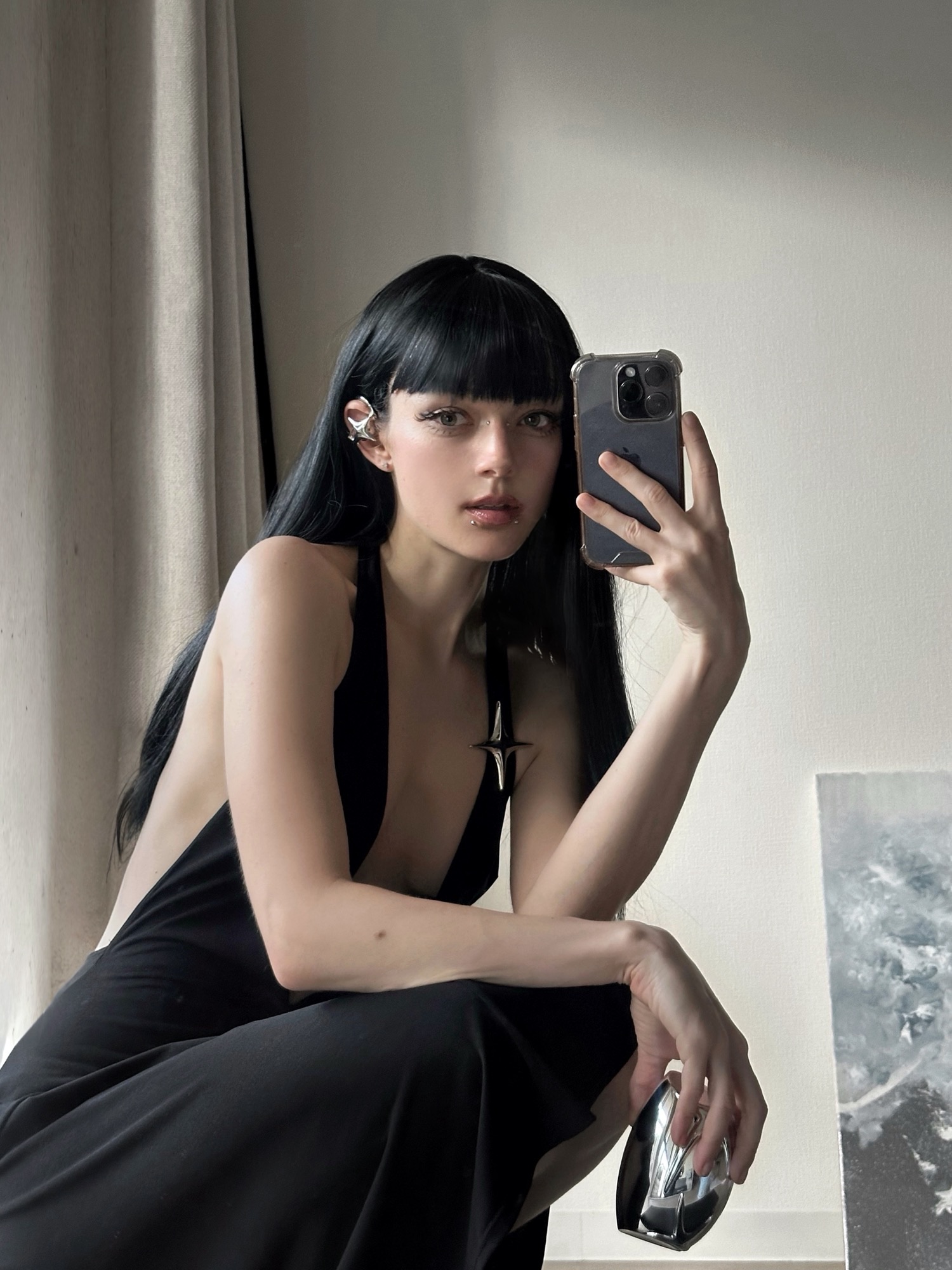
Best for: Editorial, creative portraits, gallery documentation. Portrait distance: Mid-shot to full body — the silhouette holds at 2+ meters. Why they work: Chrome or brushed-metal ear cuffs with architectural form project past the ear’s contour and create readable shadows. No piercing required. The stronger the directional lighting, the better they photograph. Look for pieces with defined edges and negative space rather than solid bands — the gaps between the metal and the skin are what create dimensionality on camera.
2. Faceted gemstone drop earrings or earphones
Best for: Mirror selfies, portrait headshots, evening events. Portrait distance: Close to mid-shot — facets catch light at conversational distance. Why they work: A faceted stone — zircon, opal, crystal — refracts light with internal depth that cameras read as texture, not as a flat shape. The facets create micro-highlights that survive compression and thumbnail viewing. Works under phone flash (bathroom selfie), natural window light (daylight portrait), and warm interior light (evening event). This category includes both traditional drop earrings and gemstone-style audio earphones like OFHUNGER’s Electronic Gems, which read as ear jewelry on camera while also functioning as open earphones.
3. Oversized chain or linked earrings
Best for: Movement shots, video content, editorial with motion. Portrait distance: Mid-shot — the chain’s movement adds visual interest that static pieces lack. Why they work: Chains catch light along multiple links, creating a line of highlights that draws the eye from the ear toward the jaw or shoulder. They read particularly well in video and motion-capture contexts where the swing adds a kinetic element to the composition. Keep to one chain per ear — doubling creates visual noise.
4. Design-fiction or sci-fi sculptural earphones
Best for: Post-human editorials, creative portfolio, cyborg-aesthetic shoots. Portrait distance: Mid-shot to wide — dramatic silhouettes hold at editorial distances. Why they work: Sculptural audio earphones with design-fiction forms — satellite curves, monolith shapes, biomorphic profiles — function as both a portrait prop and a wearable object. The NEBULA collection is one example; the broader category includes any earphone or ear-worn device where the form is designed as sculpture first and tech second. For the aesthetic principles behind organic-tech and biomorphic forms, see our Iris van Herpen accessories guide.
5. Minimalist bar or geometric studs
Best for: Corporate headshots, LinkedIn portraits, subtle editorial. Portrait distance: Tight crop only — they disappear beyond arm’s length. Why they work: A single geometric line (bar, triangle, hexagon) in polished metal reads as intentional in a close crop without dominating the face. They signal “this person chose this” without signaling “this person is wearing a statement.” Best for contexts where the portrait needs to feel professional first and styled second.
6. Ear stacking combinations
Best for: Fashion editorial, personal brand photography, detail shots. Portrait distance: Close crop to mid-shot — the layers need to be individually readable. Why they work: A curated stack — helix ring + mid-cartilage stud + lobe drop — creates a vertical composition on the ear that reads as editorial even in a casual photo. The key is visual hierarchy: one piece anchors, the others support. If all pieces compete equally, the stack reads as clutter. For how to manage ear stacks alongside earbuds, see our piercing-friendly earbuds guide. For sculptural ear stack brands, see our brand guide.

7. Statement hoop or disc earrings
Best for: Gallery openings, evening events, group event photography. Portrait distance: Mid-shot to wide — the large surface area holds at distance. Why they work: A polished metal disc or oversized hoop catches light as a single bright shape, which reads clearly even in uncontrolled event photography at unpredictable distances. Gallery opening accessories need to survive mixed lighting and candid angles — hoops and discs do this because their shape is simple enough to remain recognizable even when blurred or partially occluded by hair. For more on statement jewelry that layers easily, see our brand guide.
Quick portrait-readability test
Before choosing any ear piece for a portrait or editorial context, take one photograph: a three-quarter profile, at arm’s length, in the light you will actually be shooting in. View the image at thumbnail size.
It works if: the piece is visible, identifiable as a choice, and not competing with your face. Enlarge if: it disappears at thumbnail size — switch to a larger or more reflective piece. Simplify if: it dominates the frame — drop one size category or choose a quieter surface.
The ear is a small canvas. The best editorial ear accessories are the ones that know exactly how much of it to use.