
Why a Secure Earbud Fit Can Still Be Uncomfortable
Explore how ear shape, pressure, weight distribution and jewelry affect earbud fit, and why staying secure does not guarantee lasting comfort.
TL;DR
- Staying in place and staying comfortable are different parts of earbud fit.
- Ear tips, housings, clips and hooks place pressure on different parts of the ear; changing the tip cannot solve every contact problem.
- Short comfort tests cannot establish all-day comfort. Check movement and controls during a trial that resembles your actual use.
- Glasses, piercings and jewelry change the space available around an earbud. Evaluate the combination you wear, not just the device on its own.
Your earbuds stay in. Great. They also make you want to take them out halfway through a podcast. Less great. When we talk about earbud fit, those two experiences tend to get squeezed into the same verdict: good or bad. But an earbud can be very good at staying attached to the wrong part of your ear.
That matters whether you’re choosing sealed in-ears, ear cuff earbuds or an open design with a hook. They don’t support themselves in the same way. Changing the design can move the problem, which is useful if you know what was bothering you. If you don’t, you can end up buying a different-looking version of the same annoyance. Glasses, piercings and jewelry change the remaining space; a piercing-friendly ear stack has to be tested as a combination, not as a device on its own.
Why Doesn’t Changing Ear Tips Always Fix Discomfort?
Start with the bit everyone tells you to change: the ear tip. On a sealed earbud, the tip needs to make contact with your ear canal to form an acoustic seal. Get that seal right and you give bass reproduction and noise cancellation a better starting point. The little fit test in the app can help with that. What it doesn’t do is sit through the rest of your afternoon for you.
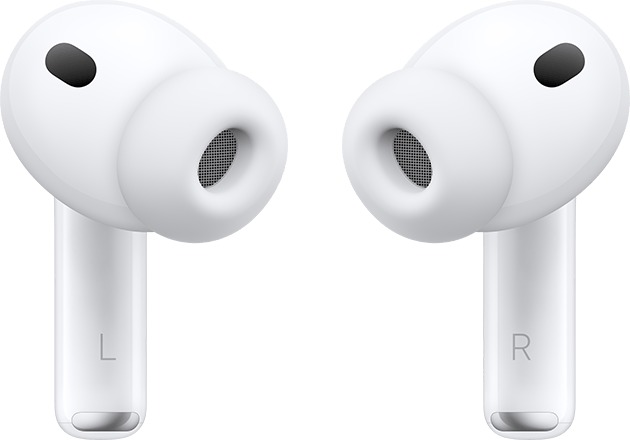
The shell still has to go somewhere. It may rest in the concha, the bowl-shaped part of your outer ear, or press near the tragus, the small flap in front of the canal opening. A different tip can change how the earbud sits, but it doesn’t make a bulky shell smaller. If the shell is the bit bothering you, repeatedly sizing up the tip because the earbud feels loose is a pretty limited strategy.
There’s a useful piece of research behind that distinction. In a 2023 study published in Applied Ergonomics, researchers measured pressure discomfort at six locations around the concha in 80 participants. The tragus was the most sensitive of the tested points. So, where a device presses deserves attention alongside how firmly it presses. A design that finds support in one person’s ear may meet a sensitive spot in someone else’s.
This is where ear ergonomics gets more interesting than small, medium and large. Two ears can have a similar overall size but give a housing different places to rest. The depth of the bowl, the curves around it and the space between contact points all matter to the object you’re trying to fit. Calling your ears small doesn’t tell a designer all of that. And calling a product ergonomic doesn’t tell you how it deals with any of it.
How Do Ear Cuff Earbuds and Ear Hooks Stay in Place?
All right, so why not keep the ear canal out of it entirely? That’s the appeal of open-ear designs. With a clip-on model, an arm connects parts sitting in front of and behind the outer ear. A hook takes a different route around the upper ear. Both can leave the canal open, but they’re asking different areas to support the device. Open-ear describes where the sound goes. It doesn’t mean nothing touches you.
For ear cuff headphones, look past the decorative front piece. The gap across the clip, the flexibility of the connecting arm and the shape of the rear contact are doing important work. A flexible bridge can accommodate some difference in ear shape, but flexibility alone doesn’t tell you the pressure at each contact. Likewise, a soft covering may feel pleasant to touch without fixing a shape that lands badly on your ear.
Bose Ultra Open Earbuds make that arrangement easy to see: a flexible arm connects the audio section in front of the ear to a battery barrel behind it. Bose also allows a little movement up or down the ear to adjust comfort, sound balance or clearance around jewelry. That is useful room to adjust, rather than one prescribed position. It still leaves you with something to check: does your preferred position stay comfortable and secure with your own accessories?

Weight deserves the same treatment. A gram figure tells you how much the whole earbud weighs, not where that weight sits relative to its support. Think about a front housing projecting outward versus mass arranged closer to the contact points. As a matter of mechanics, that position changes the turning effect the support has to resist. So I’d want to inspect the front and back of a clip, not just look for the smallest number on its specification sheet.
An ear hook also adds structure outside the canal, but now the upper ear has another occupant. If you wear glasses, that’s a place to inspect with your actual frames on. It doesn’t automatically make hooks a bad choice. It does make a bare-ear product photo a less useful demonstration of your fit.
What Can Ear Measurements Tell You About Fit?
Designers can measure these relationships rather than just guess. A 2025 AHFE paper used 3D ear data from 110 Chinese adults to help develop open-ear earphone geometry. Its design work considered dimensions and contact shapes, rather than treating the ear as a single size. That is the useful part of anthropometry: turning body measurements into decisions about the physical product.
But here’s the detail I’d pay attention to before turning that into an all-day comfort claim. The prototype-wearing evaluation involved eight people, with stationary, running and cycling conditions lasting ten minutes each. The 110 people behind the ear measurements were not 110 people wearing the finished design all day. Those are different numbers answering different questions. Scans help shape a device. People wearing it tell you what happens after it leaves the screen.
How Should You Test Stability and Long-Wear Comfort?
Movement also gives stability a more demanding definition. Not falling onto the pavement is a good start, obviously. But during a trial I’d also listen for changes as I turn my head and notice whether I keep reaching up to reposition the earbud. A device can remain attached while moving away from the position where it sounds best. And a clip that holds on by pressing uncomfortably hard hasn’t solved the whole problem just because it survived a jog.
Then there’s the part of the fit test that is very easy to forget: using the controls. You can sit perfectly still and find a comfortable position, then push the housing into your ear every time you pause a song. The control is part of the physical experience, not just something to list under features.
A 2020 Applied Sciences study compared four wireless earphone designs with 38 participants. The researchers found less pain during operation for the touch-input products than for the button-operated products they tested. That doesn’t settle buttons versus touch controls for every earbud; the products differed in other ways too. It does give you a good reason to try the controls while evaluating fit. Can you operate them without shoving the housing into a sore spot or knocking it out of position?
The same study used twenty-minute sessions with participants in their twenties. Useful, but twenty minutes still isn’t your workday. If long listening sessions are the reason you’re shopping, the duration and people behind a comfort verdict deserve more attention than a photo of someone smiling while wearing the product. Prefer a trial that resembles your use, and check the return terms before you commit. Don’t turn that trial into an endurance contest once something starts hurting.
What Else Can Make Earbuds Uncomfortable?
And if your question is “why do earbuds hurt my ears,” pressure isn’t the only possible answer. Skin irritation can involve moisture, residue or sensitivity to a material. Apple’s wearing guidance advises keeping devices and skin clean and dry, and consulting a physician before wearing them again if redness, swelling, itchiness or other irritation develops. A new tip size isn’t a diagnosis.
How Do Piercings Change Earbud Fit?
Jewelry adds another physical object to this already fairly crowded area. With a healed piercing, the question is where the post, backing or ring sits relative to the earbud. A shell can clear the visible decoration and still meet its backing. A clip can leave the canal alone and occupy the exact part of the outer ear where you wear a cuff. This is why “piercing friendly earbuds” needs a follow-up question: friendly to which piercing, with which jewelry?
A healing piercing is a different situation. The Association of Professional Piercers advises avoiding pressure and friction during healing and leaving the initial jewelry in place unless a qualified piercer makes an appropriate change. Don’t remove healing jewelry just to make room for an earbud. The thing you can readily take off here is the earbud.
How Does Earbud Shape Work With Your Style?
Now, appearance isn’t a silly reason to care about any of this. A stem draws a line below the ear. A hook traces its upper edge. A cuff puts a visible shape across it. Those outlines change how an earbud sits alongside a hoop, a stud, a glasses arm or your hair. You might want the device to disappear, or you might want it to be the accessory. Either is a perfectly reasonable preference.
OF HUNGER Electronic Gems takes the accessory idea literally, with a gem-set front and an open-ear clip using a cross-arm spring. The brand lists about 12 to 15 grams per earphone, depending on the design, and cautions that very small ears or flatter ear ridges may not provide the same secure fit. So the jewelry-like appearance comes with a very ordinary hardware question: where does this particular shape sit on your ear? I would judge that separately from whether I liked it with an outfit.
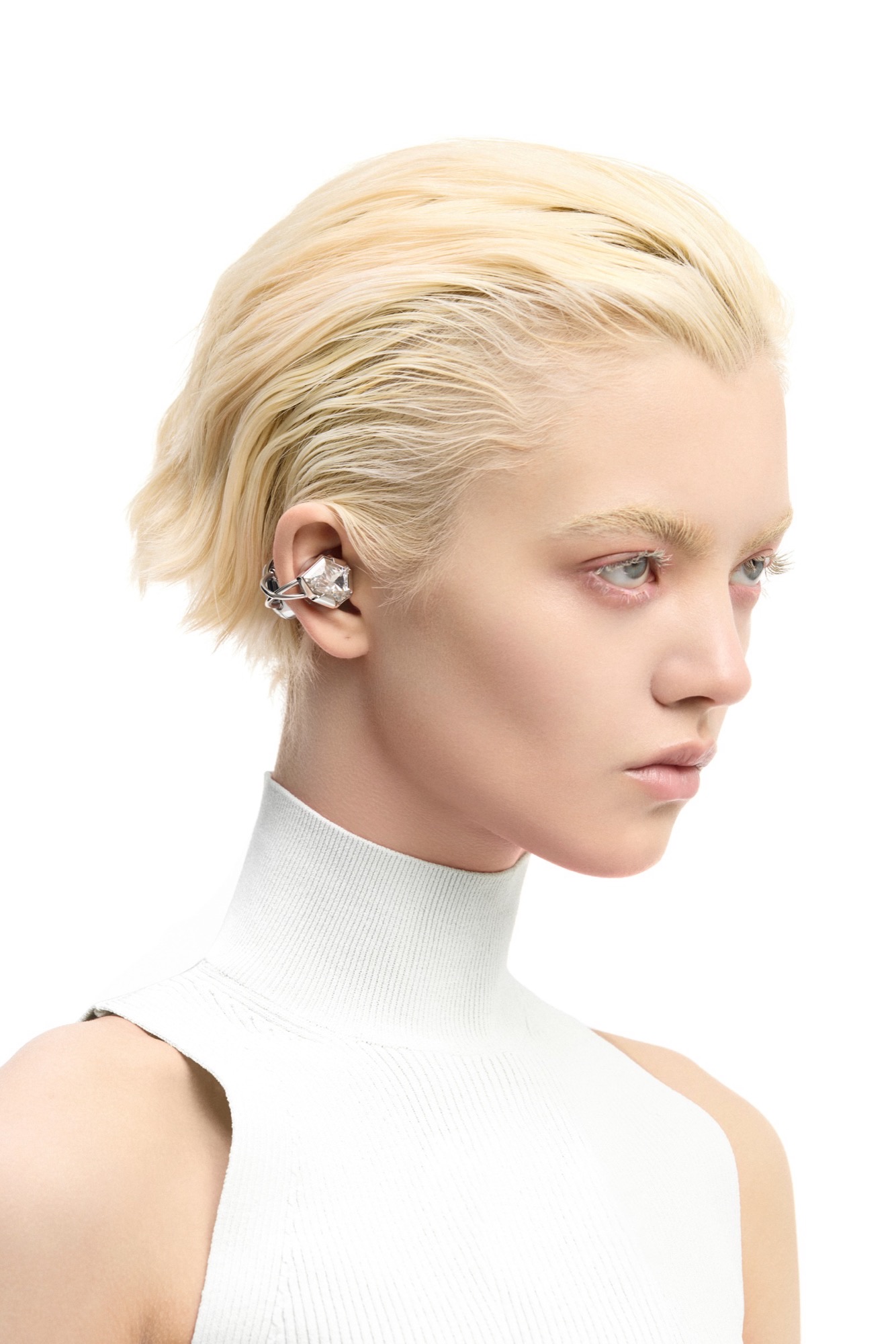
What I wouldn’t do is turn that preference into a face-shape rule and pretend it predicts comfort. Looking good from the front tells you very little about the contact behind the ear. Try the combination you actually plan to wear, then look at it from the side as well. Can your jewelry sit normally? Can you reach the controls? Does the position you like visually also work for listening? That’s a much more useful style question than deciding that one earbud shape belongs to one face shape.
What Should You Check Before Replacing Your Earbuds?
So, before spending money on another pair, get specific about the failure you’re trying to fix. If it’s pressure inside the canal, an open design changes that contact. If it’s a sore patch on the outer ear, look at where the replacement will rest. If the problem only appears with your glasses or earrings, try the whole combination. And if the pair you already own stays comfortable, sounds right and works with what you wear, a new shape on a product page isn’t a reason to replace it.