
Self-Consistent Style: Dressing for Atmosphere, Not a Costume
Build a self-consistent style through androgynous balance, softer black, low-contrast colour and clothes that reflect your present inner state.
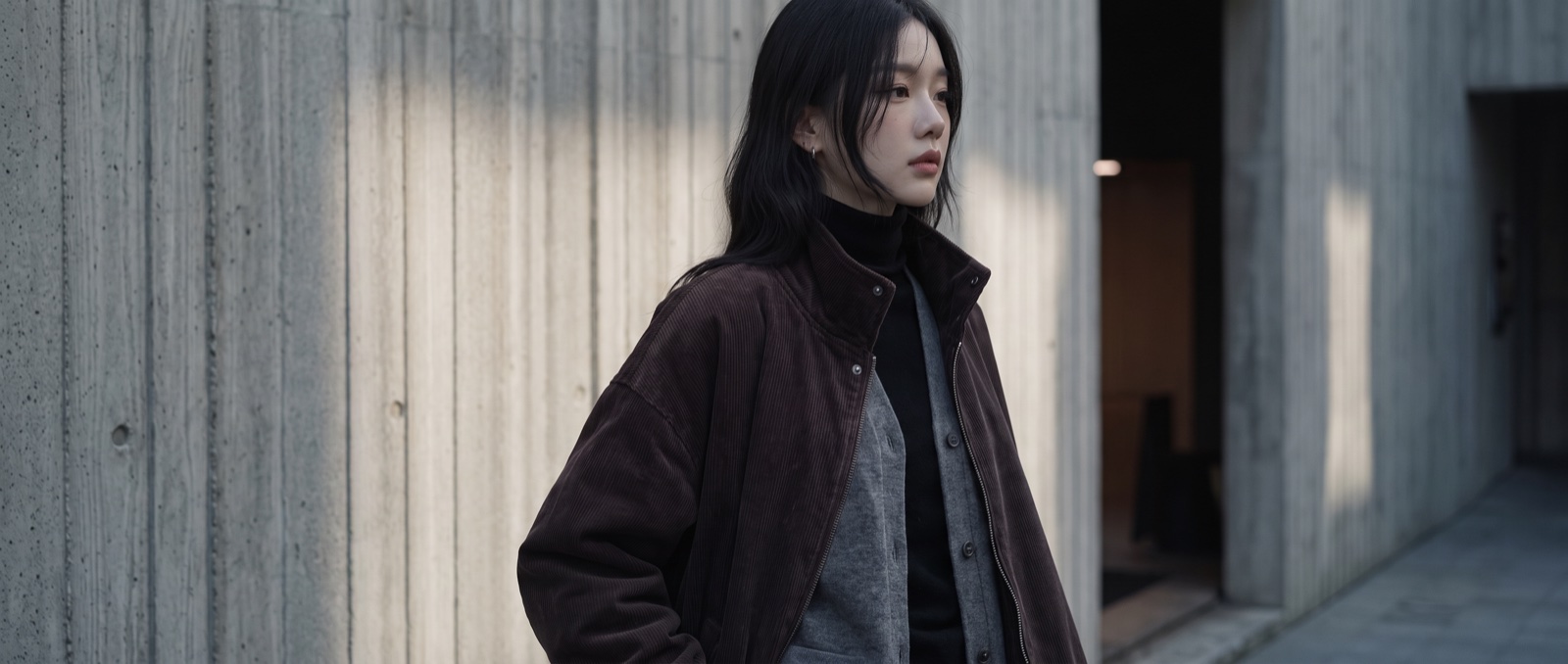
What creates atmosphere in a person? What makes us call someone’s presence distinctive? In clothing, the answer is not always a recognisable aesthetic. Sometimes it is the feeling that the person’s inner life, behaviour, values, and appearance are moving in the same direction. That is closer to dressing cold without looking loud than to collecting aesthetic labels, and it can share a temperature with dark romantic black dressing.
Psychology uses congruence to describe agreement or a match between psychological attributes and behaviour. Fashion does not provide a clinical test of that match, but the idea is useful: an outfit feels self-consistent when it supports the wearer instead of making them perform a borrowed character.
This can include contradiction. Personality is not one temperature, and clothing does not need to stay inside one gendered code. A clean white shirt can feel boyish without becoming a tomboy costume. A soft black suit can look feminine without needing decorative proof.
Let gendered signals remain unsettled
There is an old and perhaps stereotyped idea that a beautiful soul is androgynous. I still find something useful in it. Clothes can hold masculine and feminine signals in a dynamic balance rather than forcing the wearer to pick one side.
A white shirt with slightly flared trousers has that balance. On Minji, this kind of look feels clean and boyish without looking like a disguise. Less decoration makes the eye rest. The clothes become cooler and quieter, leaving more room for the person’s own character.
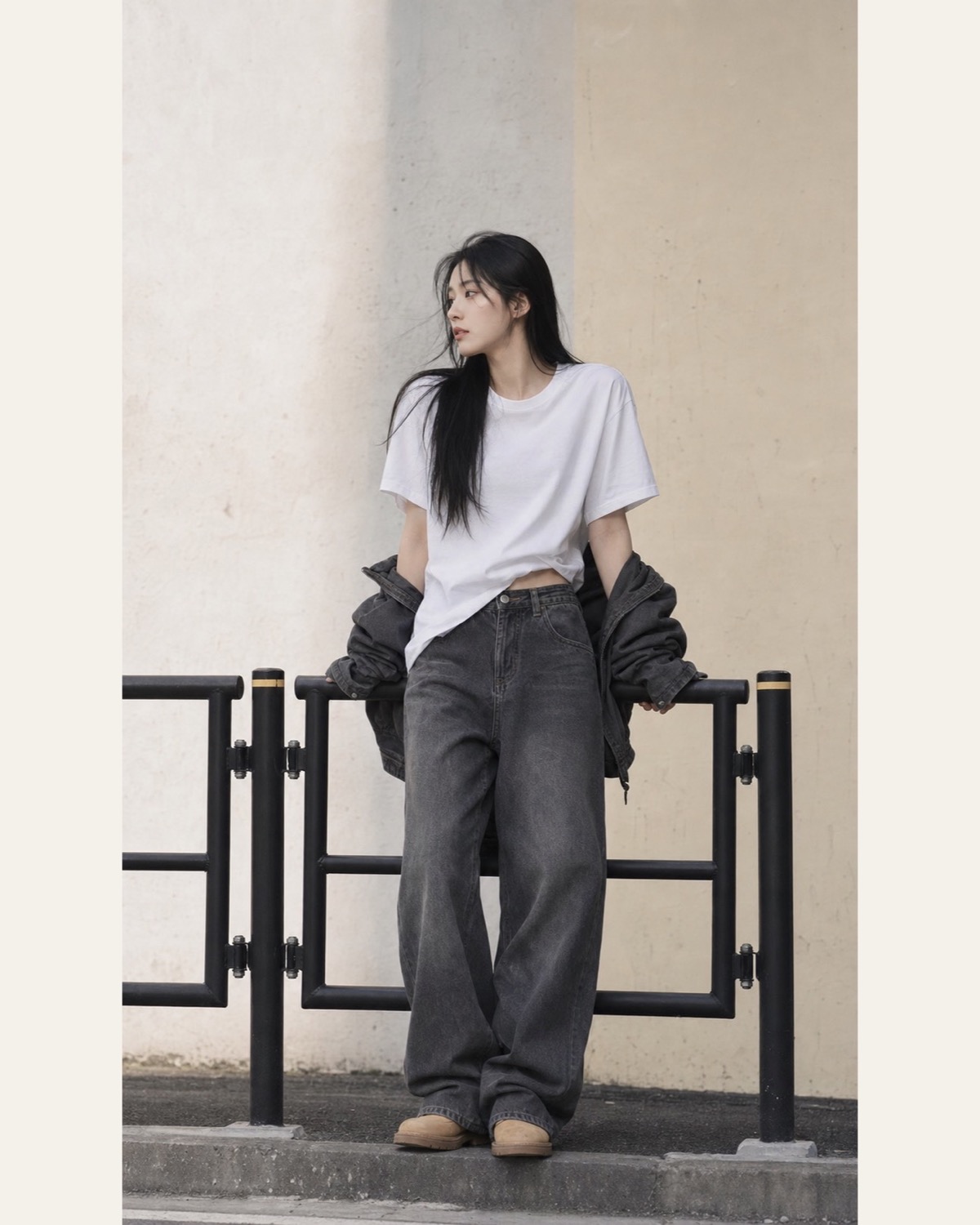
Visual reference: Instagram; AI-generated reconstruction.
The same principle applies to glasses and a crewneck sweatshirt. Large black frames can make the wearer look more open and slightly dazed. Small square frames create a more controlled, expensive nerdiness. The sweatshirt remains ordinary, but the face changes temperature.
Coldness does not always mean rejection. It can be the tension of a distance that seems to move closer and farther away.
Use fit to change the meaning of black
Black is not a complete style. Shape decides what kind of black you are wearing.
An oversized jacket can feel masculine and protective. A fitted waist with a slight flare reads as more playful and Y2K. A soft black blazer can keep its severity while moving with the body. Add a subcultural print and long straight hair, and the look can feel cool without losing its ghostly femininity.
This is what makes Chaeyoung’s all-black styling so compelling to me. It does not work because black is automatically rebellious. The print, hair, and softness of the jacket keep several identities active at once. Beside Momo in brighter colours, the temperature difference becomes even clearer.
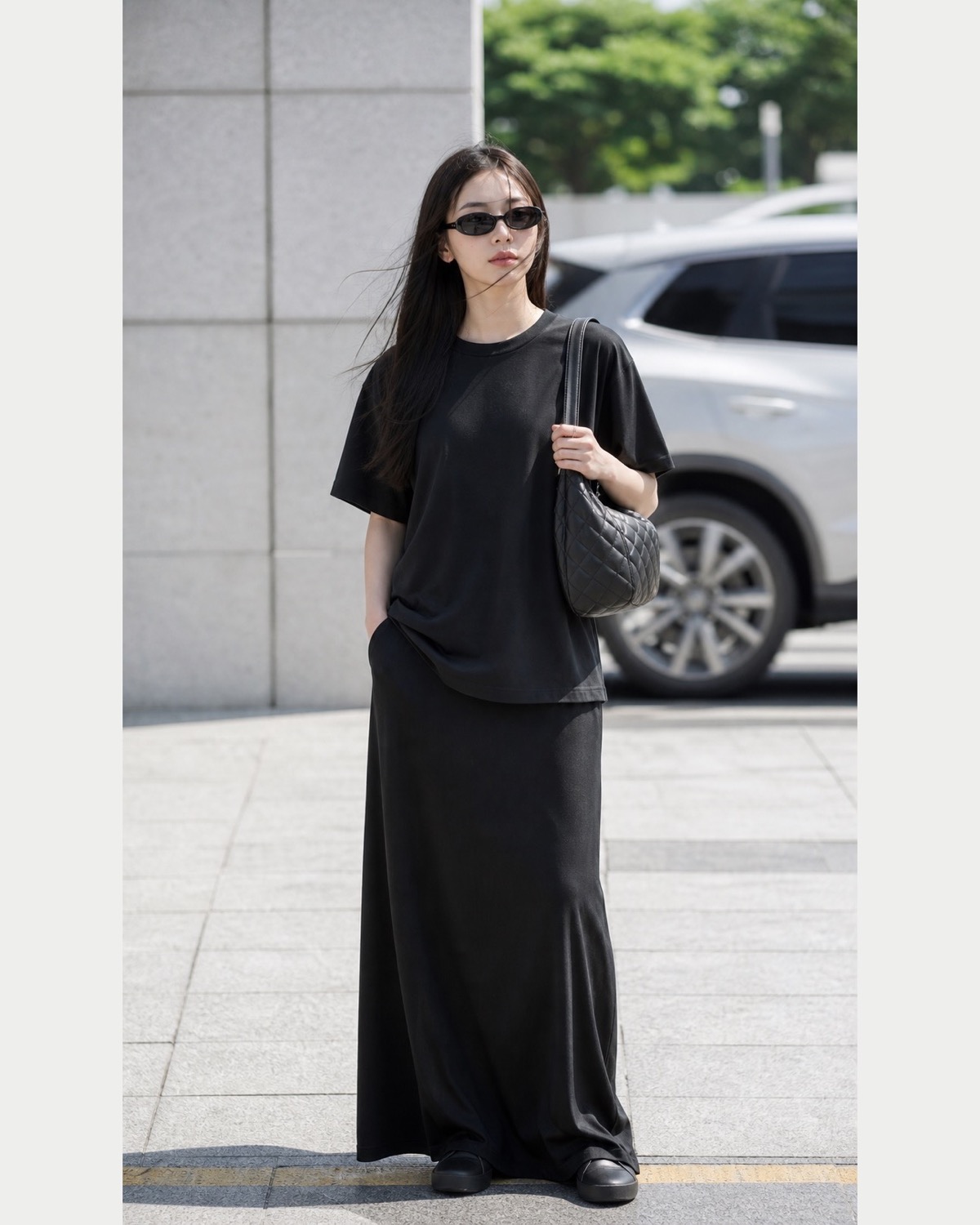
Visual reference: Instagram; AI-generated reconstruction.
Contrast between people can sharpen personal style. It should not pressure one person to dress like the other.
Lower the saturation and contrast
A dense atmosphere often comes from low saturation and low contrast rather than from adding more objects. Nearby colours create a continuous field: charcoal, faded navy, grey-brown, dusty blue, cold beige. Nothing shouts, so texture and posture become more noticeable.
Momo’s softer outfits are a good example. Hoodies and padded clothing can make the wearer resemble a well-groomed cat, especially when the colours stay close and the fabric looks touchable. The mood is not weak. It is inward.
Loose clothes can intensify that feeling. A roomy hoodie with wide trousers and a biker bag may look as if the garments were casually placed on a hanger. That slight lack of bodily definition produces a sleepy, unforced elegance.
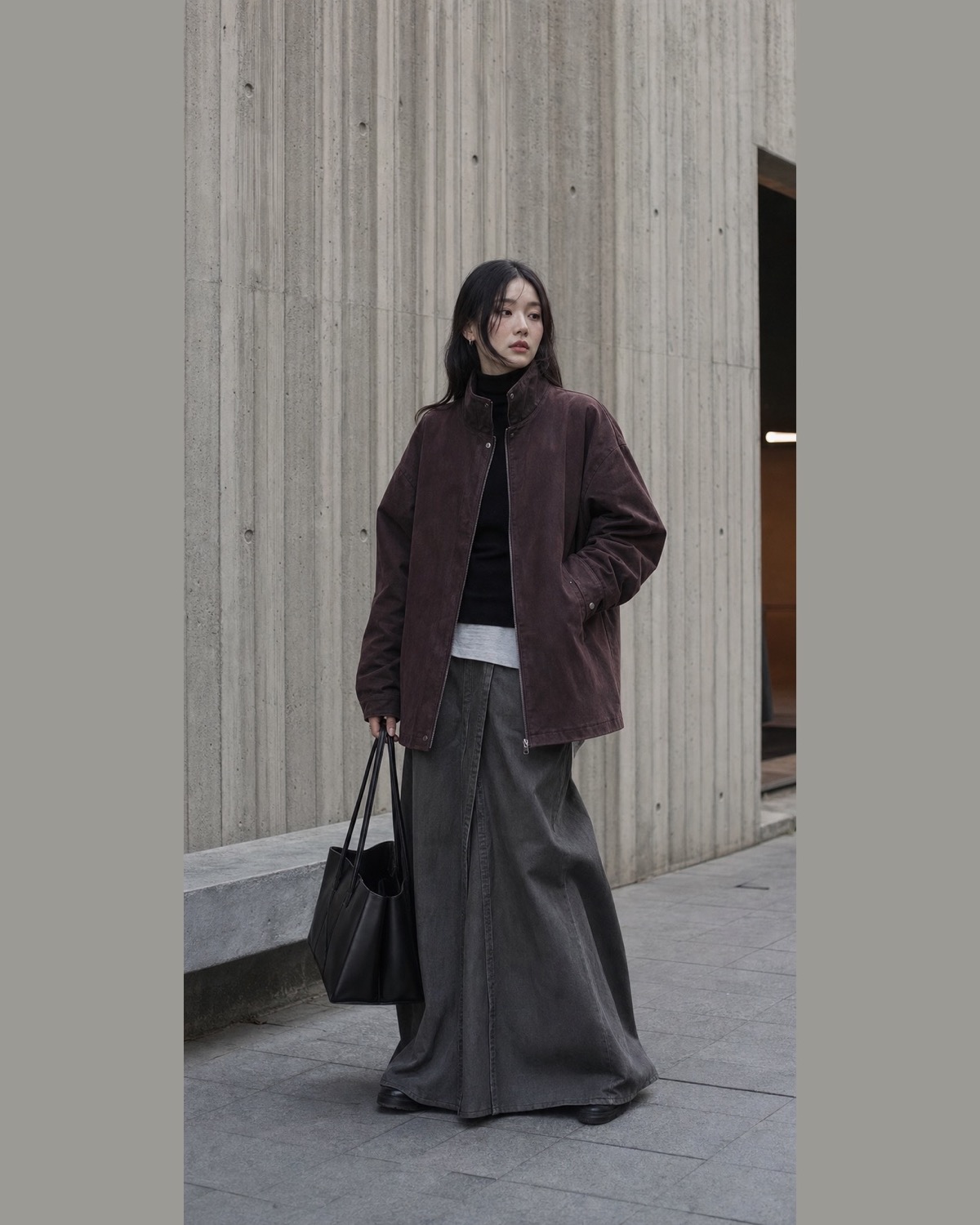
Visual reference: Instagram; AI-generated reconstruction.
Avoid assuming that low contrast means no contrast. A dark bag, metal zip, or black frame around the face can provide just enough structure to stop muted colours from dissolving.
Make black feel light
Spring and summer black can become heavy when every material is opaque. Sheer fabric changes the equation. A light skirt, gauze layer, or translucent panel allows air and skin tone to interrupt the colour.
A balloon skirt over a narrow base can feel close to the spatial experiments associated with Comme des Garçons. The Met has described Rei Kawakubo’s use of oversized form and the space between skin and fabric as part of her design language. That does not make every balloon skirt a Comme des Garçons look, but it explains why volume can feel conceptual rather than merely decorative.
Misty brows or soft makeup can cool the face, while translucent fabric prevents an all-black outfit from becoming hard all the way through. The person seems both firm and buoyant, as if the clothing has learned to float.
Black is not the only route to coldness. Morandi-like muted colours and cool moonlit shades can carry the same emotional distance. A shirt or knit tied around the waist adds Korean-style layering without breaking the quiet palette.
Dress in the direction of your current life
Self-consistent style is not a permanent uniform. It changes with the person. If you are reading melancholic books, listening to distant music, and spending more time alone, a cool and slightly broken-looking wardrobe may feel honest. When your life changes, the clothes may change too.
At the moment, I like the coldness of staying home and paying attention to myself. A white T-shirt, bare face, and quiet room can feel more exact than a fully styled outfit. It separates me from inefficient social contact, and I value that distance.
Clothing needs to follow naturally, but “naturally” does not mean carelessly. It means following your present state rather than chasing a fixed persona. The goal is for soul, behaviour, and appearance to move together, while leaving enough space for contradiction.
Fact-check notes and sources
- The APA Dictionary of Psychology defines congruence generally as agreement or harmony and, in one sense, as a match between psychological attributes and behaviour.
- The APA entry on consistency theory describes a family of theories concerned with maintaining consistency among cognitions. This article uses the idea as an analogy for personal style, not as a psychological diagnosis.
- The Met’s Rei Kawakubo exhibition documents the designer’s use of principally black monochrome, oversized form, and the space between body and clothing.
- The readings of Minji, Chaeyoung, and Momo are subjective style analysis and are preserved as such rather than presented as verified statements about their personalities.