
Why dark feminine aesthetic looks strongest when it stops trying to be liked
A fashion-editor guide to dark feminine aesthetic, succubus chic, siren makeup, sharp styling and why the look works when it is controlled rather than costume-like.
Dark feminine aesthetic is one of those phrases that sounds cringe until you realise people are using it to name something very real: a shift away from being pretty, sweet and easily consumed. It is not just black dresses and siren makeup. It is a change in posture. A change in gaze. A change in what kind of attention the outfit is willing to accept.
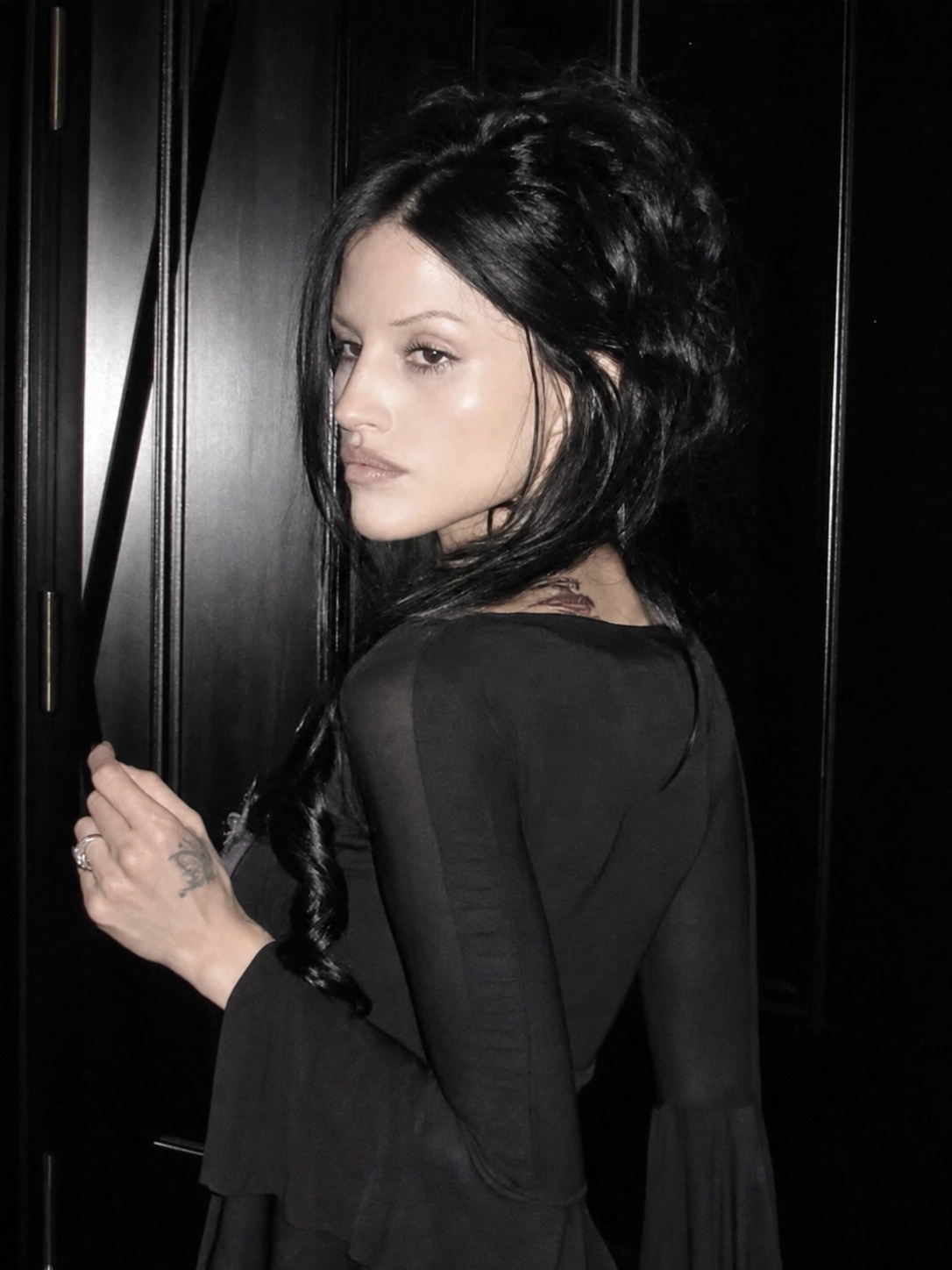
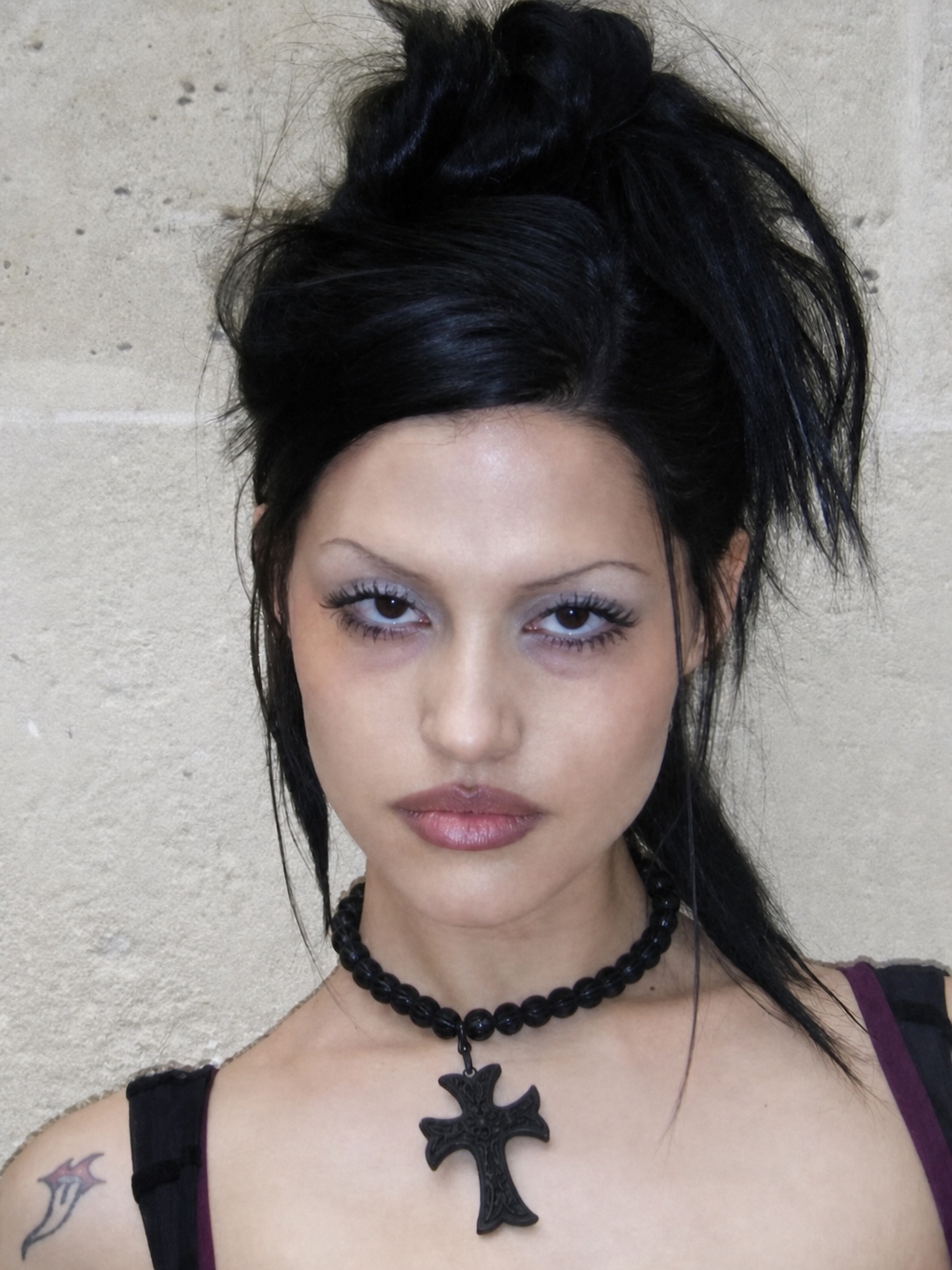
Succubus chic is the sharper, more theatrical branch of that mood. It takes dark feminine style and pushes it toward danger: deep eyes, pale skin contrast, body-skimming black, glossy hair, tight silhouettes, exposed shoulders, severe accessories and a face that does not ask for approval. The look is not soft power. It is controlled power.
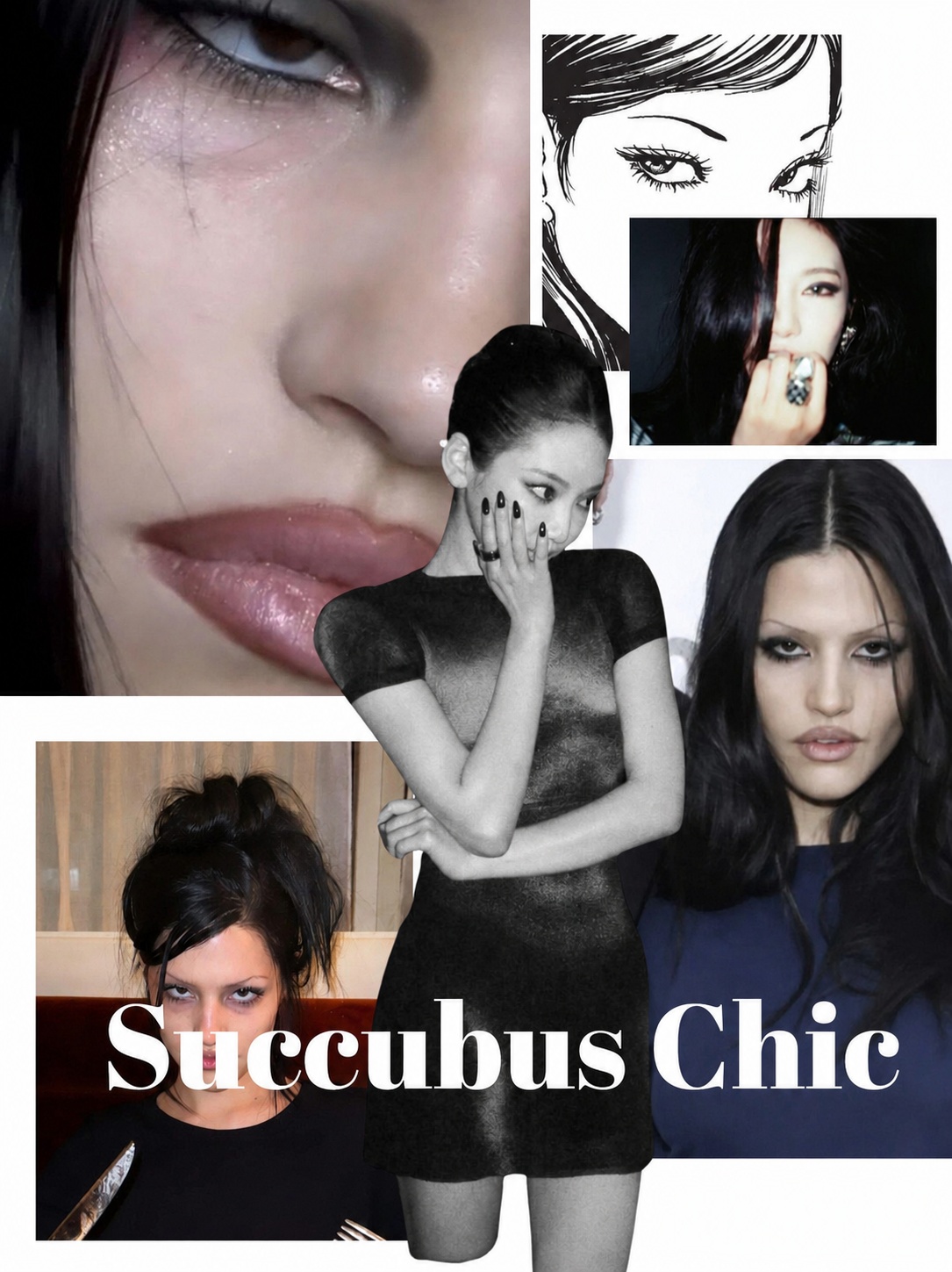
What is dark feminine aesthetic?
Dark feminine aesthetic is a style language built around mystery, restraint, seduction, distance and visual control. In fashion, it usually appears through black or low-saturation colour, body-conscious silhouettes, sharp makeup, polished hair, sheer or glossy textures, pointed shoes, narrow shapes and jewellery that reads more ritualistic than decorative.
The important part is that it is not simply “sexy.” Sexy is easy. Sexy can be obvious, commercial, flattened. Dark feminine is more specific. It has a sense of refusal inside it. It says: you can look, but you do not get to decide what I mean.

That is why succubus chic feels so current. It answers a cultural fatigue with hyper-approachable femininity. For years, the dominant online feminine ideal has been polished, friendly, glowy, digestible. Even when it was expensive, it still wanted to be liked. The dark feminine aesthetic does the opposite. It treats distance as part of the styling.
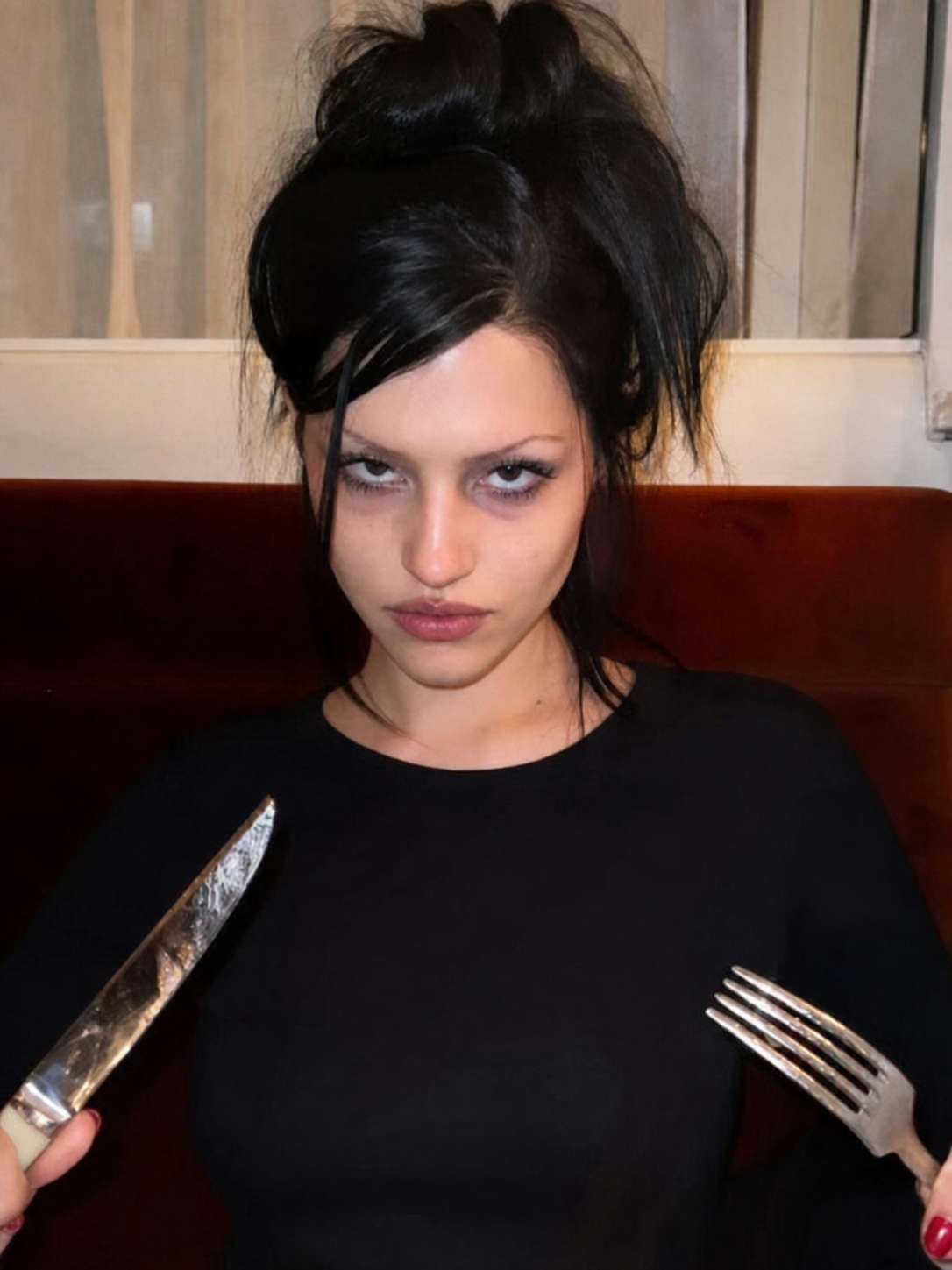
The face matters as much as the outfit
With this look, makeup is not an afterthought. The face carries the argument. Siren makeup, sharp eyeliner, muted lips, cool-toned skin and a deliberate lack of softness create the mood before the clothes even arrive. The effect is not “I woke up like this.” It is more like: I constructed this version of myself and I am not taking questions.
That is where a lot of dark feminine outfits fail. The clothes go dark, but the styling stays too sweet. A black dress with soft blush, bouncy hair and gentle accessories can still look romantic, which is fine, but it is not quite the same thing. Dark feminine aesthetic needs friction. It needs the face, hair, outfit and body language to agree on the same sentence.
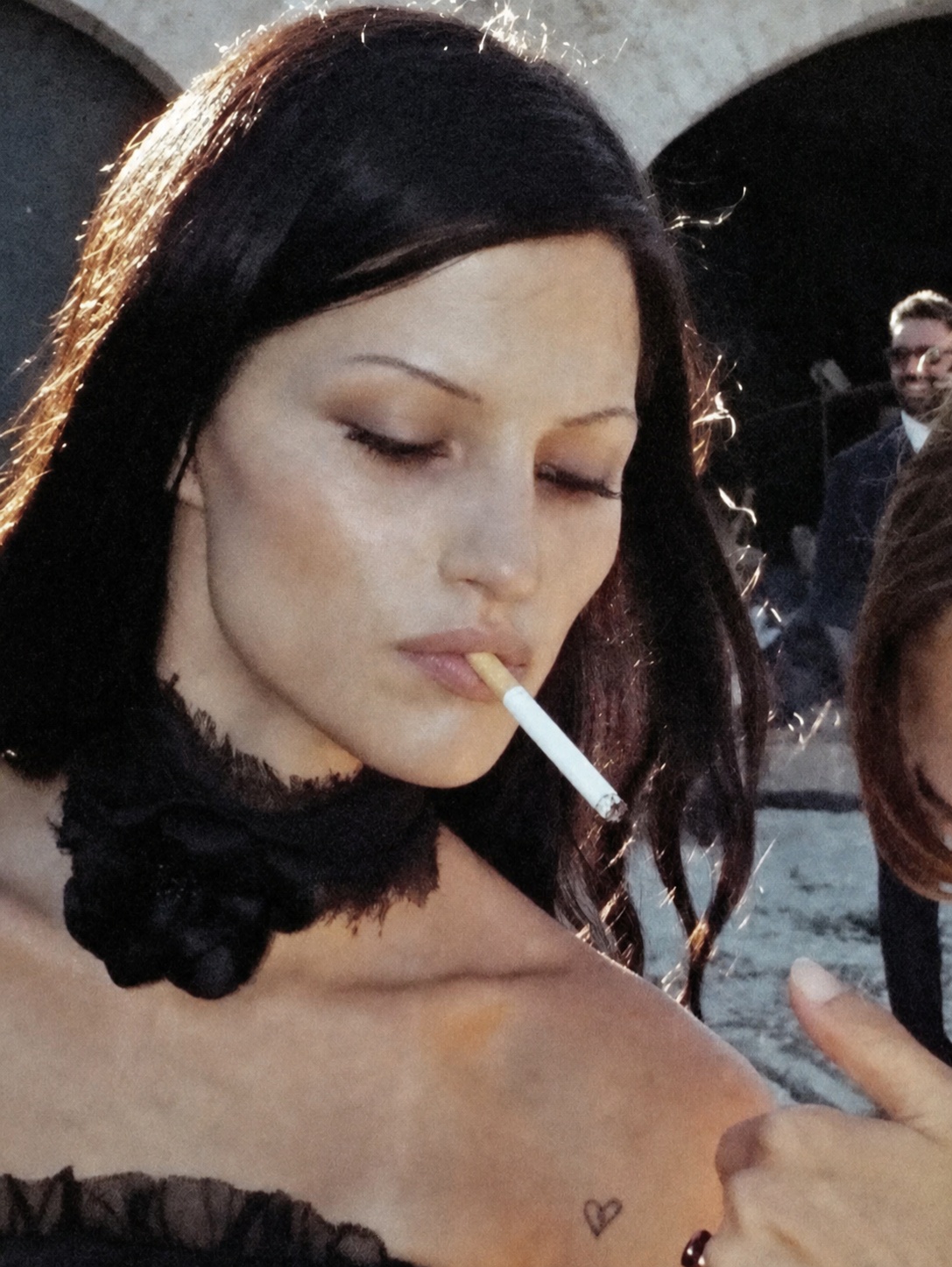
The best succubus chic outfits have a slightly hostile elegance. A high neckline with a cut-out. A simple black top with a severe eye. A glossy black dress that does not need sparkle to announce itself. A body-skimming silhouette that feels sculptural rather than thirsty. It is not about showing the most skin. It is about deciding exactly where the eye is allowed to go.
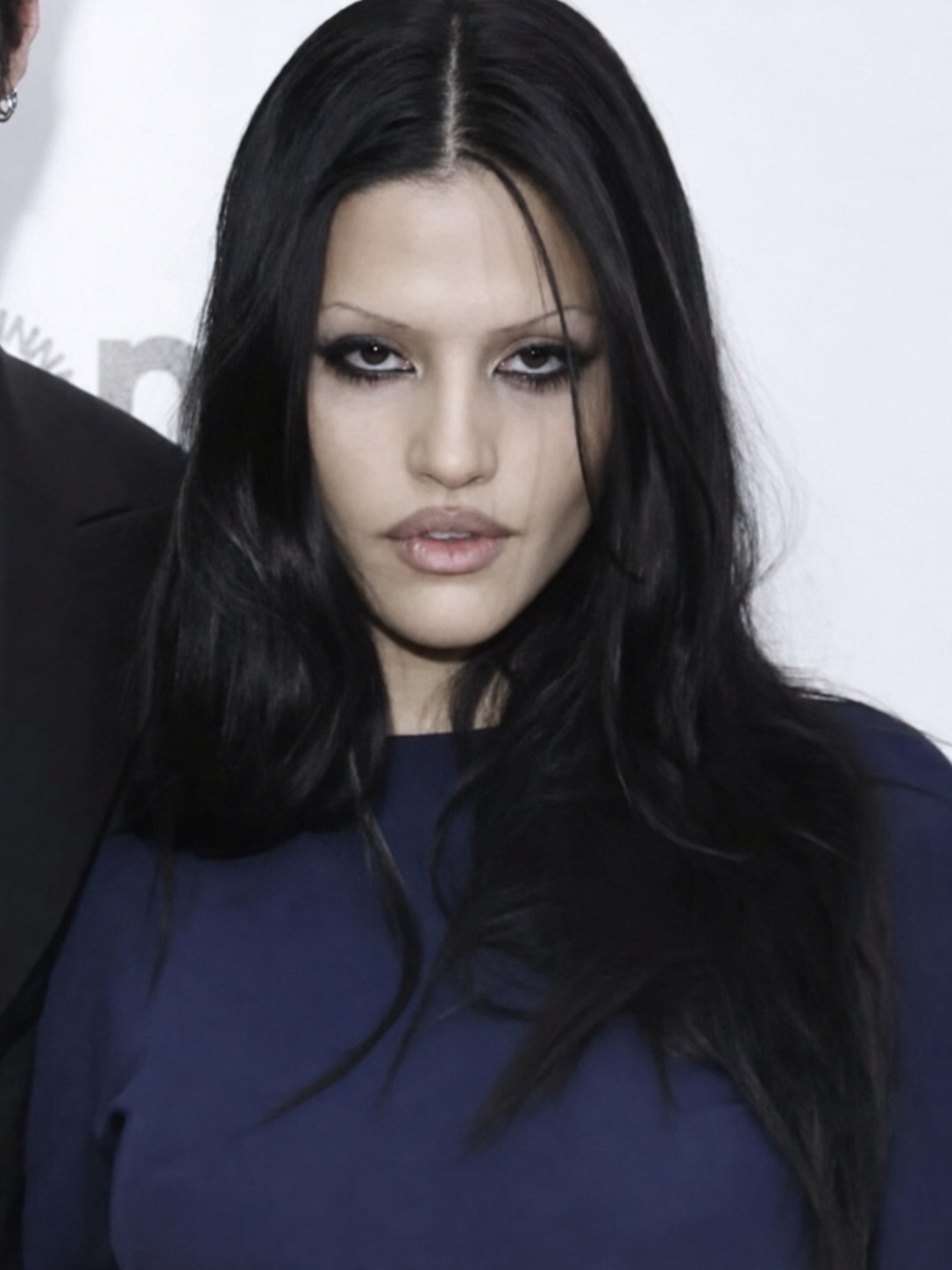
From sweet girl to controlled gaze
The most useful way to understand this shift is through contrast. Sweet girl-group styling often works through brightness, softness and approachability: pink-toned makeup, rounded eyeliner, light colour, girlish pieces, the feeling of being easy to accept. Dark feminine styling flips the mechanism. It uses sharp eyeliner, muted lips, cool-toned skin, dark clothing and a more distant expression.
Neither is automatically better. But they produce completely different social effects. One invites closeness. The other controls distance.
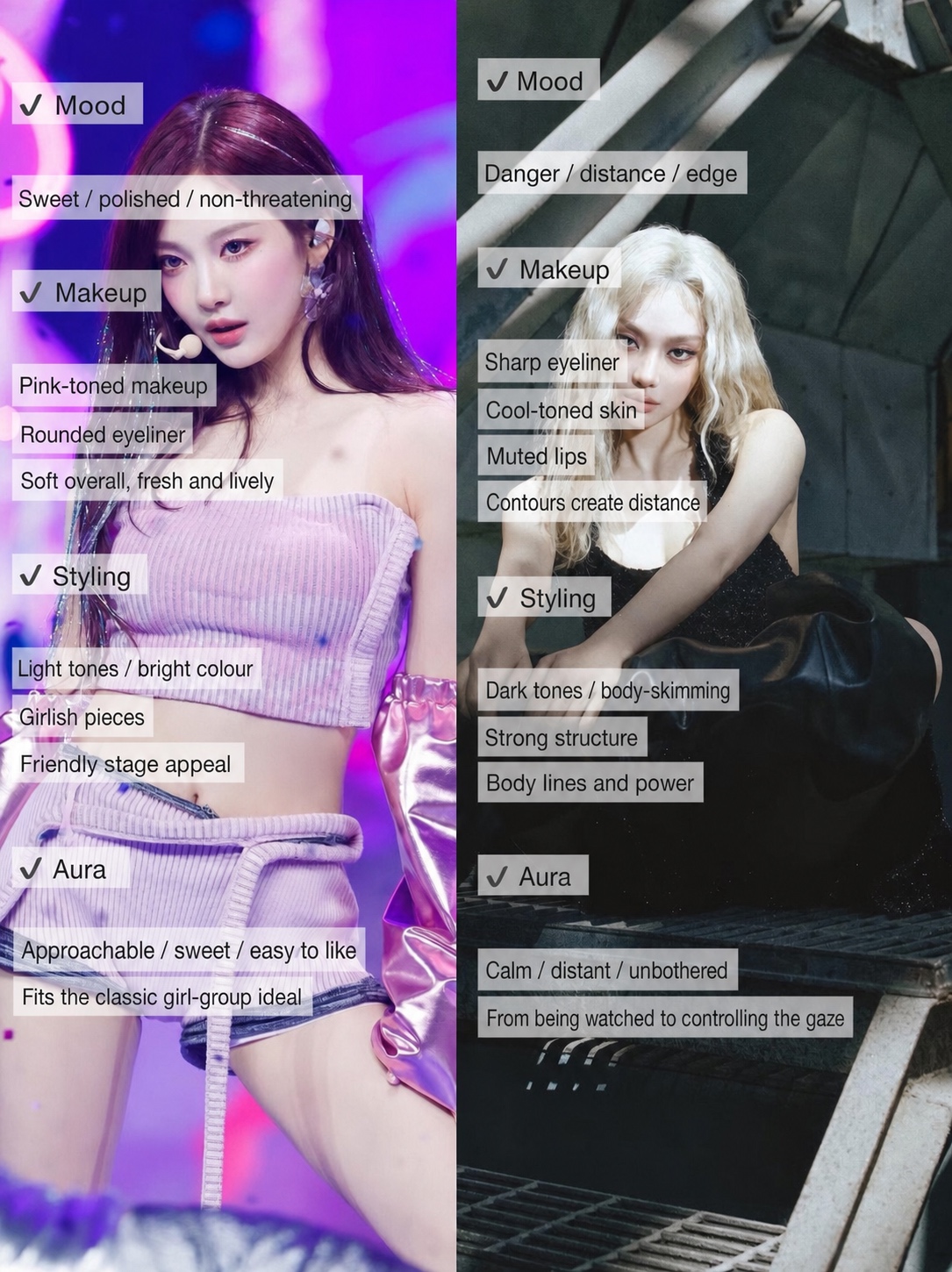
That difference matters because fashion is never just fabric on a body. It is a negotiation with being seen. The dark feminine aesthetic is interesting because it does not reject visibility; it weaponises it. It understands that being looked at and being available are not the same thing.
The runway version: black, body, control
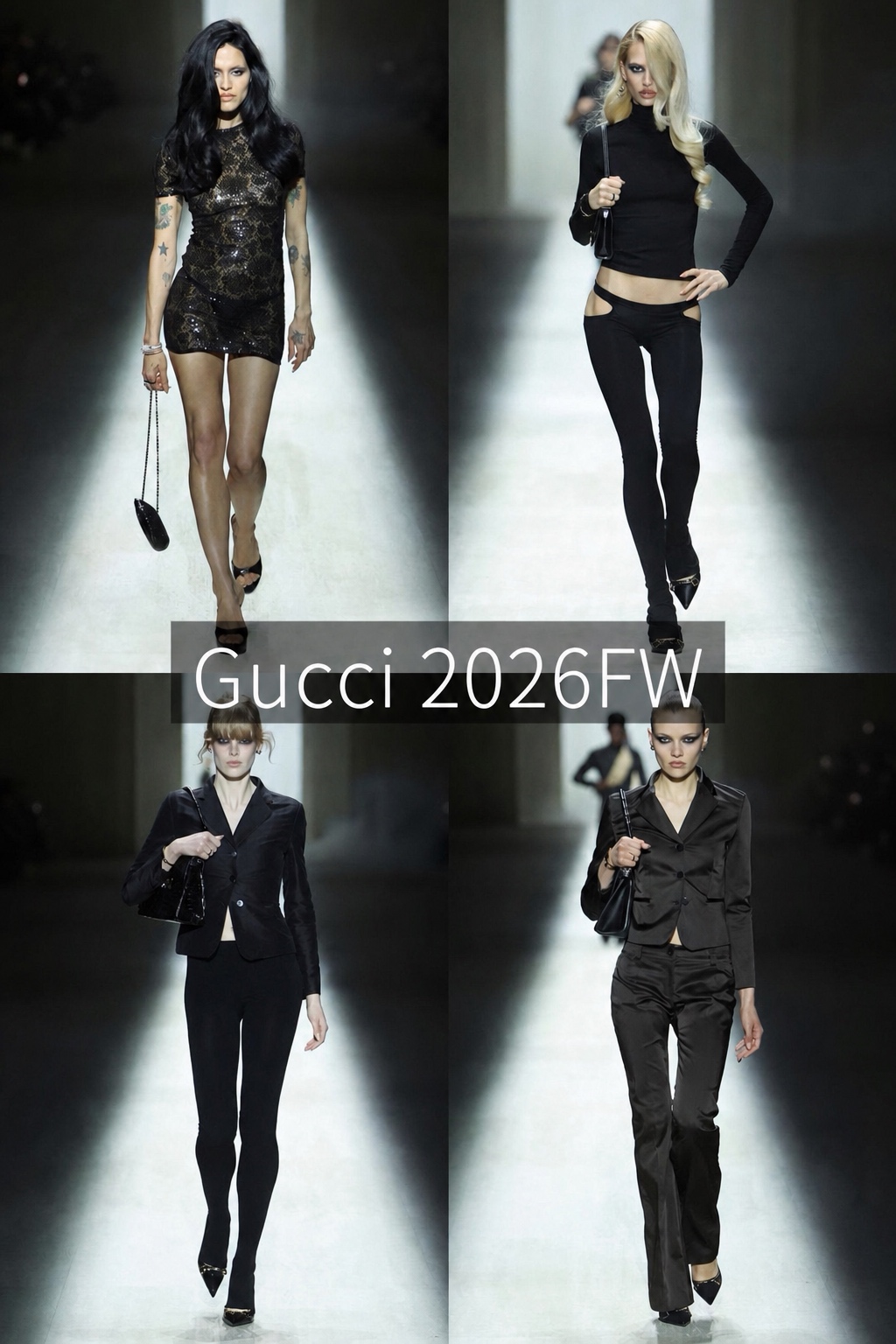
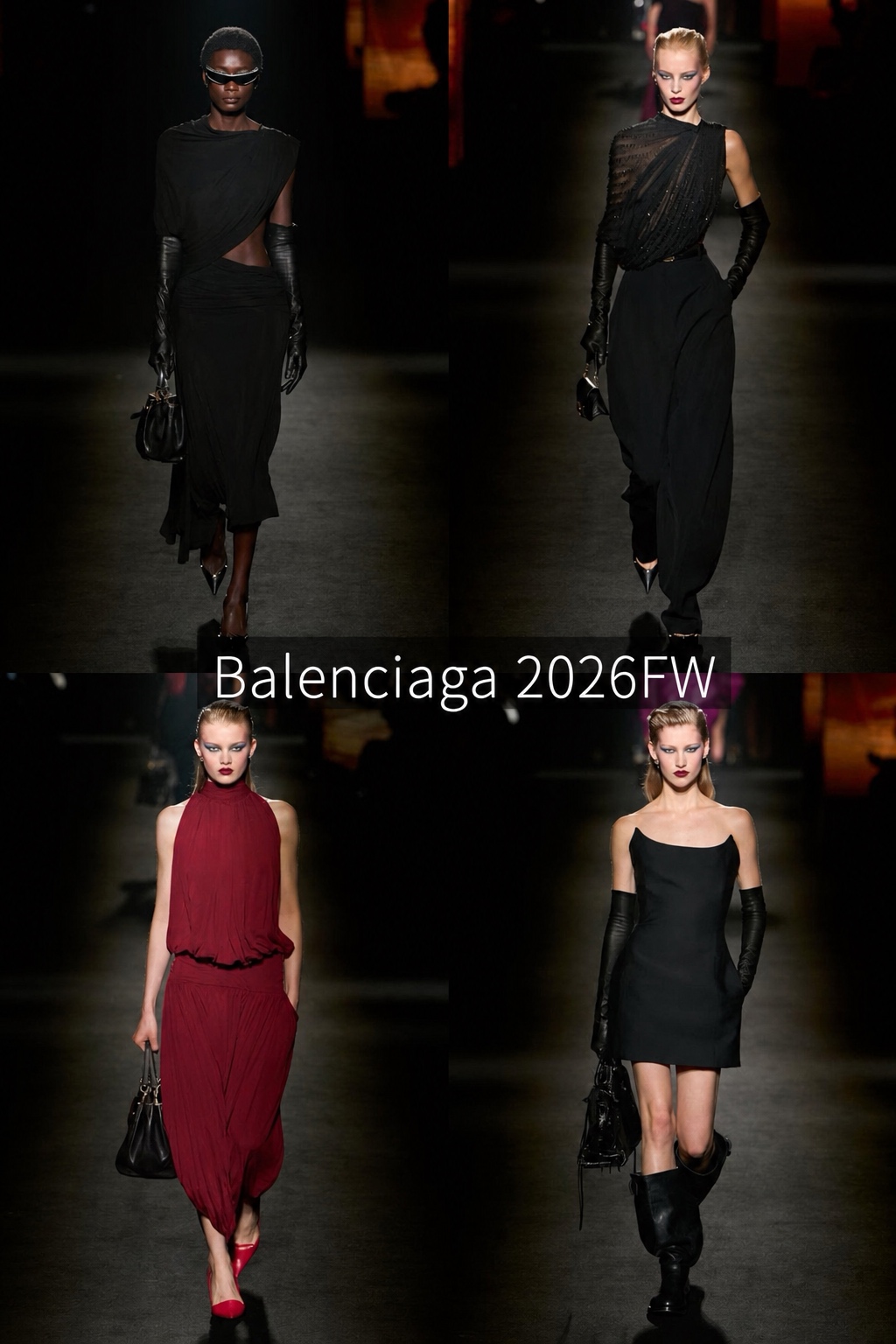
Runway references help because they show the cleaner architectural side of the look. Gucci and Balenciaga-inspired black styling pushes succubus chic away from costume and toward structure: long sleeves, sharp shoulders, cut-out hips, sheer black, narrow trousers, gloves, pointed shoes, slick hair, heavy eyes.
This is the version I find more useful for real dressing. You do not need to look like you are auditioning for a vampire club. You need one controlled line, one severe detail and one beauty choice that refuses softness.
For a wearable dark feminine outfit, I would start with three anchors: a black base, a precise silhouette and a controlled face. A black fitted top with a long skirt. A narrow dress with pointed shoes. A sheer sleeve under a blazer. A body-skimming knit with a cold-toned lip. Then decide where the tension sits: neckline, waist, eye makeup, jewellery, gloves, hair.
The danger of turning it into costume
Here is the catch: dark feminine aesthetic becomes silly very quickly when it is treated like a villain uniform. Too many obvious symbols, too much theatrical darkness, too much “mysterious woman” performance, and suddenly the whole thing collapses into content. The look works when it feels controlled, not when it feels desperate to be feared.
I am much more interested in the version that is subtle but lethal. A soft pink shirt with a sharper face can still sit near the dark feminine universe because the mood has shifted. A backless black look overlooking bright water can feel more dangerous than a full gothic outfit because the contrast is doing the work.


The thing about dark feminine style is that it is never really about darkness. It is about authorship. Who controls the gaze? Who decides whether softness is offered or withheld? Who gets to turn beauty into something less agreeable?
That is why succubus chic is more than a microtrend when it is done well. It gives femininity a colder temperature, a sharper outline and a better boundary. I am not mad at that. In fact, I think a little distance is exactly what makes the look breathe.