
EXODUS Has a Release Date, But Does It Actually Look Like a New Space Opera?
EXODUS launches on April 7, 2027, but its new trailer raises a bigger question: can its characters, machines, and worlds create a truly distinct space-opera visual language?
TL;DR
- EXODUS is scheduled to launch on April 7, 2027, with the new release-date trailer announcing the date.
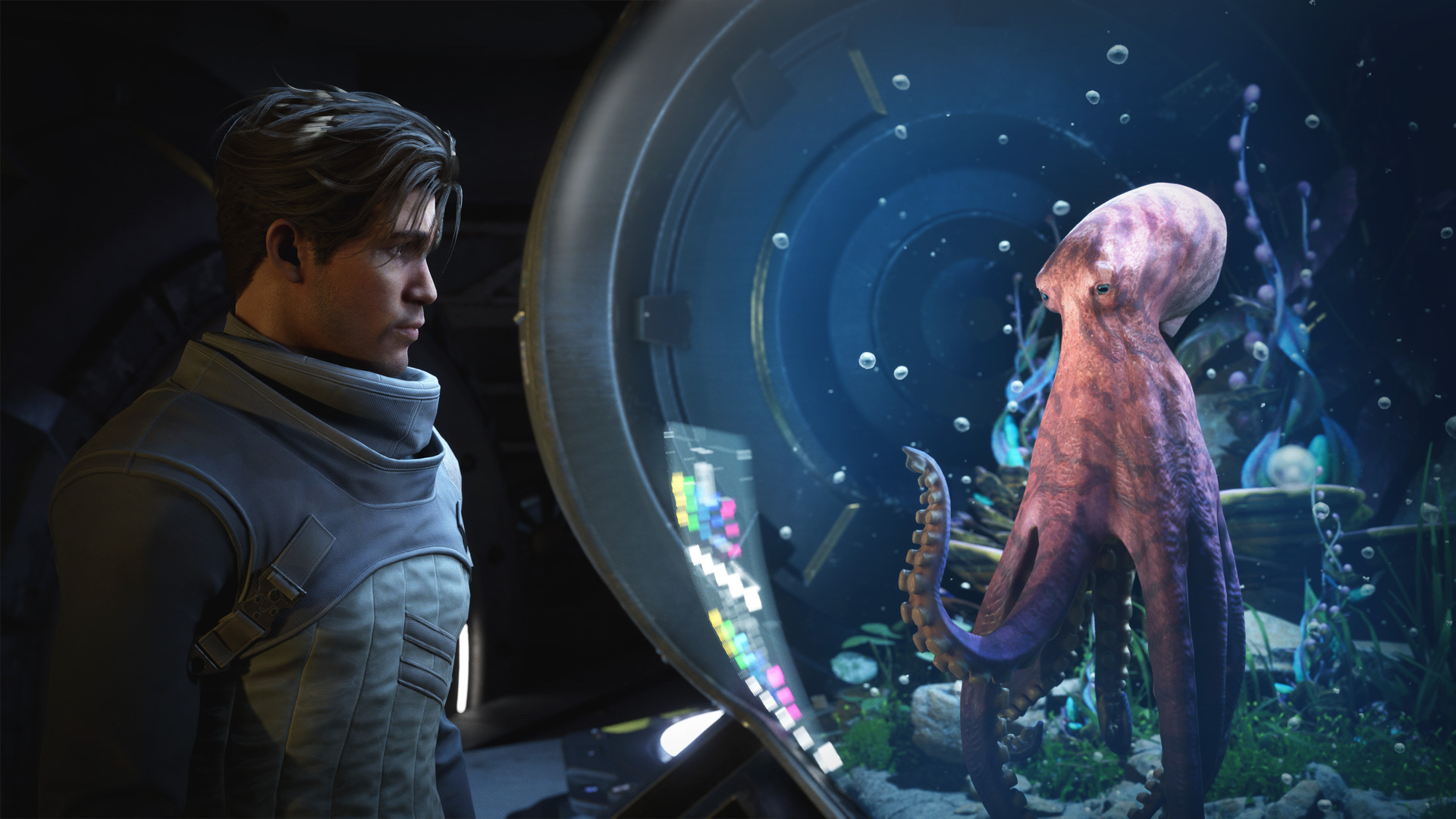
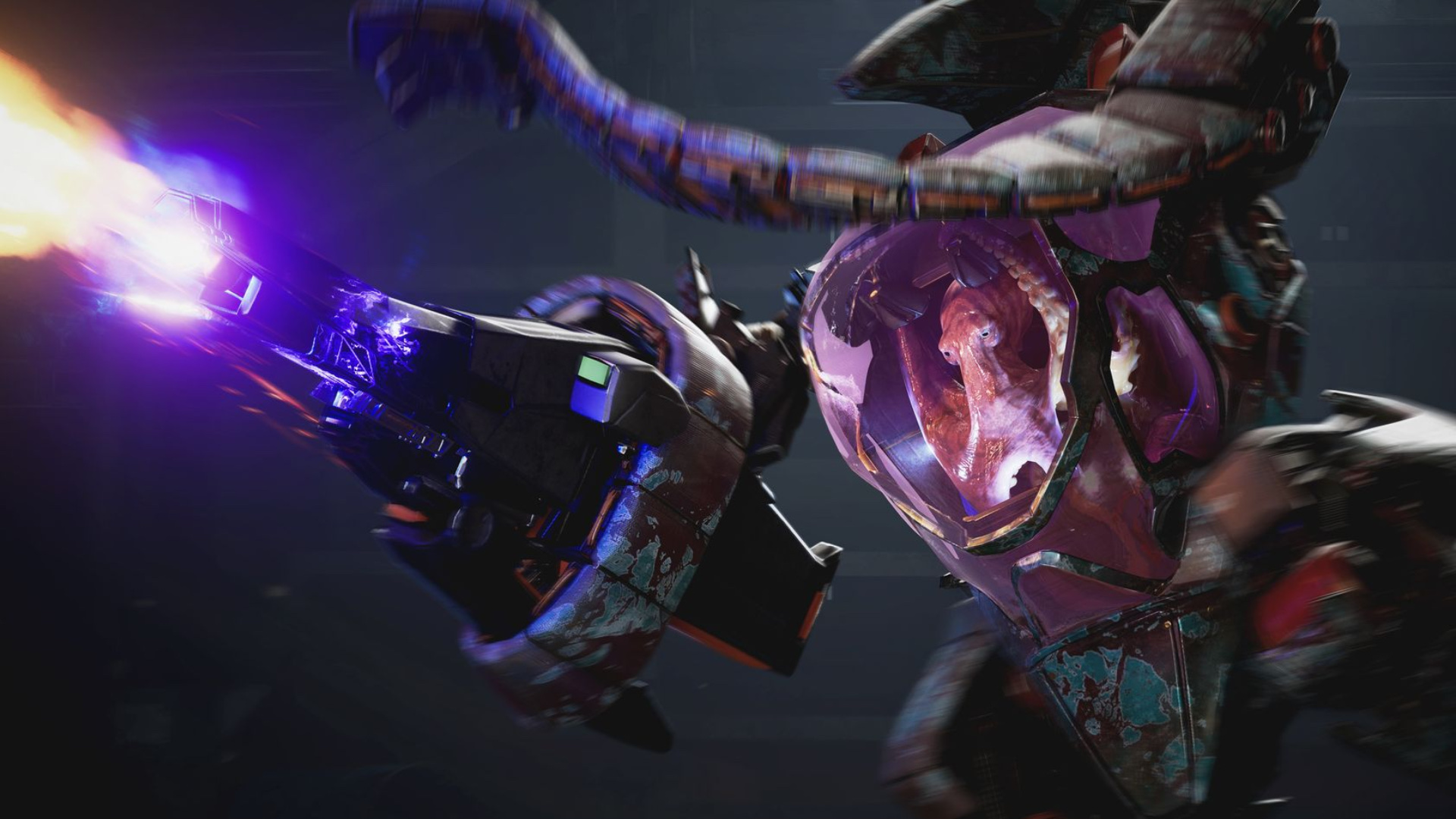
- Its most distinctive hook is Salt, an Awakened octopus mercenary piloting a combat mech alongside Jun Aslan.
- The game defines its future through characters, gear, ruins, ships, species, and technology, rather than only through a generic space backdrop.
- The trailer makes that world legible, but the full game still has to sustain its visual logic beyond the cinematic reveal.
What Is EXODUS and When Does It Launch?
Now, EXODUS finally has a release date of April 7, 2027. There you go, get it marked on the calendar, tattoo it on your forearm, or just add it to the ever-expanding list of games that you swear you are definitely going to play the moment they launch. The latest release-date trailer from Archetype Entertainment also confirms that EXODUS is heading to PlayStation 5, Xbox Series X|S, and PC via Steam and the Epic Games Store.
But honestly, the date is not the bit that caught my eye.
Why Does EXODUS Need a Visual Language?
The more interesting thing about this trailer is that EXODUS is trying to do something that every new space-opera game has to do before anyone starts caring about its lore, its combat system, or its very expensive collector’s edition. It has to become a visual language. It has to make you understand what sort of future this is just by looking at the people, the machines, and the places that inhabit it.
Otherwise, you have just got another sci-fi game with a lot of stars in the background. And, let’s be honest, the galaxy is absolutely rammed with those.
EXODUS is being sold as a cinematic single-player action RPG set 40,000 years after Earth, according to the official EXODUS premise. You play as Jun Aslan, a salvager who becomes a Traveler, and the wider setup involves dying homeworlds, ancient ruins, derelict alien ships, rival human factions, advanced Celestials, and a fair bit of time dilation to make interstellar travel even more emotionally inconvenient.
That is a hefty amount of future to cram into one game. But the thing that gives it a proper face is Salt.
How Does Salt Make EXODUS Look Different?
Salt is an Awakened octopus, a mercenary and bounty hunter who pilots a specialized combat mech. So, rather than simply giving Jun another bloke with a large gun to stand beside him, EXODUS is putting a completely different kind of body and intelligence into the same adventure. Jun is a human salvager trying to save his home. Salt is an intelligent octopus with her own history, her own survival instincts, and a mech that turns her into a long-range combat specialist.
You can probably see why that is more useful than another mysterious hooded warrior.
A new space opera needs those kinds of immediate visual relationships. Not just characters who have different names and slightly different haircuts, but bodies that tell you something about the world before anyone has delivered a five-minute speech about it. Salt’s shape, her mech, and her position alongside Jun make the future feel less like a clean extension of our own technology and more like a place where humanity has had to negotiate with everything it finds.
That is a much better starting point for a new universe.
How Do Jun and Emrys Build EXODUS’s Future?
The official material also introduces Emrys, a member of the Deva, an enigmatic Celestial species defined by plural consciousness. Again, that is doing visual and conceptual work at the same time. You are not just meeting a more advanced human. You are meeting a being whose idea of a self is different from yours, and whose body and presence have to make that difference feel real.
This is where a space-opera game either starts to get exciting or starts to feel like it has been assembled from a box marked FUTURE PARTS. The names can be fantastic, but names alone do not make a world. The player has to be able to look at a companion, a weapon, or a settlement and understand that it comes from a different history.
What Do EXODUS’s Gear and Environments Say About Its World?
That is why the clothing and gear matter, even when the trailer is busy shouting about combat. According to the official world and character guide, Jun can be played as a male or female character, with the player choosing a look and gear. That is a fairly practical character-customisation feature on paper, but it also tells you what kind of visual role the player is expected to have. You are not just selecting a face before getting dropped into a pre-built future. You are deciding what sort of Traveler you are going to look like while moving through it.
And when the central character begins life as a salvager, that gives the gear a useful job to do. The future does not have to look like every surface was designed yesterday in a laboratory by someone wearing a spotless white coat. A salvager implies old technology, recovered objects, strange equipment, and a person making a life from whatever the galaxy has left behind. That is a much more interesting visual problem than simply making everything shiny.
Mind you, I am not saying the trailer has already proven that every costume and prop in the final game is going to be a stone-cold classic. That would be a bit much, even for your Uncle Spurt. But the ingredients are at least pointing in the right direction. The character identities are not being separated from the technology around them. The technology is part of who these people are.
The same applies to the environments. EXODUS is not describing one generic planet where the hero runs from one shooting gallery to the next. The official setup moves between a dying homeworld, ancient ruins, derelict alien ships, hostile worlds, and the remnants of civilizations that have been altered by time and advanced technology.
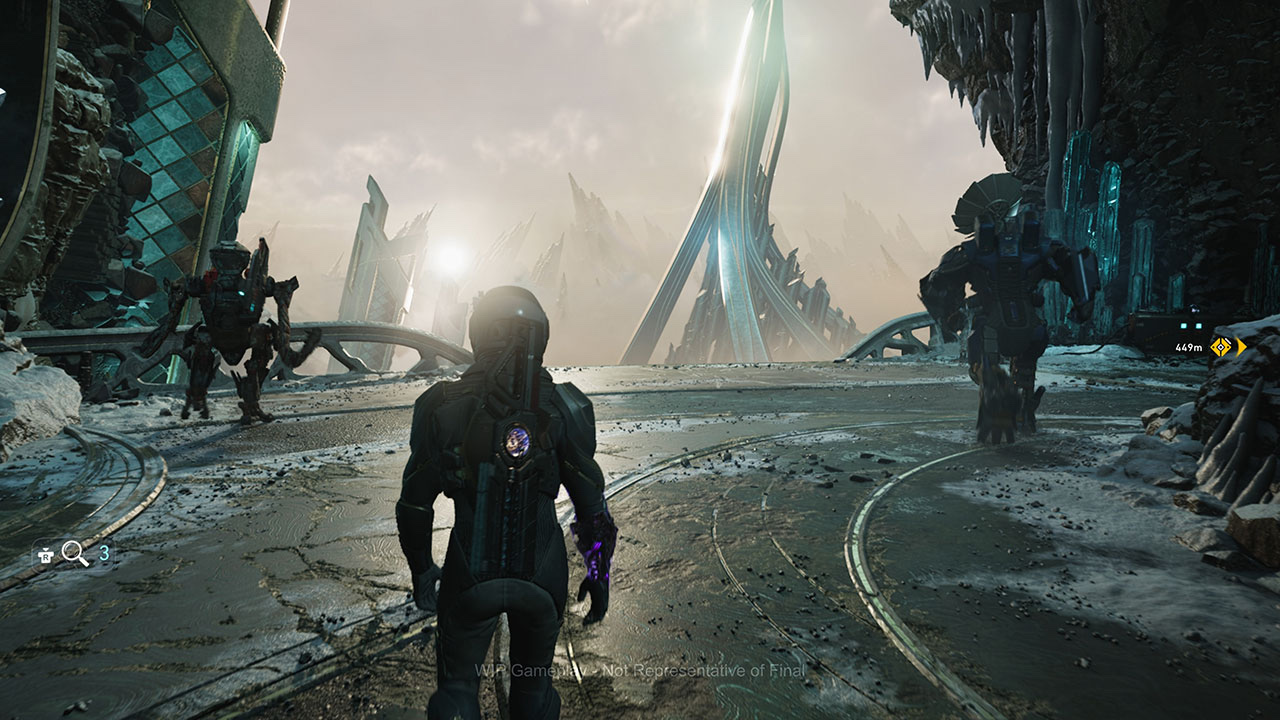
A space opera needs more than a large map. It needs spaces that explain why the people in them behave the way they do. A ruined facility should not just be a place where you find a bigger gun. A damaged ship should carry some sense of the civilization that built it. A homeworld should feel like something worth returning to, rather than the menu screen you visit between missions.
What Makes EXODUS More Than a Generic Sci-Fi Game?
That is also where the difference between a sci-fi game and a space opera starts to become clearer. Sci-fi can give you a cool machine and a question about the future. Space opera needs a whole chain of relationships. People are shaped by planets, planets are shaped by technology, technology is shaped by old civilizations, and then everybody has to argue about who gets to use the good bits.
EXODUS appears to understand that its technology cannot sit in the background like a collection of decorative screens. The game is built around Travelers venturing out to recover powerful Remnants and confront the Celestials, whose technology is far beyond what humanity currently has. Salt’s combat mech is one part of that system. Jun’s salvaging background is another. The weapons, ruins, and ships are not only there to make the screenshots look busy. They are meant to show how this civilization survives.
Or at least, that is the promise.
And this is why the release-date trailer is more useful than a simple announcement graphic. A date tells you when the product is arriving. A trailer has to tell you what sort of product it is. It has to make you want to spend time inside this particular future instead of waiting for the next one to come along.
The trailer’s focus on Salt is a smart move because she gives EXODUS an obvious point of difference. You can describe a futuristic action RPG in a hundred different ways and most of them will sound like they were generated after somebody spilled coffee on a genre spreadsheet. But say there is an intelligent octopus mercenary piloting a combat mech, and suddenly people know where to look.
That does not automatically make the game good, of course. It just makes the game legible.
And being legible is massively important for a new space opera. Established universes can lean on old symbols, familiar factions, and decades of accumulated visual memory. A new one has to teach you how to read it. It has to show you what counts as ordinary, what counts as advanced, what counts as dangerous, and what counts as home.
EXODUS is also trying to make the future feel personal rather than merely enormous. The official story keeps returning to companions, crews, survival, and the protection of home. Jun and Salt are described as two strangers shaped by very different worlds who end up standing back-to-back against the same enemy. That is a very traditional space-opera move, but it is a useful one. The galaxy may be enormous, but the player needs a couple of people to care about before all those ancient ruins start to matter.
There is a temptation with futuristic games to treat the visual language as wallpaper. Throw in a few glowing interfaces, a huge planet, some angular armour, and call it a day. But the best visual worlds make their design decisions perform a job. They tell you who has power, who is surviving on scraps, who has evolved beyond humanity, and who is carrying the consequences of old technology around in their body.
EXODUS has some promising material to work with there. The Awakened animals, the Celestials, the Changelings, the human salvagers, the combat mechs, and the ruined spaces all suggest a future that is supposed to be visibly crowded with different forms of life and different ideas about progress. That is considerably more interesting than another human crew wandering through identical corridors while somebody explains the plot over the radio.
Can EXODUS’s Trailer Carry Its Visual World Into the Full Game?
But the final test will be whether those ideas remain visible once the trailer stops doing all the heavy lifting. A release trailer can put Salt in the perfect light, arrange the ships in the most dramatic possible formation, and make every companion look like they have a secret worth uncovering. The game then has to keep that visual logic alive across actual rooms, actual missions, actual equipment menus, and all the routine bits in between the big cinematic moments.
That is a much harder job than producing one memorable reveal.
Still, the new date gives EXODUS a proper point on the horizon, while the trailer gives it something more useful than a launch window. It gives the game a face, a body, a strange companion, and a reason for all of that technology to exist in the same universe.
So, does EXODUS already look like a new space opera? It certainly looks more specific than a generic sci-fi product. Salt’s octopus-in-a-mech setup is the sort of gloriously odd idea that can pull an entire world into focus, while Jun’s salvager background gives the technology a human scale. The world-building has not yet earned a full verdict, because the game is still in development and the final experience is still some way off.
But the visual language is beginning to take shape. And for a new space opera, that is the bit that gets you through the door before the release date does anything at all.