
Why cyborg fashion needs Junya Watanabe SS2025's recycled gynoid mood
A trend note on cyborg fashion through Junya Watanabe SS2025: recycled surfaces, metallic body shells, gynoid references and fashion with real friction.
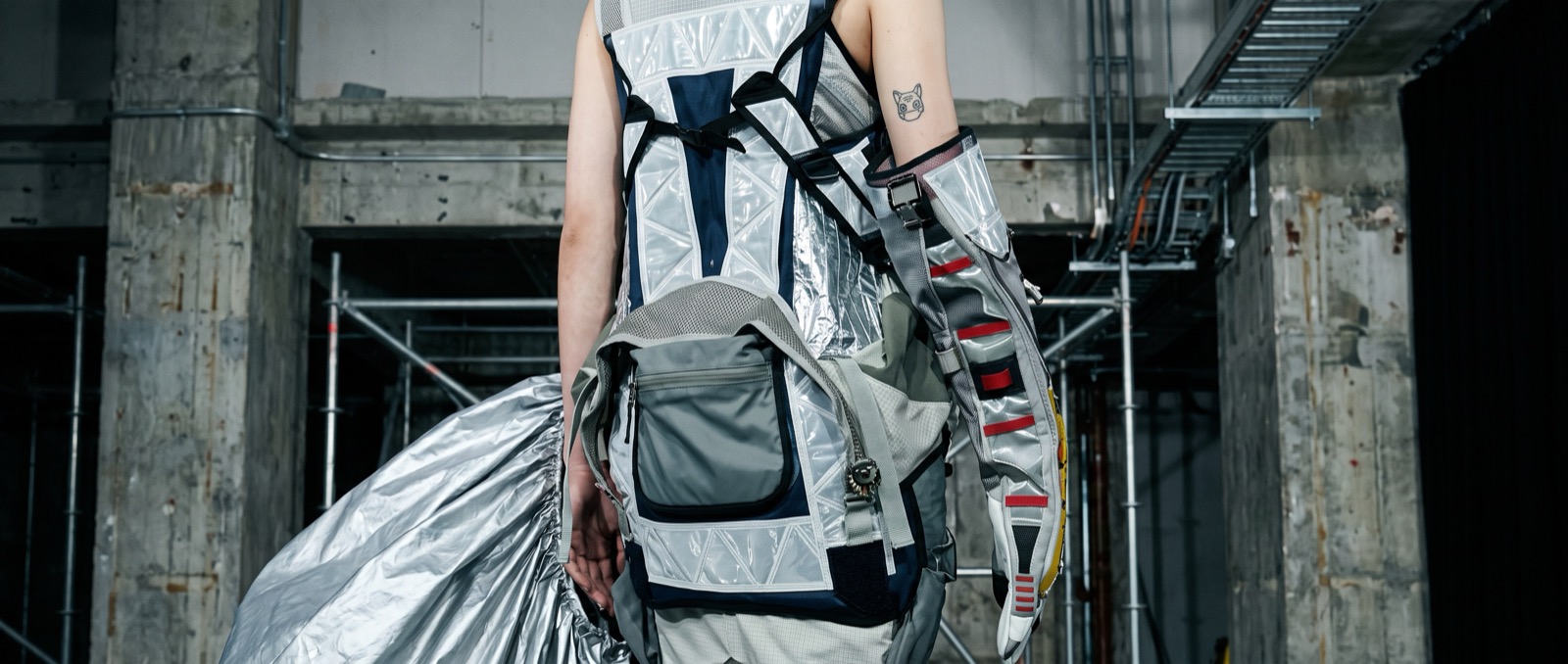
Cyborg fashion gets boring the second it becomes too smooth. A silver dress, a slick visor, a bit of chrome makeup and suddenly everyone wants to act like the future has been solved. I do not buy it. The more convincing version of cyborg dressing is not clean, polished and showroom-ready. It looks assembled, interrupted, slightly used and a little bit hostile to easy beauty.
That is why this Junya Watanabe SS2025 visual direction works for me. The “recycled gynoid” framing is clever because it refuses the most obvious fantasy of the machine woman. She is not a flawless android poured into liquid metal. She is patched together from protective shells, reflective scraps, padded modules, utility straps and stiff black surfaces. It is future-facing, yes, but it has friction. And friction is where the taste is.
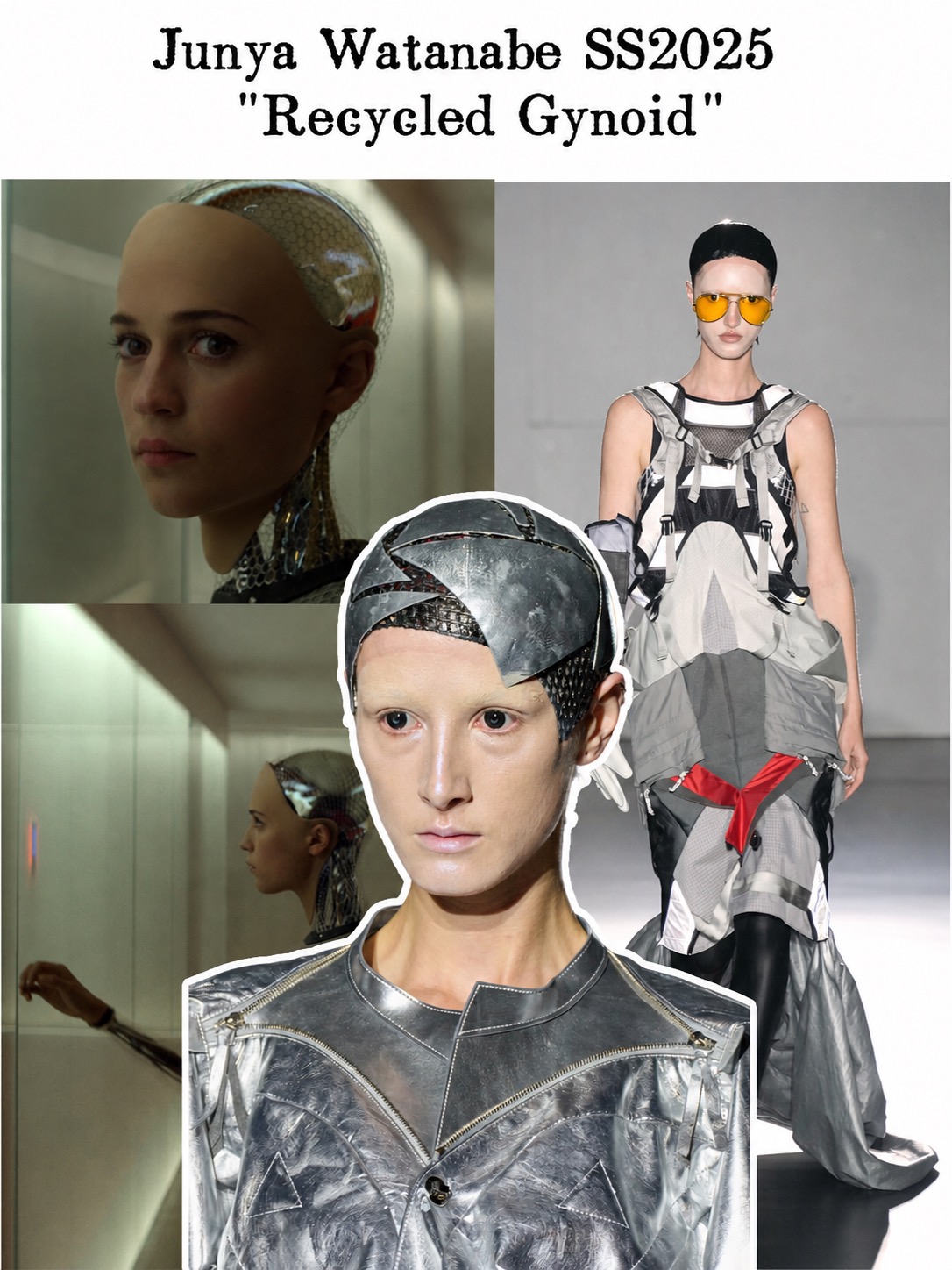
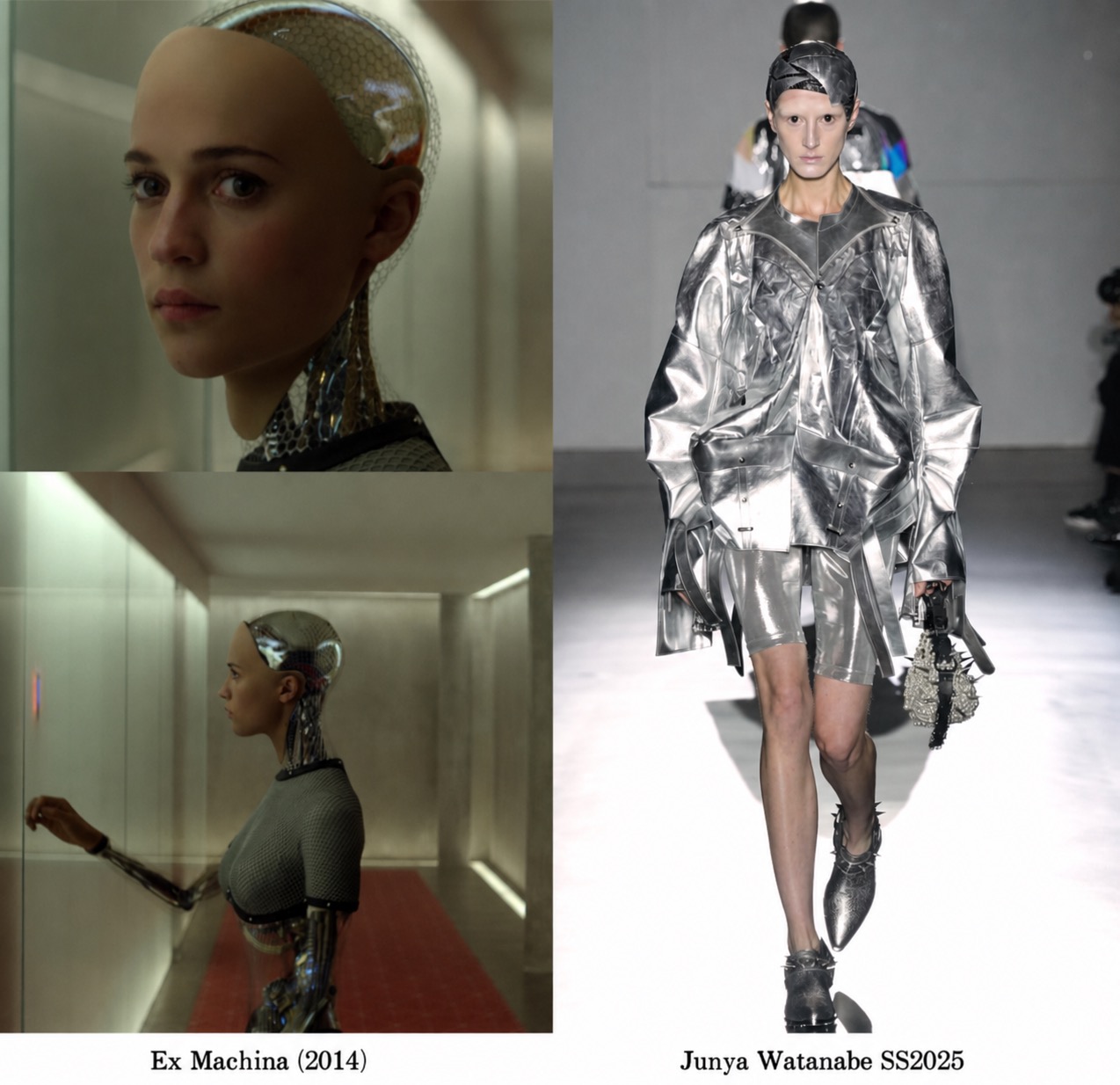
The machine fantasy is better when it looks damaged
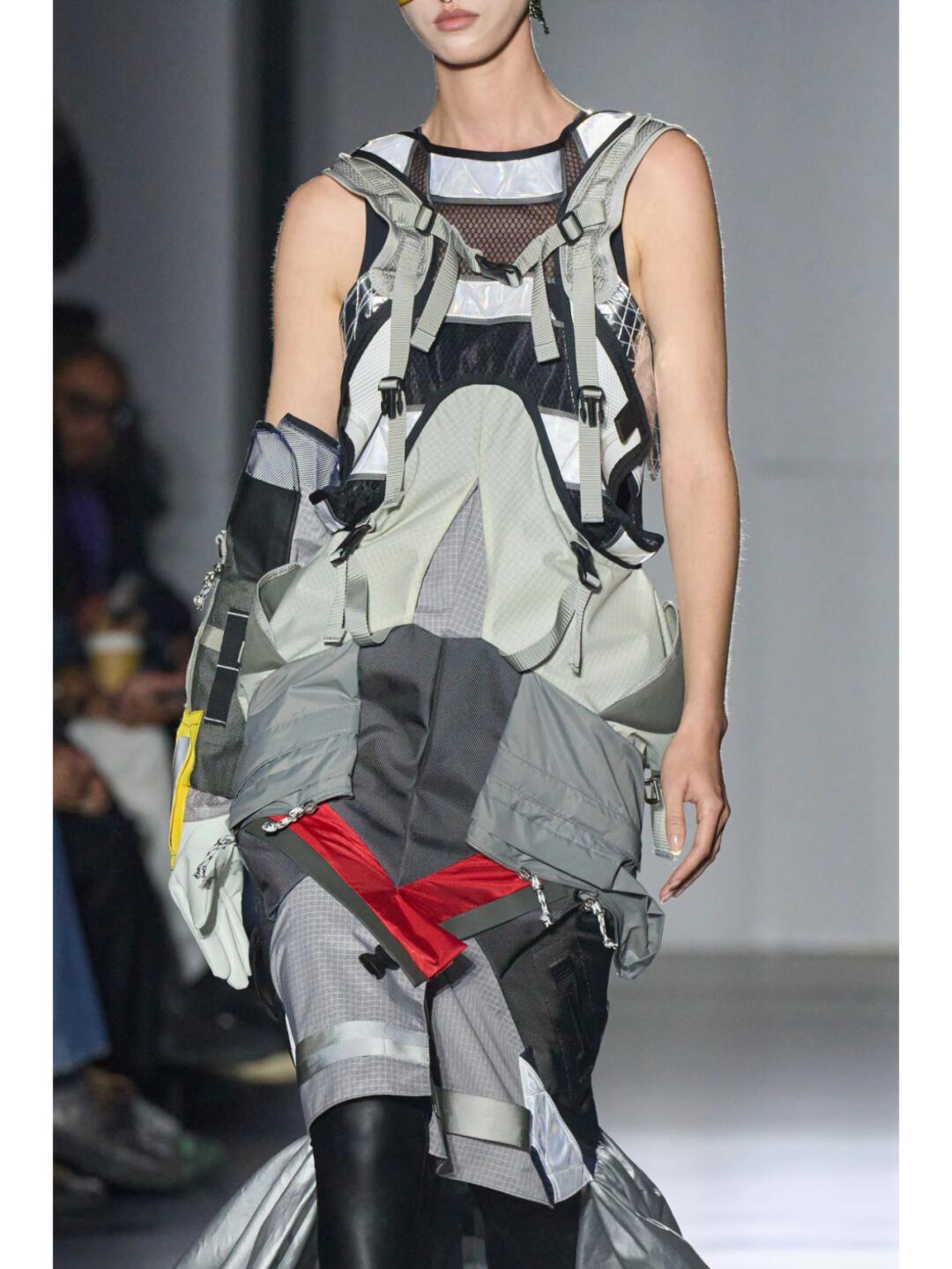
The first full runway look makes the argument almost immediately. The body is not simply dressed. It is strapped, layered and visually broken into zones: visor, sleeveless upper shell, black boots, grey panels, red interruption at the front. That red piece is important because it stops the outfit from becoming a tidy metallic exercise. It looks like a warning label, a repair mark, a small system error.
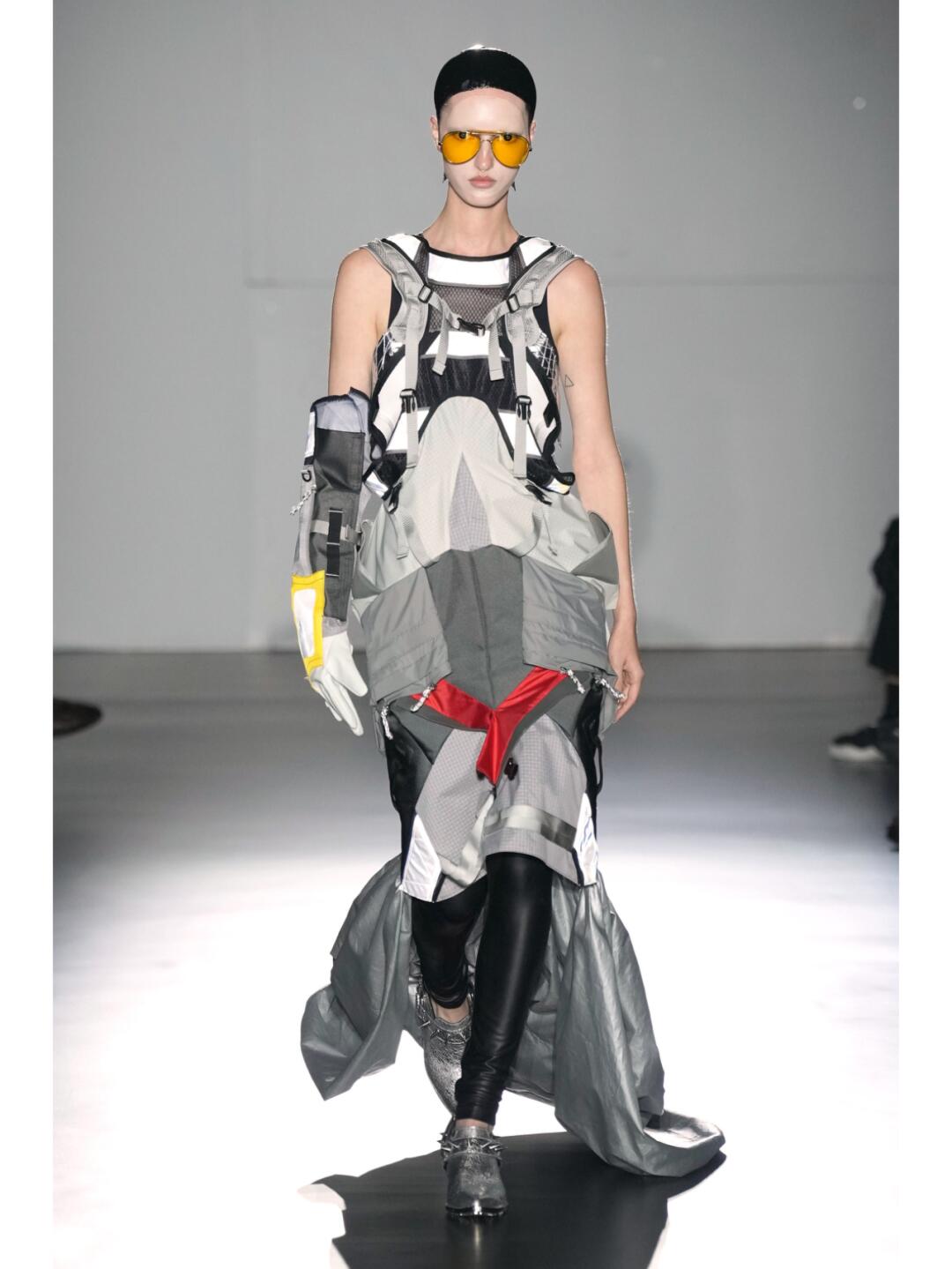
This is the part of cyborg fashion I wish people would take more seriously. The point is not to look like a robot. The point is to make the body feel negotiated. Where does clothing end and equipment begin? Where does decoration become protection? Where does a silhouette stop flattering the body and start rearranging it?
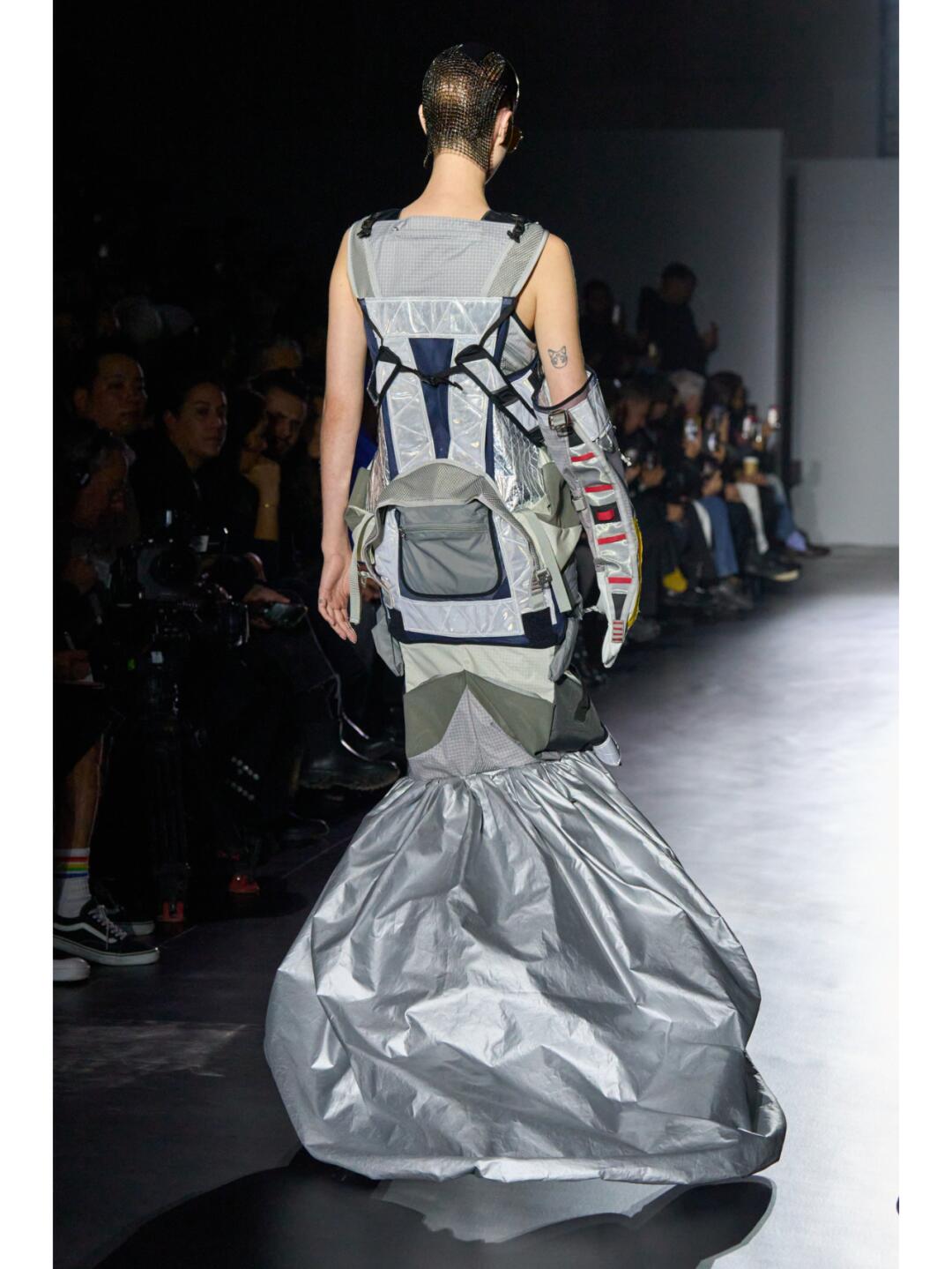
From the back, the same outfit becomes even more interesting because it has no interest in neatness. The panels sit like a soft exoskeleton, and the skirt shape falls into something half-garment, half-dragging industrial remnant. It is not trying to be pretty in the standard way. Good. Pretty would flatten it.
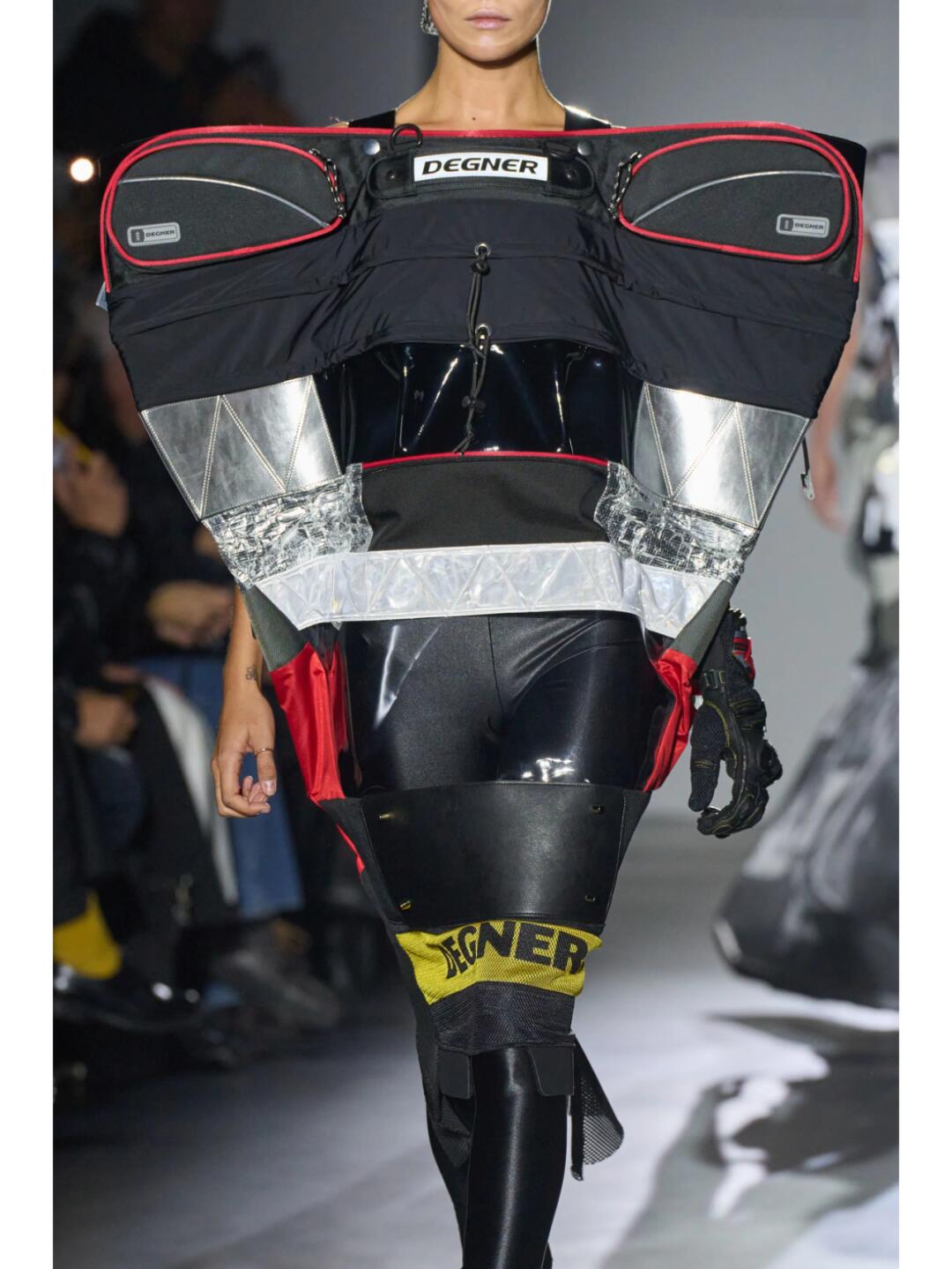
The broad black and silver piece pushes that logic further. It is almost anti-body. The shoulders expand, the surface turns rigid and the face becomes less central than the structure around it. I like that kind of arrogance in futuristic runway fashion. It understands that the future does not have to make the wearer smaller, softer or easier to consume.
Silver is not enough
Silver is the laziest shortcut in futuristic dressing. I say that with love, because I love silver. But silver alone does not create cyborg fashion. The material needs a reason to be there. It needs tension, weight, surface, placement and some kind of relationship to the body.
This look understands that. The metallic surface is not just shiny. It is wrinkled, strapped and interrupted by red, blue and black details. The bag-like side structures make the body look mobile, as if the outfit carries its own tools, files, hardware or emotional baggage. Honestly, same.
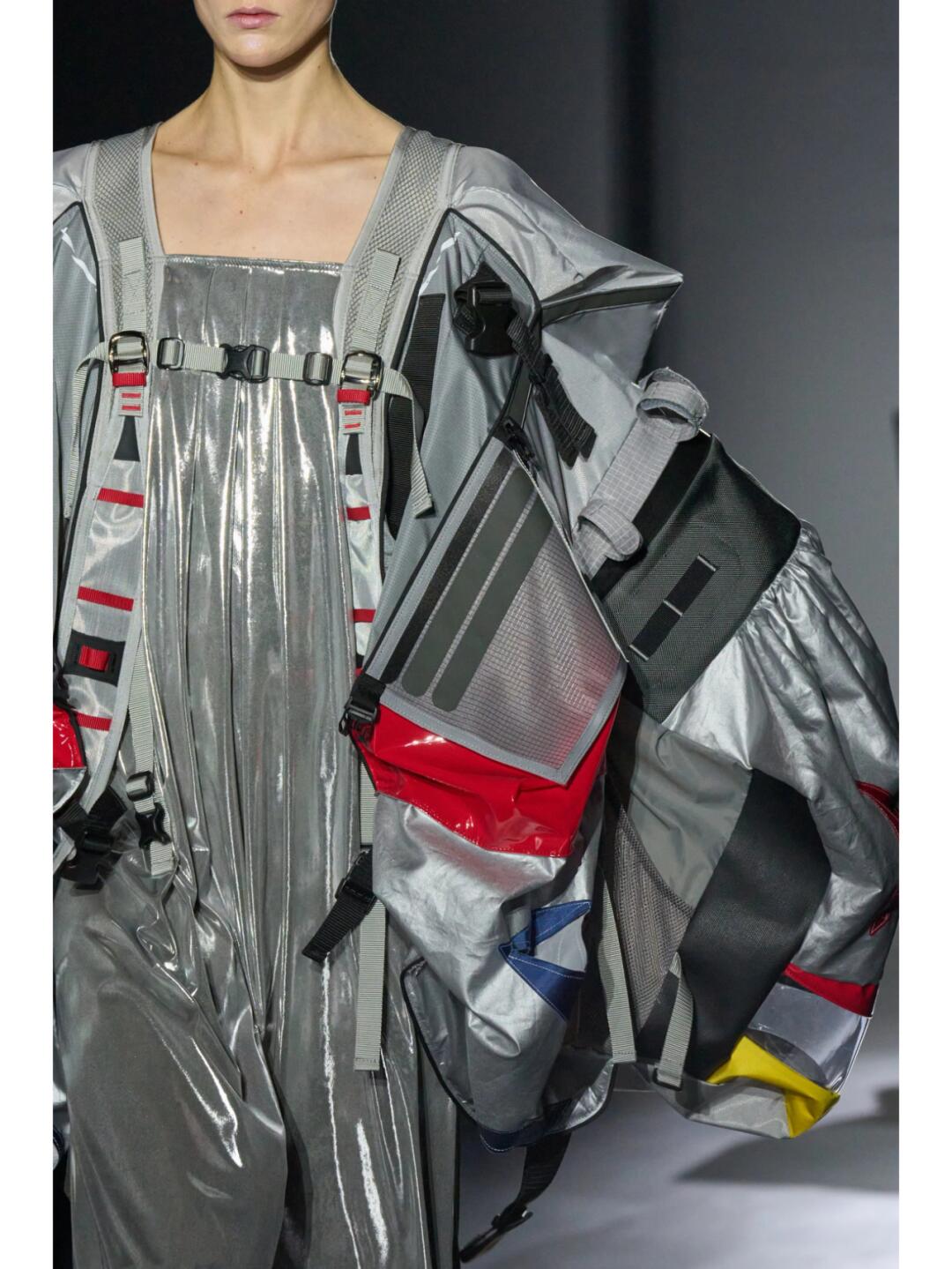
The pile of grey, black, blue and red pieces reads less like a dress and more like an exploded wardrobe that decided to become armour. This is where recycled fashion becomes more than a sustainability-adjacent mood. Visually, recycling here means refusing smoothness. The garment keeps the memory of fragments.
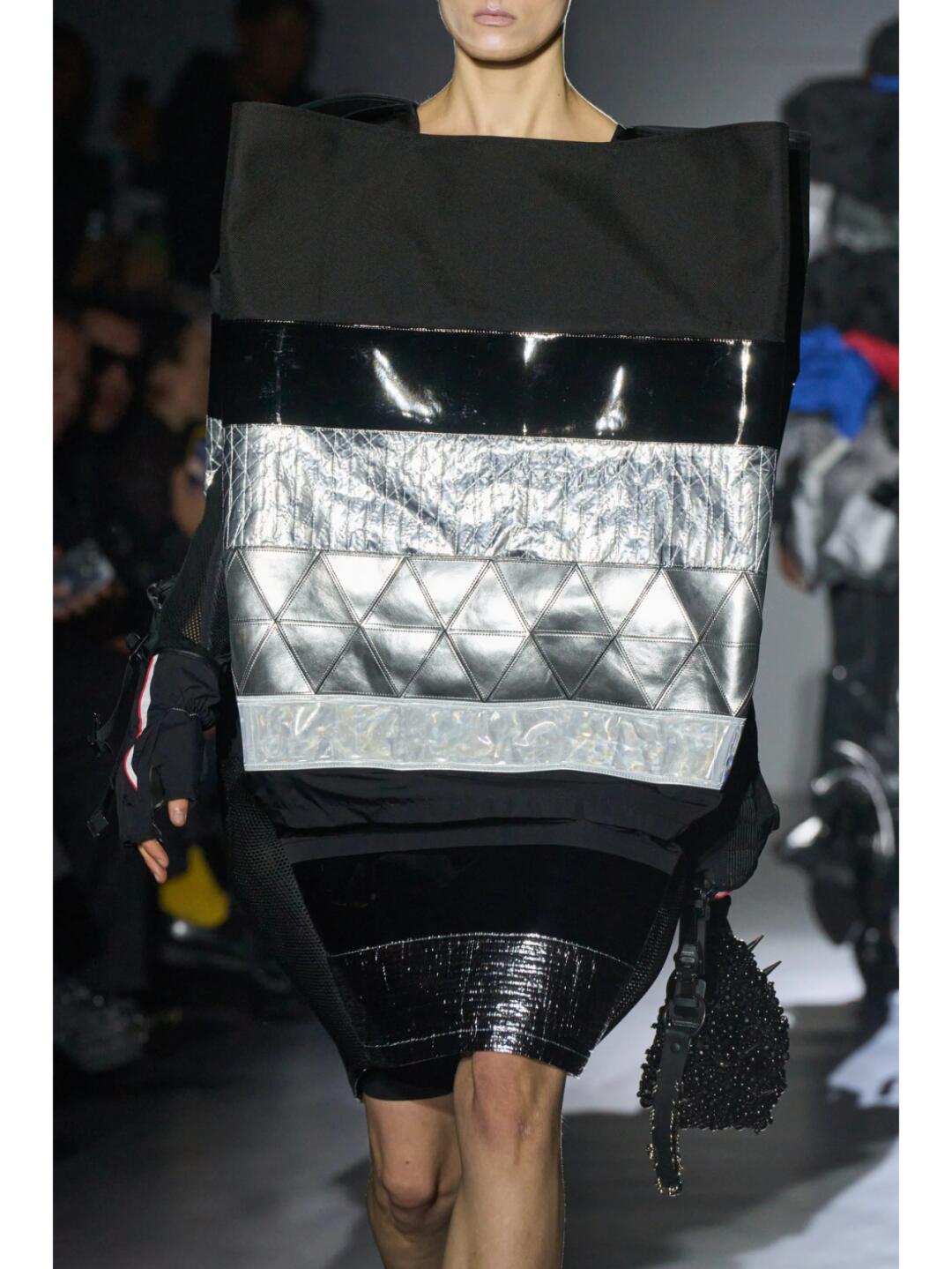
The black rectangular bodice with the quilted silver panel is much cleaner, but it still has that useful awkwardness. The body is boxed in, not revealed. The waist disappears behind a flat technical surface. It is wearable enough to understand, but strange enough to keep the eye working.
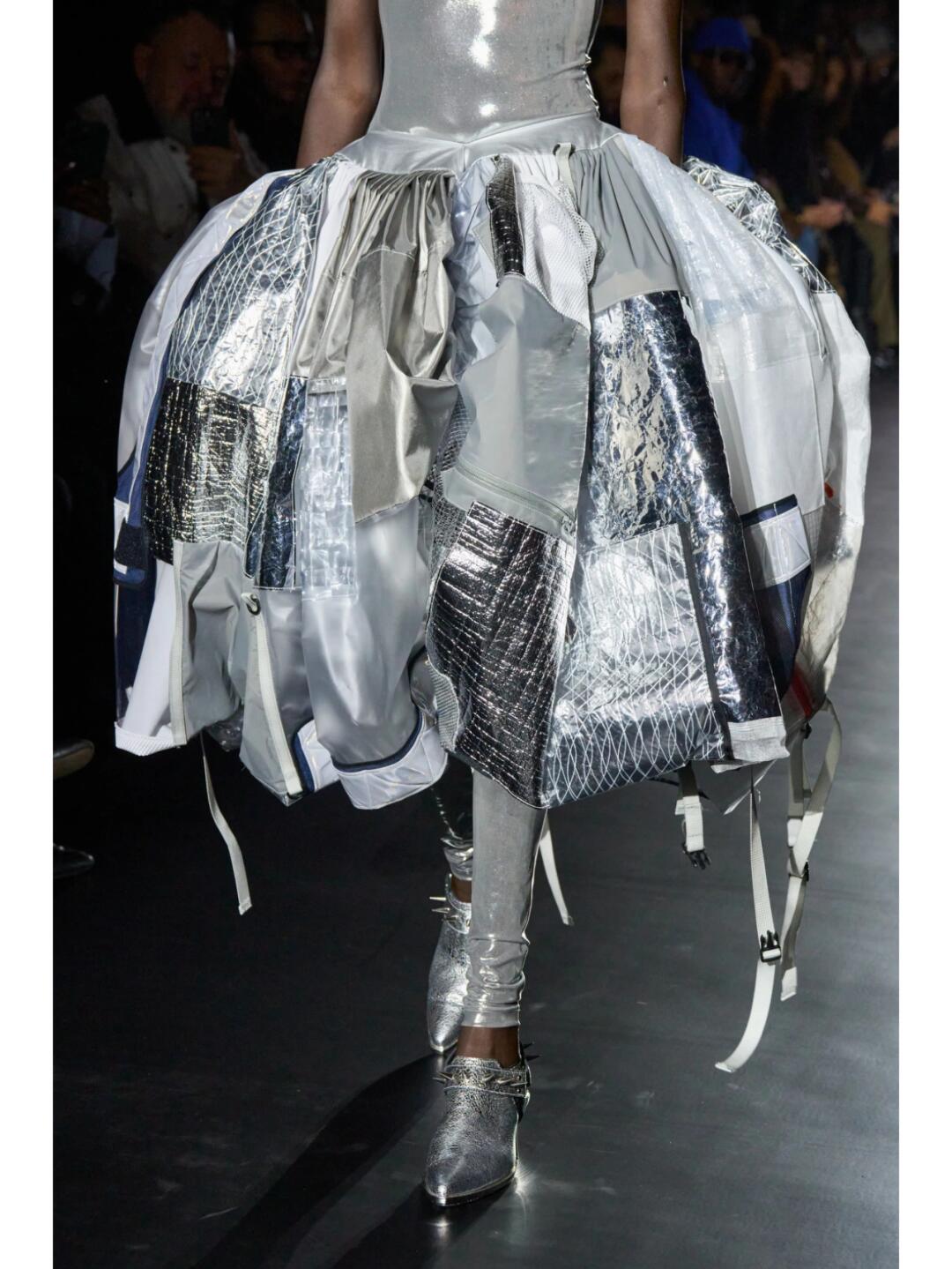
The skirt detail is another reminder that deconstructed fashion works best when it has discipline. A mess is not automatically a vision. Here the dangling pieces, drawstrings and reflective panels still follow a rhythm. The outfit looks chaotic, but not random.
The body becomes a technical object
What makes the strongest looks land is the way they treat the body as a site for attachment. Sleeves swell into equipment. Bags become part of the silhouette. Padded shapes hover around the torso like detachable architecture. It is not “woman in metallic dress.” It is woman plus system.
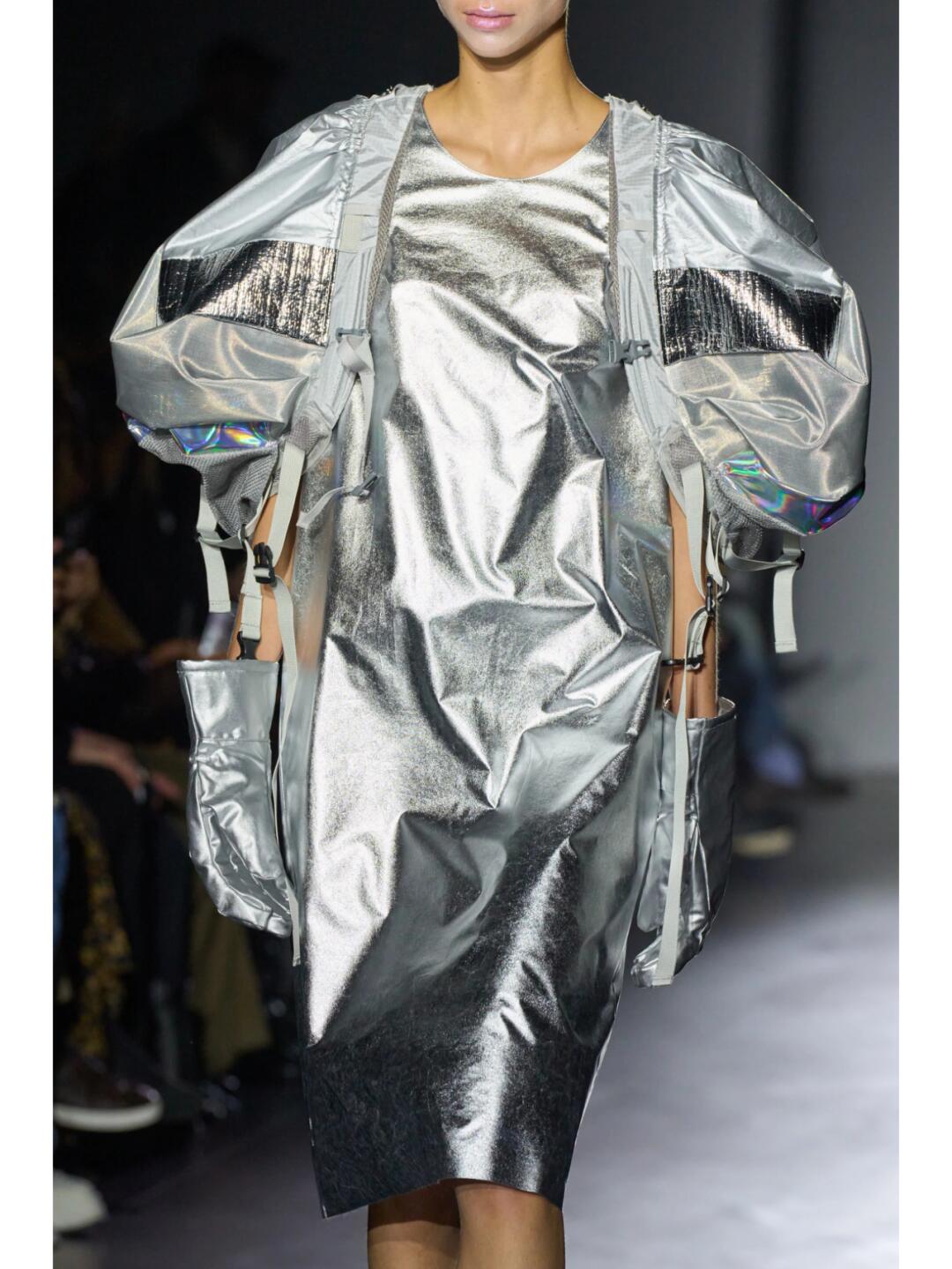
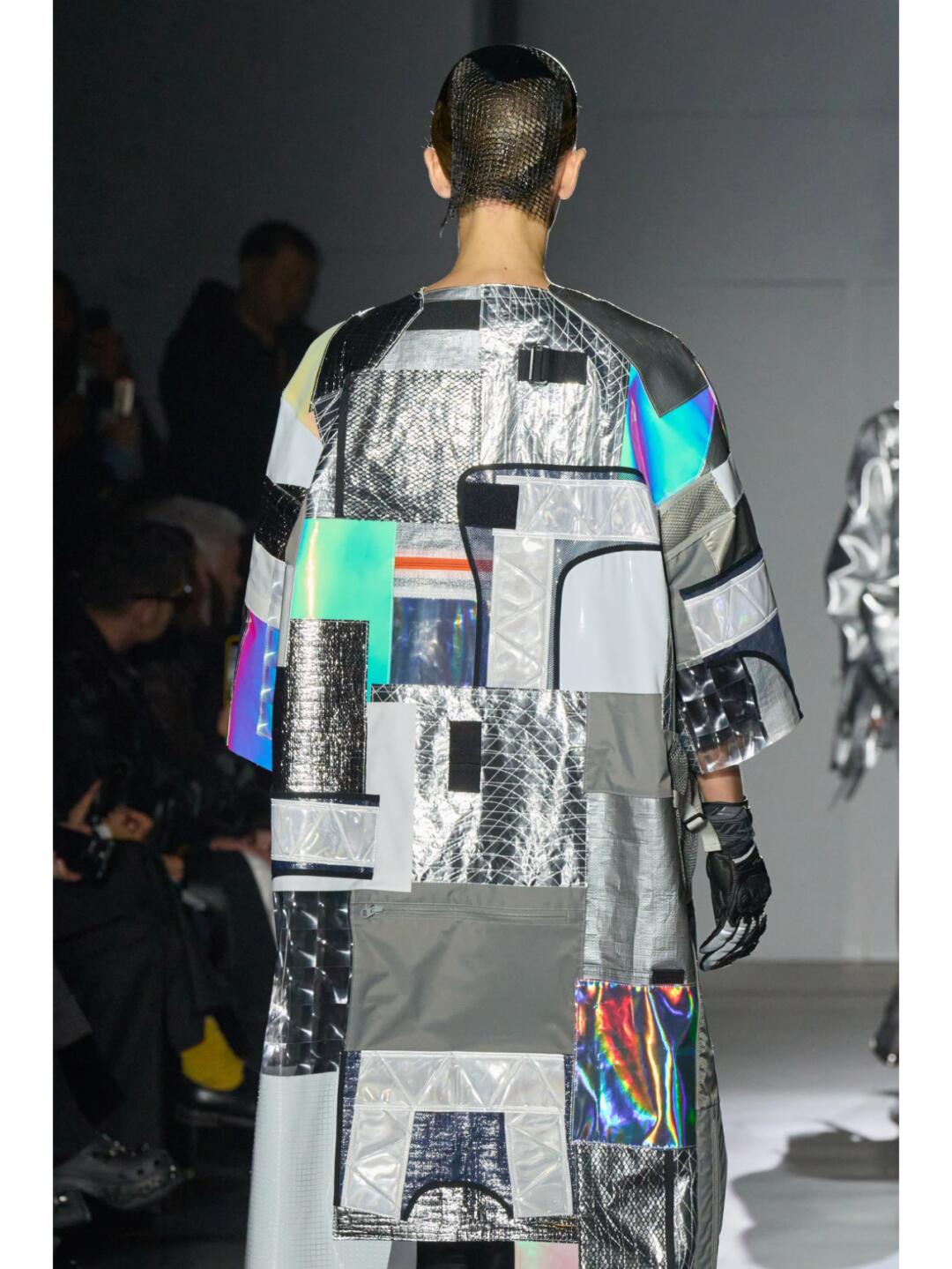
From the back, the patchwork coat almost becomes a map of surfaces: matte grey, printed panels, holographic shine, dark blocks, pale grids. That mixture is what keeps the look alive. Cyborg fashion should feel like multiple technologies, histories and mistakes sitting on the same body.
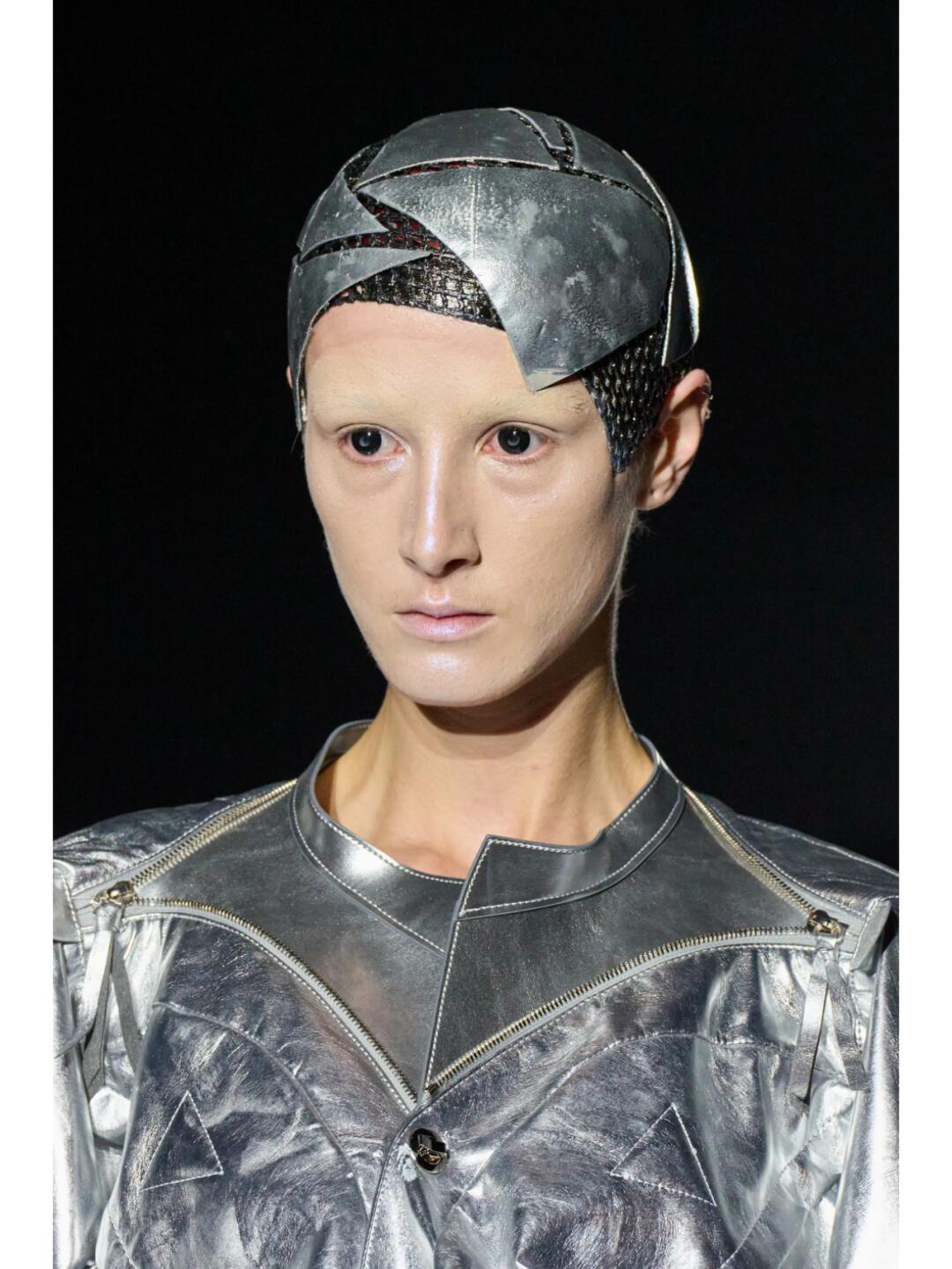
Even the headpiece matters. The metallic cap creates a synthetic skull, which is much more interesting than adding a pretty futuristic accessory at the end. It changes the head, the face and the emotional temperature of the look. The wearer becomes less approachable, less readable, more image than personality. I mean that as a compliment.
Black makes the cyborg less decorative
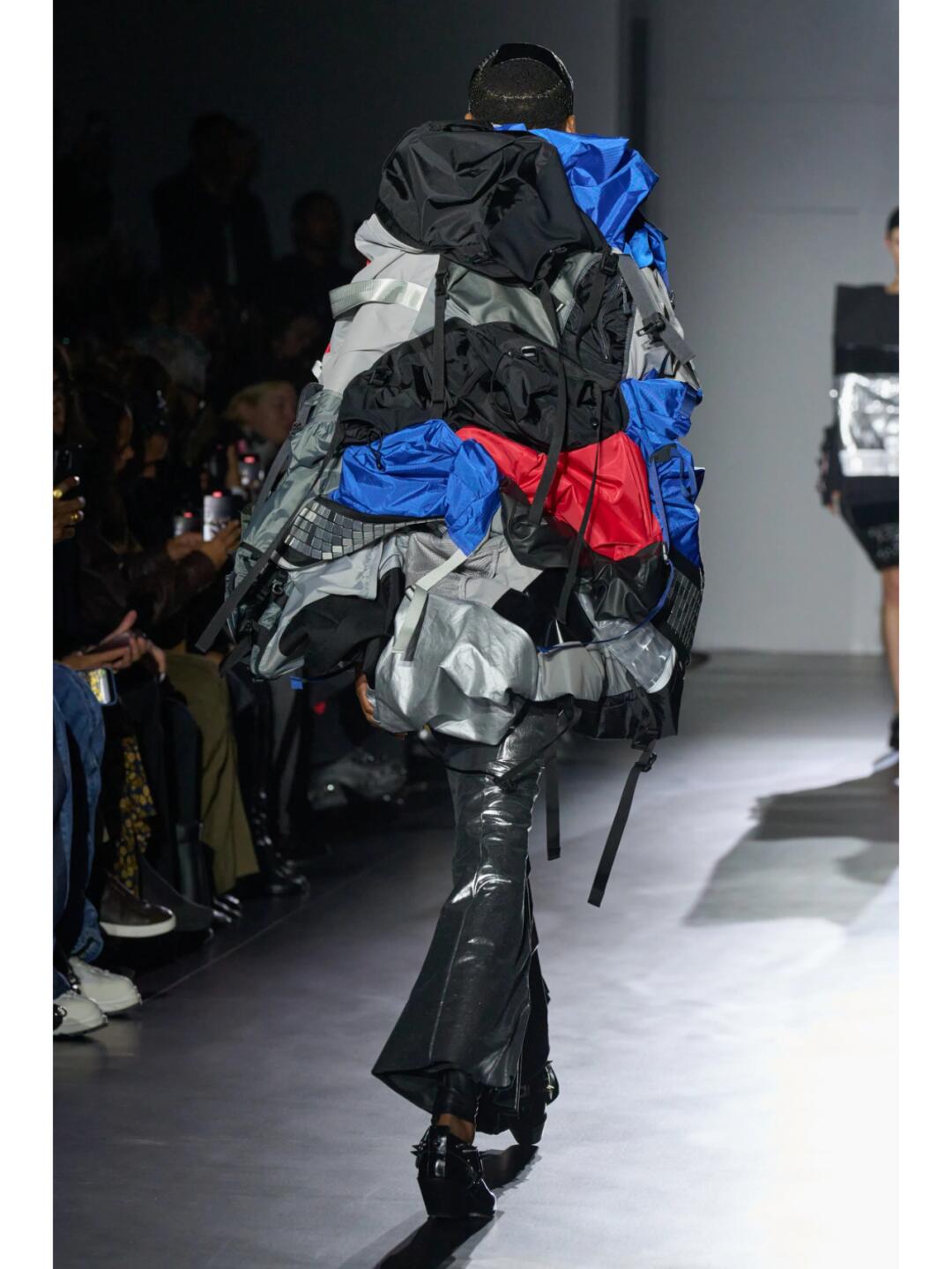
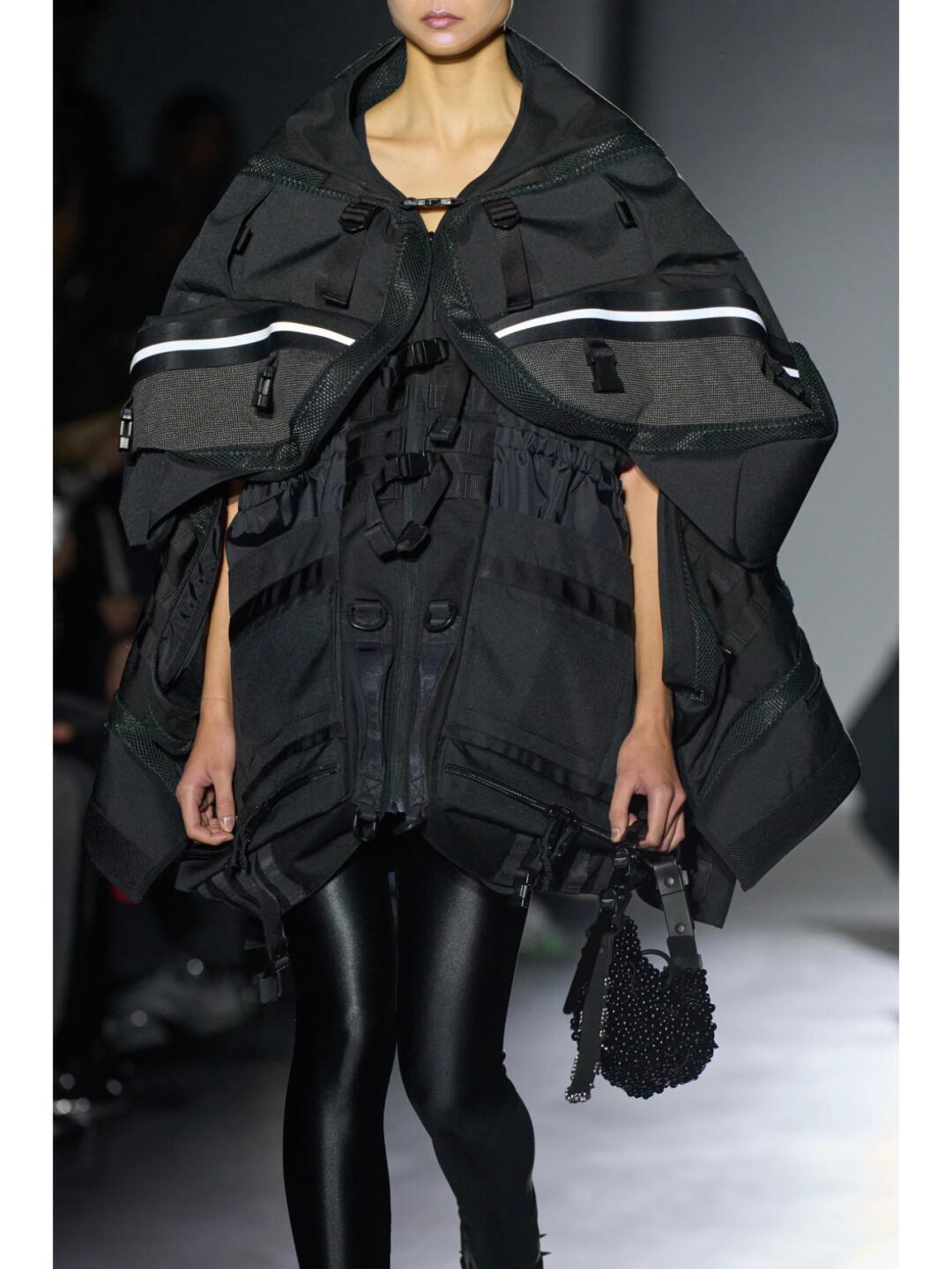
The black looks are where the collection’s mood gets heavier. Black stops cyborg fashion from sliding into costume-party silver. It adds utility, weight and a touch of menace. The oversized hooded shape feels less like clothing and more like portable shelter.
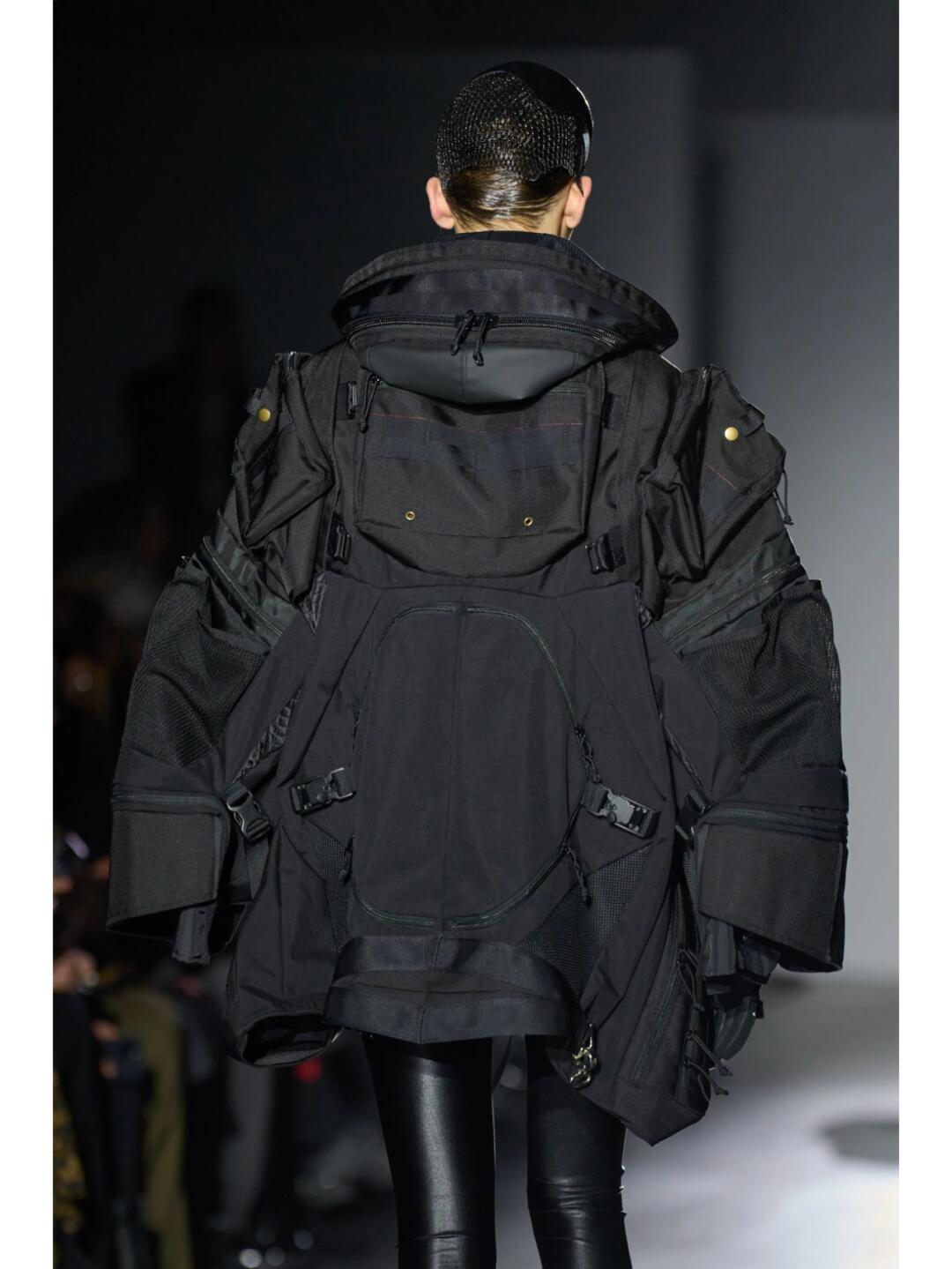
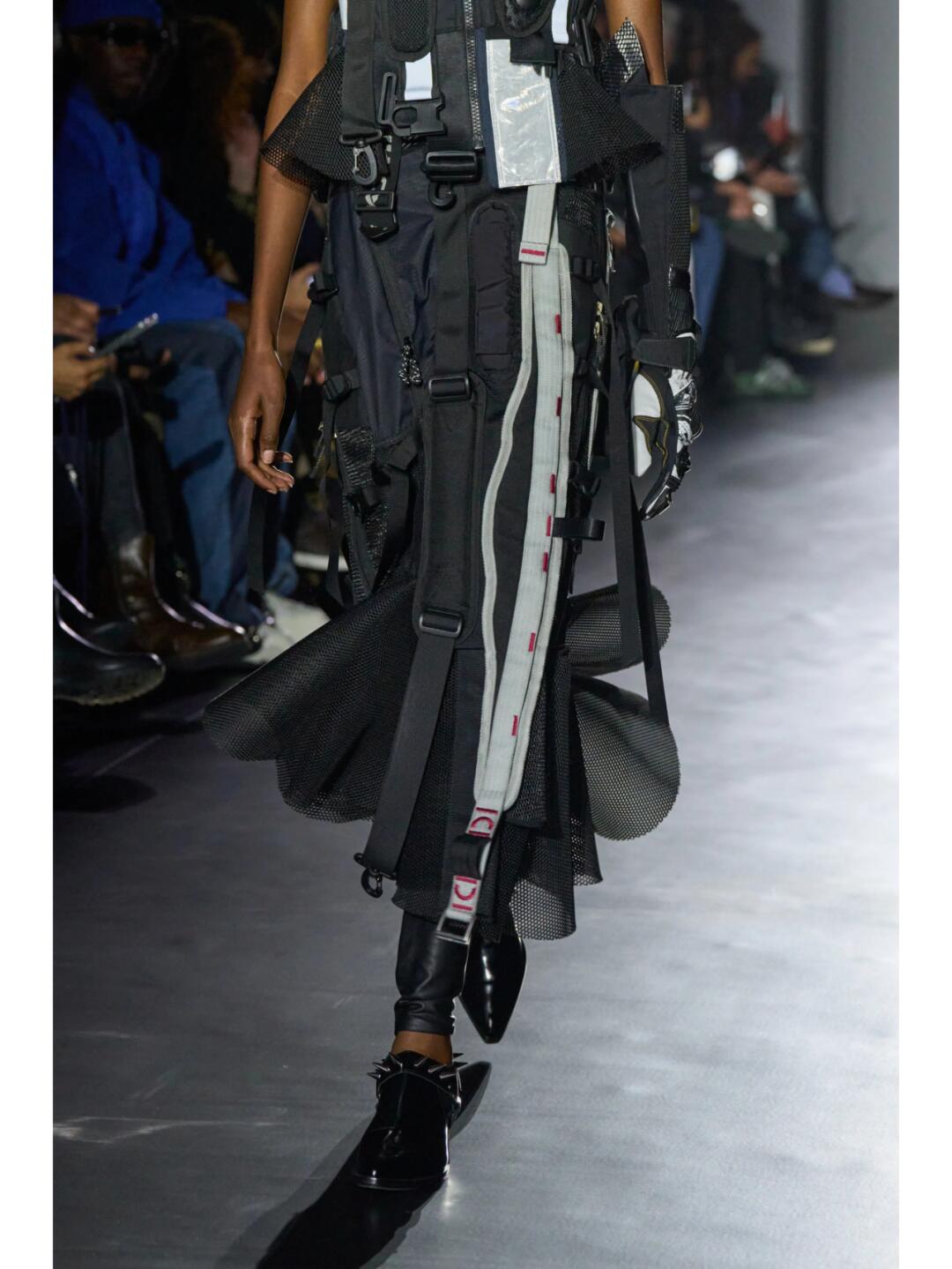
From behind, the same kind of black technical volume becomes even more convincing. There are pockets, tabs, folds and hard points of interruption everywhere. This is the post-human part I respond to: the body is still there, but it is no longer the only thing carrying meaning.
The all-black crumpled look is less metallic, but it still belongs inside the same conversation. The surface has a crushed, gathered, almost discarded quality. It proves that cyborg fashion does not need to scream “technology” to feel future-facing. Sometimes the future is just a body wrapped in the evidence of collapse.
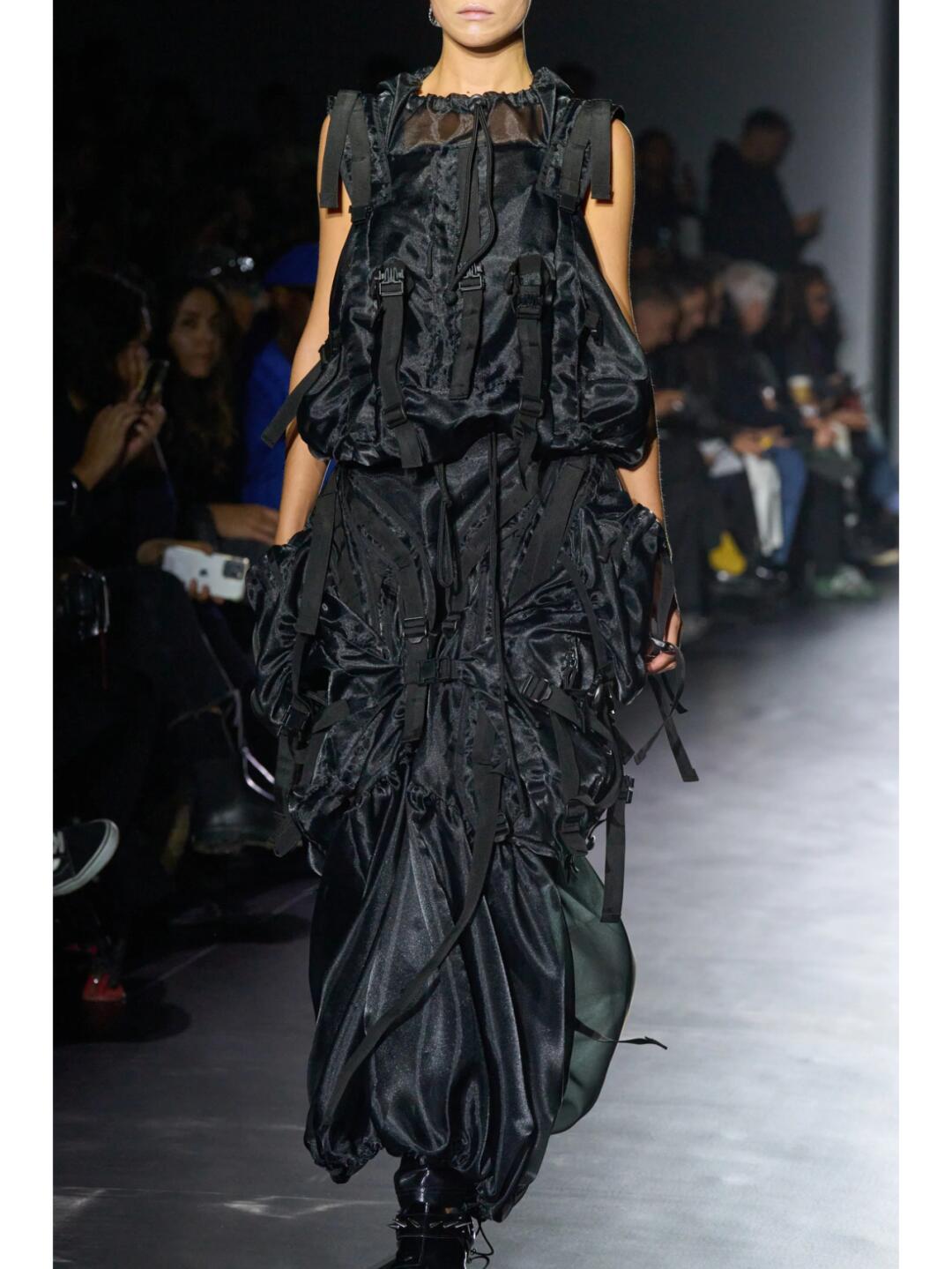
The narrow black look with long strips and hardware-like lines feels more severe. It has a verticality that reads as both restraint and machinery. I like it because it is not trying to charm anyone. There is a confidence in clothing that knows it may alienate people, and that is usually where the interesting work begins.
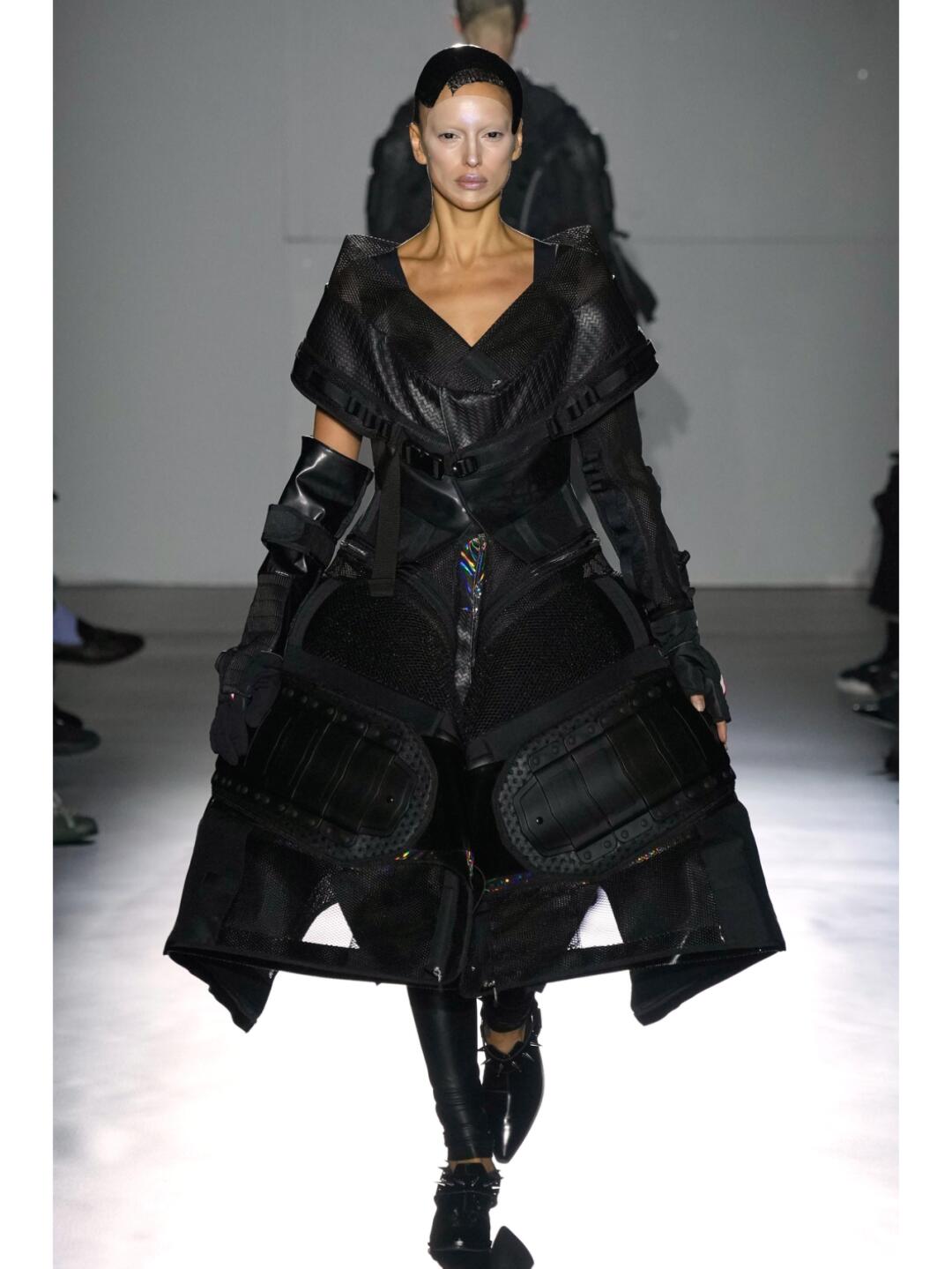
The final black silhouette gives the body width, depth and shadow. It is wearable only in the fashion sense of the word, which is to say: not very. But as a visual proposition, it lands. It turns the wearer into a walking structure, not a pretty vehicle for a dress.
How I would read cyborg fashion from here
For me, the lesson is simple: cyborg fashion needs more than chrome. It needs a changed relationship between body, object and surface. If the outfit is only shiny, it is just shiny. If the outfit makes the body look protected, extended, interrupted, repaired or slightly incompatible with ordinary life, then we are getting somewhere.
That is why the recycled gynoid idea feels sharper than a generic robot-girl fantasy. It keeps the glamour, but it does not let glamour clean everything up. The wearer looks engineered and exhausted, elegant and salvaged, human and not quite human enough. That contradiction is the whole point.
I would not reduce this to a styling trend you can recreate by buying one metallic skirt. The better takeaway is structural. Try a hard silver surface against soft black fabric. Try one practical strap on a decorative dress. Try a visor or headpiece that changes the face. Try a bag that feels attached to the outfit instead of politely carried beside it.
Cyborg fashion is strongest when it makes the body feel like a question. Not “how do I look futuristic?” but “what kind of body does the future want, use, decorate, protect and discard?” That is a much better question. It is less comfortable, but fashion gets far more interesting when it stops trying to be reassuring.
FAQ
What is cyborg fashion?
Cyborg fashion is clothing that makes the body feel partly human and partly technological. It often uses metallic surfaces, protective shapes, straps, modular panels, visor-like accessories, technical fabrics and silhouettes that treat the body as something extended or engineered.
Why does Junya Watanabe SS2025 fit cyborg fashion?
Junya Watanabe SS2025 fits cyborg fashion because the looks use recycled-looking panels, metallic shells, black technical volume, straps and hard body interruptions. The result feels less like simple silver dressing and more like a body rebuilt through fragments.
Is cyborg fashion the same as futuristic fashion?
No. Futuristic fashion can be any style that gestures toward the future. Cyborg fashion is more specific because it focuses on the relationship between body and machine. It asks how clothing can make a human body look extended, modified or partially artificial.
How can cyborg fashion be worn in daily outfits?
For daily styling, I would keep one cyborg element and make the rest wearable. A silver bag, technical strap, glossy black boot, sculptural jacket, visor-like sunglasses or metallic headpiece can carry the mood without turning the whole outfit into costume.