
Lisa Coachella and Kpop Outfits as Stage Plot
How Lisa Coachella visuals, Kpop outfits, BIGBANG, XG, ENHYPEN, Jennie, and Taemin turned Coachella stagewear into narrative.
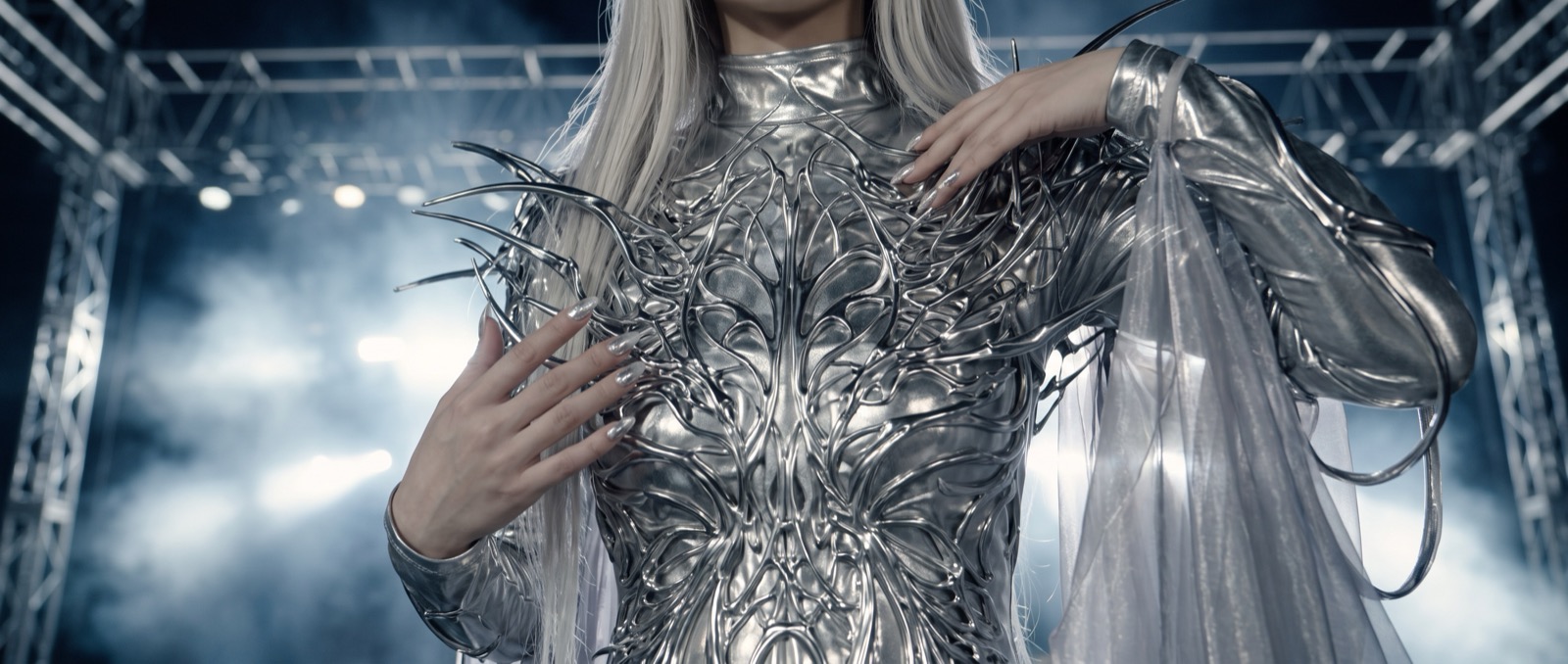
Coachella used to frame K-pop as a guest language: a high-production import inside a festival built on American pop, rock, rap, and electronic mythology. By 2025 and 2026, that balance had changed. K-pop artists were no longer just proving they could survive the desert stage. They were using it to build whole visual worlds.
Searches for kpop outfits usually flatten this into inspo. Who wore what, which designer, which hair color, which boots. The stronger reading is stranger and more useful. At Coachella, stage clothing became a plot device. It told the audience what kind of body the performer wanted to become: mechanical angel, disciplined unit, red desert diva, legacy icon, or solo myth.
The mechanical angel
The clearest opening image is Lisa. Her Coachella path now stretches from BLACKPINK’s 2019 and 2023 appearances to her 2025 solo set and a 2026 guest turn with Anyma. In 2025, she treated the Sahara Stage like a solo identity lab: 13 songs, a fast-moving Alter Ego structure, and a wardrobe that moved between silver body armor, reptilian futurism, and playful Hello Kitty-coded pop. The styling was not decoration. Each look acted like a different mode of performance.
That is why her 2026 “Bad Angel” appearance with Anyma matters visually, even though it was a guest slot rather than a full solo set. The image was almost too perfect for the current future-fashion mood: Lisa in an angelic, metallic, translucent look, surrounded by Anyma’s vast digital humanoid language, with a giant AR version of her visible to livestream viewers. It turned the pop star into a broadcast body, half performer and half digital apparition.
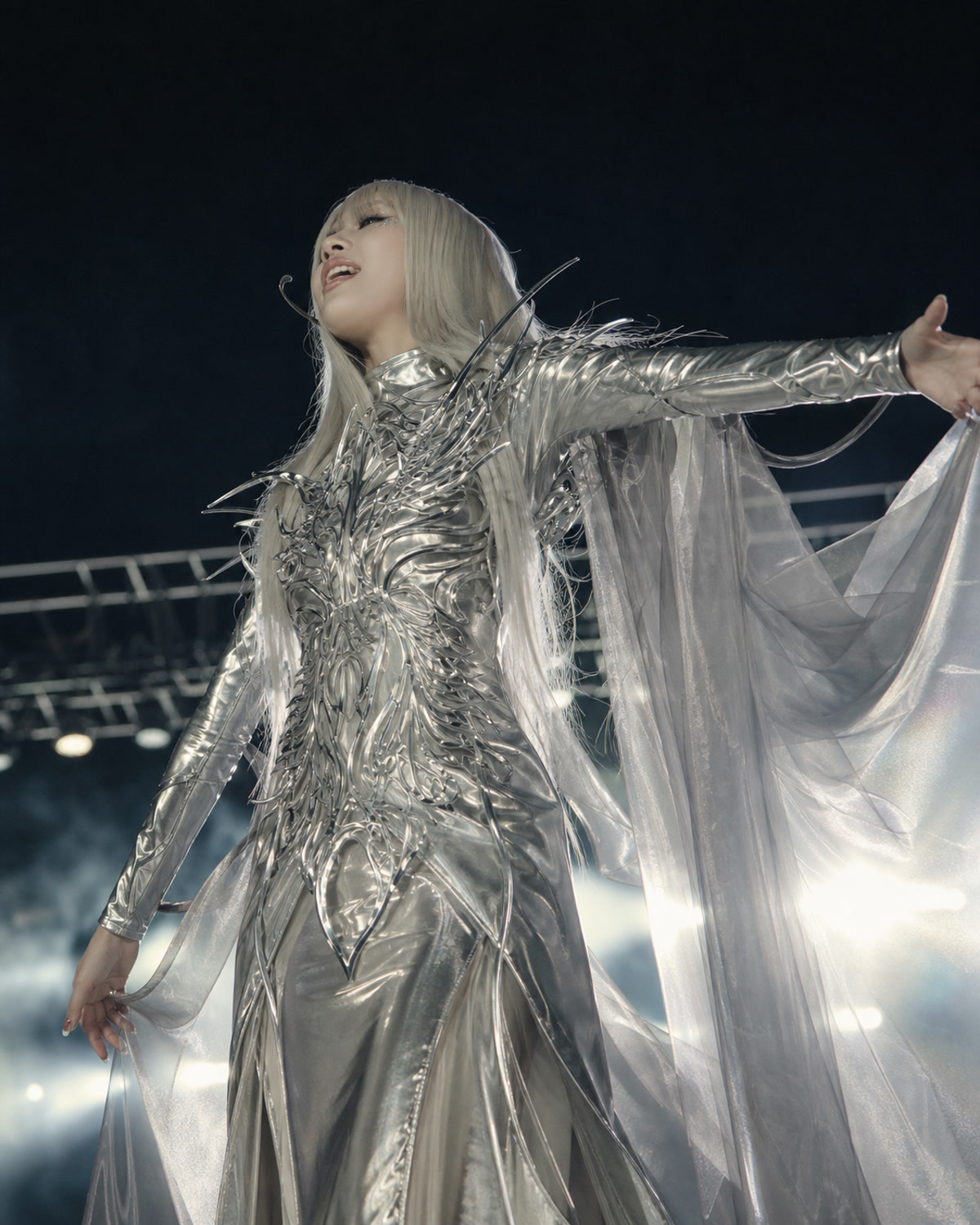
This is one of K-pop’s strongest Coachella narratives: the mechanical angel. The silver clothing and sci-fi screen matter, but the sharper idea is the performer becoming the interface. Gesture, silence, close-up, lighting, chrome garment, avatar, and livestream effect all work together until the boundary between styling and stage technology starts to blur.
Group discipline as fashion
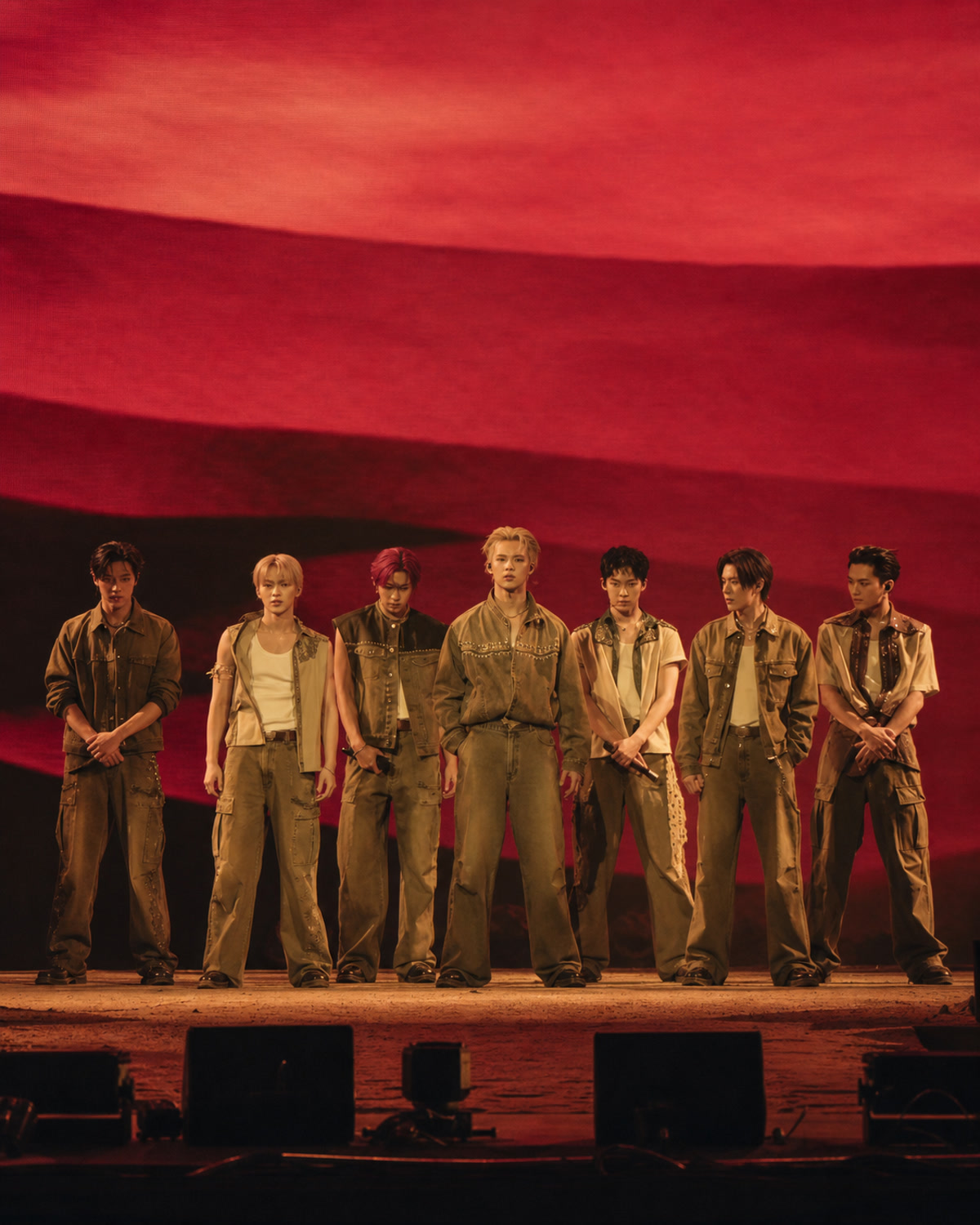
ENHYPEN showed another route into the same shift. Their 2025 Sahara set leaned less on one surreal icon and more on group discipline. The neutral denim and rhinestone looks gave the members a shared Western festival code, but the real styling force came from repetition: seven bodies moving with sharp timing against desert-themed screens, live-band arrangements, and a pink-moon visual for “Moonstruck.” Even when strong wind cut across the stage, the point was control. The fantasy came from precision under pressure.
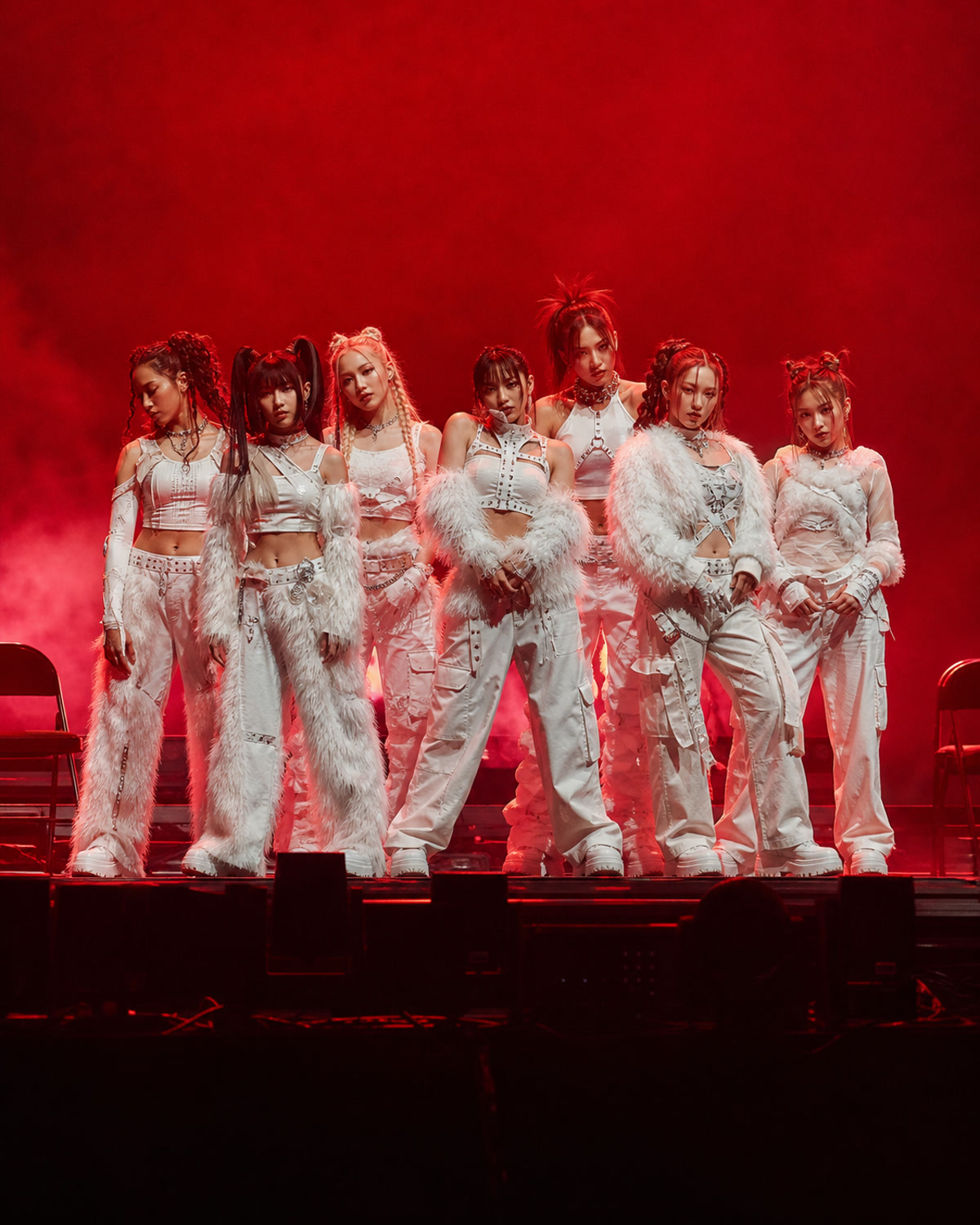
XG pushed that idea into a sharper global girl-group language. Their 2025 Coachella debut on the Sahara Stage carried a different kind of futurism: rap formations, chair choreography, live-band force, custom stagewear, and an all-English set that moved like a festival-ready manifesto. “GRL GVNG” already had a digital-history footnote as the first Japanese song to reach No. 1 on Billboard’s Hot Trending Songs chart. At Coachella, that online momentum became physical formation.
Jennie complicated the story in a softer but still strategic way. Her Outdoor Theatre stage in 2025 made her the first K-pop solo artist to perform on that major Coachella stage. The red cowgirl styling gave the set a desert-pop character, somewhere between Western costume, diva uniform, and sharp fashion editorial. Then the Starlight moment with her mother cut through the production. For a few seconds, the stage persona loosened and the person showed. That contrast is part of why the clip traveled.
Legacy theater and the body
Then 2026 brought the other narrative: stairway theater, legacy as spectacle. BIGBANG’s three-member Coachella debut worked because it did not need to pretend to be new. G-Dragon, Taeyang, and Daesung arrived with almost 20 years of K-pop memory behind them, plus the unresolved shadow of the 2020 Coachella booking that the pandemic erased. The setlist moved through “Bang Bang Bang,” “Fantastic Baby,” “Haru Haru,” “Lies,” solo sections, Daesung’s trot humor, G-Dragon’s “Power,” and the emotional pull of “Still Life.” This was not futurism by avatar. It was futurism by archive: a group using the festival to prove that K-pop history can still fill a field.
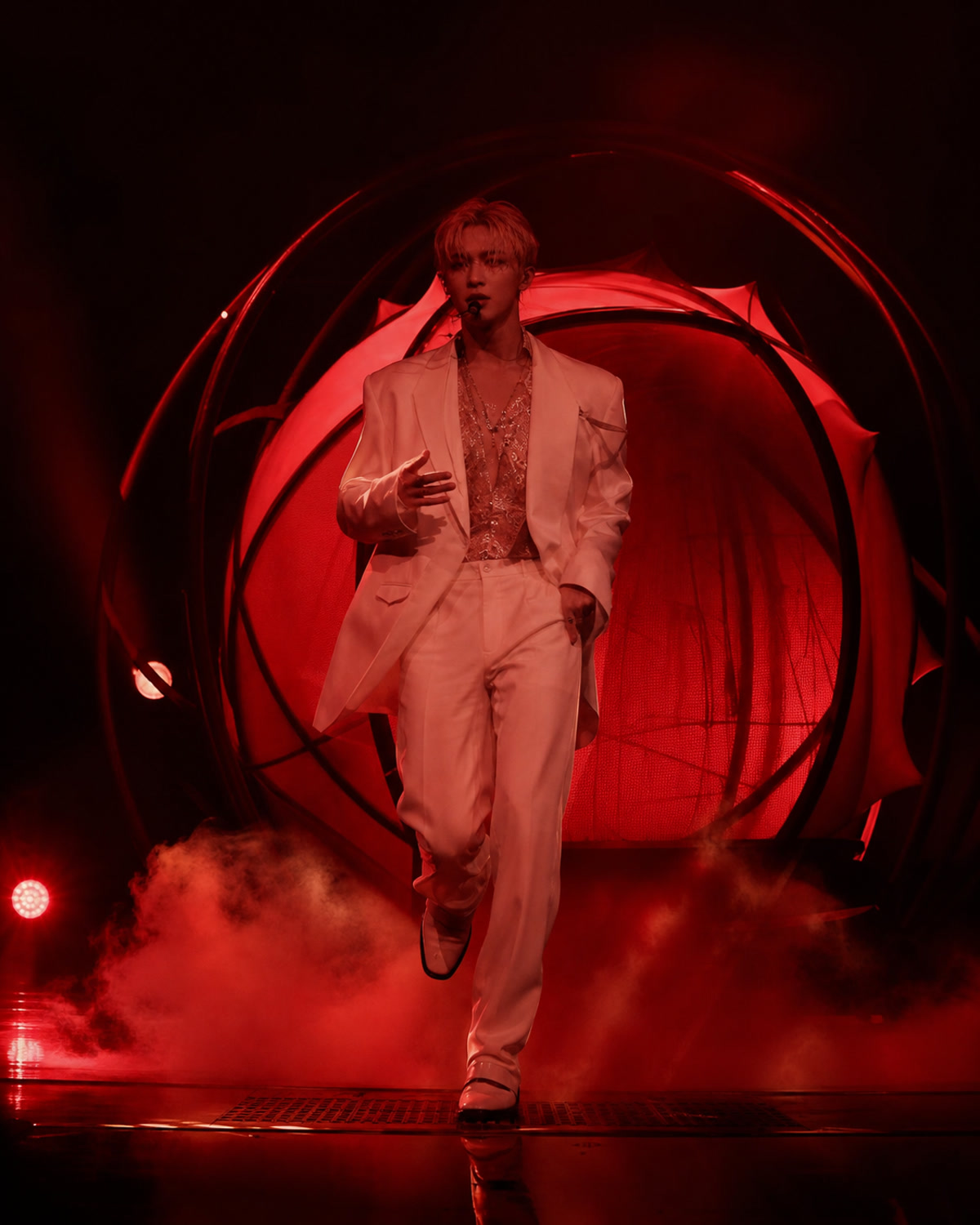
Taemin gave 2026 its most art-school version of that argument. As the first Korean male solo artist with a standalone Coachella slot, he could have played the safest possible career summary. Instead, he used the Mojave Stage for a 50-minute set with six unreleased songs, including “Permission,” “Parasite,” “Frankenstein,” “Let Me Be the One,” “Sober,” and “1004.” The performance treated the body as the main technology. The staging gave him a shell-like emergence, but the real transformation came from control, sweat, costume change, and new music risk.
The Western acts around them were also turning inward. Justin Bieber’s 2026 headline set famously placed him at a laptop, scrolling through old YouTube clips and singing along with versions of himself. That moment says a lot about what Coachella has become. The festival is no longer only a live music field. It is a place where artists perform their own archive in public.
Why this matters for future alt fashion
For future alt fashion, K-pop’s Coachella rise is not just a scheduling story. It is a styling story, a body story, and a media story. Lisa’s mechanical angel, ENHYPEN’s disciplined denim formation, XG’s spaceship-core group language, Jennie’s red desert diva, BIGBANG’s legacy theater, and Taemin’s body-led solo mythology all point to the same change: stage clothing is no longer a surface layer. It is the plot.
That is the part worth borrowing from these kpop outfits. Not the exact celebrity look, and not the full festival costume. The transferable idea is how each outfit creates a role for the body. Chrome turns the body into signal. Denim uniforms turn a group into architecture. White futuristic stagewear makes formation feel digital. A red cowgirl look makes softness and spectacle share the same frame. A white suit inside a red shell makes transformation visible before the song even starts.
The Lisa Coachella image is the most obvious hook, but it is not the whole story. The bigger trend is K-pop learning to use Coachella as a stage for visual authorship. The clothes are not afterthoughts to the performance. They are the evidence that the performance has a world.