
Why Rosé's New Trick Music Video Feels Like More Than a Phone Campaign
Rosé's new trick music video turns the iPhone 18 Pro into more than a camera, showing how Apple and K-pop image-making can merge in one campaign.
TL;DR
- Rosé’s new trick music video was made with Apple and shot on the iPhone 18 Pro.
- The campaign makes the phone part of the image without making it the visible subject.
- K-pop’s visual system helps turn a product launch into celebrity and fashion communication.
- The video’s quieter move is to make the camera feel like an aesthetic participant rather than a specification to study.
We are used to seeing the phone in a music video in one of two ways. It is either a prop that helps the plot move along, or it is placed very carefully on a table so that we can understand what the characters are using. In both cases, the phone is visible as an object. It has a job, a shape, a brand.
Rosé’s new trick is doing something slightly stranger. The phone is important to the video, but it does not need to perform as a phone.
Rosé released “new trick” and its music video on September 18. The video was made in collaboration with Apple and shot on the iPhone 18 Pro, with Dave Meyers directing. Yonhap described the song as an energetic garage-punk track about moving through heartbreak, while Soompi noted that the song was part of Apple’s Shot on iPhone campaign. That is the basic news story. A new song, a new video, a new iPhone, a very famous pop star.
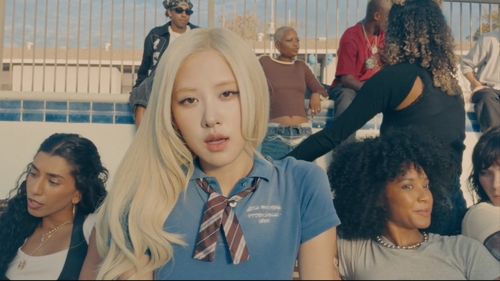
The Apple Shot on iPhone campaign is therefore doing more than attaching a product to a release. The shot on iPhone music video is not a camera comparison chart; the iPhone 18 Pro music video is a way of making a consumer device feel native to a creative world. The search phrase rose new trick music video names the event, but it misses the campaign’s more interesting question: what happens when a phone becomes part of a pop image without appearing as a conventional product placement?
But if you reduce it to a celebrity using the latest device, you miss the more interesting arrangement. This is not really a phone appearing inside a music video. It is a phone being folded into the conditions that make a music video feel like a music video in the first place: a star, a mood, a body, a styling system, a fantasy of reinvention, and an image that is meant to travel.
The product is not necessarily asking you to look at it. It is asking you to look through it.
Why Does the Phone Disappear From the Campaign?
Apple has made an entire cultural language out of the idea that an iPhone can be a camera. That sounds obvious now, but it is still a useful trick. A camera is normally backstage. It is the machine that produces the image, not the image’s subject. A “Shot on iPhone” project reverses that relationship just enough to make the device part of the story without requiring it to become the story.
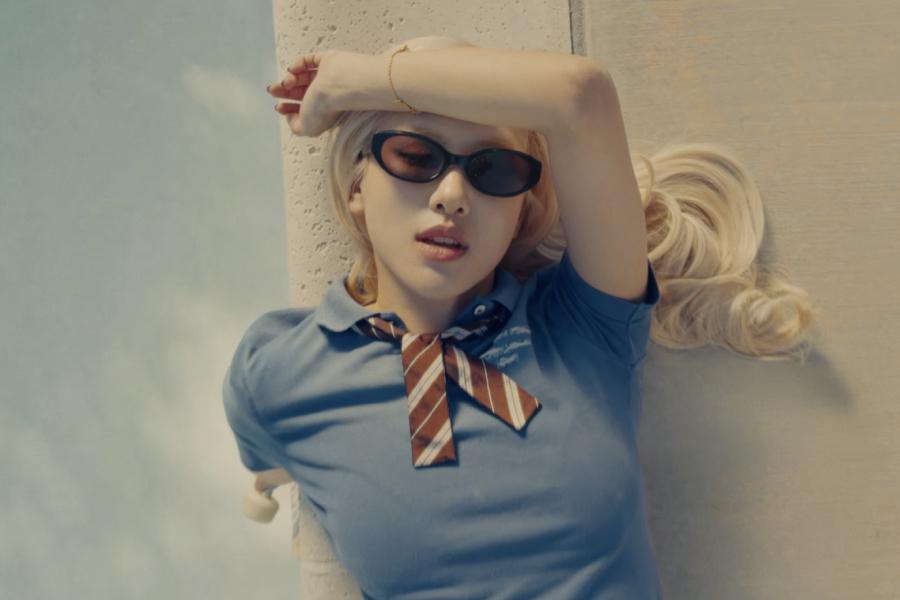
That distinction matters in a music video. If the phone were constantly shown in Rosé’s hand, the collaboration would read as product placement. The viewer would be asked to remember an object. When the phone disappears into the image, the viewer can remember a feeling instead: the speed of the song, the force of the performance, the particular version of Rosé that the video presents.
This is one of the oldest tricks in advertising. The product does not always need to be the most visible thing in the room. Sometimes it wants to borrow the emotional charge of everything around it. A phone becomes associated with the person who looks good on camera, the person who appears to be entering a new phase, the person who has apparently found the “new trick” for getting out of a bad situation.
That is why this campaign is more interesting as a piece of pop culture than as a piece of phone news. The iPhone 18 Pro does not need to win a camera comparison in the viewer’s head. It needs to sit near the image of a person who already carries a lot of meaning.
How Does Rosé Give the Product a New Context?
There is a difference between a celebrity holding a product and a celebrity giving a product a new context.
The first one is easy to understand. A singer holds a phone, wears a watch, drives a car, or drinks a beverage. The object benefits from proximity. The second is more complicated because the celebrity’s existing image becomes part of how the object is interpreted. The phone is no longer only a piece of consumer electronics. It becomes attached to a particular way of moving through pop culture.
Rosé is a useful person for this kind of collaboration because her public image already lives between categories. She is a member of BLACKPINK and a solo artist. She is a musician, but also a fashion-facing figure whose appearances and visual choices circulate far beyond the songs themselves. The campaign does not have to explain this entire network to the audience. The audience already understands that her image is part of the product’s context.
This is also why the new trick music video belongs to the history of fashion communication, even though the object at the center is a phone. Fashion is not only the thing worn on a body. It is the system that teaches us how to read a body, a pose, a color, a setting, or a new version of someone’s identity. A music video participates in that system because it turns a person into an image that can be replayed, copied, clipped, and circulated.
The phone enters at the point where that image is made. It is not acting like jewelry, exactly. It is more like the invisible accessory that decides how the jewelry, the face, the movement, and the room become available to everyone else. You do not have to see the camera for it to affect the image’s cultural life.
What Does the Music Video Sell Beyond Phone Specs?
There is a particular kind of consumer technology writing that begins with the question: What can this product do?
That is a reasonable question. It is also a very limited one when the product is being launched through culture.
The new trick campaign is not asking the viewer to compare sensor sizes or calculate whether the iPhone 18 Pro is a better filmmaking tool than a dedicated camera. Those questions may matter to filmmakers. They are not the emotional engine of the collaboration. The campaign is asking a different question: What kind of image becomes possible when this product is placed inside the world of Rosé?
The answer does not have to be a list of features. It can be a feeling of immediacy. It can be the fantasy that the distance between a professional-looking image and an everyday consumer object has become smaller. It can be the suggestion that a phone is not merely where we watch culture, but one of the objects through which culture is made.
This is why the phrase “shot on iPhone” has such a strange double life. It is both a technical claim and a status signal. It tells us how the image was produced, but it also tells us that the device deserves to be considered part of the creative process. The phone is being moved from the category of thing that records culture into the category of thing that participates in culture.
That does not mean every image made on a phone is suddenly a work of art. It means the phone wants to be understood as part of the aesthetic conversation. It wants to be evaluated alongside the singer, the director, the styling, the editing, and the campaign idea.
Why Does K-pop Make This Campaign Work?
The collaboration works especially well because K-pop has never treated music as sound alone.
A song arrives with a visual world. There are outfits, choreography, album packaging, teasers, color systems, faces, and repeated gestures. A comeback is not only a release date. It is a coordinated attempt to give an audience a new set of images through which to understand an artist.
That does not mean every K-pop music video is a fashion campaign, or that every visual decision is secretly a product strategy. It means the audience is already used to reading music through its image system. The song and the image do not sit in separate rooms.
Rosé’s new trick is therefore a particularly convenient place for Apple to enter. The phone is being attached to an existing way of making meaning. It does not need to build a visual language from scratch. It can enter through the release, through the artist, and through the anticipation around a new version of her.
The campaign benefits from that structure while appearing to remain a music event. This is the part that makes celebrity-brand collaborations so powerful and so easy to underestimate. The product does not always interrupt the culture. Sometimes it is allowed to move through the culture as if it naturally belongs there.
How Does the Video Turn a Phone Into a Story of Reinvention?
The song’s premise is about finding a way to move forward after heartbreak. That is a familiar pop idea, but familiarity is not the problem. Familiar ideas are often exactly what campaigns want, because they already have an emotional shape people understand.
“New trick” gives the iPhone a convenient narrative position. The phone is new, Rosé is presenting a new song, and the video is built around the idea of finding a new way to get through an old emotional problem. None of these things need to be literally identical to reinforce each other. They only need to occupy the same atmosphere.
The result is a product story about reinvention. The new phone is not introduced as a cold piece of hardware. It arrives beside the person who is turning a wound into a performance. That is a much more appealing story than “here are the updated camera capabilities.”
This is also where the fashion element becomes unavoidable. Fashion has always been good at making change visible. A new outfit can be a new identity, a new haircut can be a new chapter, and a new image can make a familiar person feel briefly unavailable to their past. The iPhone enters as part of that visual transition. It is not the outfit, but it helps produce the version of the person we are being invited to see.
Is Rosé’s Video a Music Video or an Advertisement?
The answer is probably both, which is why the collaboration works.
Calling the video an advertisement can make the creative object sound less interesting than it is. Calling it only a music video can make the commercial structure disappear. The point is not to decide which label is the “real” one. The point is to notice how easily the two forms now share the same visual language.
The music video gives Apple access to a star, a song, and a world that people already want to enter. Apple gives the music video a product story that can travel beyond the song itself. The arrangement is not a simple trade of exposure. It is a trade in cultural context.
And once a phone can be folded into that context, the phone’s physical visibility becomes less important. The product can remain almost completely off to the side while still becoming part of what the viewer associates with the image. This is the odd promise of consumer technology when it enters fashion and entertainment: the best product placement may be the one that does not look like placement at all.
Of course, a single music video cannot prove that phone cameras have transformed filmmaking, and the collaboration does not need to prove that. Its more modest achievement is easier to see. It makes the camera feel like an aesthetic participant without asking the audience to study the camera.
That is a very different kind of product demonstration.
The new trick is not that Rosé used an iPhone 18 Pro. We already know that. The new trick is that the phone can disappear into the image, borrow the image’s emotional charge, and reappear later as the thing that supposedly made the image possible.
For a consumer device, that is an unusually fashionable place to be.