
Luffu Link Is a Smart Wearable That Looks More Like Jewellery
Luffu Link puts health tracking, voice logging, location sharing and trusted-contact alerts into a screenless wristband designed for everyday wear.
TL;DR
- Luffu Link is a screenless health and safety band designed to sit on the wrist without behaving like a tiny phone.
- It combines activity, sleep, heart-rate and HRV tracking with voice logging, LTE, GPS, location sharing, check-ins and help messages to trusted contacts.
- The jewellery-inspired form may make it easier to wear with everyday clothes, but the stainless-steel body still sits on a silicone wristband rather than becoming conventional jewellery.
- The current $249.99 preorder price comes with a $19.99 monthly Family Plan, US-only availability, and trusted contacts instead of direct 911 calling.
What Does Luffu Link Look Like?
Luffu Link starts at a current preorder price of $249.99, is expected to ship in early 2027, and is not another smartwatch with a slightly different screen slapped onto the front. It is a health and safety band with no display at all, developed by Fitbit co-founders James Park and Eric Friedman. Instead of trying to look like a tiny phone on your wrist, Luffu would rather this thing passed for a piece of jewellery.
That is quite a pitch for a wearable carrying health tracking, voice logging, location sharing and help features. The basic idea is to put a fairly serious bundle of care technology into a slim band that can sit quietly on your wrist. No glowing fitness tiles begging to be swiped through, no little rectangle announcing to the entire room that you are wearing a wearable. Just sit there and get on with it, hopefully.
The first thing to get your head around is the object itself. Luffu lists a stainless-steel metal body with a silicone wristband, rather than a conventional smartwatch case with a glass display in the middle. The available colours are Halo Gold, Onyx Black and Sterling Blue. Halo Gold is making the biggest effort to join the jewellery conversation, while the black and blue versions should be easier to fold into a casual outfit or a stack of other wrist bits.
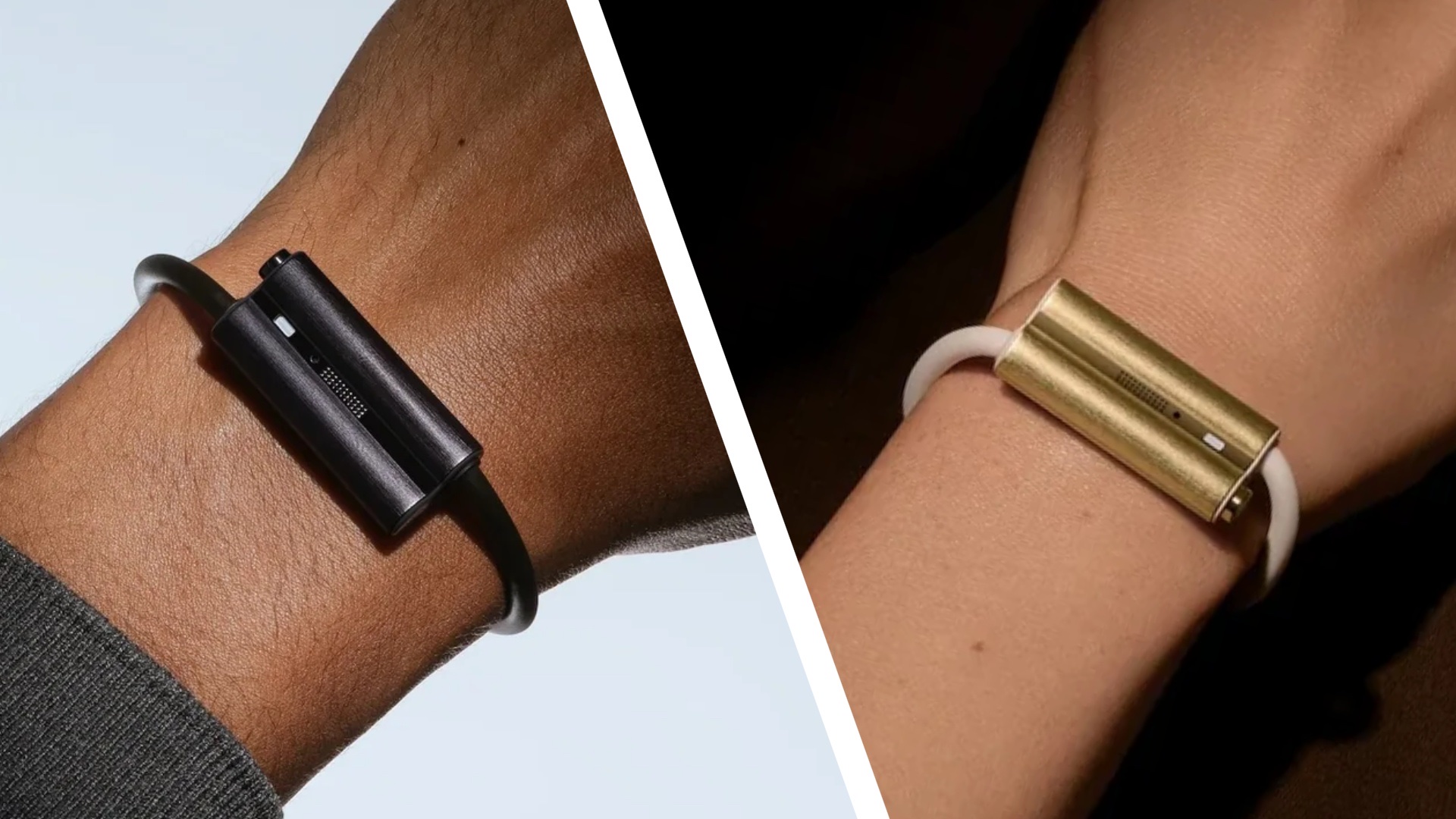
Luffu calls the design slim, lightweight and elegant enough for everyday wear, and uses the usual quiet-luxury language for a piece of technology that does not want to look like technology. But the more useful question is whether the shape gives you a reason to leave it on your arm.
Why Does Luffu Link Have No Screen?
That matters because a health wearable is only much use when it is actually being worn. A bulky smartwatch can clash with a shirt cuff. A bright display can feel a bit much with a more formal outfit. And if the thing is constantly buzzing away, it starts to behave like another phone, only smaller and more irritating. A band that is less visually demanding has a better chance of staying on the wrist through the boring parts of the day, which is where all that tracking is supposed to happen.
The screen is not being reduced, hidden behind a watch face or switched off to save battery. It is gone. So there is no scrolling through sleep scores on your wrist, no checking a message while pretending to listen to somebody, and no quick glance at the time unless you are also wearing an actual watch. If you want one device to do absolutely everything, that sounds like a terrible omission. If you are tired of every object trying to become a phone, it is probably the entire appeal.
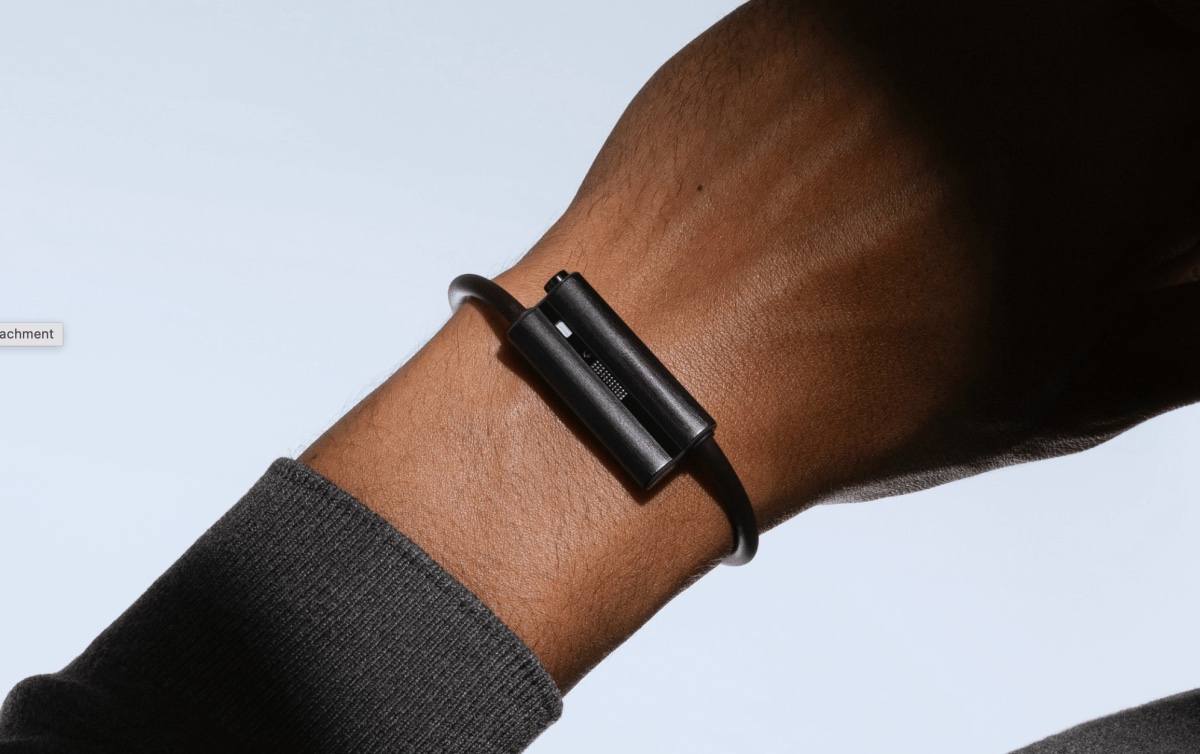
What remains is aimed at the background. Luffu Link is designed to track activity, steps, sleep, heart rate and heart-rate variability. It also includes voice logging, built-in LTE, GPS and Bluetooth, along with location sharing, check-ins and help messages to trusted contacts. So you can keep somebody in the loop without opening an app, and in some situations without having your phone right beside you.
What Health and Safety Features Does It Include?
That is where Luffu Link stops being just a discreet health tracker and starts looking like a family-care product. Luffu’s own story is built around reducing the mental load of caring for other people, with family caregivers, older adults living independently and health-and-safety-conscious adults all fitting the intended audience. A discreet wrist band should be less awkward than an emergency pendant, and less distracting than a smartwatch, while still giving a chosen contact a way to know that something is wrong.
There is a fairly important catch here, though. Luffu Link does not call 911 or another emergency service. It contacts the trusted people you have set up. That makes it a direct line into your own support network rather than a replacement for professional emergency response. Whether that feels reassuring or too dependent on somebody else picking up their phone will depend on the family using it, but it changes what you are buying.
The voice-logging feature follows the same logic. Rather than tapping around a miniature interface, you record something by speaking. That could be useful for a quick note, an observation or something you do not want to forget, although saying it out loud on a crowded street is a different sort of friction. Luffu removes the fiddly screen interaction, but it cannot remove the social awkwardness of talking to a band in public. Technology, as ever, has found a way to make one problem smaller and another one slightly weirder.
How Much Does Luffu Link Cost?
Alongside the current $249.99 preorder price and displayed $299.99 retail price, Luffu lists a Family Plan at $19.99 per month for up to four family members. LTE service is included in that plan, so this is not a small metal-and-silicone object that you buy once and forget about. You are paying for the hardware, the connected service and the relationship with the people who may receive its alerts.
That could make sense for a family sharing the cost of a safety system, particularly if the alternative is a very obvious device that the wearer refuses to use. It is a much harder sell as a general fitness tracker. A screenless band with a claimed maximum battery life of five days sounds pleasantly simple, but the Family Plan changes the question from “Do I want another activity tracker?” to “Is this connected care service worth paying for every month?”
What Are the Trade-Offs of a Screenless Wearable?
The missing display changes the health-tracking side as well. Luffu Link can collect activity, sleep and heart data, but that information is not going to greet you from the wrist. There is no little animation congratulating you for hitting a step target and no tiny graph to inspect while waiting for the kettle. The upside is that the band is not constantly asking for attention. The downside is that the reward for wearing it is pushed away from the object itself.
This is why the styling question is part of the product rather than a decorative extra. Once you remove the screen, there is no glowing interface to explain why the object deserves space on your wrist. The case, strap, weight, colours and the way it sits beside a watch or bracelet have to do that job instead.
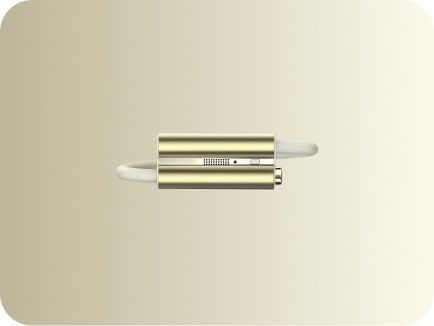
Halo Gold is the obvious attempt to make the band feel more like an accessory. Onyx Black and Sterling Blue give you a less jewellery-specific route, which may be easier with everyday clothes. The stainless-steel body supplies the premium signal, but the silicone wristband keeps the object closer to a fitness band than a gold bangle. The honest description is probably a piece of safety technology borrowing the visual manners of jewellery without pretending it has become jewellery.
Can Luffu Link Fit Into Everyday Wear?
That puts Luffu Link in an interesting part of the wearable mix. Recent fashion-tech coverage from Vogue Business has placed smart glasses, smart rings and other wearables alongside personal accessories, while a separate Whoop fashion case shows the category testing how health technology can fit into clothing, identity and status.
Luffu takes the wristband route and removes the most obvious sign that it is a computer: the display. That may make it easier to wear with a shirt cuff, a more formal outfit or a bracelet stack, but the result still depends on the actual band. Halo Gold can carry the accessory argument more readily than Onyx Black or Sterling Blue, while the silicone strap keeps all three versions anchored in wearable technology.
The jewellery-like shape is therefore a reason to keep wearing Luffu Link, not proof that every other compromise has vanished. The product currently planned for the US market only requires iOS 18 or later or Android 14 or later, and the expected shipping window is early 2027. None of that is particularly glamorous, but these are the details that turn an appealing object into a buying decision.
Who Is Luffu Link For?
Luffu Link makes the most sense for somebody who wants health and safety tracking to stay present without making technology the centre of an outfit or a day. It could suit a family trying to support an older relative without handing them a chunky emergency pendant. It could also appeal to a health-conscious wearer who has no interest in notifications, apps and yet another glowing screen.
It makes much less sense if you want a smartwatch replacement, a standalone fitness display or a one-off purchase with no monthly commitment. At the $249.99 preorder price before the ongoing plan, the band is asking you to pay for the quietness of the object and the connected safety network behind it.
That is a more specific proposition than “the future of wearable technology”. Luffu Link is not trying to show you more information. It is trying to make the wrist less visually busy while keeping a few important channels open in the background. Whether that is enough to change what wearables look like will come down to real clothes, real routines and real family arrangements.
Frequently Asked Questions
Does Luffu Link call 911?
No. Luffu Link is designed to send help messages to trusted contacts selected by the wearer rather than calling 911 or another emergency service.
Does Luffu Link require a monthly subscription?
Yes. The listed Luffu Family Plan costs $19.99 per month for up to four family members, and LTE service is included in that plan. The current order page notes that pricing and plan details can change.
How long is Luffu Link’s battery supposed to last?
Luffu lists battery life of up to five days, depending on usage. That is a maximum claim rather than a guaranteed runtime for every wearer.
When is Luffu Link expected to ship?
Luffu currently lists early 2027 as the expected shipping window, with availability planned for the US market.
For now, the buying verdict is straightforward: if you want a calm, screen-free health and safety band that can blend into an outfit, this is a distinctive idea. If you want a tiny computer on your wrist, you will probably find the missing screen rather difficult to forgive.