
Ninajirachi I Love My Computer and the Cyber Pop Wardrobe
A Trend Notes essay on Ninajirachi I Love My Computer, cyber Y2K styling, device nostalgia and the fashion logic of digital pop imagery.
I love when a musician’s visual world understands the music instead of simply decorating it. That is what makes the Ninajirachi I Love My Computer imagery feel so sticky. It does not treat cyber Y2K as a costume rack. It treats it as a whole emotional environment: devices, screens, cables, glossy eyes, soft menace, bedroom clutter and the strange intimacy of being raised by the internet.
The look is futuristic, yes, but not in the clean chrome showroom sense. It is more interesting than that. It is nostalgic technology made uncanny.
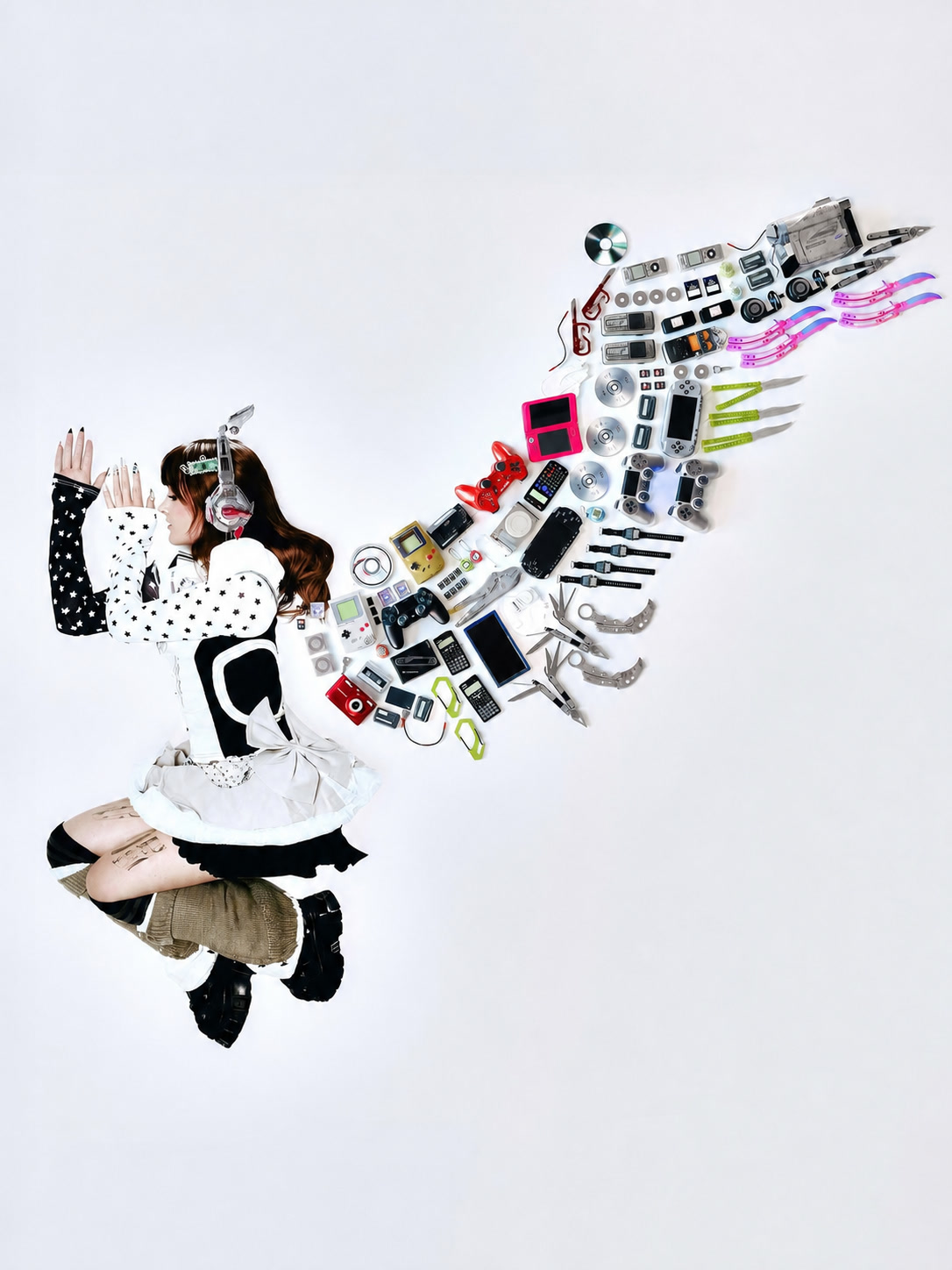
The Album Gives the Wardrobe Its Logic
The title matters. Ninajirachi’s I Love My Computer album is not just a music release with a cyber visual attached. The phrase gives the styling permission to be affectionate toward obsolete tech rather than merely ironic about it.
That is the difference between this and a flat Y2K aesthetic. Y2K often gets reduced to low-rise denim, tiny sunglasses and shiny plastic. Here, the mood is more specific: the computer is a companion, a shrine, a mess, a mirror and maybe a trap.
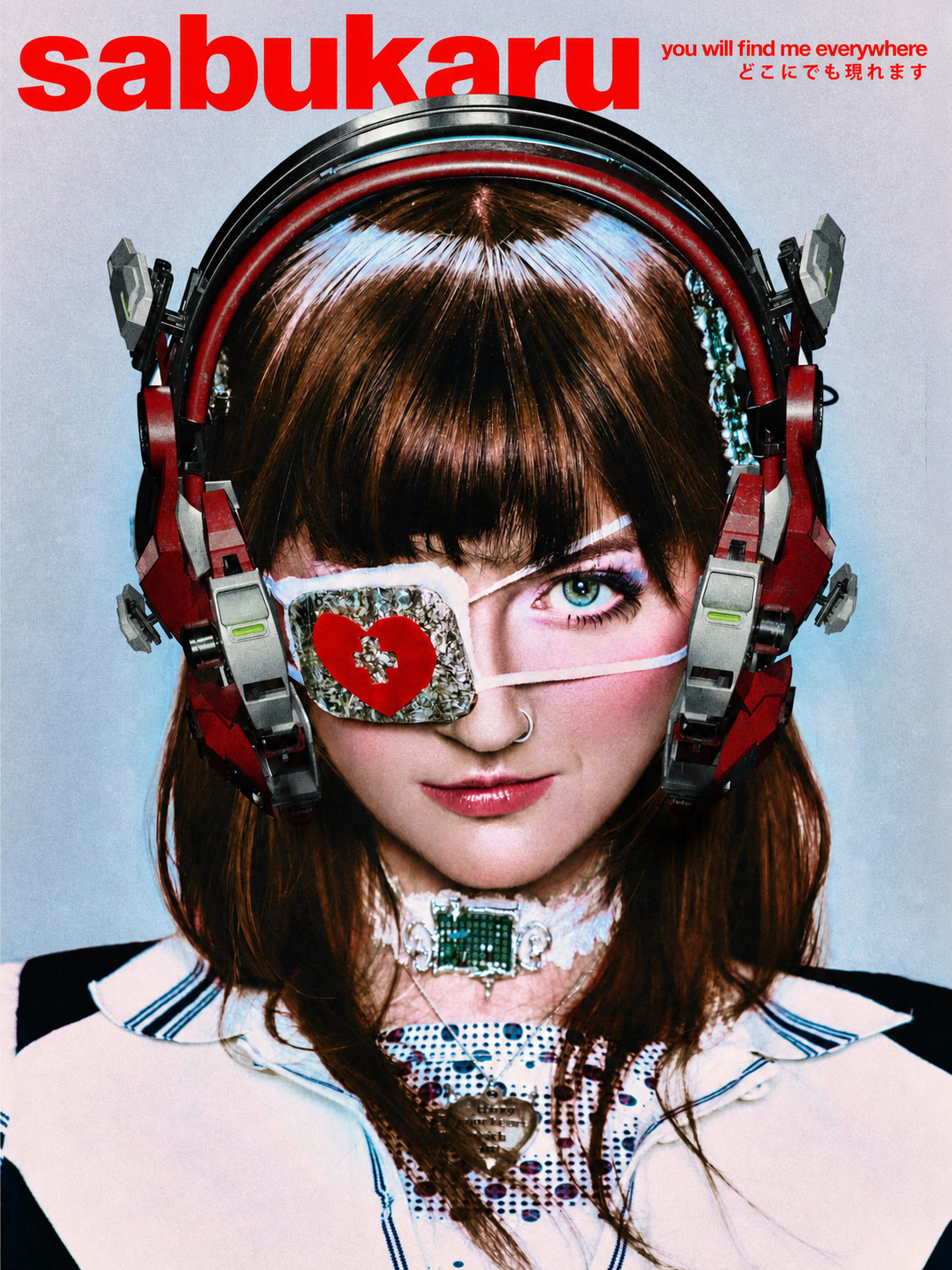
The close portrait makes that relationship feel personal. The red mechanical headphones are not just accessories. They frame the face like hardware. The eye patch turns beauty styling into interface design. The collar piece reads like a piece of wearable circuitry.
It is cyberpunk fashion without the usual noir heaviness. Instead of rain, leather coats and city grime, the image gives us sweetness, polish and a slightly unnerving doll quality.
Cybercore Looks Better With Sentiment
I think cybercore aesthetic works best when it has emotion under the machinery. Otherwise, it becomes a collection of predictable signifiers: silver, black, goggles, wires, dystopia. These images are stronger because they make the technology feel sentimental.
Old phones, handheld consoles, CD-ROMs and monitors are not presented as dead objects. They look devotional. The devices become a wing, a halo, a protective shell, a mess of memory.
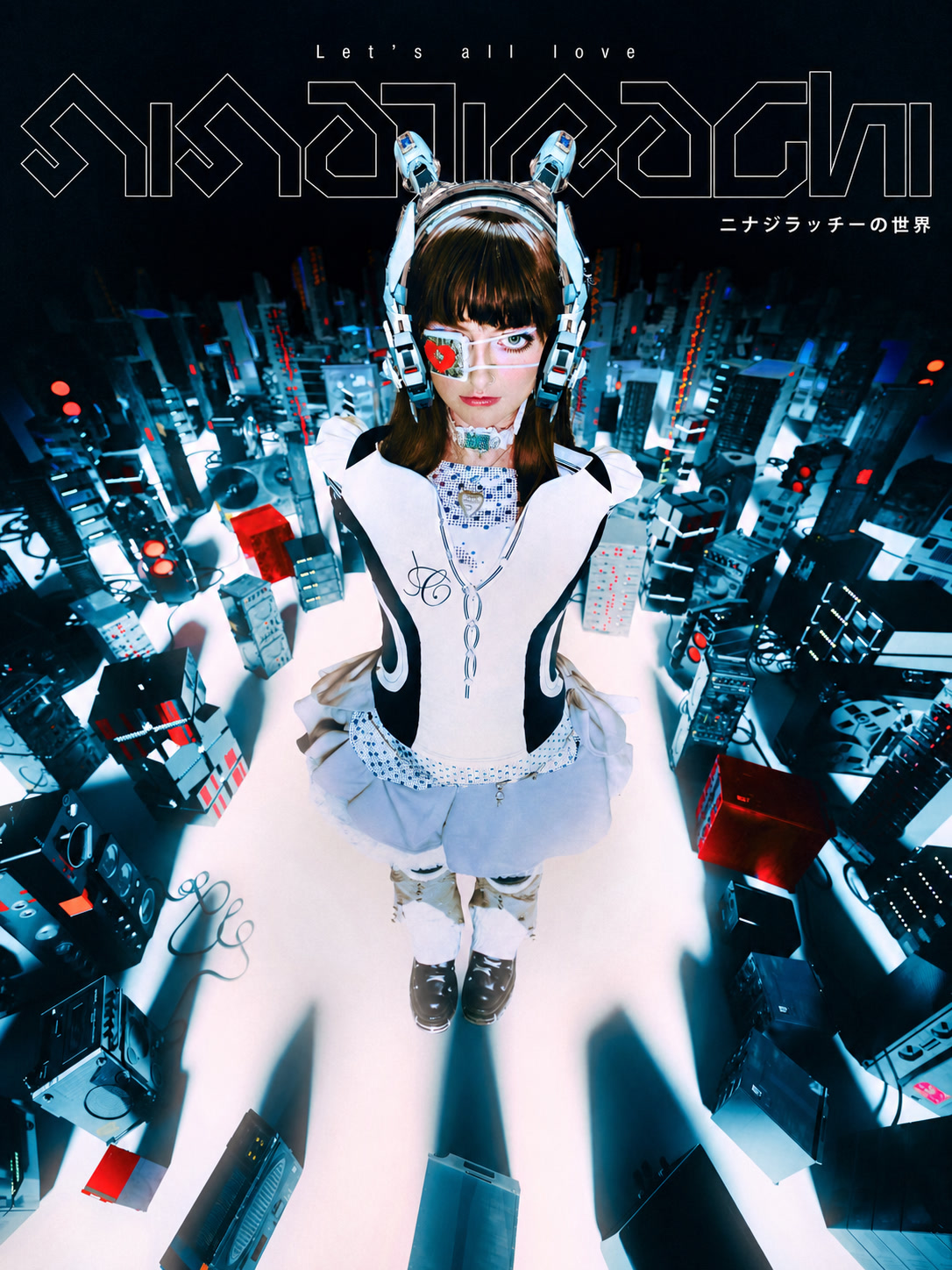
That is why the Japanese cyberpunk reference does not feel pasted on. The city of devices around her has a cinematic scale, but the styling keeps pulling us back to the body: the decorated eye, the headphones, the white techwear shape, the little hardware details.
The future is not somewhere else. It is strapped to the face.
The CD Is the Most Romantic Object Here
There is something almost tender about the CD image. A disc is not futuristic anymore, which is exactly why it works. It carries the memory of software, music, installation screens and bedrooms where physical media still felt magical.
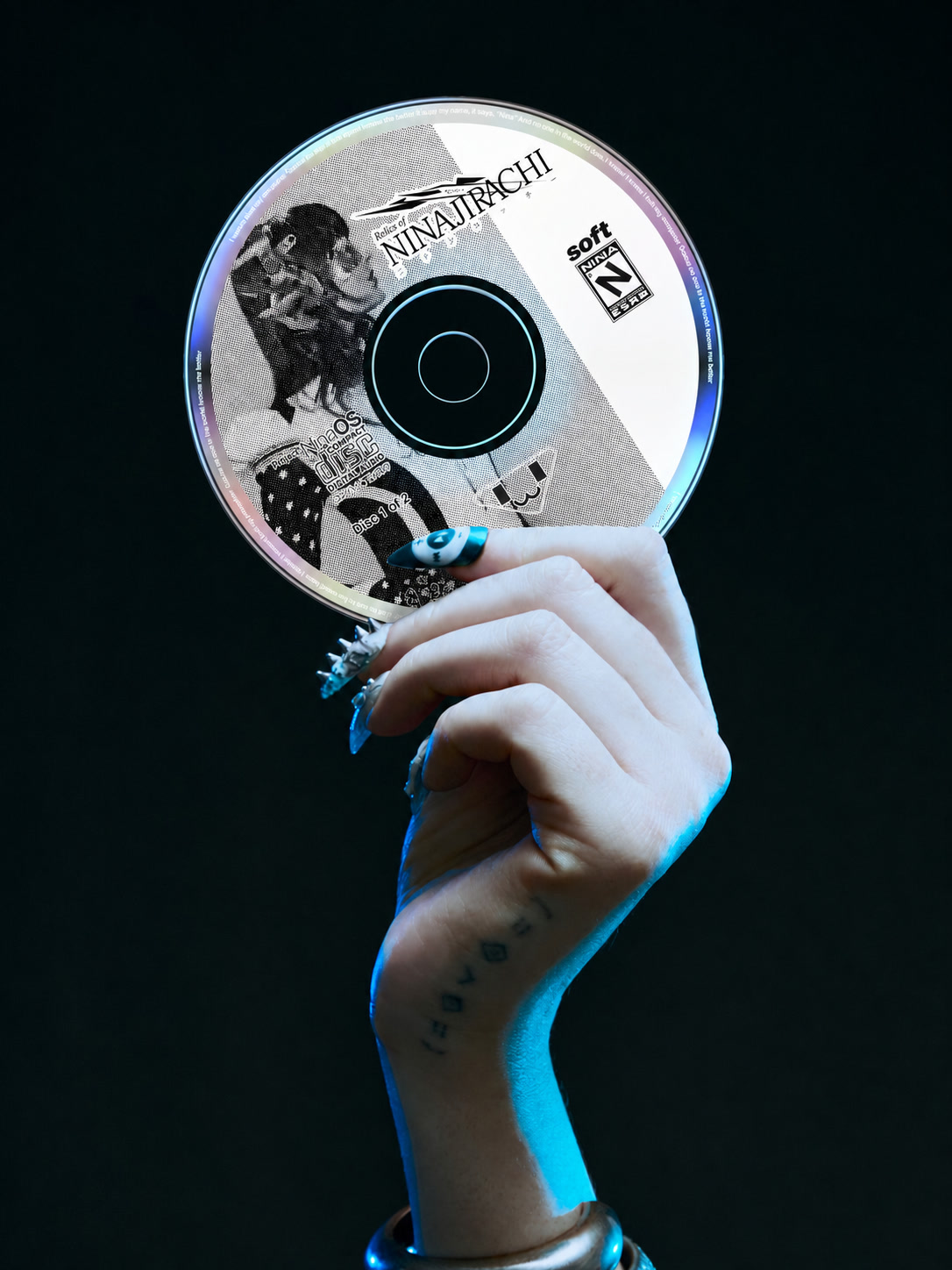
This is where the I Love My Computer album visual language becomes fashion-relevant. The styling is not only about clothes. It is about object intimacy. Nails, rings, discs, headphones and devices all become part of the same accessory language.
For a future alt fashion audience, that is useful. It suggests that styling can begin with the objects around the body, not just the garments on it.
The Body Becomes an Interface
The upside-down image is pure cyber photoshoot logic: a body caught between screens, cords and blue light. The outfit is not loud in a traditional sense, but every detail has a signal function. Lace-up tights, platform shoes, hardware headphones, glossy monitor reflections. It is soft, technical and a little uncanny.
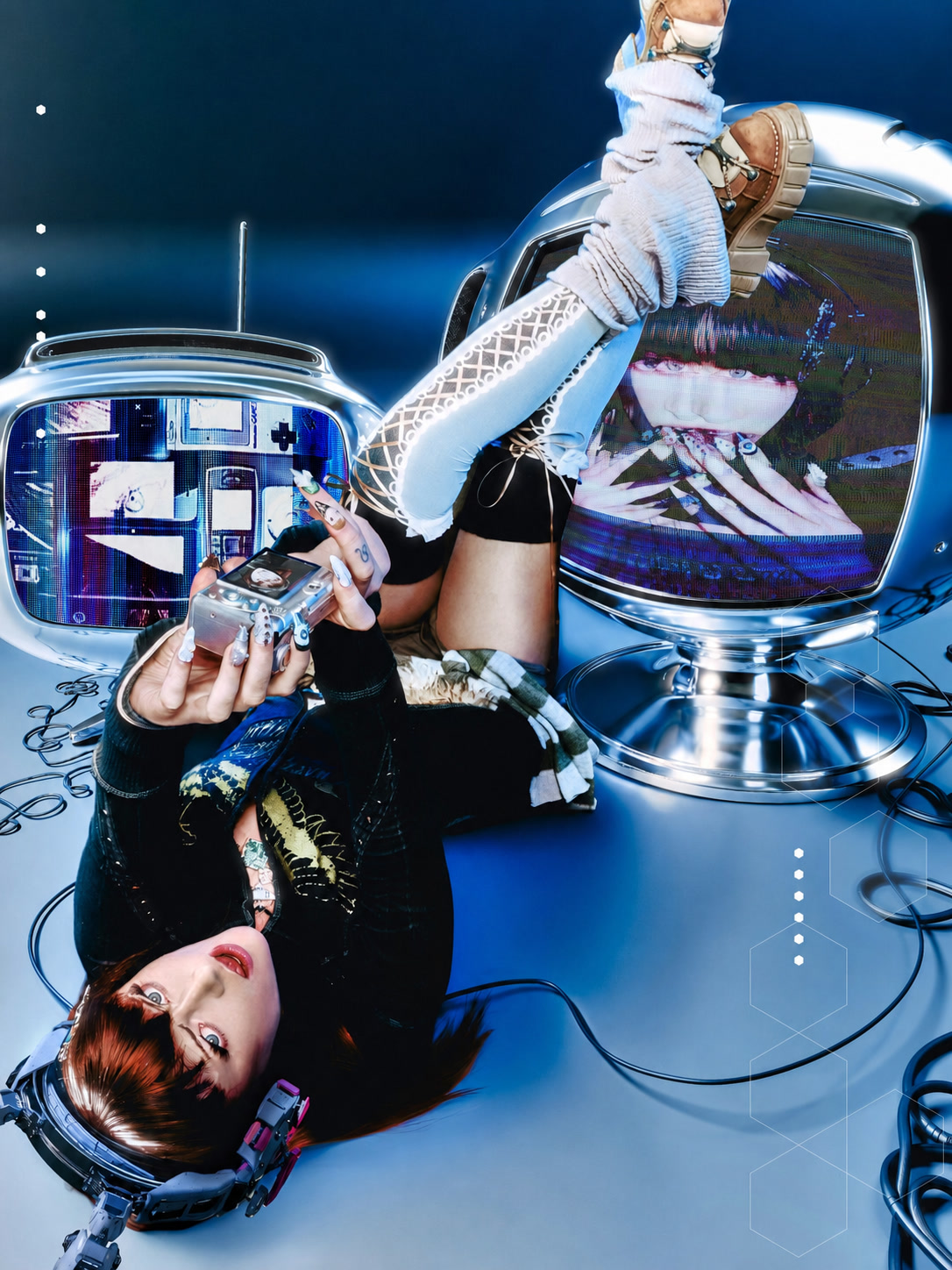
This is the cyber Y2K aesthetic I find most convincing. Not the algorithmic version that looks like a shopping filter, but the version that understands clutter. The internet was never minimalist. It was desktop icons, broken links, file names, chat windows, bad compression and emotional overexposure.
The device flat lay makes that even clearer.
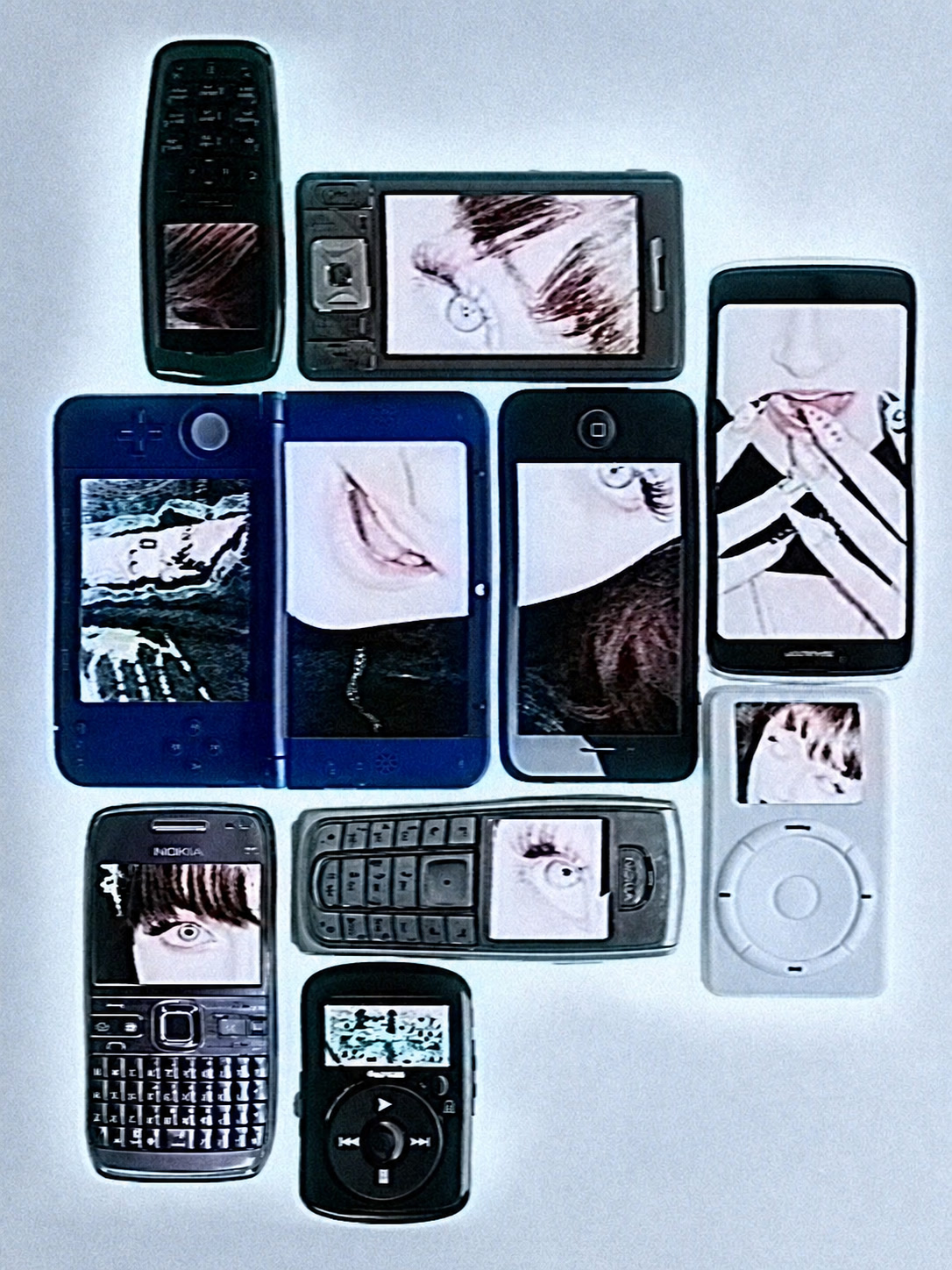
The phones are not props in the lazy sense. They explain the palette and the mood: black plastic, silver edges, icy blue light, overexposed skin, screen glare. If someone wanted to build a cyber y2k photoshoot, this is the better starting point than just buying a metallic skirt.
Why This Works as Fashion, Not Just Music Imagery
The FADER’s 2026 Ninajirachi interview is useful context because it frames her world as performance, fandom and movement rather than only sound. Fashion lives in that overlap. It is the part of music culture that lets a listener step into the atmosphere.
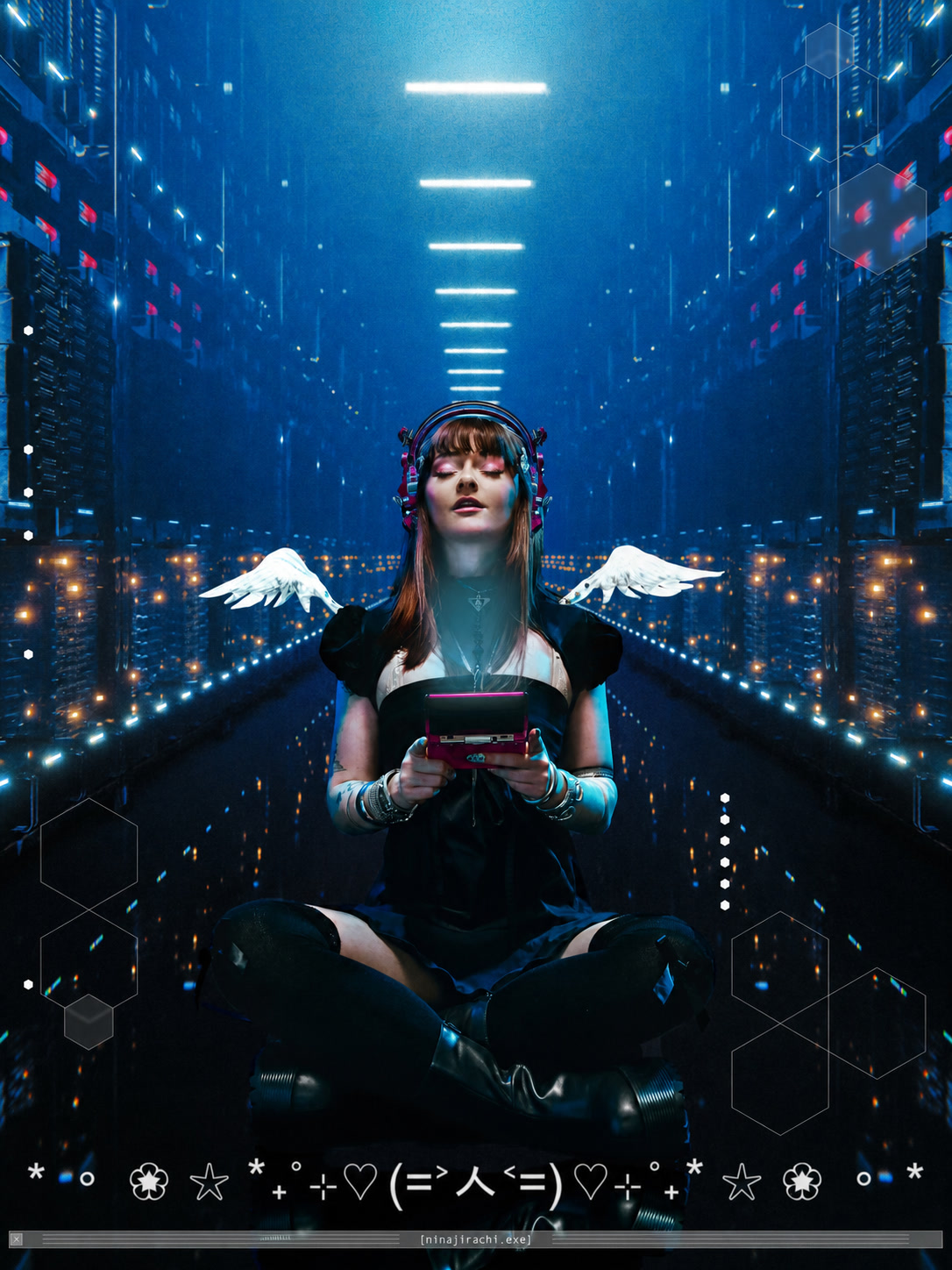
The winged image is the most literal fantasy, but it still works because it is surrounded by system language. The bottom interface bar, the digital symbols, the tunnel lighting and the handheld device keep the angel idea from becoming soft-focus fantasy. It is angelcore processed through a machine room.
That is the friction. Cute, but not harmless. Digital, but not sterile.
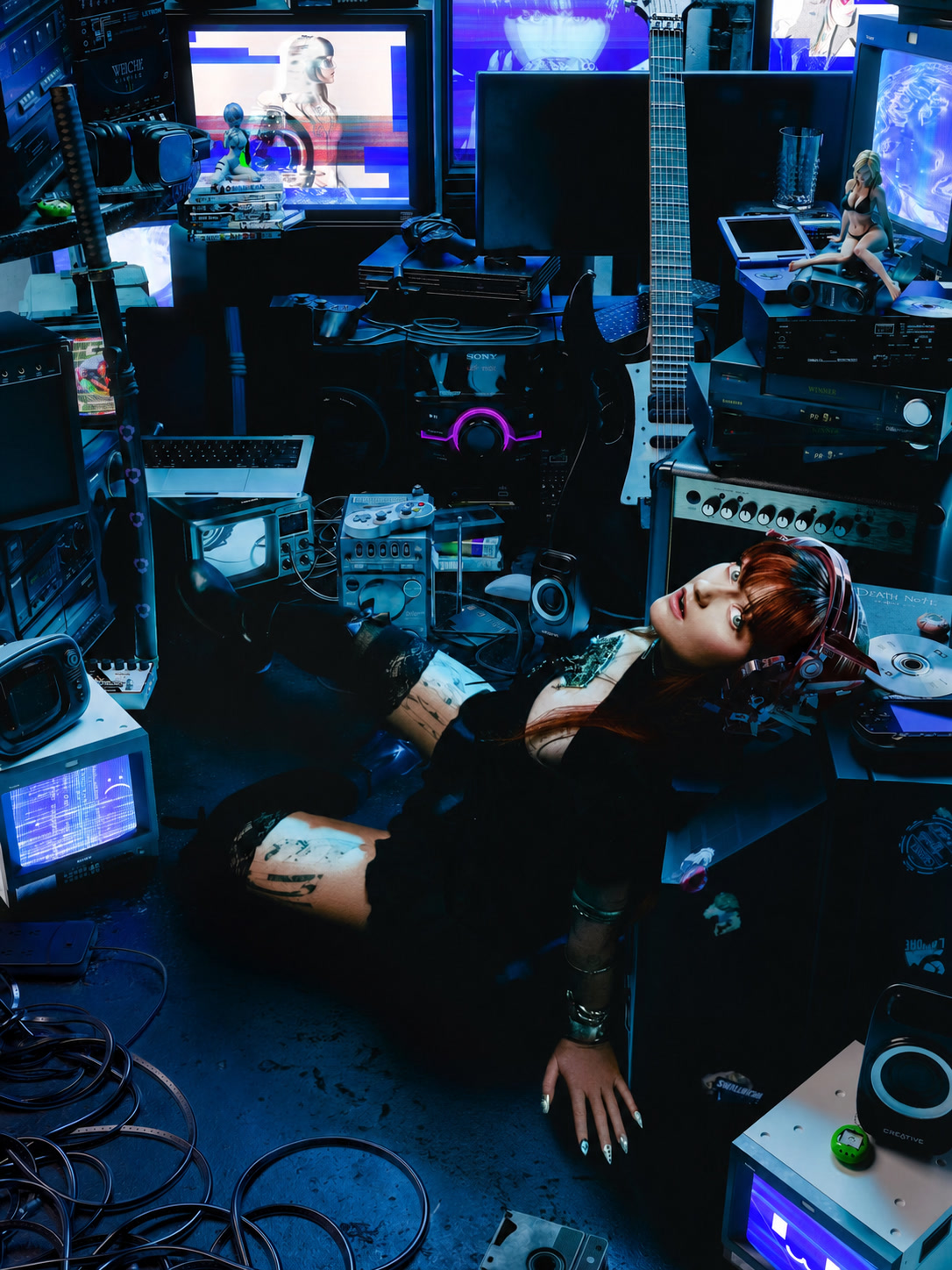
The room image is my favourite because it refuses cleanliness. A lot of futuristic fashion imagery wants to erase the mess of living. This does the opposite. It makes the mess the point. Cables, speakers, screens, figures, discs and a body folded into the chaos. It feels like an archive of internet girl aesthetic without flattening her into a mood board.
The Better Version of Y3K Is Personal
The final image pushes everything into maximalism: posters, wires, keyboards, tech, clothes, clutter, a body lying inside the archive. It is not a future outfit in the usual way. It is a future room. A future identity system.
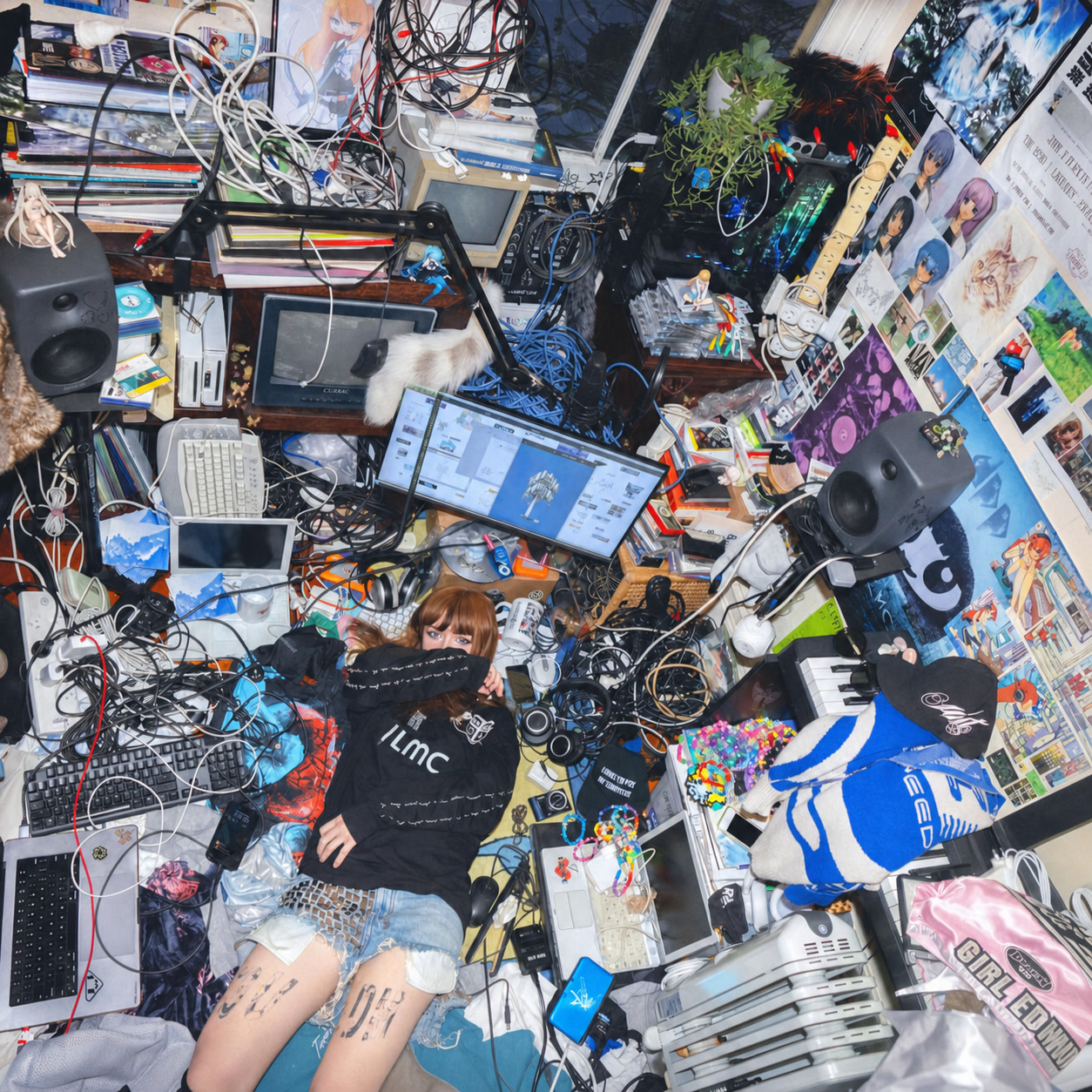
This is where I think the trend becomes useful beyond Ninajirachi herself. The best Y3K aesthetic is not just silver clothes and robot references. It is a way of styling the self as a node in a network of objects. Your headphones matter. Your nails matter. Your screen glow matters. Your room matters.
Pitchfork’s review of I Love My Computer gives the album a music-critical frame, but visually, I think the bigger fashion lesson is this: digital identity feels more convincing when it has memory attached to it.
That is why these images work. They are not asking us to look futuristic. They are asking what kind of future we grew up inside.