
Samsung Is Putting Consumer Electronics in a Design Fair
Samsung's Design Miami Seoul exhibition combines artist-made work, AI animation, an OLED TV, and a custom frame to test how consumer electronics are seen.
TL;DR
- Samsung’s Design Miami Seoul presentation pairs specific products with work by 14 Korean artists, AI animation, the S95H OLED TV, and custom frames.
- The TV is being presented as part of a complete artwork rather than only as a screen that delivers an image.
- The design-fair setting changes the first question from display specifications to what kind of object the product is trying to be in a room.
- The exhibition tests whether a new frame and context change the product itself or mainly make familiar hardware more memorable.
What Is Samsung Showing at Design Miami Seoul?
There are a lot of ways to announce a TV. Samsung’s latest one is to put its products into Design Miami Seoul and let 14 Korean artists reinterpret them as original works.
The setup is specific. Samsung’s exhibition announcement places the presentation at Dongdaemun Design Plaza in Seoul from September 1 through 6, with each of 14 Korean artists working from a specific Samsung product. The work is then brought to life with AI and presented on the OLED TV S95H, with a custom frame that becomes part of the artwork itself.
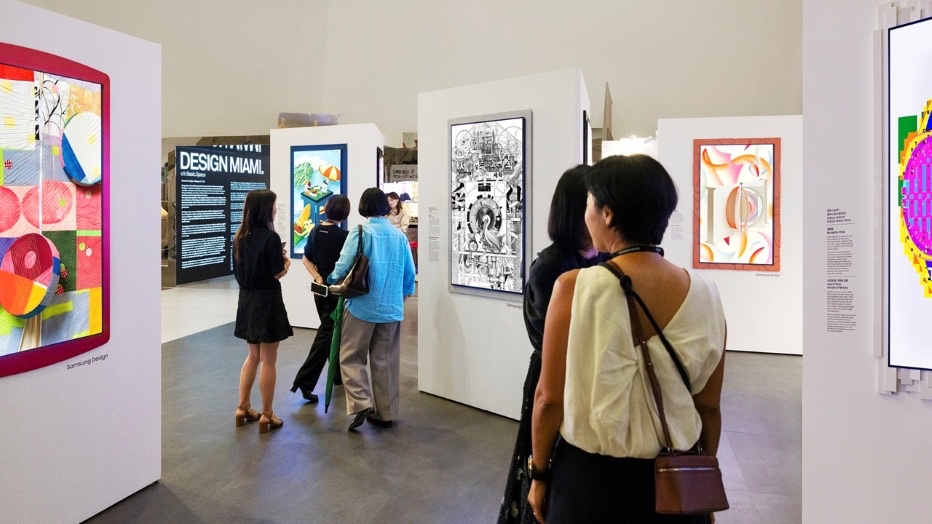
That sounds like a brand presentation, because it is. But it is also a pretty interesting technology question: when a consumer device moves from a showroom or a desk into an exhibition space, what exactly are we looking at?
How Does the Exhibition Change the Role of a TV?
Usually, a TV has one job. Turn it on, show the picture, and let the picture quality make the case. Even the more design-conscious versions of the product are still trying to disappear into the room, or at least look good enough that you don’t mind the big black rectangle when the screen is off. The technology is useful when it becomes invisible.
This exhibition asks the screen to do something slightly different. It isn’t just the surface where the art appears. The TV, the animated work and the custom frame are being presented as one object. The display is part of the visual language, not only the thing delivering it.
And that changes the way the product gets judged. At a tech event, you want to know how bright the panel is, how accurate the colors are, what the processing does and whether the price makes sense. At a design fair, those questions don’t disappear, but they move back a little. The first question becomes: what kind of object is this trying to be in the room?
Why Is the Custom Frame Important?
Samsung’s own design description of the collaboration frames it as a way for technology and craft to speak the same visual language. The custom frame is the clearest evidence of that idea. A frame normally tells you how to look at an image. Here, Samsung is making the frame part of the thing being looked at. The TV is not being dressed up as a neutral window. It is being given a body, a border and a relationship to the artwork around it.
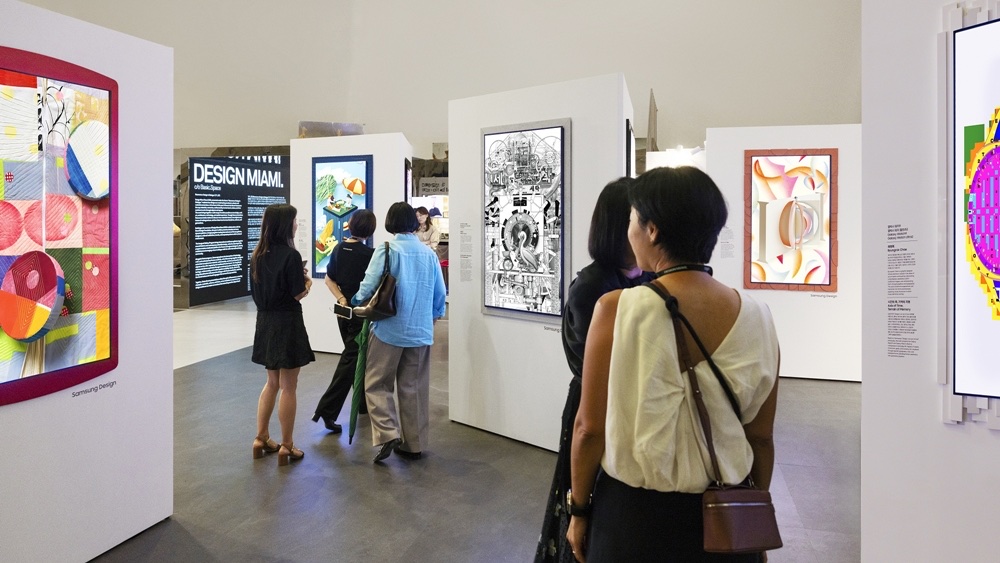
That’s a very Samsung way to make a display feel less like a display. The panel still matters, obviously, but the product is being asked to carry a little more identity before anyone talks about its specifications.
What Is AI Doing in the Presentation?
The AI part is doing a different kind of work. Samsung says each artist’s original piece is brought to life with AI before being shown on the S95H. The important thing here is not to treat AI as a magic word that automatically makes the work more contemporary. Its practical role is to put motion and transformation between the artist’s work and the screen. A static object becomes something the display can keep changing.
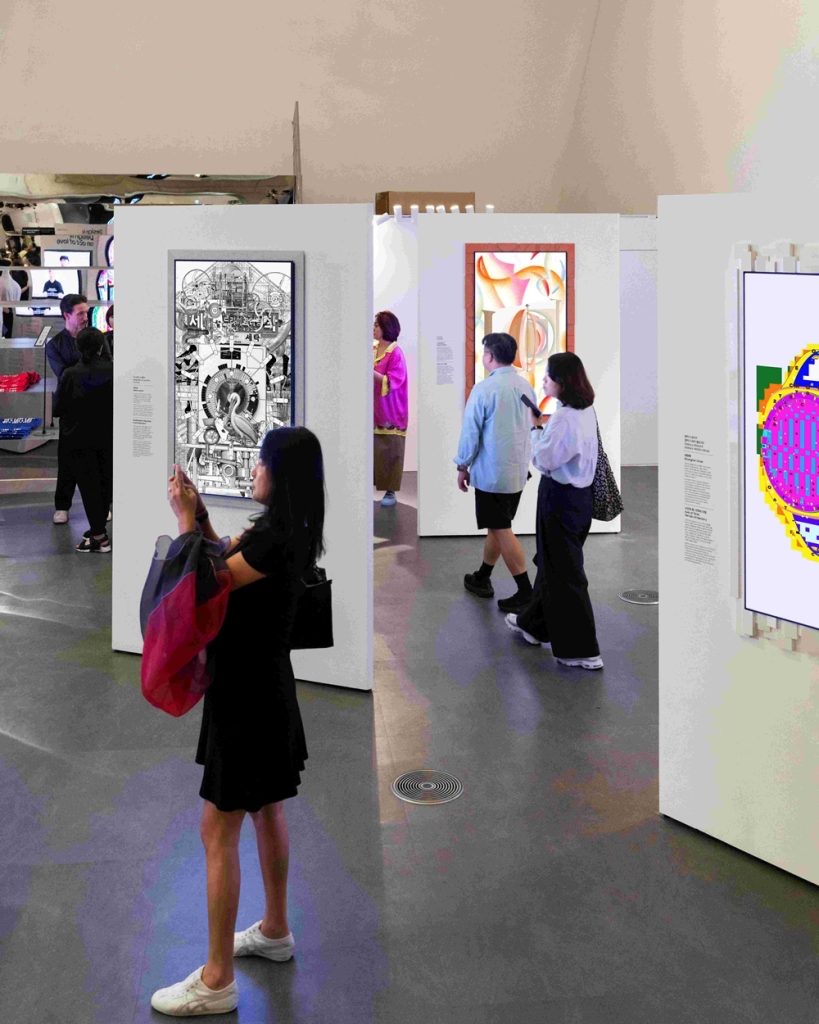
That gives the TV a role beyond showing a finished file. It becomes the place where the work continues to happen. Whether that feels like a meaningful extension of the artwork or just a more elaborate way to make a product demo is the part worth paying attention to. The exhibition is built around that ambiguity.
Why Does the Design Miami Seoul Setting Matter?
There is also a difference between putting Samsung products in a gallery and putting them inside Design Miami Seoul. Design Miami describes this as its second Seoul edition, with galleries, cultural institutions, curated exhibitions and corporate collaborations gathered at DDP. Samsung Design places the collaboration within DDP’s wider Design Miami program, alongside the fair’s galleries and In Situ program. The fair’s theme is “Resonance: Design in Dialogue,” which is a fairly direct description of the kind of setting Samsung is entering here: a place where design objects, brands and cultural ideas are allowed to sit next to each other and affect how they are read.
That context does some of the work before Samsung’s installation even starts. The S95H is no longer appearing in the category of televisions. It is appearing alongside a design program that expects people to look at objects for more than their immediate function. The product is still a product, but the room is giving it a different viewing contract.
This is why the location matters more than the phrase “Samsung and artists.” Samsung could have made a video about expressive design, or placed the same work on a product page. Instead, the company is putting the display in a public design event at DDP, next to the fair’s other programs. That lets the hardware borrow the attention normally reserved for objects that are discussed through form, material and cultural context rather than only through performance.
But the borrowing goes both ways. The artwork also has to pass through the logic of a Samsung display. The S95H is not a passive piece of furniture. It controls the scale, motion, brightness and behavior of what visitors are seeing. The frame may make it feel more like an art object, but the screen still determines how that object exists over time.
Is Samsung Changing the Product or Just the Presentation?
That is the part I find more interesting than the broad claim that consumer electronics are entering visual culture. Consumer electronics have been in visual culture forever. Phones, televisions and laptops already shape what rooms look like and how people present themselves. The more specific shift is that the product company is now making the device’s presentation part of the product story.
Samsung has been building toward this kind of language for a while. Its earlier “Design Is an Act of Love” exhibition at Milan Design Week was organized as an open lab with 12 immersive zones and more than 120 products and concepts. One section, called “Artful Living,” described screens as expressive mediums for personality, culture and emotion. The Seoul collaboration narrows that larger idea down to a more legible object: an artist, a Samsung product, an animated image, an OLED panel and a frame.
That makes it easier to see what Samsung is actually trying to prove. Not that a TV can display art. Every good TV can display art. The test is whether a TV can become memorable as an object before the picture does the heavy lifting.
There is a real tradeoff here. The more successful the installation is as an artwork, the easier it may be to forget that the hardware is being evaluated. Visitors might remember the frame, the artist and the moving image while the actual benefits of the S95H become almost invisible. For Samsung, that may be fine. A technology company does not always need the product to be the loudest thing in the room. Sometimes it needs the product to become the reason the room looks that way.
Still, presentation is not transformation. A familiar screen placed inside a beautiful frame can feel new without being a new kind of screen. The exhibition has to earn the distinction by making the device itself feel more legible as a designed object, not just by surrounding it with more interesting content.
That is what makes this a useful case to watch. Samsung is not simply showing off an OLED TV, and it is not turning a television into art by declaration. It is testing how much context can change the way a piece of consumer electronics is seen. If the artist collaboration, AI motion and custom frame make the S95H feel like part of a considered object rather than a black rectangle that happens to be on, then the design intervention is doing real work.
If the memorable part is only the artwork around it, then the frame carried the presentation and the product stayed where it started.
For a company that sells screens, that is a more interesting demo than another spec slide.
Frequently Asked Questions
What is Samsung showing at Design Miami Seoul?
Samsung is presenting a collaboration in which specific products are reinterpreted by Korean artists and shown as framed, AI-animated works on the S95H OLED TV.
Why does the custom frame matter?
The frame is treated as part of the artwork instead of as a neutral border around the screen. That makes the TV’s physical presentation part of the design question.
What role does AI play in the exhibition?
AI is used to bring the artists’ works to life on the display, adding motion and transformation between the original work and the screen.
Does the exhibition make the TV a new kind of product?
Not by itself. It changes the context in which the TV is seen and tested, but whether the device becomes a more legible design object depends on how much the display and frame contribute beyond the artwork they show.